

Sourcing marine winches requires more than comparing rated capacities and purchase prices. Buyers must verify operating loads, braking performance, duty cycles, installation compatibility, and compliance evidence.
An overlooked braking requirement or unsuitable drive arrangement can compromise vessel safety and project uptime. A credible quotation should therefore demonstrate performance under defined operating conditions.
For cross-sector buyers, the structured approach behind textile supply chain supplier assessment offers a useful starting point, but marine procurement demands its own technical checks.
This guide helps procurement teams, marine engineers, and fleet managers compare suppliers, identify incomplete specifications, and evaluate lifetime costs before committing to an order.
1. Does the Specification Describe the Actual Marine Operation?
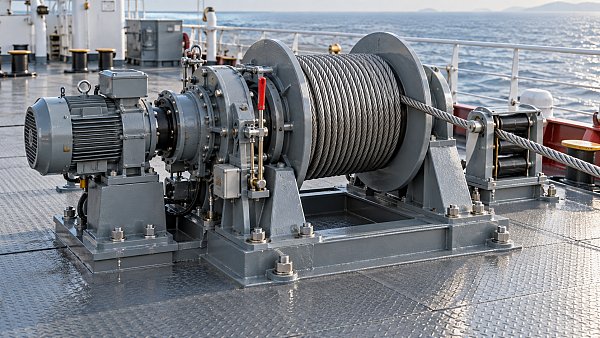
Start by identifying the application: mooring, towing, anchor handling, lifting, research deployment, or another defined operation. These duties create different loading, control, and safety requirements.
A general description such as “ten-tonne marine winch” leaves critical questions unanswered. Suppliers need operating scenarios, line characteristics, environmental conditions, and installation constraints to propose suitable equipment.
Document normal working loads, expected peaks, required line speeds, deployment lengths, and operating frequency. Identify whether the winch must hold, recover, render, or continuously tension the line.
Describe vessel movement, possible snagging, shock loading, and the consequences of losing control. Dynamic loads require engineering assessment; an arbitrary capacity margin cannot replace that assessment.
Separate routine service from exceptional conditions. Buyers should establish which loads the equipment must withstand, which functions must remain available, and when operation must stop.
Before requesting quotations, obtain agreement between procurement, the vessel operator, and the responsible engineer. A shared technical specification makes competing offers meaningfully comparable and reduces redesign.
2. Are Line Pull, Speed, and Drum Capacity Defined Together?
Rated line pull is meaningful only when its reference conditions are stated. Ask whether the quoted capacity applies to the first drum layer or another position.
For a given drum torque, available line pull decreases as the effective winding radius increases. A strong first-layer rating can therefore conceal inadequate performance on outer layers.
Require a performance table showing line pull and line speed across the intended drum layers. Confirm that the operating point satisfies the actual recovery requirement.
Specify rope diameter, construction, minimum breaking load, length, and termination arrangement. Steel wire and synthetic rope can require different drum geometry, handling practices, and inspection procedures.
Check usable storage capacity, minimum retained wraps, flange clearance, and spooling arrangements. A drum that nominally holds the line may still spool poorly in service.
Review fleet angle, fairlead location, and the need for level winding. Poor alignment can damage the rope, create uneven layers, and increase loads on equipment.
3. Will the Brake Hold and Release Safely?
Brake holding capacity deserves separate verification because it is not the same as powered line pull. Confirm its value, reference drum layer, and specified test conditions.
Check the complete load path through the brake, drum, shaft, gearbox where relevant, foundation, and supporting structure. Component ratings alone do not establish system capacity.
Ask how the brake behaves after electrical power loss, hydraulic pressure loss, or a control fault. Require a clear description of automatic engagement and controlled release.
For mooring service, brake settings must align with the vessel’s approved mooring arrangement and line characteristics. Simply requesting the highest possible holding force can create hazards.
Where rendering or controlled payout is required, verify that the design supports it. Static holding capability does not demonstrate adequate thermal performance during sustained slipping.
Request the brake adjustment procedure, inspection intervals, wear limits, and test method. Operators need a practical way to maintain the specified performance throughout service life.
4. Can the Drive Sustain the Required Duty Cycle?
A winch that meets peak pull briefly may still overheat during repeated recovery cycles. Specify operating duration, starts per hour, rest periods, and ambient conditions.
Electric drives can provide efficient control and straightforward integration where suitable vessel power is available. Check starting demand, speed regulation, enclosure protection, and braking arrangements.
Hydraulic drives can suit demanding load conditions, but performance depends on the complete system. Verify available pressure, flow, cooling capacity, filtration, and hydraulic fluid compatibility.
If comparing a self-contained hydraulic package with a vessel-fed system, define the scope boundary. Otherwise, power packs, coolers, pipework, or commissioning work may disappear between quotations.
Require performance at the specified duty cycle and worst relevant ambient temperature. Motor power alone does not establish acceptable gearbox, brake, bearing, or hydraulic temperatures.
Ask suppliers to identify operating limits and protective functions. Thermal trips, overload protection, and recovery procedures should match the consequences of an interrupted marine operation.
5. Is Corrosion Protection Suitable for the Installation?
“Marine grade” is an incomplete specification. Equipment on an exposed deck faces different conditions from equipment inside a sheltered machinery space or intended for submerged service.
Define exposure to salt spray, washdown, immersion, ultraviolet light, and temperature extremes. Then request material selections, coating specifications, surface preparation requirements, and inspection acceptance criteria.
For coated steel, review the complete coating system and specified dry film thickness. Paint colour or a generic corrosion claim provides little evidence of durability.
Check fasteners, exposed shafts, seals, electrical connections, and drainage details. Corrosion problems often begin at interfaces, water traps, damaged coatings, or inaccessible maintenance points.
Where dissimilar metals are present, ask how galvanic corrosion is managed. Stainless steel components still require appropriate grades, installation details, and inspection under their actual exposure.
Confirm that replacement seals, lubricants, coatings, and sacrificial components are available locally. A protection strategy that cannot be maintained economically will lose value quickly.
6. Which Rules and Certificates Actually Apply?
Applicable requirements depend on the vessel, flag, classification society, installation, operating function, and contract. Establish the compliance basis before suppliers finalize their designs and prices.
Ask the vessel owner or responsible technical authority to confirm relevant class rules and statutory requirements. Include applicable standards and their required editions in the purchase specification.
A supplier’s ISO 9001 certificate concerns its quality management system. It does not, by itself, demonstrate that a particular winch meets the vessel’s technical requirements.
Likewise, distinguish approval of a product design from certification or survey of the delivered unit. Verify certificate scope, model coverage, issuing organization, and any operating limitations.
Where lifting, hazardous areas, or specialized offshore operations are involved, additional requirements may apply. Confirm these with qualified specialists rather than assuming general marine suitability.
Define required documentation early: approved drawings, material certificates where specified, calculations, inspection records, test reports, manuals, and certificates. Late additions can affect both cost and delivery.
7. Will the Winch Fit the Vessel and Its Controls?
Review more than the overall dimensions. Foundation reactions, bolt patterns, equipment weight, maintenance access, and rope lead direction all affect installation cost and operational suitability.
Ask for loads transmitted to the deck under specified operating and exceptional conditions. The vessel’s structural designer must assess the foundation and surrounding supporting structure.
Check removal routes for motors, gearboxes, brakes, and drums. A compact arrangement can become expensive if routine repairs require dismantling nearby equipment or modifying deck structures.
Define local and remote controls, emergency stops, communication interfaces, and required instrumentation. Operators should receive clear indications of relevant operating conditions and equipment faults.
Specify what happens when a sensor, communication link, or control power supply fails. The safe response depends on the operation and requires an agreed control philosophy.
Confirm responsibilities for cabling, hydraulic connections, software integration, installation supervision, and commissioning. Clear interfaces prevent disputes and reduce the risk of discovering missing scope onboard.
8. Can the Supplier Prove Performance Before Shipment?
Use supplier assessment to verify manufacturing capability, engineering competence, quality controls, and service support. References should involve comparable applications, operating environments, and equipment sizes where possible.
The discipline of textile supply chain supplier assessment transfers well to traceability, subcontractor oversight, and corrective actions. Marine acceptance additionally requires equipment-specific engineering and performance evidence.
Request an inspection and test plan with agreed hold points and acceptance criteria. Identify which checks require buyer attendance, third-party witnessing, or classification society involvement.
A factory acceptance test should verify the functions and performance included in the contract. Depending on scope, this may cover load, speed, brakes, controls, and alarms.
Confirm how loads are applied and measured, whether instruments have valid calibration, and which drum layers are represented. Record limitations of the factory test arrangement.
Review results against contractual requirements before shipment release. Define how deviations, retesting, incomplete documentation, and outstanding work will be resolved, including responsibility for associated costs.
9. What Will the Winch Cost Over Its Service Life?
Compare total installed and operating cost alongside purchase price. Include foundations, power infrastructure, installation, commissioning, energy use, planned maintenance, wear parts, and expected repair effort.
Ask suppliers for maintenance schedules, recommended commissioning spares, and critical operational spares. Identify proprietary components with long lead times and confirm realistic regional service coverage.
Evaluate downtime using your own operating assumptions. A cheaper winch can become costly when an unavailable brake component delays vessel operations or requires urgent international shipment.
Review warranty coverage, exclusions, claim procedures, and the start date. Establish who pays for travel, removal, reinstallation, transport, and troubleshooting when a covered failure occurs.
Use a weighted comparison that prioritizes technical compliance, operating reliability, documentation, and support. Treat unresolved safety requirements as approval barriers rather than weaknesses offset by price.
Before placing the order, close technical exceptions in writing and attach the agreed specification, documentation schedule, test requirements, delivery milestones, and service commitments to the contract.
Conclusion: Buy Verified Performance for the Intended Operation
The strongest marine winch offer connects a defined operating duty with verifiable performance, appropriate braking, durable construction, applicable compliance evidence, and practical maintenance support throughout service.
Buyers should proceed when the supplier can demonstrate that connection and resolve critical exceptions. A competitive price becomes meaningful only after the technical and commercial scope is clear.