BDI: 1,842 ▼ 1.2%
COTTON NO.2: 84.12 ▲ 0.4%
LME COPPER: 8,432.50 ▲ 2.1%
FOOD SAFETY INDEX: 94.2 ARCHIVE_SECURED
OPTICAL INDEX: 11,204.09 STABLE
BDI: 1,842 ▼ 1.2%
SECTOR INDEX
V.24.08 ARCHIVE
Hot Articles
- Tamil Nadu Plans SIM-Based Upgrade for 17.7 Million Smart MetersTamil Nadu plans 17.7 million smart meters with proposed SIM-based upgrades. Explore potential supplier opportunities and the tender details still to come.
- Fiber Laser CE Marking: EU Safety Requirements and DocumentationFiber laser CE compliance goes beyond the mark. Explore EU safety requirements, essential documentation and practical checks before purchasing.
- US Grid Equipment Shortages Could Hinder $1 Trillion UpgradeUS grid equipment shortages could hinder a $1 trillion upgrade. Explore how transformer supply, data centers and rising power demand could affect grid projects.
Green Station Certification Cost: Fees and Budget Considerations


Green station certification cost cannot be reduced to a single published fee. “Green station” is not one universally defined certification: the applicable scheme may assess a building, a transport facility, an energy installation, or another type of site. The first budgeting decision is therefore to identify the program and confirm that the station is eligible before requesting a price.
The certification body’s charges are only part of the potential expenditure. Depending on the scheme and the site’s condition, the budget may also need to cover evidence collection, technical studies, external support, site improvements, verification, and future reassessment. A low application fee does not necessarily mean a low total cost, particularly when substantial work is needed to meet the chosen performance level.
Define what is being certified before comparing fees
A station can contain several assets with different functions: an occupied building, passenger areas, charging equipment, electrical infrastructure, or supporting land. A scheme designed for buildings may assess only a defined building boundary, while another program may cover a wider facility or a specific operation. Certification of one component should not be assumed to certify the whole site.
Before seeking quotations, establish the station’s location, asset type, ownership and operating arrangements, project stage, floor area where relevant, and intended certification level. Also clarify whether the project is new, undergoing refurbishment, or already operating. These details can change eligibility, the evidence required, and the basis on which fees are calculated.
The precise name and version of the scheme matter. Programs may use different assessment methods for design and construction, operational performance, or individual products and services. A supplier’s generic statement that it can deliver a “green station certificate” is not enough to establish which asset will be assessed or what the resulting certificate will represent.
Ask the scheme administrator or authorized assessment provider for its current fee schedule and eligibility rules. Where the scheme does not publish a complete schedule, request a written quotation that identifies assumptions and exclusions. Avoid applying a price quoted for a different asset, certification level, or jurisdiction without checking its relevance.
Separate the certificate fee from the cost of becoming eligible
The direct payment to a scheme administrator or certification body may include registration, application, assessment, and certificate issuance. Depending on the program, some of these services are bundled; others are invoiced separately. Additional charges can arise if a submission needs another review, the project scope changes, or an assessment must be rescheduled.
Indirect costs are less visible in an initial quotation. Someone must gather utility records, organize drawings, explain operating procedures, coordinate suppliers, and respond to assessor questions. Even when employees do this work rather than an external consultant, it consumes project resources and should be recognized in the budget.
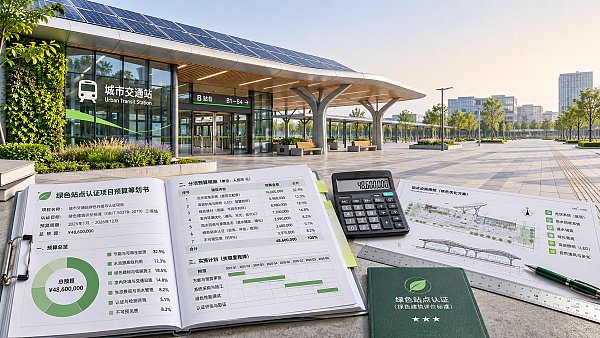
These categories should not be added blindly: an assessor’s proposal may already include travel, document review, or a site visit. Conversely, a consultant’s fee may exclude the certification body’s invoice. A cost register that assigns each item to one contract, one internal owner, or an explicit allowance helps prevent both omissions and double counting.
What makes one station more expensive to certify than another?
Scheme scope and assessment method. A certification that reviews a limited set of documents requires a different level of work from one involving detailed calculations, performance evidence, or a site inspection. Even when two programs use similar environmental language, their assessment boundaries and deliverables may differ. Compare the requirements, not just the headline fee.
Size and complexity. Where fees depend on floor area, asset size, number of facilities, or project value, an inaccurate scope can produce a misleading quotation. Complexity also affects work outside the published fee schedule. A station with several buildings, contractors, or operating entities can require more coordination to establish a consistent set of evidence.
Project stage. A project still in design may be able to incorporate required features into planned specifications. At an operating station, the same target could require surveys, retrofit work, or changes to established procedures. On the other hand, an existing facility may already have metering and operating records that reduce the effort needed to demonstrate performance. The relevant comparison is the cost of the remaining gap, not simply whether the site is new or existing.
Quality and availability of records. Drawings, equipment schedules, utility data, maintenance records, and commissioning documents can support an assessment only if they cover the correct asset boundary and period. Missing data may require additional measurement, reconstruction of records, or an alternative evidence route accepted by the scheme. Confirm those options before assuming that an existing data set will suffice.
Target level. A higher rating or more demanding performance threshold may increase costs beyond the assessor’s fee. It can change equipment specifications, testing requirements, documentation effort, and the risk that a project must be revised. Set the target against a documented business requirement rather than selecting the highest level before understanding its incremental cost.
Location and logistics. Assessment provider availability, travel, translation, local taxes, and currency exposure can affect the final amount. A cross-border quotation should identify the billing currency, applicable taxes, travel assumptions, and the party responsible for any local specialist services.
Build a budget that can survive the assessment process
Start with a gap assessment against the intended scheme. Its purpose is to identify what the site already satisfies, which evidence is available, and which requirements remain uncertain. The result should distinguish mandatory requirements from optional measures that increase a rating. This distinction matters because a project can spend money on attractive upgrades while still failing an unmet prerequisite.
Price the gap in separate work packages. For example, the budget might include a fixed certification body fee, an external adviser’s scope, metering or equipment work, and an internal allowance for document collection. Link every item to a requirement or deliverable. If a measure is also needed for safety, maintenance, or planned modernization, identify the incremental amount attributable to the certification target rather than charging the entire project to certification.
Use a base case and a sensitivity case where information is incomplete. The base case can assume that existing records are accepted and one review is sufficient; the sensitivity case can include extra testing, a further review, or an additional site visit. These are planning scenarios, not predictions. Their value is to make the financial effect of unresolved assumptions visible before a contract is signed.
A contingency should be tied to identified uncertainties, such as incomplete utility records, unresolved ownership of data, or an equipment upgrade that has not yet been designed. A single unexplained percentage can conceal the underlying risk. If the scheme’s requirements or the project boundary change, update the allowance rather than treating the initial figure as fixed.
Illustrative cost structure
Consider a hypothetical station seeking a facility-level assessment. Its initial budget contains a registration and review charge, a consultant’s fixed fee for preparing the submission, and an allowance for staff time. A preliminary review then identifies missing energy data and a control system that may need adjustment to meet the chosen target.
The decision is not simply whether the original certification fee is affordable. The team must price the missing-data solution, confirm whether the control change is mandatory, and establish who pays if a further assessment is needed. If the control work was already planned for operational reasons, only the additional cost caused by the certification requirement should be treated as incremental. This example illustrates cost allocation; it is not a quotation or a representative market price.
Compare proposals on the same commercial basis
Request itemized proposals using the same station boundary, scheme version, target level, and anticipated submission date. If providers make different assumptions, normalize them before comparing totals. A lower bid that excludes a site visit or responses to assessor comments may be more expensive once those tasks are added.
Contract terms deserve particular attention where the final outcome depends on a third-party assessment:
- Deliverables: Specify whether the provider will conduct the gap review, prepare evidence, upload documentation, answer review comments, and support the site visit.
- Review limits: Establish how many rounds of comments are included and how additional work is priced.
- Independent charges: Identify fees paid directly to the certification body, laboratory, verifier, or local specialist.
- Change control: Define how changes in station scope, target level, design, or scheme requirements affect price and schedule.
- Timing and payment: Link milestones to identifiable deliverables and account for the possibility that review timing is controlled by the certification body.
- Outcome claims: Distinguish a commitment to provide services from a guarantee of certification. Approval depends on the scheme’s assessment and the project’s evidence.
Also check that the assessment provider is accepted by the intended scheme where authorization is required. A consultant’s familiarity with sustainability reporting does not by itself establish authority to issue or verify a particular certificate.
Allow for the cost after the certificate is issued
Some schemes require continuing data collection, periodic reporting, surveillance, or reassessment; others have different validity and renewal conditions. Obtain the rules for the specific program before treating the initial certificate as a one-time expense. Include both external charges and the internal work needed to maintain usable records.
Review any planned operational changes against the certification boundary. A change in occupancy, equipment, operator, or site layout could affect the evidence or require notification under the scheme’s rules. The contract should make clear who retains the underlying documents and who is responsible for future submissions, especially when consultants or facility operators change.
A sound budget therefore separates three decisions: the price of assessment, the cost of achieving the required standard, and the cost of maintaining recognition. Approval is more reliable when each has an owner, a defined scope, and a documented assumption—not when the certificate fee alone is treated as the project price.
Recommended for You
 Smart MetersTamil Nadu Plans SIM-Based Upgrade for 17.7 Million Smart MetersTamil Nadu plans 17.7 million smart meters with proposed SIM-based upgrades. Explore potential supplier opportunities and the tender details still to come.By: Dr. Elena VoltNov 22, 2026
 Fiber LasersFiber Laser CE Marking: EU Safety Requirements and DocumentationFiber laser CE compliance goes beyond the mark. Explore EU safety requirements, essential documentation and practical checks before purchasing.By: Dr. Hideo TanakaNov 22, 2026
 Grid ResilienceUS Grid Equipment Shortages Could Hinder $1 Trillion UpgradeUS grid equipment shortages could hinder a $1 trillion upgrade. Explore how transformer supply, data centers and rising power demand could affect grid projects.By: Dr. Elena VoltNov 21, 2026
 Digital SeaChoosing Bluetooth Speakers: Sound Quality, Battery Life and PortabilityBluetooth speakers come in all shapes and sizes. Learn how to compare sound quality, battery life and portability to find the right fit for your listening needs.By: Captain Kenji SatoNov 21, 2026
 Subsea ROV/AUV2025 Ocean Equipment Report: China's Industry Moves Toward Scaled ApplicationChina's marine equipment industry is moving toward scaled application. Explore what the 2025 Ocean Equipment Report could mean for buyers, suppliers and offshore projects.By: Captain Kenji SatoNov 20, 2026
 Digital SeaChoosing a Thermoforming Vacuum Packaging Machine for Meat ProductsChoose a thermoforming vacuum packaging machine for meat with confidence. Compare sealing, film compatibility, hygiene and real-world production capacity.By: Captain Kenji SatoNov 20, 2026
 Digital SeaGreen Station Certification Cost: Fees and Budget ConsiderationsGreen station certification cost varies by scheme and site. Explore fees, hidden expenses, and budgeting tips to plan confidently and compare providers.By: Captain Kenji SatoNov 19, 2026
 UHV TransformersLIMiK Capital to Invest $328 Million in South Carolina Transformer PlantLIMiK Capital plans a $327.7 million transformer plant in South Carolina. Explore its potential impact on US grid supply and procurement.By: Dr. Elena VoltNov 18, 2026
 Digital SeaHow to Choose STEM Kits for Kids by Age, Interests, and Skill LevelChoose STEM kits that match your child's age, interests, and skills. Explore safety tips, project ideas, and practical checks to find an engaging fit.By: Captain Kenji SatoNov 18, 2026
 Digital SeaManufacturing Supplier Requirements: What to Include in Technical SpecificationsDiscover how manufacturing technical specifications and supplier requirements improve quality, simplify comparisons, and prevent delays with measurable acceptance criteria.By: Captain Kenji SatoNov 17, 2026
 Digital SeaChina's Environment Ministry Opens ALC Submarine Cable Project to ReviewChina's Environment Ministry opens the ALC submarine cable project's environmental assessment to review. Explore the proposed marine protection measures and what comes next.By: Captain Kenji SatoNov 16, 2026
 Precision LensesOptical Lens Surface Roughness Testing: Methods and Ra InterpretationOptical lens surface roughness testing explained: compare measurement methods, interpret Ra values, and define reliable acceptance criteria.By: Dr. Hideo TanakaNov 16, 2026
 Digital SeaBusiness Growth Strategies: How to Choose the Right Path for Your CompanyExplore business growth strategies and learn how to compare market opportunities, costs, risks, and capabilities to choose the right path for your company.By: Captain Kenji SatoNov 15, 2026
 Smart MetersIndia’s Competition Commission Approves Adani Acquisition of IntelliSmartExplore the reported CCI approval of Adani’s IntelliSmart acquisition and what a larger Indian smart meter platform could mean for suppliers and investors.By: Dr. Elena VoltNov 14, 2026
 Digital SeaHow Does a Ballast Cleaner Screening System Separate Track Ballast?Discover how a ballast cleaner screening system separates reusable stone from fines, what affects performance, and how to assess the results.By: Captain Kenji SatoNov 14, 2026
 Smart MetersPakistan to Seek World Bank and ADB Funding for Smart MetersPakistan seeks World Bank and ADB funding for smart meters on distribution transformers. Explore the plan to tackle power theft and improve grid efficiency.By: Dr. Elena VoltNov 13, 2026
 Digital SeaWhat Is Precision Medicine and How Does It Guide Treatment?Discover how precision medicine uses biomarkers and genetic insights to guide treatment, where it can help, and what to ask before testing.By: Captain Kenji SatoNov 13, 2026
 Grid Resilience2026 CSEE Annual Meeting Opens with Focus on AI and Power SystemsThe 2026 CSEE Annual Meeting explores AI, low-carbon power systems and ultra-high-voltage transmission. Discover why these discussions matter.By: Dr. Elena VoltNov 12, 2026
 Digital SeaShip Radar Detection Range: How Far Can It See and What Limits It?Ship radar detection range depends on more than the display scale. Discover how antenna height, weather, target size, and settings affect what radar can see.By: Captain Kenji SatoNov 12, 2026
 UHV TransformersGE Vernova to Invest $34.5 Million in Louisiana Transformer Plant ExpansionGE Vernova plans a $34.5 million transformer plant expansion in Louisiana. Explore its potential impact on North American supply and procurement.By: Dr. Elena VoltNov 11, 2026
 Digital SeaMetro Station Noise Criteria: Limits and Measurement MethodsExplore metro station noise criteria, applicable limits and measurement methods. Learn how to select metrics and assess compliance with confidence.By: Captain Kenji SatoNov 11, 2026
 Digital SeaKongsberg Maritime Unveils Arctic Hunter Unmanned Surface VesselKongsberg Maritime's Arctic Hunter unmanned surface vessel is proposed for the Royal Navy's Type 92 programme. Explore its technology and procurement implications.By: Captain Kenji SatoNov 10, 2026
 Sorting RobotsHow Accurate Is AI in Food Quality Control? Metrics and Testing MethodsExplore AI in food quality control accuracy, from recall and false negatives to validation methods. Learn how to assess real-world inspection reliability.By: Marcus SterlingNov 10, 2026
 UHV TransformersGE Vernova Selected for 6 GW HVDC Link in IndiaGE Vernova will design a 6 GW HVDC link for PGCIL, connecting Rajasthan and South Kalamb to support India's clean energy transition. Discover the project.By: Dr. Elena VoltNov 09, 2026
 Grid ResilienceEurope's Grid Compliance Standards in 2026: Generator Connection RequirementsExplore new grid compliance standards 2026 Europe projects must address, from generator connection rules to testing and documentation. Prepare for approval.By: Dr. Elena VoltNov 09, 2026
 Technical FabricsNonwoven Bonding Cost Data: Comparing Thermal and Chemical ProcessesExplore nonwoven bonding cost data to compare thermal and chemical processes, assess usable yield, and choose the best-value option for your application.By: Chloe DuboisNov 08, 2026
 Fiber LasersIndustrial Lasers to 2035: Automotive Lightweighting and Precision Welding Drive DemandExplore the industrial laser market outlook to 2035 and discover how automotive lightweighting and precision welding could shape demand and procurement.By: Dr. Hideo TanakaNov 07, 2026
 Technical FabricsChoosing Geotextile Under Railway Ballast: Key Performance RequirementsChoosing geotextile under railway ballast? Explore essential filtration, drainage, strength and durability criteria to make a confident, project-specific selection.By: Chloe DuboisNov 07, 2026
 Digital SeaChoosing Rail Welding Equipment for Maintenance: Field Conditions and Weld TypesChoose rail welding equipment for maintenance with confidence. Compare welding methods, field constraints, inspection needs, and lifecycle costs.By: Captain Kenji SatoNov 06, 2026
 Digital SeaIndia Broadband Forum Urges Stronger Submarine Cable ResilienceIndia’s submarine cable resilience is in focus as the Broadband India Forum urges faster repairs, more vessels and stronger landing infrastructure.By: Captain Kenji SatoNov 06, 2026
 Digital SeaChoosing a Railway Network Switch Supplier: Reliability and Support CriteriaChoosing a railway network switch supplier? Compare reliability, standards evidence, cybersecurity, and lifecycle support to reduce project risk.By: Captain Kenji SatoNov 05, 2026