BDI: 1,842 ▼ 1.2%
COTTON NO.2: 84.12 ▲ 0.4%
LME COPPER: 8,432.50 ▲ 2.1%
FOOD SAFETY INDEX: 94.2 ARCHIVE_SECURED
OPTICAL INDEX: 11,204.09 STABLE
BDI: 1,842 ▼ 1.2%
SECTOR INDEX
V.24.08 ARCHIVE
Hot Articles
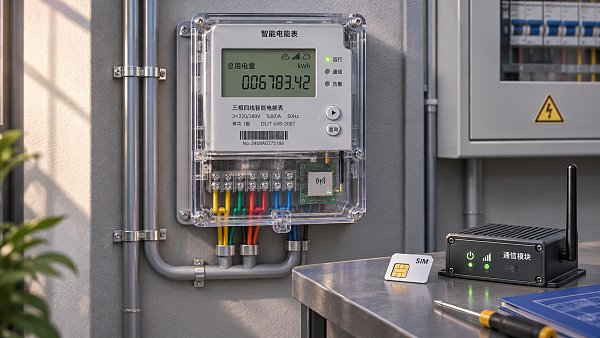
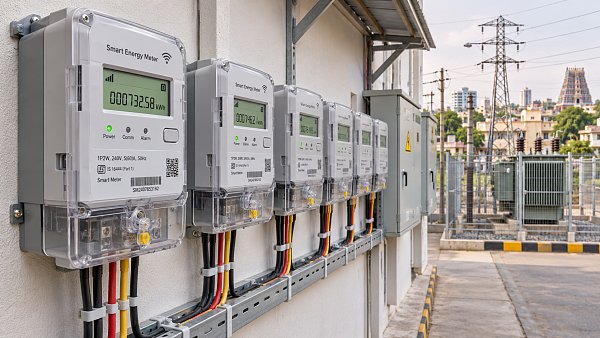
- Tamil Nadu Plans SIM-Based Upgrade for 17.7 Million Smart MetersTamil Nadu plans 17.7 million smart meters with proposed SIM-based upgrades. Explore potential supplier opportunities and the tender details still to come.
- Fiber Laser CE Marking: EU Safety Requirements and DocumentationFiber laser CE compliance goes beyond the mark. Explore EU safety requirements, essential documentation and practical checks before purchasing.
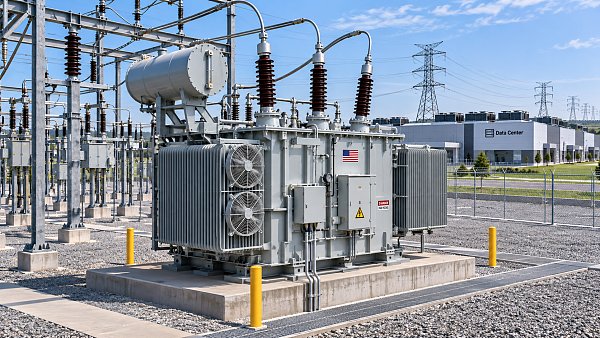
- US Grid Equipment Shortages Could Hinder $1 Trillion UpgradeUS grid equipment shortages could hinder a $1 trillion upgrade. Explore how transformer supply, data centers and rising power demand could affect grid projects.
Metro Station Noise Criteria: Limits and Measurement Methods


Metro station noise criteria rarely reduce to one permissible decibel value. An acceptable result depends on where the measurement is taken, which operating condition it represents, the acoustic metric specified and the authority or contract that sets the limit. A platform measured during train arrival cannot be assessed on the same basis as a quiet concourse measured between services unless the applicable criterion explicitly allows that comparison.
For technical assessors, the first task is to establish a complete test condition: a numerical limit, a descriptor such as LAeq or LAFmax, a location, a measurement period and the operating scenario. A reading can be accurate and still be unsuitable for a compliance decision if any of those elements differs from the requirement.
Which noise limits apply inside a metro station?
There is no single international noise limit that automatically applies to every metro platform and concourse. Requirements may come from national or local law, a transit authority’s design standard, an environmental approval, an occupational health regulation or a project specification. More than one may apply, and they may govern different receptors or conditions.
A station assessment should distinguish at least three questions. First, does the passenger environment meet the acoustic requirement for each public area? Second, is staff exposure controlled over the relevant working period? Third, does noise transmitted outside the station meet the limits applicable at nearby receptors? A platform reading alone does not answer all three.
Passenger-area criteria may also differ between normal operation and periods when trains are absent. A specification might control the continuous background created by ventilation while separately limiting train events. In other projects, it may prescribe an average that includes a representative mix of train arrivals, departures and announcements. The correct interpretation rests on the wording of the governing document.
Do not compare a measured value with a limit until their conditions match. A stated limit in dB(A), by itself, leaves open the averaging time, whether train movements are included, and whether the value applies during peak service or another defined period. Those details can change the outcome of an assessment.
Standards, guidance and project requirements serve different roles
Acoustic standards often describe measurement methods or instrument performance; they do not necessarily establish a pass/fail limit for a metro station. For example, the IEC 61672 series addresses sound level meter performance. ISO 1996 addresses the description, measurement and assessment of environmental noise, while ISO 9612 provides a method for determining occupational noise exposure. Their relevance depends on the question being assessed and the documents incorporated into the project or jurisdiction.
An assessor should identify the applicable edition and any amendments, together with the clauses adopted by the authority or contract. A project may specify its own positions, operating conditions or acceptance procedure. Where documents conflict or leave a material gap, obtain an interpretation from the responsible authority or contracting parties before testing; choosing a convenient method after collecting data weakens the result.
Choose the metric before choosing the instrument settings
Metro noise changes quickly. Trains, ventilation, crowd activity and public-address announcements contribute in different ways, so a single metric seldom describes every concern. The following measures answer different questions:
- LAeq,T: The A-weighted equivalent continuous sound level over a defined period T. It is useful for an average over a specified operating interval, but it can conceal short, loud events.
- LAFmax: The maximum A-weighted sound level recorded using the fast time weighting during a defined event or interval. It can characterize a train arrival, although the result is sensitive to event definition and measurement position.
- LAE or SEL: The A-weighted sound exposure level of an individual event, expressed with a reference duration of one second. It helps compare events of different lengths and can support calculations over a service period when event counts are known.
- LCpeak: The C-weighted peak sound pressure level, relevant where an applicable requirement addresses peak exposure. It is not interchangeable with LAFmax.
- Frequency-band levels: Octave or one-third-octave data can help diagnose sources, assess tonal or low-frequency components and support noise-control design when required by the project method.
The duration attached to LAeq matters. A measurement that includes several train movements may give a different result from one taken during a single approach or an empty interval. Neither is inherently better; each is useful only for the question and criterion it represents. Similarly, an event maximum should be reported with enough context to identify whether it came from wheel–rail interaction, an announcement or another source.
A numerical example shows why the descriptor matters. An LAeq over a complete observation period and an LAFmax from the loudest train can have very different values at the same microphone position. Comparing both with a limit written only for LAeq would produce an invalid conclusion for the maximum. The measurement report should reproduce the criterion’s descriptor and time basis alongside the result.
Plan measurements around station use and train operations
Start with a plan of the spaces, the relevant criteria and the operating timetable. Select positions that represent occupied areas and locations where high levels or important variations are plausible. The plan should explain why each point was chosen and how it relates to a particular requirement.
On a platform, sound can vary along its length and across its width. Train speed, braking, track geometry, the position of equipment and the proximity of reflecting surfaces can affect a reading. A single point may be insufficient to represent the whole platform, especially where different train stopping positions or entrances create distinct conditions. Placement must also respect safe separation from the platform edge and any operational restrictions.
In concourses and circulation routes, consider ventilation outlets, ticket barriers, escalators, retail activity and the paths used by passengers. A measurement immediately beside a loudspeaker or grille may be useful for diagnosing a source, but it should not automatically be presented as representative of the wider space. Conversely, avoiding a persistently occupied area because it is loud can understate exposure.
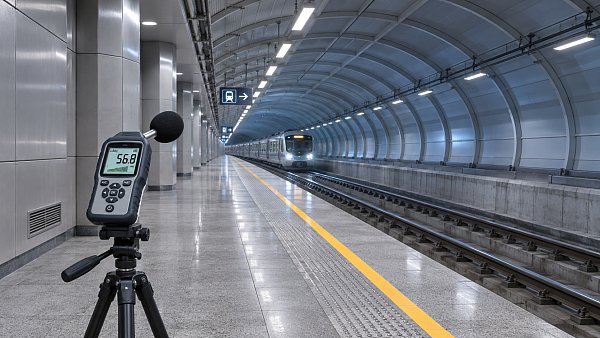
At each location, document the microphone position and height, nearby surfaces and obstructions, and whether the location represents a passenger position, a staff workstation or a source investigation. Follow the applicable method for placement. If site constraints require a departure from it, record the departure and assess its effect on comparability.
Capture representative conditions
The measurement schedule should match the acceptance scenario. Record the number and direction of trains, whether they stop or pass, service frequency, relevant ventilation settings and the presence of announcements. Passenger activity can also influence the sound field, so note whether the station is lightly occupied, busy or closed to the public.
Where a specification requires several conditions, measure them separately. A ventilation-only interval can help establish the contribution of building services, while train-event measurements can reveal short-duration noise. An operational LAeq that includes both may be appropriate for a separate requirement. Combining the data without preserving those distinctions can make the results hard to interpret or reproduce.
Repeat observations where train events or operating conditions vary. The number of samples and the way they are combined should follow the governing procedure; there is no universal sample count that makes every station survey representative. If the observed service pattern differs materially from the specified one, report the limitation and arrange additional measurements or an agreed assessment method.
Make the measurement traceable and defensible
Use instrumentation that meets the performance class required by the specification. Record the sound level meter, microphone and acoustic calibrator identifiers, relevant calibration records, frequency weighting, time weighting, logging interval and measurement range. Check the measurement chain with an acoustic calibrator before and after the survey, following the applicable procedure and manufacturer’s instructions. An unacceptable change between checks calls for investigation under that procedure; it should not be silently corrected.
Keep a synchronized field log. A time-stamped record of each train movement, announcement, unusual disturbance and equipment change makes it possible to associate peaks with events and to decide whether an interval belongs in the assessment. Preserve original logged data as well as processed results. If a reading is excluded, explain the reason and identify the rule that permits exclusion.
Background sound deserves particular care. When assessing an individual source, other sounds may affect the measured level. Any background correction must follow the applicable method and depends on the relationship between the source-on and background measurements. When levels are close, the source contribution can become highly uncertain; simple subtraction of decibel values is not valid because decibels are logarithmic.
For measurements near outdoor entrances or at external receptors, document relevant weather and other site conditions required by the method. For underground locations, focus instead on the conditions that can alter the station sound field, including operating modes and temporary works. In either case, the report should make clear whether the recorded conditions represent the condition being judged.
Interpret borderline results against the actual acceptance rule
Measurement uncertainty can arise from instrumentation, microphone placement, changing train operations, background noise and limited sampling. Its treatment matters most when a result is close to a limit. Some requirements specify how uncertainty is to be handled in a compliance decision; others leave the decision rule to an agreement or governing framework. Do not assume that uncertainty is automatically added to or subtracted from the measured value.
A defensible report presents the measured result, the applicable limit, the decision rule and the uncertainty information required by the assessment method. It also identifies any condition that prevents a firm decision. For example, an LAeq measured during a reduced service cannot establish compliance with a peak-service criterion merely because its numerical value is below the limit.
If a location exceeds a requirement, separate the compliance finding from the diagnosis. Time histories and event logs can show whether the dominant contribution coincides with trains, ventilation or announcements; frequency data may help narrow the source further. Those observations guide the next investigation, but they do not by themselves prove the effectiveness of a proposed acoustic treatment.
A useful final assessment allows another reviewer to trace each conclusion back to a requirement and a defined observation: where the microphone stood, what the station was doing, which metric was calculated and how the result was compared with the limit. Where that chain is incomplete, further targeted measurement is more valuable than a broader collection of decibel readings.
Recommended for You
 Smart MetersTamil Nadu Plans SIM-Based Upgrade for 17.7 Million Smart MetersTamil Nadu plans 17.7 million smart meters with proposed SIM-based upgrades. Explore potential supplier opportunities and the tender details still to come.By: Dr. Elena VoltNov 22, 2026
 Fiber LasersFiber Laser CE Marking: EU Safety Requirements and DocumentationFiber laser CE compliance goes beyond the mark. Explore EU safety requirements, essential documentation and practical checks before purchasing.By: Dr. Hideo TanakaNov 22, 2026
 Grid ResilienceUS Grid Equipment Shortages Could Hinder $1 Trillion UpgradeUS grid equipment shortages could hinder a $1 trillion upgrade. Explore how transformer supply, data centers and rising power demand could affect grid projects.By: Dr. Elena VoltNov 21, 2026
 Digital SeaChoosing Bluetooth Speakers: Sound Quality, Battery Life and PortabilityBluetooth speakers come in all shapes and sizes. Learn how to compare sound quality, battery life and portability to find the right fit for your listening needs.By: Captain Kenji SatoNov 21, 2026
 Subsea ROV/AUV2025 Ocean Equipment Report: China's Industry Moves Toward Scaled ApplicationChina's marine equipment industry is moving toward scaled application. Explore what the 2025 Ocean Equipment Report could mean for buyers, suppliers and offshore projects.By: Captain Kenji SatoNov 20, 2026
 Digital SeaChoosing a Thermoforming Vacuum Packaging Machine for Meat ProductsChoose a thermoforming vacuum packaging machine for meat with confidence. Compare sealing, film compatibility, hygiene and real-world production capacity.By: Captain Kenji SatoNov 20, 2026
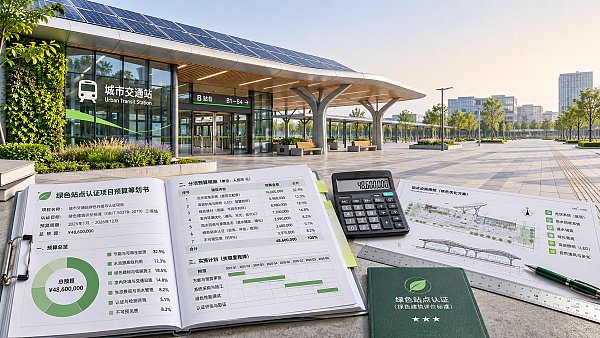
 Digital SeaGreen Station Certification Cost: Fees and Budget ConsiderationsGreen station certification cost varies by scheme and site. Explore fees, hidden expenses, and budgeting tips to plan confidently and compare providers.By: Captain Kenji SatoNov 19, 2026
 UHV TransformersLIMiK Capital to Invest $328 Million in South Carolina Transformer PlantLIMiK Capital plans a $327.7 million transformer plant in South Carolina. Explore its potential impact on US grid supply and procurement.By: Dr. Elena VoltNov 18, 2026
 Digital SeaHow to Choose STEM Kits for Kids by Age, Interests, and Skill LevelChoose STEM kits that match your child's age, interests, and skills. Explore safety tips, project ideas, and practical checks to find an engaging fit.By: Captain Kenji SatoNov 18, 2026
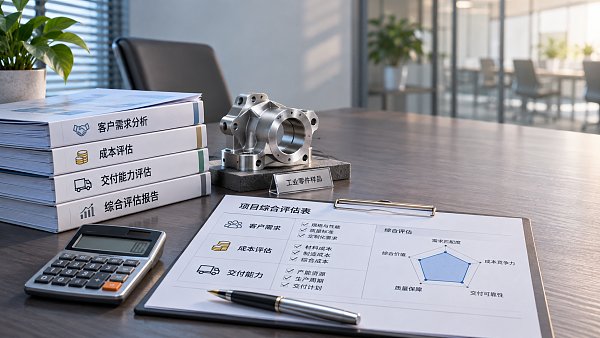
 Digital SeaManufacturing Supplier Requirements: What to Include in Technical SpecificationsDiscover how manufacturing technical specifications and supplier requirements improve quality, simplify comparisons, and prevent delays with measurable acceptance criteria.By: Captain Kenji SatoNov 17, 2026
 Digital SeaChina's Environment Ministry Opens ALC Submarine Cable Project to ReviewChina's Environment Ministry opens the ALC submarine cable project's environmental assessment to review. Explore the proposed marine protection measures and what comes next.By: Captain Kenji SatoNov 16, 2026
 Precision LensesOptical Lens Surface Roughness Testing: Methods and Ra InterpretationOptical lens surface roughness testing explained: compare measurement methods, interpret Ra values, and define reliable acceptance criteria.By: Dr. Hideo TanakaNov 16, 2026
 Digital SeaBusiness Growth Strategies: How to Choose the Right Path for Your CompanyExplore business growth strategies and learn how to compare market opportunities, costs, risks, and capabilities to choose the right path for your company.By: Captain Kenji SatoNov 15, 2026
 Smart MetersIndia’s Competition Commission Approves Adani Acquisition of IntelliSmartExplore the reported CCI approval of Adani’s IntelliSmart acquisition and what a larger Indian smart meter platform could mean for suppliers and investors.By: Dr. Elena VoltNov 14, 2026
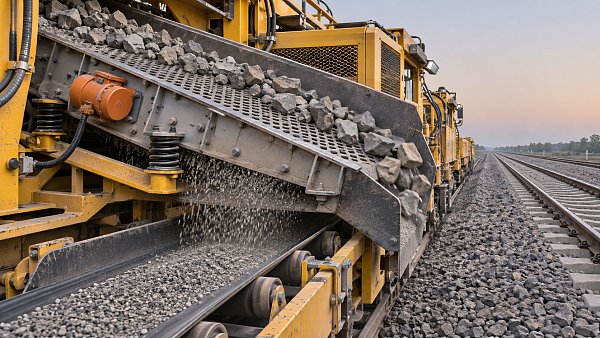
 Digital SeaHow Does a Ballast Cleaner Screening System Separate Track Ballast?Discover how a ballast cleaner screening system separates reusable stone from fines, what affects performance, and how to assess the results.By: Captain Kenji SatoNov 14, 2026
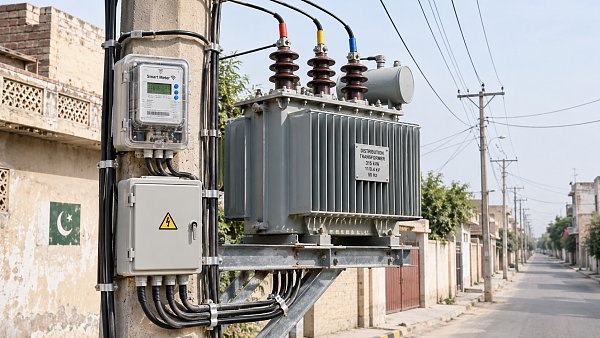
 Smart MetersPakistan to Seek World Bank and ADB Funding for Smart MetersPakistan seeks World Bank and ADB funding for smart meters on distribution transformers. Explore the plan to tackle power theft and improve grid efficiency.By: Dr. Elena VoltNov 13, 2026
 Digital SeaWhat Is Precision Medicine and How Does It Guide Treatment?Discover how precision medicine uses biomarkers and genetic insights to guide treatment, where it can help, and what to ask before testing.By: Captain Kenji SatoNov 13, 2026
 Grid Resilience2026 CSEE Annual Meeting Opens with Focus on AI and Power SystemsThe 2026 CSEE Annual Meeting explores AI, low-carbon power systems and ultra-high-voltage transmission. Discover why these discussions matter.By: Dr. Elena VoltNov 12, 2026
 Digital SeaShip Radar Detection Range: How Far Can It See and What Limits It?Ship radar detection range depends on more than the display scale. Discover how antenna height, weather, target size, and settings affect what radar can see.By: Captain Kenji SatoNov 12, 2026
 UHV TransformersGE Vernova to Invest $34.5 Million in Louisiana Transformer Plant ExpansionGE Vernova plans a $34.5 million transformer plant expansion in Louisiana. Explore its potential impact on North American supply and procurement.By: Dr. Elena VoltNov 11, 2026
 Digital SeaMetro Station Noise Criteria: Limits and Measurement MethodsExplore metro station noise criteria, applicable limits and measurement methods. Learn how to select metrics and assess compliance with confidence.By: Captain Kenji SatoNov 11, 2026
 Digital SeaKongsberg Maritime Unveils Arctic Hunter Unmanned Surface VesselKongsberg Maritime's Arctic Hunter unmanned surface vessel is proposed for the Royal Navy's Type 92 programme. Explore its technology and procurement implications.By: Captain Kenji SatoNov 10, 2026
 Sorting RobotsHow Accurate Is AI in Food Quality Control? Metrics and Testing MethodsExplore AI in food quality control accuracy, from recall and false negatives to validation methods. Learn how to assess real-world inspection reliability.By: Marcus SterlingNov 10, 2026
 UHV TransformersGE Vernova Selected for 6 GW HVDC Link in IndiaGE Vernova will design a 6 GW HVDC link for PGCIL, connecting Rajasthan and South Kalamb to support India's clean energy transition. Discover the project.By: Dr. Elena VoltNov 09, 2026
 Grid ResilienceEurope's Grid Compliance Standards in 2026: Generator Connection RequirementsExplore new grid compliance standards 2026 Europe projects must address, from generator connection rules to testing and documentation. Prepare for approval.By: Dr. Elena VoltNov 09, 2026
 Technical FabricsNonwoven Bonding Cost Data: Comparing Thermal and Chemical ProcessesExplore nonwoven bonding cost data to compare thermal and chemical processes, assess usable yield, and choose the best-value option for your application.By: Chloe DuboisNov 08, 2026
 Fiber LasersIndustrial Lasers to 2035: Automotive Lightweighting and Precision Welding Drive DemandExplore the industrial laser market outlook to 2035 and discover how automotive lightweighting and precision welding could shape demand and procurement.By: Dr. Hideo TanakaNov 07, 2026
 Technical FabricsChoosing Geotextile Under Railway Ballast: Key Performance RequirementsChoosing geotextile under railway ballast? Explore essential filtration, drainage, strength and durability criteria to make a confident, project-specific selection.By: Chloe DuboisNov 07, 2026
 Digital SeaChoosing Rail Welding Equipment for Maintenance: Field Conditions and Weld TypesChoose rail welding equipment for maintenance with confidence. Compare welding methods, field constraints, inspection needs, and lifecycle costs.By: Captain Kenji SatoNov 06, 2026
 Digital SeaIndia Broadband Forum Urges Stronger Submarine Cable ResilienceIndia’s submarine cable resilience is in focus as the Broadband India Forum urges faster repairs, more vessels and stronger landing infrastructure.By: Captain Kenji SatoNov 06, 2026
 Digital SeaChoosing a Railway Network Switch Supplier: Reliability and Support CriteriaChoosing a railway network switch supplier? Compare reliability, standards evidence, cybersecurity, and lifecycle support to reduce project risk.By: Captain Kenji SatoNov 05, 2026