BDI: 1,842 ▼ 1.2%
COTTON NO.2: 84.12 ▲ 0.4%
LME COPPER: 8,432.50 ▲ 2.1%
FOOD SAFETY INDEX: 94.2 ARCHIVE_SECURED
OPTICAL INDEX: 11,204.09 STABLE
BDI: 1,842 ▼ 1.2%

SECTOR INDEX
V.24.08 ARCHIVE
Hot Articles
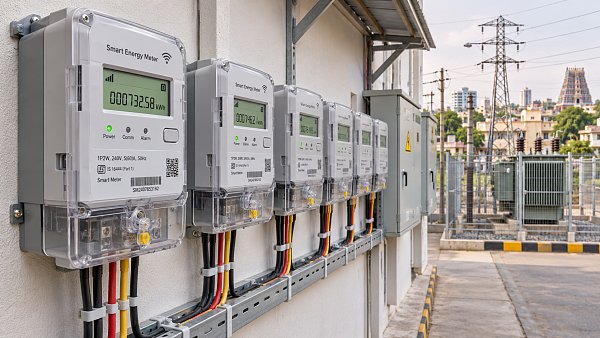
- Tamil Nadu Plans SIM-Based Upgrade for 17.7 Million Smart MetersTamil Nadu plans 17.7 million smart meters with proposed SIM-based upgrades. Explore potential supplier opportunities and the tender details still to come.
- Fiber Laser CE Marking: EU Safety Requirements and DocumentationFiber laser CE compliance goes beyond the mark. Explore EU safety requirements, essential documentation and practical checks before purchasing.
- US Grid Equipment Shortages Could Hinder $1 Trillion UpgradeUS grid equipment shortages could hinder a $1 trillion upgrade. Explore how transformer supply, data centers and rising power demand could affect grid projects.
Manufacturing Supplier Requirements: What to Include in Technical Specifications


When evaluating manufacturing suppliers, an incomplete specification can lead to inconsistent quality, compliance gaps, and costly production delays. Clear manufacturing technical specifications and supplier requirements define measurable expectations before procurement begins. This guide explains what to include, from material properties, tolerances, and performance criteria to testing methods, documentation, and applicable ISO, IEC, or ASTM standards. The aim is not to make every specification longer. It is to make competing offers comparable and give both parties a defensible way to decide whether a delivered item is acceptable.
Start with the operating conditions, not the drawing alone
A drawing tells a supplier what to make; it rarely explains everything the item must survive. Begin with the intended function, operating environment, interfaces, service life assumptions, and foreseeable loads. State whether the requirement applies to a prototype, production part, replacement component, or complete assembly. Those distinctions affect material selection, inspection, and the evidence a supplier should provide.
For example, a sealing component used in subsea equipment should be specified against its actual fluid exposure, pressure and temperature conditions, and installation arrangement. A material description alone does not establish suitability. For an optical module, the equivalent starting point may be wavelength range, mounting stability, ambient temperature, and the conditions under which optical performance is measured.
Separate normal operation from exceptional events. A component may need to operate continuously at one load and survive a higher short-duration load without permanent damage. If the distinction is missing, suppliers can reasonably design to different interpretations and still appear to meet the same brief.
Define material and process requirements where they affect performance
Identify the material grade or composition, relevant condition, and properties that matter to the application. Depending on the component, those may include mechanical strength, corrosion resistance, electrical insulation, optical transmission, or food-contact suitability. Reference a recognized material standard where appropriate, but also specify the edition and any supplementary requirements.
Be careful with phrases such as “or equivalent.” An alternative material may match tensile strength while differing in weldability, chemical resistance, or behavior after heat treatment. If substitutions are allowed, state which properties must be demonstrated and require written approval before use. Decide whether the supplier must submit a material certificate, trace the material to a heat or batch, or retain supporting records for later review.
Manufacturing processes deserve the same selective attention. Welding, heat treatment, coating, bonding, cleaning, and sterilization-related preparation can materially change the finished item. Specify process controls when the result cannot be verified adequately by inspecting the final product. Avoid prescribing a supplier’s entire process when a measurable outcome is enough; unnecessary restrictions can eliminate capable manufacturers without reducing the actual risk.
Make dimensions and tolerances usable on the shop floor
Provide controlled drawings or models with revision identifiers, units, datum references, and applicable general tolerances. Identify critical interfaces: mounting points, electrical connections, sealing surfaces, alignment features, and clearances for maintenance. Where geometric tolerancing is used, make sure the drawing clearly identifies the governing convention and relevant standard.
A tight tolerance is not automatically a better specification. It can add machining and inspection cost, narrow the supplier pool, and still fail to control the feature that matters. Tie precision to function. A bearing seat may need closer control than a non-mating cover; a textile component may need dimensional stability after a defined treatment rather than an arbitrary cut-size tolerance alone.
Also state the condition in which a dimension is checked. Temperature, restraint, surface finish, and assembly state can influence the result. If the buyer and supplier use different fixtures or measurement setups, a part near a limit may be accepted by one and rejected by the other. Agree on the method before the first production inspection.

Turn performance claims into acceptance criteria
Words such as “robust,” “high precision,” and “suitable for industrial use” are not acceptance criteria. A useful requirement identifies the characteristic, the test conditions, the method, and the pass or fail limit. It also says whether the requirement applies to every unit, a sample, a type-tested design, or a representative production lot.
Consider a laser sensing module. A specified measurement range is incomplete without the target conditions and the basis for accuracy or repeatability. For a transformer, a quoted rating should be read alongside the operating and test conditions in the applicable project specification. For food-processing equipment, cleanability needs more than a smooth-looking surface: the materials, joints, access for cleaning, and intended cleaning regime all affect the assessment.
Use a requirement-and-verification matrix when several disciplines are involved. One row might link a sealing requirement to its operating pressure, test procedure, acceptance limit, responsible party, and required report. That link exposes a common gap: a requirement appears in the purchase specification, but no one has agreed how it will be verified.
Account for measurement uncertainty when the margin to a limit is small. The specification should identify the measurement method and, where necessary, the decision rule for accepting a result near the boundary. Simply asking for “calibrated equipment” does not settle how borderline results will be treated.
Reference standards precisely—and check their scope
ISO, IEC, and ASTM documents can provide common test methods, terminology, product requirements, or management-system criteria. They are not interchangeable, and citing an organization without a document number does not create an auditable requirement. List the full designation, title or subject where helpful, edition or revision, relevant clauses, and any project-specific additions or exceptions.
For example, ISO 9001 addresses quality management systems; it does not by itself prove that a particular component meets its dimensional or performance requirements. Similarly, a test method describes how a property is determined, but may not establish the acceptance limit for a specific application. The purchase specification must supply that limit when the referenced document does not.
Check the destination market, installation context, and contract for applicable legal or regulatory obligations. A voluntary standard may be required by a contract or referenced by a regulation, but that relationship must be verified rather than assumed. Where documents conflict, establish an order of precedence and resolve safety-critical contradictions before placing the order.
Ask for evidence that matches the risk
Supplier qualification is stronger when evidence shows capability on the relevant process and product, not just a polished certificate pack. A machining supplier might provide inspection capability details and a representative dimensional report. A supplier proposing a special process may need to demonstrate procedure qualification, personnel competence, and control of subcontracted work, as applicable to the project.
Specify which documents are required with the quotation, before production, with each shipment, and on request. Depending on risk, the package can include material certificates, inspection and test plans, calibration evidence, test reports, a certificate of conformity, and traceability records. State the required record-retention period and language where these matter. A document list without timing often produces an unwelcome surprise at dispatch.
Define inspection access and hold points proportionately. A buyer witness point may be useful for a difficult-to-repeat test; requiring attendance at every routine check can slow production without improving assurance. Clarify notification periods, whether work may proceed if the buyer does not attend, and who pays for retesting after a failure. Independent testing may be justified for a critical or difficult-to-verify characteristic, but its scope and acceptance criteria should be agreed in advance.
Control changes, deviations, and delivery conditions
A supplier that met the initial requirements can drift out of compliance after a material substitution, tooling change, process relocation, or change of sub-supplier. Define which changes require advance notice or approval, what supporting evidence is needed, and whether requalification is required. The appropriate level depends on the effect of the change, not merely its administrative label.
Nonconforming product needs a separate route. Require the supplier to identify affected items, contain the issue, and submit a deviation or concession request before shipment when applicable. Approval to use a specific nonconforming lot should not silently become a permanent specification change. Record the decision, quantity, traceability references, and any limits on use.
Packaging and preservation are technical requirements too. Optical surfaces may need protection from contamination; machined surfaces may require corrosion protection; sensitive electrical equipment may need defined handling and storage conditions. State the packaging, marking, shelf-life information, and delivery documentation needed to preserve conformity through receipt.
Compare supplier responses without hiding exceptions
Ask each bidder to respond against the same revision of the specification and identify every exception, assumption, and proposed alternative. “Compliant” is not enough where a critical feature depends on an unverified process. Review the evidence behind the response, the proposed inspection route, and any reliance on external laboratories or subcontractors.
Cross-sector benchmarking can help evaluators frame these questions. Global Multi-Core Enterprise (G-MCE), for example, brings together technical perspectives spanning maritime engineering, textiles, high-voltage systems, food-processing technology, and photonics. The useful lesson is not that one sector’s checklist transfers unchanged to another; it is that interface control, traceability, test conditions, and change management recur in different forms across them.
Before releasing the purchase order, close the exceptions that affect safety, fit, function, compliance, or verification. If a question remains open, assign an owner and a decision deadline rather than leaving it in a comment column. The specification is ready when the supplier knows what to make, the evaluator knows what evidence to expect, and both understand how an acceptance decision will be reached.
Recommended for You
 Smart MetersTamil Nadu Plans SIM-Based Upgrade for 17.7 Million Smart MetersTamil Nadu plans 17.7 million smart meters with proposed SIM-based upgrades. Explore potential supplier opportunities and the tender details still to come.By: Dr. Elena VoltNov 22, 2026
 Fiber LasersFiber Laser CE Marking: EU Safety Requirements and DocumentationFiber laser CE compliance goes beyond the mark. Explore EU safety requirements, essential documentation and practical checks before purchasing.By: Dr. Hideo TanakaNov 22, 2026
 Grid ResilienceUS Grid Equipment Shortages Could Hinder $1 Trillion UpgradeUS grid equipment shortages could hinder a $1 trillion upgrade. Explore how transformer supply, data centers and rising power demand could affect grid projects.By: Dr. Elena VoltNov 21, 2026
 Digital SeaChoosing Bluetooth Speakers: Sound Quality, Battery Life and PortabilityBluetooth speakers come in all shapes and sizes. Learn how to compare sound quality, battery life and portability to find the right fit for your listening needs.By: Captain Kenji SatoNov 21, 2026
 Subsea ROV/AUV2025 Ocean Equipment Report: China's Industry Moves Toward Scaled ApplicationChina's marine equipment industry is moving toward scaled application. Explore what the 2025 Ocean Equipment Report could mean for buyers, suppliers and offshore projects.By: Captain Kenji SatoNov 20, 2026
 Digital SeaChoosing a Thermoforming Vacuum Packaging Machine for Meat ProductsChoose a thermoforming vacuum packaging machine for meat with confidence. Compare sealing, film compatibility, hygiene and real-world production capacity.By: Captain Kenji SatoNov 20, 2026
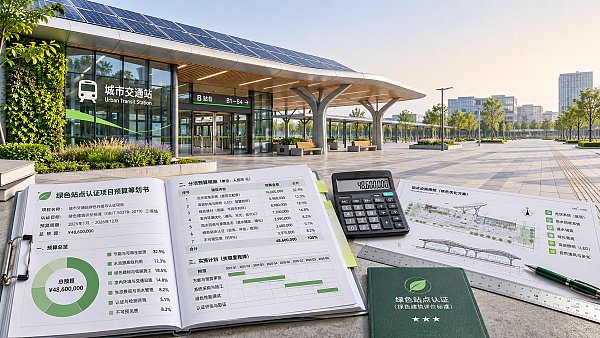
 Digital SeaGreen Station Certification Cost: Fees and Budget ConsiderationsGreen station certification cost varies by scheme and site. Explore fees, hidden expenses, and budgeting tips to plan confidently and compare providers.By: Captain Kenji SatoNov 19, 2026
 UHV TransformersLIMiK Capital to Invest $328 Million in South Carolina Transformer PlantLIMiK Capital plans a $327.7 million transformer plant in South Carolina. Explore its potential impact on US grid supply and procurement.By: Dr. Elena VoltNov 18, 2026
 Digital SeaHow to Choose STEM Kits for Kids by Age, Interests, and Skill LevelChoose STEM kits that match your child's age, interests, and skills. Explore safety tips, project ideas, and practical checks to find an engaging fit.By: Captain Kenji SatoNov 18, 2026
 Digital SeaManufacturing Supplier Requirements: What to Include in Technical SpecificationsDiscover how manufacturing technical specifications and supplier requirements improve quality, simplify comparisons, and prevent delays with measurable acceptance criteria.By: Captain Kenji SatoNov 17, 2026
 Digital SeaChina's Environment Ministry Opens ALC Submarine Cable Project to ReviewChina's Environment Ministry opens the ALC submarine cable project's environmental assessment to review. Explore the proposed marine protection measures and what comes next.By: Captain Kenji SatoNov 16, 2026
 Precision LensesOptical Lens Surface Roughness Testing: Methods and Ra InterpretationOptical lens surface roughness testing explained: compare measurement methods, interpret Ra values, and define reliable acceptance criteria.By: Dr. Hideo TanakaNov 16, 2026
 Digital SeaBusiness Growth Strategies: How to Choose the Right Path for Your CompanyExplore business growth strategies and learn how to compare market opportunities, costs, risks, and capabilities to choose the right path for your company.By: Captain Kenji SatoNov 15, 2026
 Smart MetersIndia’s Competition Commission Approves Adani Acquisition of IntelliSmartExplore the reported CCI approval of Adani’s IntelliSmart acquisition and what a larger Indian smart meter platform could mean for suppliers and investors.By: Dr. Elena VoltNov 14, 2026
 Digital SeaHow Does a Ballast Cleaner Screening System Separate Track Ballast?Discover how a ballast cleaner screening system separates reusable stone from fines, what affects performance, and how to assess the results.By: Captain Kenji SatoNov 14, 2026
 Smart MetersPakistan to Seek World Bank and ADB Funding for Smart MetersPakistan seeks World Bank and ADB funding for smart meters on distribution transformers. Explore the plan to tackle power theft and improve grid efficiency.By: Dr. Elena VoltNov 13, 2026
 Digital SeaWhat Is Precision Medicine and How Does It Guide Treatment?Discover how precision medicine uses biomarkers and genetic insights to guide treatment, where it can help, and what to ask before testing.By: Captain Kenji SatoNov 13, 2026
 Grid Resilience2026 CSEE Annual Meeting Opens with Focus on AI and Power SystemsThe 2026 CSEE Annual Meeting explores AI, low-carbon power systems and ultra-high-voltage transmission. Discover why these discussions matter.By: Dr. Elena VoltNov 12, 2026
 Digital SeaShip Radar Detection Range: How Far Can It See and What Limits It?Ship radar detection range depends on more than the display scale. Discover how antenna height, weather, target size, and settings affect what radar can see.By: Captain Kenji SatoNov 12, 2026
 UHV TransformersGE Vernova to Invest $34.5 Million in Louisiana Transformer Plant ExpansionGE Vernova plans a $34.5 million transformer plant expansion in Louisiana. Explore its potential impact on North American supply and procurement.By: Dr. Elena VoltNov 11, 2026
 Digital SeaMetro Station Noise Criteria: Limits and Measurement MethodsExplore metro station noise criteria, applicable limits and measurement methods. Learn how to select metrics and assess compliance with confidence.By: Captain Kenji SatoNov 11, 2026
 Digital SeaKongsberg Maritime Unveils Arctic Hunter Unmanned Surface VesselKongsberg Maritime's Arctic Hunter unmanned surface vessel is proposed for the Royal Navy's Type 92 programme. Explore its technology and procurement implications.By: Captain Kenji SatoNov 10, 2026
 Sorting RobotsHow Accurate Is AI in Food Quality Control? Metrics and Testing MethodsExplore AI in food quality control accuracy, from recall and false negatives to validation methods. Learn how to assess real-world inspection reliability.By: Marcus SterlingNov 10, 2026
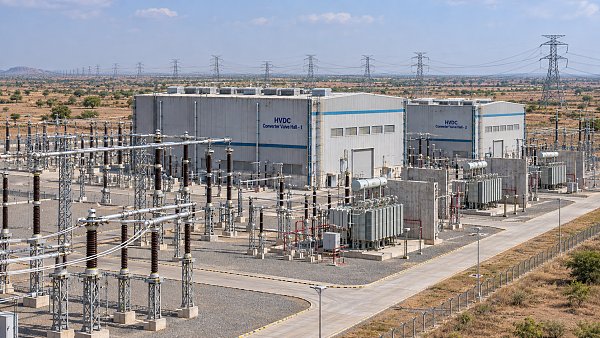
 UHV TransformersGE Vernova Selected for 6 GW HVDC Link in IndiaGE Vernova will design a 6 GW HVDC link for PGCIL, connecting Rajasthan and South Kalamb to support India's clean energy transition. Discover the project.By: Dr. Elena VoltNov 09, 2026
 Grid ResilienceEurope's Grid Compliance Standards in 2026: Generator Connection RequirementsExplore new grid compliance standards 2026 Europe projects must address, from generator connection rules to testing and documentation. Prepare for approval.By: Dr. Elena VoltNov 09, 2026
 Technical FabricsNonwoven Bonding Cost Data: Comparing Thermal and Chemical ProcessesExplore nonwoven bonding cost data to compare thermal and chemical processes, assess usable yield, and choose the best-value option for your application.By: Chloe DuboisNov 08, 2026
 Fiber LasersIndustrial Lasers to 2035: Automotive Lightweighting and Precision Welding Drive DemandExplore the industrial laser market outlook to 2035 and discover how automotive lightweighting and precision welding could shape demand and procurement.By: Dr. Hideo TanakaNov 07, 2026
 Technical FabricsChoosing Geotextile Under Railway Ballast: Key Performance RequirementsChoosing geotextile under railway ballast? Explore essential filtration, drainage, strength and durability criteria to make a confident, project-specific selection.By: Chloe DuboisNov 07, 2026
 Digital SeaChoosing Rail Welding Equipment for Maintenance: Field Conditions and Weld TypesChoose rail welding equipment for maintenance with confidence. Compare welding methods, field constraints, inspection needs, and lifecycle costs.By: Captain Kenji SatoNov 06, 2026
 Digital SeaIndia Broadband Forum Urges Stronger Submarine Cable ResilienceIndia’s submarine cable resilience is in focus as the Broadband India Forum urges faster repairs, more vessels and stronger landing infrastructure.By: Captain Kenji SatoNov 06, 2026
 Digital SeaChoosing a Railway Network Switch Supplier: Reliability and Support CriteriaChoosing a railway network switch supplier? Compare reliability, standards evidence, cybersecurity, and lifecycle support to reduce project risk.By: Captain Kenji SatoNov 05, 2026