BDI: 1,842 ▼ 1.2%
COTTON NO.2: 84.12 ▲ 0.4%
LME COPPER: 8,432.50 ▲ 2.1%
FOOD SAFETY INDEX: 94.2 ARCHIVE_SECURED
OPTICAL INDEX: 11,204.09 STABLE
BDI: 1,842 ▼ 1.2%

SECTOR INDEX
V.24.08 ARCHIVE
Hot Articles
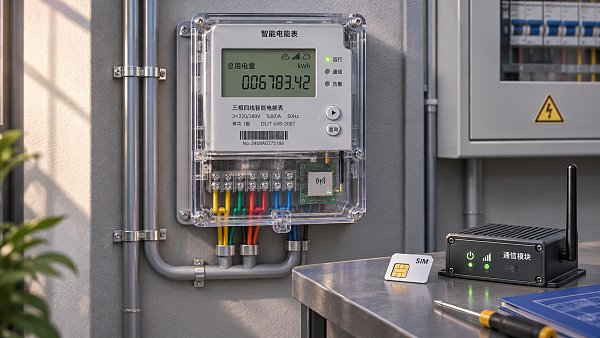
- Tamil Nadu Plans SIM-Based Upgrade for 17.7 Million Smart MetersTamil Nadu plans 17.7 million smart meters with proposed SIM-based upgrades. Explore potential supplier opportunities and the tender details still to come.
- Fiber Laser CE Marking: EU Safety Requirements and DocumentationFiber laser CE compliance goes beyond the mark. Explore EU safety requirements, essential documentation and practical checks before purchasing.
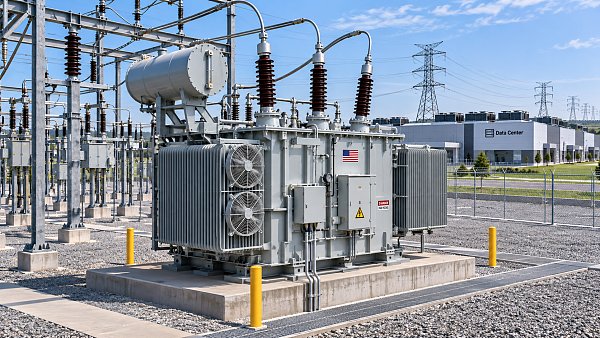
- US Grid Equipment Shortages Could Hinder $1 Trillion UpgradeUS grid equipment shortages could hinder a $1 trillion upgrade. Explore how transformer supply, data centers and rising power demand could affect grid projects.
Fiber Laser CE Marking: EU Safety Requirements and Documentation


Evaluating fiber laser CE compliance requires more than checking for a CE mark. Technical assessors need to establish which EU legislation applies to the equipment being supplied, examine laser and machinery hazards, and determine whether the manufacturer’s documentation supports its EU declaration of conformity. The most consequential distinction is often between a laser source and the complete machine: evidence for one does not automatically establish conformity of the other.
This guide focuses on industrial fiber laser machines and assemblies placed on the EU market. Requirements depend on the product’s configuration, intended use and date of placing on the market; an engraving station, an enclosed cutting machine and a laser source sold for integration may have different compliance boundaries.
Define the fiber laser CE assessment boundary
Before reviewing certificates, identify exactly what is being supplied. A fiber laser source may be incorporated into a workstation with an enclosure, motion system, extraction interface, control panel and interlocked doors. The manufacturer responsible for the finished machine must address the hazards of that assembled product, including interactions between its components.
Request a configuration description that matches the purchase order: model, options, intended materials, operating modes, accessories and installation assumptions. Pay particular attention to equipment described as a “module” or “partly completed machinery.” Its legal treatment depends on what it can do and how it is supplied, not simply on the supplier’s label.
- Finished machine: Assess the complete product, including enclosure, controls and foreseeable interventions such as setup and maintenance.
- Laser source or component: Review its specifications and applicable obligations, but do not treat its documentation as proof that the final machine is compliant.
- Integrated production line: Determine who assumes responsibility for the conformity assessment of an assembly of machinery, where applicable, especially when separate units operate together as an integrated whole.
Procurement warning: An EU declaration naming a different model, or covering only a laser power supply, is not adequate evidence for the machine being purchased. Ask the supplier to explain any differences between the declared configuration and the delivered one.
Map the applicable EU legislation
The legislation depends on the equipment and its market date. The table is a screening aid, not a substitute for a product-specific legal assessment. Official texts and current applicability are available through EUR-Lex.
Sources: Machinery Directive 2006/42/EC, especially Articles 1, 5 and Annex I, section 1.5.1: https://eur-lex.europa.eu/eli/dir/2006/42/oj ; Machinery Regulation (EU) 2023/1230, including Articles 52 and 54: https://eur-lex.europa.eu/eli/reg/2023/1230/oj ; EMC Directive: https://eur-lex.europa.eu/eli/dir/2014/30/oj ; Low Voltage Directive: https://eur-lex.europa.eu/eli/dir/2014/35/oj ; RoHS Directive: https://eur-lex.europa.eu/eli/dir/2011/65/oj ; Radio Equipment Directive: https://eur-lex.europa.eu/eli/dir/2014/53/oj .
A CE mark is the manufacturer’s declaration of conformity with all applicable EU requirements providing for that marking. It is not a general EU-issued approval. Where several applicable acts require CE marking, the declaration should identify the relevant legislation and product. Source: European Commission, CE marking: https://single-market-economy.ec.europa.eu/single-market/ce-marking_en .
Examine the laser safety concept, not only the class label
Start with the accessible radiation during normal operation, then examine what changes during loading, alignment, servicing and foreseeable misuse. A machine can contain a high-power laser source while its accessible emission classification in a specified configuration is different. The classification of the source must not be substituted for the classification and safety assessment of the finished product.
Ask for the wavelength or wavelength range, emission characteristics, operating modes, relevant accessible emission classification and the conditions under which that classification was established. For an enclosed system, assess whether the evidence covers doors, viewing windows, apertures, cable entries and any removable panels relevant to access.
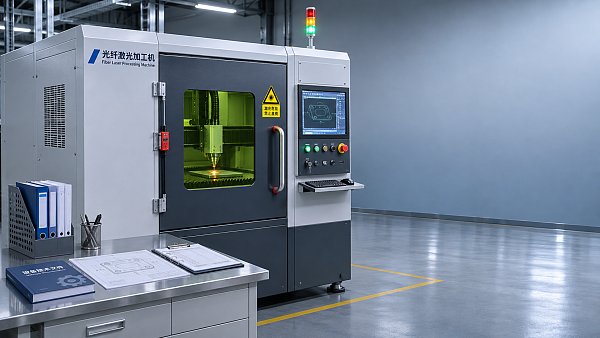
Review the relationship between safeguards and actual work. For example, if alignment requires an open door, what prevents hazardous exposure? If a service procedure defeats an interlock, who is authorized to do it, what controls are required, and are those residual risks explained in the instructions? A warning label alone does not resolve a hazard that can reasonably be reduced by design or guarding.
Standards to investigate: IEC 60825-1 addresses laser product safety and classification; ISO 11553-1 addresses safety requirements for laser processing machines; and IEC 60825-4 addresses laser guards. Use the applicable European adoptions and editions, and verify their current harmonised status and any limitations in the Official Journal of the EU. Applying a standard does not by itself establish conformity, and a non-harmonised standard does not automatically provide a presumption of conformity. Sources: IEC standards catalogue, https://webstore.iec.ch/ ; ISO standards catalogue, https://www.iso.org/standards.html ; European Commission harmonised standards information, https://single-market-economy.ec.europa.eu/single-market/european-standards/harmonised-standards_en .
Test the machinery safety argument
Laser radiation is only one part of the assessment. Cutting and marking equipment can also present moving-axis, electrical, fire, fume and maintenance hazards. The technical file should show how the manufacturer identified hazards, reduced risks and communicated those that remain. ISO 12100 provides a recognised methodology for machinery risk assessment and risk reduction; verify the relevant edition and harmonised status for the legislation and assessment date. Source: ISO catalogue, https://www.iso.org/standards.html .
- Guarding and interlocks: Check whether access to hazardous motion or radiation is prevented or controlled, and whether foreseeable bypassing and failure modes have been considered.
- Safety-related controls: Request the safety functions, required and achieved performance, validation evidence and assumptions for interlocks, emergency stop and other relevant functions. ISO 13849-1 and ISO 13849-2 are commonly used references; check their applicable editions and status.
- Electrical equipment: Examine protective bonding, isolation, cabinet access and electrical verification. EN 60204-1 is a relevant machinery electrical-safety reference; check its applicable edition and status.
- Process emissions: Determine which materials and coatings are permitted, what contaminants may be generated and what extraction or filtration the installation requires. A connection port is not proof that the purchaser’s extraction system is adequate.
- Fire and reflected beams: Review material restrictions, supervision, housekeeping and the suitability of guards and beam containment for the intended process.
For a procurement assessment, request evidence proportionate to the risk: a safety-function list, validation summary, test reports or selected risk-assessment extracts. The complete technical file is generally retained for competent authorities; it is not automatically a document a supplier must deliver in full to every buyer. Negotiate access to the evidence needed for technical acceptance.
What fiber laser CE documentation should an assessor request?
Start with the EU declaration of conformity and the instructions for the exact machine. Then trace the declaration’s claims to supporting evidence. A polished third-party certificate can be useful, but it does not replace the manufacturer’s declaration or demonstrate conformity beyond the certificate’s stated scope.
- Identify the responsible manufacturer. Confirm the name and address, product identification, model and any serial-number or configuration references. For machinery under Directive 2006/42/EC, check the declaration against Annex II requirements.
- Review legislation and standards. Check that the declaration lists the applicable acts and identifies standards actually used. Compare editions and publication status against the relevant Official Journal references.
- Check test and assessment scope. Match reports to the supplied enclosure, controls, laser source and operating modes. Record deviations, untested options and conditions of validity.
- Examine instructions and labels. Look for intended use, installation requirements, operating limits, residual risks, maintenance procedures and laser warnings. Confirm language requirements for the destination Member State.
- Resolve open interfaces. Document responsibilities for power, extraction, external interlocks, installation, training and commissioning. Determine whether the supplier’s declaration assumes safeguards that the purchaser must provide.
Also distinguish a declaration of conformity from a declaration of incorporation for partly completed machinery. The latter accompanies assembly instructions and does not mean the incomplete item can simply be treated as a finished CE-marked machine under the Machinery Directive. Source: Directive 2006/42/EC, Articles 5 and 13 and Annexes II and VI: https://eur-lex.europa.eu/eli/dir/2006/42/oj .
Turn evidence gaps into acceptance conditions
Before signing off, maintain a short issue register linking each gap to the affected configuration, required evidence, responsible party and closure date. High-priority gaps include an unmatched declaration, undocumented open-door operation, undefined extraction requirements and safety functions without validation evidence.
At delivery or commissioning, compare the as-built machine with the assessed configuration: labels, guards, interlocks, controls, options and instructions. Functional checks should follow an agreed, safe procedure; they do not replace the manufacturer’s conformity assessment. If the machine has been substantially modified or integrated into a larger assembly, obtain a competent assessment of whether new conformity obligations arise before operation.
Fiber laser CE: practical questions
Is a notified body certificate always required?
No. The applicable conformity assessment route depends on the legislation, machinery category and circumstances. Do not infer that a certificate is mandatory—or that any certificate is sufficient—without checking the applicable route. Where notified-body involvement is required, verify its identity, notification scope and the certificate’s product scope. Source: European Commission, NANDO database: https://webgate.ec.europa.eu/single-market-compliance-space/notified-bodies .
Can an importer rely entirely on the manufacturer’s CE mark?
No. Importers have their own obligations under applicable EU legislation, including checks concerning conformity assessment, documentation, marking and instructions. The exact duties depend on the applicable act. A supplier’s assertion is a starting point for verification, not a substitute for it. Source: Regulation (EU) 2019/1020 on market surveillance and compliance of products, including Article 4 where applicable: https://eur-lex.europa.eu/eli/reg/2019/1020/oj .
Does a laser class label settle the installation review?
No. It is an important input, but the assessor must still consider the stated operating conditions, service access, guarding, process emissions and site interfaces. The useful question is whether the delivered configuration and the way it will actually be used match the manufacturer’s documented safety assumptions.
Recommended for You
 Smart MetersTamil Nadu Plans SIM-Based Upgrade for 17.7 Million Smart MetersTamil Nadu plans 17.7 million smart meters with proposed SIM-based upgrades. Explore potential supplier opportunities and the tender details still to come.By: Dr. Elena VoltNov 22, 2026
 Fiber LasersFiber Laser CE Marking: EU Safety Requirements and DocumentationFiber laser CE compliance goes beyond the mark. Explore EU safety requirements, essential documentation and practical checks before purchasing.By: Dr. Hideo TanakaNov 22, 2026
 Grid ResilienceUS Grid Equipment Shortages Could Hinder $1 Trillion UpgradeUS grid equipment shortages could hinder a $1 trillion upgrade. Explore how transformer supply, data centers and rising power demand could affect grid projects.By: Dr. Elena VoltNov 21, 2026
 Digital SeaChoosing Bluetooth Speakers: Sound Quality, Battery Life and PortabilityBluetooth speakers come in all shapes and sizes. Learn how to compare sound quality, battery life and portability to find the right fit for your listening needs.By: Captain Kenji SatoNov 21, 2026
 Subsea ROV/AUV2025 Ocean Equipment Report: China's Industry Moves Toward Scaled ApplicationChina's marine equipment industry is moving toward scaled application. Explore what the 2025 Ocean Equipment Report could mean for buyers, suppliers and offshore projects.By: Captain Kenji SatoNov 20, 2026
 Digital SeaChoosing a Thermoforming Vacuum Packaging Machine for Meat ProductsChoose a thermoforming vacuum packaging machine for meat with confidence. Compare sealing, film compatibility, hygiene and real-world production capacity.By: Captain Kenji SatoNov 20, 2026
 Digital SeaGreen Station Certification Cost: Fees and Budget ConsiderationsGreen station certification cost varies by scheme and site. Explore fees, hidden expenses, and budgeting tips to plan confidently and compare providers.By: Captain Kenji SatoNov 19, 2026
 UHV TransformersLIMiK Capital to Invest $328 Million in South Carolina Transformer PlantLIMiK Capital plans a $327.7 million transformer plant in South Carolina. Explore its potential impact on US grid supply and procurement.By: Dr. Elena VoltNov 18, 2026
 Digital SeaHow to Choose STEM Kits for Kids by Age, Interests, and Skill LevelChoose STEM kits that match your child's age, interests, and skills. Explore safety tips, project ideas, and practical checks to find an engaging fit.By: Captain Kenji SatoNov 18, 2026
 Digital SeaManufacturing Supplier Requirements: What to Include in Technical SpecificationsDiscover how manufacturing technical specifications and supplier requirements improve quality, simplify comparisons, and prevent delays with measurable acceptance criteria.By: Captain Kenji SatoNov 17, 2026
 Digital SeaChina's Environment Ministry Opens ALC Submarine Cable Project to ReviewChina's Environment Ministry opens the ALC submarine cable project's environmental assessment to review. Explore the proposed marine protection measures and what comes next.By: Captain Kenji SatoNov 16, 2026
 Precision LensesOptical Lens Surface Roughness Testing: Methods and Ra InterpretationOptical lens surface roughness testing explained: compare measurement methods, interpret Ra values, and define reliable acceptance criteria.By: Dr. Hideo TanakaNov 16, 2026
 Digital SeaBusiness Growth Strategies: How to Choose the Right Path for Your CompanyExplore business growth strategies and learn how to compare market opportunities, costs, risks, and capabilities to choose the right path for your company.By: Captain Kenji SatoNov 15, 2026
 Smart MetersIndia’s Competition Commission Approves Adani Acquisition of IntelliSmartExplore the reported CCI approval of Adani’s IntelliSmart acquisition and what a larger Indian smart meter platform could mean for suppliers and investors.By: Dr. Elena VoltNov 14, 2026
 Digital SeaHow Does a Ballast Cleaner Screening System Separate Track Ballast?Discover how a ballast cleaner screening system separates reusable stone from fines, what affects performance, and how to assess the results.By: Captain Kenji SatoNov 14, 2026
 Smart MetersPakistan to Seek World Bank and ADB Funding for Smart MetersPakistan seeks World Bank and ADB funding for smart meters on distribution transformers. Explore the plan to tackle power theft and improve grid efficiency.By: Dr. Elena VoltNov 13, 2026
 Digital SeaWhat Is Precision Medicine and How Does It Guide Treatment?Discover how precision medicine uses biomarkers and genetic insights to guide treatment, where it can help, and what to ask before testing.By: Captain Kenji SatoNov 13, 2026
 Grid Resilience2026 CSEE Annual Meeting Opens with Focus on AI and Power SystemsThe 2026 CSEE Annual Meeting explores AI, low-carbon power systems and ultra-high-voltage transmission. Discover why these discussions matter.By: Dr. Elena VoltNov 12, 2026
 Digital SeaShip Radar Detection Range: How Far Can It See and What Limits It?Ship radar detection range depends on more than the display scale. Discover how antenna height, weather, target size, and settings affect what radar can see.By: Captain Kenji SatoNov 12, 2026
 UHV TransformersGE Vernova to Invest $34.5 Million in Louisiana Transformer Plant ExpansionGE Vernova plans a $34.5 million transformer plant expansion in Louisiana. Explore its potential impact on North American supply and procurement.By: Dr. Elena VoltNov 11, 2026
 Digital SeaMetro Station Noise Criteria: Limits and Measurement MethodsExplore metro station noise criteria, applicable limits and measurement methods. Learn how to select metrics and assess compliance with confidence.By: Captain Kenji SatoNov 11, 2026
 Digital SeaKongsberg Maritime Unveils Arctic Hunter Unmanned Surface VesselKongsberg Maritime's Arctic Hunter unmanned surface vessel is proposed for the Royal Navy's Type 92 programme. Explore its technology and procurement implications.By: Captain Kenji SatoNov 10, 2026
 Sorting RobotsHow Accurate Is AI in Food Quality Control? Metrics and Testing MethodsExplore AI in food quality control accuracy, from recall and false negatives to validation methods. Learn how to assess real-world inspection reliability.By: Marcus SterlingNov 10, 2026
 UHV TransformersGE Vernova Selected for 6 GW HVDC Link in IndiaGE Vernova will design a 6 GW HVDC link for PGCIL, connecting Rajasthan and South Kalamb to support India's clean energy transition. Discover the project.By: Dr. Elena VoltNov 09, 2026
 Grid ResilienceEurope's Grid Compliance Standards in 2026: Generator Connection RequirementsExplore new grid compliance standards 2026 Europe projects must address, from generator connection rules to testing and documentation. Prepare for approval.By: Dr. Elena VoltNov 09, 2026
 Technical FabricsNonwoven Bonding Cost Data: Comparing Thermal and Chemical ProcessesExplore nonwoven bonding cost data to compare thermal and chemical processes, assess usable yield, and choose the best-value option for your application.By: Chloe DuboisNov 08, 2026
 Fiber LasersIndustrial Lasers to 2035: Automotive Lightweighting and Precision Welding Drive DemandExplore the industrial laser market outlook to 2035 and discover how automotive lightweighting and precision welding could shape demand and procurement.By: Dr. Hideo TanakaNov 07, 2026
 Technical FabricsChoosing Geotextile Under Railway Ballast: Key Performance RequirementsChoosing geotextile under railway ballast? Explore essential filtration, drainage, strength and durability criteria to make a confident, project-specific selection.By: Chloe DuboisNov 07, 2026
 Digital SeaChoosing Rail Welding Equipment for Maintenance: Field Conditions and Weld TypesChoose rail welding equipment for maintenance with confidence. Compare welding methods, field constraints, inspection needs, and lifecycle costs.By: Captain Kenji SatoNov 06, 2026
 Digital SeaIndia Broadband Forum Urges Stronger Submarine Cable ResilienceIndia’s submarine cable resilience is in focus as the Broadband India Forum urges faster repairs, more vessels and stronger landing infrastructure.By: Captain Kenji SatoNov 06, 2026
 Digital SeaChoosing a Railway Network Switch Supplier: Reliability and Support CriteriaChoosing a railway network switch supplier? Compare reliability, standards evidence, cybersecurity, and lifecycle support to reduce project risk.By: Captain Kenji SatoNov 05, 2026