BDI: 1,842 ▼ 1.2%
COTTON NO.2: 84.12 ▲ 0.4%
LME COPPER: 8,432.50 ▲ 2.1%
FOOD SAFETY INDEX: 94.2 ARCHIVE_SECURED
OPTICAL INDEX: 11,204.09 STABLE
BDI: 1,842 ▼ 1.2%

SECTOR INDEX
V.24.08 ARCHIVE
Hot Articles
- Tamil Nadu Plans SIM-Based Upgrade for 17.7 Million Smart MetersTamil Nadu plans 17.7 million smart meters with proposed SIM-based upgrades. Explore potential supplier opportunities and the tender details still to come.
- Fiber Laser CE Marking: EU Safety Requirements and DocumentationFiber laser CE compliance goes beyond the mark. Explore EU safety requirements, essential documentation and practical checks before purchasing.
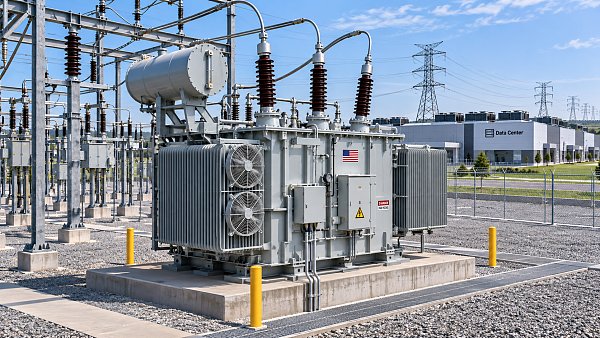
- US Grid Equipment Shortages Could Hinder $1 Trillion UpgradeUS grid equipment shortages could hinder a $1 trillion upgrade. Explore how transformer supply, data centers and rising power demand could affect grid projects.
What Steps Should an Industrial Oven Procurement Plan Include?


An industrial oven may meet the specified maximum temperature yet still miss production targets because a full load heats too slowly, airflow leaves cold zones, or the plant cannot support its exhaust requirements. Buying against a catalog specification alone can leave procurement teams managing installation changes and production teams struggling with inconsistent results.
An industrial oven procurement plan should define the process and load, establish measurable thermal requirements, select the equipment configuration, verify site and safety constraints, compare qualified suppliers, evaluate lifecycle costs, and set contractual acceptance criteria. Commissioning and service arrangements should be planned before the purchase order, not after delivery. Each stage should produce evidence that supports the next purchasing decision.
1. Establish the production requirement before requesting quotations
Start with the result the oven must achieve: curing a coating, drying a component, baking food, or heat-treating a material. These applications can require different airflow arrangements, materials of construction, ventilation, and controls even when their operating temperatures overlap.
Create a user requirement specification jointly with production, process engineering, maintenance, quality, and environmental health and safety personnel. Procurement should coordinate the document, but should not have to infer the process requirements from previous purchase orders.
- Product and load: Record dimensions, mass, material, incoming temperature, fixture weight, and loading arrangement.
- Process outcome: Define the required moisture level, cure condition, product properties, or other measurable quality result.
- Production demand: State normal throughput, peak demand, shift pattern, product mix, and expected changeovers.
- Released substances: Identify water vapor, solvents, combustible residues, fumes, or other emissions generated during heating.
- Operating conditions: Include cleaning frequency, contamination restrictions, atmosphere requirements, and upstream or downstream interfaces.
Separate mandatory requirements from preferences. A validated product-temperature limit is a purchasing gate; a preferred screen layout may be negotiable. Identify unresolved process data explicitly and assign responsibility for testing it before suppliers commit to a design.
2. Translate the process into measurable thermal performance
Maximum chamber temperature is only one specification. The purchasing document should distinguish operating range, control stability, temperature uniformity across the usable work zone, and the time needed for the product itself to reach the required condition.
A chamber sensor measures its local environment, not necessarily the coldest point inside a dense load. Where product quality depends on core temperature or time at temperature, define the relevant product measurement locations and when the dwell period begins. Otherwise, suppliers may offer the same nominal cycle time while assuming different starting points.
Specify performance for representative loads, including demanding combinations of mass, packing density, and initial temperature. An empty-chamber uniformity test can provide useful information, but it does not prove that a loaded process will perform correctly.
Do not impose unnecessarily tight tolerances without a process reason. They can increase equipment and qualification costs without improving the product.
3. Choose the configuration around material flow
Batch ovens suit discrete loads and processes requiring recipe flexibility. Continuous ovens can support steady production, but conveyor speed, loading consistency, and residence time become closely linked. Neither configuration should be selected from hourly output alone.
For batch equipment, calculate the complete cycle: loading, heating, dwell, cooling, unloading, and preparation for the next load. For continuous equipment, consider gaps between products, changeovers, conveyor loading limits, and how an upstream stoppage affects material already inside the heated zone.
Compare heating methods against the actual product. Forced convection depends on airflow reaching the load; radiant heating depends on exposure and surface absorption. Direct-fired and indirect-fired arrangements also differ in whether combustion products contact the process atmosphere. Electric heating removes combustion exhaust at the point of use but still requires adequate electrical capacity and any necessary process ventilation.
Ask suppliers to explain airflow paths, loading restrictions, and fixture effects. A larger chamber is not useful capacity if racks obstruct circulation or operators cannot load it consistently.
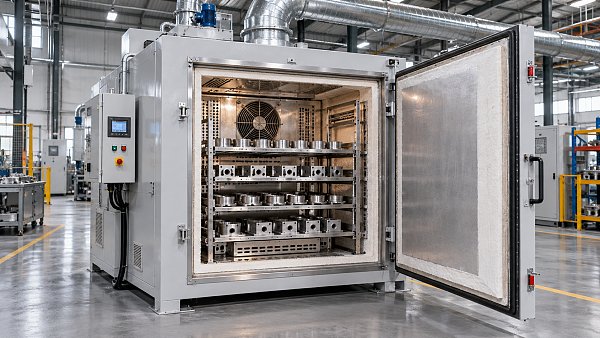
4. Verify installation feasibility and safety responsibilities
A site survey should precede final commercial selection. Confirm delivery access, door openings, equipment weight, floor capacity, maintenance clearances, and space for ductwork. Check whether installation requires roof penetrations, lifting equipment, structural work, or a planned production shutdown.
Available utility capacity must be verified at the proposed connection point. Electrical service, fuel pressure, compressed air, cooling water, exhaust routing, and replacement air can all constrain the design. Exhausting heated air without adequate makeup air may affect building pressure and nearby processes.
Resolve process hazards before freezing the design
Combustible vapors, powders, deposits, and fuel systems require a process-specific hazard assessment. Where flammable substances can be released, provide the supplier with credible release information for normal operation and foreseeable abnormal conditions. Do not treat a general-purpose oven as suitable merely because it reaches the required temperature.
Have qualified personnel establish the applicable local machinery, electrical, fire, fuel-gas, emissions, and process requirements. Safety provisions may include ventilation proving, purge sequences, independent overtemperature protection, flame supervision, and interlocks. Their necessity and design depend on the application; a generic feature list is not a safety assessment.
Assign responsibility for permits, exhaust treatment, building modifications, and final approvals. Supplier statements of compliance should identify the equipment scope and supporting documentation rather than leaving responsibility for the complete installation ambiguous.
5. Issue a common RFQ and require an exceptions register
A disciplined industrial procurement planning process gives every bidder the same technical baseline. The request for quotation should contain the approved requirements, site information, utility conditions, required drawings, acceptance tests, delivery expectations, and installation scope.
Require suppliers to mark each requirement as compliant, noncompliant, or dependent on an assumption. An exceptions register makes differences visible before price comparison. Without one, a lower bid may simply omit exhaust equipment, product trials, calibration, or commissioning support.
Evaluate suppliers through evidence relevant to the application:
- Technical explanations of thermal sizing, airflow, controls, and proposed safety functions.
- Experience with comparable load behavior and process conditions, supported by verifiable information where available.
- Sample documentation, including drawings, maintenance instructions, and test procedures.
- Service coverage, spare-parts availability, controls support, and responsibilities for subcontracted components.
Use mandatory technical and safety requirements as pass/fail gates before applying weighted commercial scoring. Where load behavior remains uncertain, a representative trial may be more useful than further brochure comparisons. Record the trial conditions and any limitations on extrapolating its results.
6. Compare total installed and operating cost
Normalize bids to a common scope before ranking them. Include freight, rigging, foundations, utility upgrades, exhaust systems, permits, integration, qualification, and training alongside the oven price. Record exclusions as estimated project costs rather than leaving them outside the comparison.
Operating costs should reflect the intended production pattern. Request energy estimates with their assumptions: load mass, moisture removal, setpoint, exhaust rate, idle periods, and annual operating hours. Heater rating is not the same as average energy consumption, and an unloaded demonstration is not a reliable estimate for production operation.
Include maintenance labor, calibration, wear parts, cleaning, and service travel. For equipment whose failure would stop a production line, evaluate repair access and critical-spares lead times. Compare cost per acceptable unit where practical, while keeping uncertain yield or downtime assumptions visible rather than presenting them as guaranteed savings.
7. Put acceptance evidence into the contract
Acceptance should be negotiated before order placement. Define what will be demonstrated, where testing will occur, who supplies materials and instruments, and how deviations will be resolved. Agree which results support shipment approval and which are required for final acceptance.
Factory acceptance testing can verify construction, controls, alarms, documentation, and agreed thermal performance before shipment. If production material cannot be tested at the factory, document the substitute load and what it cannot demonstrate. Passing a simulated-load test should not automatically establish product-process capability.
Site acceptance testing should confirm operation after installation with actual utilities, exhaust connections, interfaces, and representative loads. Include approved checks of safety functions and agreed evidence for throughput and product quality. Safety testing must follow controlled procedures, not improvised attempts to create hazardous conditions.
For each performance test, define instrument calibration, sensor placement, load configuration, stabilization, pass/fail limits, and reporting. Establish a process for corrective work and retesting. Any contractual payment retention or warranty trigger should align with these agreed milestones.
8. Build the delivery schedule backward from production readiness
The required delivery date is not the date the oven becomes ready for production. The schedule must allow for installation, utility connection, inspections, commissioning, training, process trials, and any required qualification.
Assign owners and dependencies for drawing approval, site preparation, shutdown access, freight, lifting, and acceptance testing. Confirm long-lead components with the supplier and distinguish an estimated shipment date from a committed milestone. Late changes to chamber size, fuel choice, or exhaust design can affect both equipment manufacture and plant work.
Prepare an interface schedule for automation and data connections. Define signals, operating sequences, fault responses, and responsibility for software changes. This prevents an otherwise complete oven from waiting on an unresolved conveyor permissive or production-record interface.
9. Close procurement with an operational handover
Before final handover, obtain as-built drawings, electrical schematics, control backups, operating instructions, maintenance schedules, calibration records, spare-parts lists, and completed test reports. Verify that authorized staff can restore recipes and controls after a component failure.
Training should cover normal operation, loading limits, alarm response, cleaning, safe shutdown, and maintenance isolation. Define warranty coverage, response arrangements, remote-access permissions, and who pays for travel or replacement labor.
Keep unresolved items in a signed closeout register with owners and completion dates. Items affecting safe operation or agreed process capability should not be treated as minor documentation issues. Final acceptance should rest on the specified load meeting the agreed process requirements at the installed site, with the records and support needed to keep it operating.
Recommended for You
 Smart MetersTamil Nadu Plans SIM-Based Upgrade for 17.7 Million Smart MetersTamil Nadu plans 17.7 million smart meters with proposed SIM-based upgrades. Explore potential supplier opportunities and the tender details still to come.By: Dr. Elena VoltNov 22, 2026
 Fiber LasersFiber Laser CE Marking: EU Safety Requirements and DocumentationFiber laser CE compliance goes beyond the mark. Explore EU safety requirements, essential documentation and practical checks before purchasing.By: Dr. Hideo TanakaNov 22, 2026
 Grid ResilienceUS Grid Equipment Shortages Could Hinder $1 Trillion UpgradeUS grid equipment shortages could hinder a $1 trillion upgrade. Explore how transformer supply, data centers and rising power demand could affect grid projects.By: Dr. Elena VoltNov 21, 2026
 Digital SeaChoosing Bluetooth Speakers: Sound Quality, Battery Life and PortabilityBluetooth speakers come in all shapes and sizes. Learn how to compare sound quality, battery life and portability to find the right fit for your listening needs.By: Captain Kenji SatoNov 21, 2026
 Subsea ROV/AUV2025 Ocean Equipment Report: China's Industry Moves Toward Scaled ApplicationChina's marine equipment industry is moving toward scaled application. Explore what the 2025 Ocean Equipment Report could mean for buyers, suppliers and offshore projects.By: Captain Kenji SatoNov 20, 2026
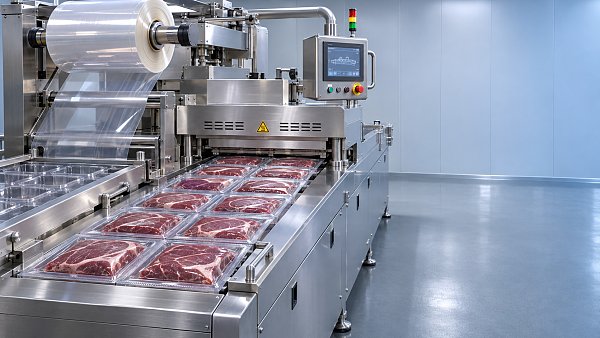
 Digital SeaChoosing a Thermoforming Vacuum Packaging Machine for Meat ProductsChoose a thermoforming vacuum packaging machine for meat with confidence. Compare sealing, film compatibility, hygiene and real-world production capacity.By: Captain Kenji SatoNov 20, 2026
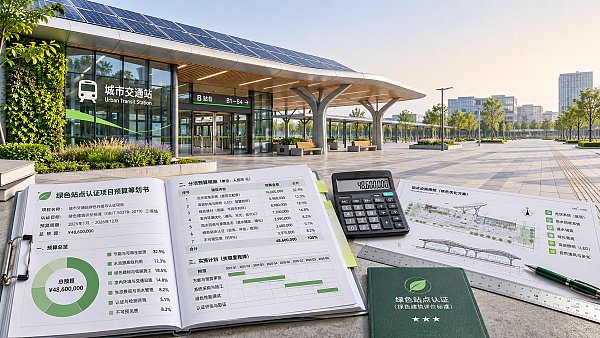
 Digital SeaGreen Station Certification Cost: Fees and Budget ConsiderationsGreen station certification cost varies by scheme and site. Explore fees, hidden expenses, and budgeting tips to plan confidently and compare providers.By: Captain Kenji SatoNov 19, 2026
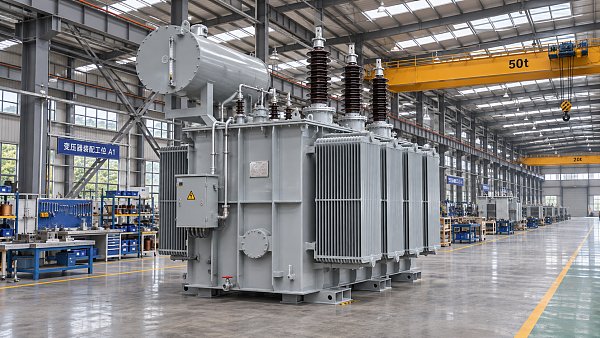
 UHV TransformersLIMiK Capital to Invest $328 Million in South Carolina Transformer PlantLIMiK Capital plans a $327.7 million transformer plant in South Carolina. Explore its potential impact on US grid supply and procurement.By: Dr. Elena VoltNov 18, 2026
 Digital SeaHow to Choose STEM Kits for Kids by Age, Interests, and Skill LevelChoose STEM kits that match your child's age, interests, and skills. Explore safety tips, project ideas, and practical checks to find an engaging fit.By: Captain Kenji SatoNov 18, 2026
 Digital SeaManufacturing Supplier Requirements: What to Include in Technical SpecificationsDiscover how manufacturing technical specifications and supplier requirements improve quality, simplify comparisons, and prevent delays with measurable acceptance criteria.By: Captain Kenji SatoNov 17, 2026
 Digital SeaChina's Environment Ministry Opens ALC Submarine Cable Project to ReviewChina's Environment Ministry opens the ALC submarine cable project's environmental assessment to review. Explore the proposed marine protection measures and what comes next.By: Captain Kenji SatoNov 16, 2026
 Precision LensesOptical Lens Surface Roughness Testing: Methods and Ra InterpretationOptical lens surface roughness testing explained: compare measurement methods, interpret Ra values, and define reliable acceptance criteria.By: Dr. Hideo TanakaNov 16, 2026
 Digital SeaBusiness Growth Strategies: How to Choose the Right Path for Your CompanyExplore business growth strategies and learn how to compare market opportunities, costs, risks, and capabilities to choose the right path for your company.By: Captain Kenji SatoNov 15, 2026
 Smart MetersIndia’s Competition Commission Approves Adani Acquisition of IntelliSmartExplore the reported CCI approval of Adani’s IntelliSmart acquisition and what a larger Indian smart meter platform could mean for suppliers and investors.By: Dr. Elena VoltNov 14, 2026
 Digital SeaHow Does a Ballast Cleaner Screening System Separate Track Ballast?Discover how a ballast cleaner screening system separates reusable stone from fines, what affects performance, and how to assess the results.By: Captain Kenji SatoNov 14, 2026
 Smart MetersPakistan to Seek World Bank and ADB Funding for Smart MetersPakistan seeks World Bank and ADB funding for smart meters on distribution transformers. Explore the plan to tackle power theft and improve grid efficiency.By: Dr. Elena VoltNov 13, 2026
 Digital SeaWhat Is Precision Medicine and How Does It Guide Treatment?Discover how precision medicine uses biomarkers and genetic insights to guide treatment, where it can help, and what to ask before testing.By: Captain Kenji SatoNov 13, 2026
 Grid Resilience2026 CSEE Annual Meeting Opens with Focus on AI and Power SystemsThe 2026 CSEE Annual Meeting explores AI, low-carbon power systems and ultra-high-voltage transmission. Discover why these discussions matter.By: Dr. Elena VoltNov 12, 2026
 Digital SeaShip Radar Detection Range: How Far Can It See and What Limits It?Ship radar detection range depends on more than the display scale. Discover how antenna height, weather, target size, and settings affect what radar can see.By: Captain Kenji SatoNov 12, 2026
 UHV TransformersGE Vernova to Invest $34.5 Million in Louisiana Transformer Plant ExpansionGE Vernova plans a $34.5 million transformer plant expansion in Louisiana. Explore its potential impact on North American supply and procurement.By: Dr. Elena VoltNov 11, 2026
 Digital SeaMetro Station Noise Criteria: Limits and Measurement MethodsExplore metro station noise criteria, applicable limits and measurement methods. Learn how to select metrics and assess compliance with confidence.By: Captain Kenji SatoNov 11, 2026
 Digital SeaKongsberg Maritime Unveils Arctic Hunter Unmanned Surface VesselKongsberg Maritime's Arctic Hunter unmanned surface vessel is proposed for the Royal Navy's Type 92 programme. Explore its technology and procurement implications.By: Captain Kenji SatoNov 10, 2026
 Sorting RobotsHow Accurate Is AI in Food Quality Control? Metrics and Testing MethodsExplore AI in food quality control accuracy, from recall and false negatives to validation methods. Learn how to assess real-world inspection reliability.By: Marcus SterlingNov 10, 2026
 UHV TransformersGE Vernova Selected for 6 GW HVDC Link in IndiaGE Vernova will design a 6 GW HVDC link for PGCIL, connecting Rajasthan and South Kalamb to support India's clean energy transition. Discover the project.By: Dr. Elena VoltNov 09, 2026
 Grid ResilienceEurope's Grid Compliance Standards in 2026: Generator Connection RequirementsExplore new grid compliance standards 2026 Europe projects must address, from generator connection rules to testing and documentation. Prepare for approval.By: Dr. Elena VoltNov 09, 2026
 Technical FabricsNonwoven Bonding Cost Data: Comparing Thermal and Chemical ProcessesExplore nonwoven bonding cost data to compare thermal and chemical processes, assess usable yield, and choose the best-value option for your application.By: Chloe DuboisNov 08, 2026
 Fiber LasersIndustrial Lasers to 2035: Automotive Lightweighting and Precision Welding Drive DemandExplore the industrial laser market outlook to 2035 and discover how automotive lightweighting and precision welding could shape demand and procurement.By: Dr. Hideo TanakaNov 07, 2026
 Technical FabricsChoosing Geotextile Under Railway Ballast: Key Performance RequirementsChoosing geotextile under railway ballast? Explore essential filtration, drainage, strength and durability criteria to make a confident, project-specific selection.By: Chloe DuboisNov 07, 2026
 Digital SeaChoosing Rail Welding Equipment for Maintenance: Field Conditions and Weld TypesChoose rail welding equipment for maintenance with confidence. Compare welding methods, field constraints, inspection needs, and lifecycle costs.By: Captain Kenji SatoNov 06, 2026
 Digital SeaIndia Broadband Forum Urges Stronger Submarine Cable ResilienceIndia’s submarine cable resilience is in focus as the Broadband India Forum urges faster repairs, more vessels and stronger landing infrastructure.By: Captain Kenji SatoNov 06, 2026
 Digital SeaChoosing a Railway Network Switch Supplier: Reliability and Support CriteriaChoosing a railway network switch supplier? Compare reliability, standards evidence, cybersecurity, and lifecycle support to reduce project risk.By: Captain Kenji SatoNov 05, 2026