BDI: 1,842 ▼ 1.2%
COTTON NO.2: 84.12 ▲ 0.4%
LME COPPER: 8,432.50 ▲ 2.1%
FOOD SAFETY INDEX: 94.2 ARCHIVE_SECURED
OPTICAL INDEX: 11,204.09 STABLE
BDI: 1,842 ▼ 1.2%

SECTOR INDEX
V.24.08 ARCHIVE
Hot Articles
- Industrial Freeze Dryer Factory Middle East: What Buyers Should Check Before OrderingIndustrial freeze dryer factory Middle East buyers should verify factory capability, FAT, compliance, real capacity, and lifecycle cost before ordering. Learn the key checks to avoid costly mistakes.
- Air Jet Loom for Cotton: Which Fabric Types and Production Goals Is It Best For?Air jet loom for cotton: discover the best fabric types, yarn ranges, and production goals it supports—ideal for mills seeking higher output, stable quality, and smarter investment decisions.
- Electric Vehicle Parts Guide: Key Components, Functions, and Replacement BasicsElectric vehicle parts explained clearly: explore key EV components, core functions, common failure points, and replacement basics to compare smarter and choose with confidence.
How Precision Optics Improve Semiconductor Fab Yield


In semiconductor manufacturing, yield losses rarely come from one dramatic failure. More often, they come from small, repeatable process errors that accumulate across lithography, metrology, alignment, inspection, and contamination control. Precision optics improve semiconductor fab yield by reducing those small errors: they sharpen imaging, stabilize measurement accuracy, improve overlay and focus control, support earlier defect detection, and help maintain process consistency at scale. For engineers, buyers, and fab decision-makers, the real value is not “better optics” in the abstract, but better process windows, fewer false calls, less rework, and more predictable throughput.
This article looks at where precision optics affect yield inside semiconductor fabs, what technical and purchasing teams should evaluate, and how optics strategy connects with wider developments in photonics, infrared imaging, and laser-enabled cleaning.
Why precision optics matter directly to fab yield
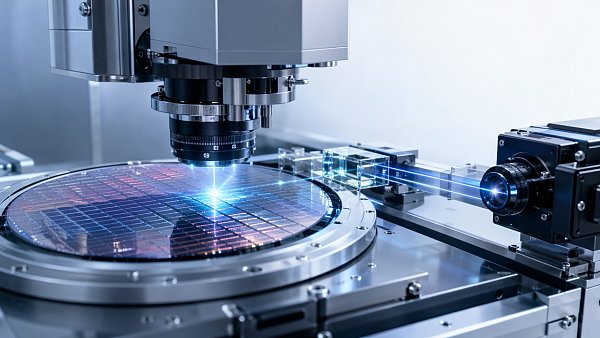
In a fab, optical performance is tightly linked to process control. If the optical path in a critical tool introduces distortion, low contrast, stray light, thermal drift, or poor repeatability, the result is not just a measurement problem. It becomes a production problem.
Precision optics influence yield in several direct ways:
- More accurate imaging: Higher-resolution, lower-aberration optics improve pattern detection, edge definition, and defect visibility.
- Better alignment and overlay control: Stable optical systems support precise wafer positioning and layer-to-layer alignment.
- Improved defect inspection: Cleaner signal capture helps identify real defects earlier while reducing false positives and false negatives.
- Tighter metrology: Optical repeatability helps maintain dimensional accuracy for CD measurement, film inspection, and surface analysis.
- Reduced process variation: Low-drift optical assemblies help maintain consistent performance over time and across shifts.
For fabs operating at advanced nodes or high-volume manufacturing conditions, these effects are magnified. A minor optical deviation that seems acceptable in a general industrial setting can be yield-relevant in semiconductor production.
Where precision optics have the biggest impact inside a semiconductor fab
Not every optical subsystem has the same yield leverage. The highest-value areas are those tied to pattern fidelity, defect discovery, and process feedback loops.
Lithography and alignment systems
Lithography is the most obvious domain where optics affect yield. Projection optics, beam shaping, alignment optics, and autofocus subsystems all influence whether features are printed correctly and consistently. Aberration control, wavefront quality, transmission stability, and contamination resistance matter because any degradation can narrow the usable process window.
Even outside the scanner itself, alignment optics in supporting tools affect wafer placement and stage precision. Better optical stability improves overlay performance, which directly influences electrical yield.
Wafer inspection and defect review
Inspection tools depend on precision optics to detect particles, pattern defects, scratches, residues, and process excursions before they become high-cost losses. Optical quality affects contrast, sensitivity, and signal-to-noise ratio. In practical terms, that means:
- finding smaller defects earlier,
- improving defect classification confidence,
- reducing nuisance alarms that waste engineering time,
- supporting faster root-cause isolation.
For quality teams and process engineers, this is often where optics produce one of the clearest returns: more trustworthy inspection data leads to faster corrective action.
Metrology and measurement systems
Critical dimension metrology, surface profiling, film thickness measurement, and overlay verification all rely on optical integrity. If the optics drift thermally, scatter excess light, or lose calibration stability, measurement repeatability suffers. Once measurement confidence declines, fabs risk making process decisions based on noisy or biased data.
That can lead to overcorrection, undercorrection, or delayed response to process drift—all of which can lower yield.
Laser-based processing and cleaning support
Precision optics also matter in laser beam delivery systems used in semiconductor-related cleaning, marking, micromachining, and specialty processes. Beam uniformity, focus quality, and optical coating durability affect how consistently energy is delivered to the target. In contamination-sensitive environments, this can support cleaner surfaces and lower damage risk.
What problems poor optical performance creates in real fab operations
Readers evaluating semiconductor optics often do not need another generic explanation of lenses and coatings. They need to know what goes wrong when optical performance is insufficient.
Common fab-level consequences include:
- Higher defect escape rates: Inspection misses true defects because the image signal is weak or distorted.
- More false positives: Operators spend time reviewing noise, lowering inspection efficiency.
- Overlay and focus drift: Variation increases across lots or over tool runtime.
- Reduced tool uptime: Optical contamination, coating wear, or thermal instability drive maintenance events.
- Calibration burden: Teams need more frequent recalibration to maintain acceptable performance.
- Yield variability: Even if average output looks acceptable, lot-to-lot consistency worsens.
For procurement and finance stakeholders, this is important because the cost of suboptimal optics often appears indirectly—in scrap, engineering labor, lost throughput, and delayed qualification—rather than as a visible line item.
How to evaluate precision optics for semiconductor applications
Technical evaluators and sourcing teams should assess precision optics based on fab outcomes, not just catalog specifications. A component with impressive optical numbers may still be a poor fit if it cannot maintain performance under semiconductor operating conditions.
Key technical criteria
- Wavefront accuracy and aberration control: Essential for imaging and beam-shaping consistency.
- Surface quality and roughness: Important for minimizing scatter and preserving image clarity.
- Optical coating performance: Transmission, reflection control, laser damage threshold, and chemical durability should match the process environment.
- Thermal stability: Optical systems must hold performance under temperature variation and tool heat loads.
- Contamination resistance: Critical in cleanroom environments where haze, outgassing, and particle generation are unacceptable.
- Material suitability: Fused silica, calcium fluoride, infrared materials, and specialty glasses should be selected based on wavelength, environment, and process sensitivity.
- Assembly precision: Mounting stress, centering, and long-term mechanical stability matter as much as the optical element itself.
Questions buyers should ask suppliers
- What semiconductor or adjacent high-cleanliness applications has this optical design already served?
- How is performance validated across thermal cycling and long-duration operation?
- What contamination-control standards are used during manufacturing and packaging?
- Which ISO, ASTM, or internal test protocols are applied for surface quality, coating durability, and dimensional accuracy?
- Can the supplier provide lot-to-lot consistency data and traceability?
- What is the field replacement cycle, and what failure modes are most common?
For enterprise decision-makers, supplier maturity, process control, and documentation quality are often just as important as raw optical performance.
How precision optics improve ROI, not just technical performance
Fab managers and financial approvers usually need a business case. The strongest case for precision optics is that they improve both yield and decision quality.
Potential value areas include:
- Higher usable wafer output: Better process control reduces defect-related losses.
- Lower inspection cost per wafer: More reliable imaging reduces unnecessary reviews and repeats.
- Reduced downtime: Durable, stable optics lower maintenance interruptions.
- Faster process optimization: Better metrology and inspection feedback accelerate engineering learning cycles.
- Less qualification risk: Stable optics help maintain repeatable performance during scale-up or node transitions.
In many cases, the ROI is strongest where the optical subsystem supports a bottleneck tool, a high-value process step, or a defect-sensitive product line. Buyers should therefore prioritize optics upgrades or sourcing rigor where yield leverage is highest, rather than treating all optical components equally.
How broader photonics trends influence semiconductor fab optics strategy
Semiconductor fabs do not operate in isolation. The optics technologies they depend on are shaped by broader advances in the photonics industry.
Global photonics research funding
Public and private investment in photonics research is accelerating innovation in optical materials, coatings, imaging architectures, and sensor integration. For semiconductor stakeholders, this means future gains in durability, spectral precision, miniaturization, and AI-assisted optical analysis may arrive faster than in previous equipment cycles.
Tracking photonics research funding trends can help procurement and technology teams identify where next-generation inspection, metrology, and imaging capabilities are likely to emerge.
Infrared imaging advances
Infrared imaging is increasingly relevant in semiconductor environments for thermal monitoring, failure analysis, and process observation where visible imaging is insufficient. Improvements in IR detector sensitivity, optical materials, and image processing can expand how fabs monitor heat distribution, latent defects, and process anomalies.
For evaluators, the key question is whether new infrared imaging capabilities can provide earlier warning of process instability or equipment drift before yield loss becomes visible downstream.
Laser cleaning technology news
Laser cleaning technology is gaining attention across high-precision manufacturing because it can remove contaminants with less mechanical contact and potentially lower chemical dependence. In semiconductor-related environments, the relevance is not broad replacement of all cleaning methods, but selective use in contamination-sensitive or delicate process scenarios.
The effectiveness of these systems still depends heavily on precision optical delivery, beam control, and repeatability. That makes optics quality a strategic factor not only in inspection and metrology, but also in emerging cleaning workflows.
What different stakeholders should focus on before making an optics decision
Because the target audience spans technical, operational, and commercial roles, evaluation priorities should be role-specific.
For process and equipment engineers
- Focus on repeatability, drift behavior, contamination tolerance, and real process impact.
- Ask how the optics affect measurement confidence and defect detectability.
- Review integration constraints, maintenance requirements, and calibration stability.
For quality and safety teams
- Verify cleanliness standards, material compatibility, and traceability.
- Assess whether the optics support earlier detection of process deviations.
- Check compliance with relevant testing and quality documentation practices.
For procurement and sourcing teams
- Compare total lifecycle value, not only purchase price.
- Evaluate supplier consistency, lead times, technical support, and replacement logistics.
- Look for evidence of semiconductor-grade production discipline.
For executives and financial approvers
- Prioritize applications where optics have measurable influence on yield, throughput, or qualification risk.
- Request business cases tied to scrap reduction, uptime, engineering efficiency, and product quality.
- Avoid under-specifying critical optical components in high-cost process steps.
Practical conclusion: precision optics are a yield lever, not a peripheral component
Precision optics improve semiconductor fab yield because they make critical processes more stable, visible, and controllable. They help tools see more clearly, measure more reliably, align more accurately, and respond faster to defects and drift. In a fab environment where small deviations can create major cumulative losses, that is not a secondary benefit—it is a core production advantage.
For organizations evaluating semiconductor optics, the right approach is to link optical performance to operational outcomes: defect detection quality, metrology confidence, process stability, maintenance burden, and total cost of ownership. Teams that do this well are better positioned to select optics that support not only technical excellence, but also commercial resilience in an increasingly demanding semiconductor landscape.
Recommended for You
 Industrial OvensIndustrial Freeze Dryer Factory Middle East: What Buyers Should Check Before OrderingIndustrial freeze dryer factory Middle East buyers should verify factory capability, FAT, compliance, real capacity, and lifecycle cost before ordering. Learn the key checks to avoid costly mistakes.By: Marcus SterlingJul 02, 2026
 Automated LoomsAir Jet Loom for Cotton: Which Fabric Types and Production Goals Is It Best For?Air jet loom for cotton: discover the best fabric types, yarn ranges, and production goals it supports—ideal for mills seeking higher output, stable quality, and smarter investment decisions.By: Chloe DuboisJul 02, 2026
 Grid ResilienceElectric Vehicle Parts Guide: Key Components, Functions, and Replacement BasicsElectric vehicle parts explained clearly: explore key EV components, core functions, common failure points, and replacement basics to compare smarter and choose with confidence.By: Dr. Elena VoltJul 02, 2026
 Lumen VisionHow to Evaluate a Metro Wayfinding Signage Factory for Large Transit ProjectsMetro wayfinding signage factory selection can make or break large transit projects. Learn how to assess capacity, compliance, durability, and coordination before you choose.By: Dr. Hideo TanakaJul 02, 2026
 Digital SeaWheelset Price Explained: What Affects Cost and How to Compare QuotesWheelset price explained clearly: learn what drives costs, compare supplier quotes accurately, avoid hidden expenses, and make smarter sourcing decisions with confidence.By: Captain Kenji SatoJul 02, 2026
 UHV TransformersPOWERGRID Tender Raises UHV Transformer Entry BarPOWERGRID tender raises the UHV transformer entry bar with IEC 60076-22:2026 validation, 200 person-days of training, and a bilingual digital twin platform—see what suppliers must prepare now.By: Dr. Elena VoltJul 02, 2026
 Subsea ROV/AUVTitanium Housing Lead Times Stretch to 28 WeeksTitanium Housing Lead Times Stretch to 28 Weeks as subsea ROV/AUV demand surges. Learn how ISO 15156-certified supply constraints impact sourcing, exports, and delivery planning.By: Captain Kenji SatoJul 02, 2026
 SafeStreamFDA Tightens SafeStream Audit Focus on AI Vision LogsFDA Tightens SafeStream Audit Focus on AI Vision Logs: learn how new GMP review rules, Lumen Vision log retention, and Import Alert 99-35 risks could affect exporters before Q3 2026.By: Marcus SterlingJul 02, 2026
 Technical FabricsVietnam Tightens Technical Fabrics Import ChecksVietnam tightens technical fabrics import checks with stricter SVHC, azo amine, and traceability rules. See how RCEP importers can reduce compliance risk and avoid shipment delays.By: Chloe DuboisJul 02, 2026
 GIS SwitchgearEU Rule Tightens GIS Switchgear Entry from Oct 2026GIS Switchgear suppliers face a major EU compliance shift from Oct 2026. Learn how IEC 62271-200:2026 and new CE testing rules may affect certification, exports, and delivery timelines.By: Dr. Elena VoltJul 02, 2026
 SafeStreamPPE Selection Guide for Industrial Sites: Matching Hazards, Tasks, and Compliance NeedsPPE selection guide for industrial sites: learn how to match hazards, tasks, and compliance needs to improve safety, audit readiness, and operational performance.By: Marcus SterlingJul 01, 2026
 Smart MetersDigital Standards in Industrial Systems: What to Check for Interoperability and ComplianceDigital standards are key to industrial interoperability and compliance. Learn what to verify in protocols, data models, certifications, and lifecycle control before you buy.By: Dr. Elena VoltJul 01, 2026
 Fiber LasersSheet Metal Thickness Explained: Gauge, mm, Tolerance, and Material FitSheet metal thickness explained clearly: compare gauge, mm, tolerance, and material fit to reduce sourcing risk, improve fabrication accuracy, and choose the right spec with confidence.By: Dr. Hideo TanakaJul 01, 2026
 Grid ResilienceHow to Evaluate a Traction Motor Manufacturer for EV and Rail ProjectsTraction motor manufacturer selection for EV and rail projects: learn how to compare engineering, compliance, production stability, and total lifecycle cost before you buy.By: Dr. Elena VoltJul 01, 2026
 Fabric LogicPet Toy Durability Benchmarks: How to Compare Materials, Seams, and Chew ResistancePet toy durability benchmarks made simple: compare materials, seam strength, and chew resistance to choose safer, longer-lasting toys and avoid costly replacements.By: Chloe DuboisJul 01, 2026
 Sorting RobotsRobot Orders Stretch Jetson Orin-X Lead Time to 36 WeeksRobot Orders Stretch Jetson Orin-X Lead Time to 36 Weeks: learn how sorting robot shortages, UL 3101-2-10 requalification, and export delays can impact sourcing, delivery, and market strategy.By: Marcus SterlingJul 01, 2026
 Aseptic FillingVietnam Tightens Aseptic Filling Import RulesAseptic Filling import rules in Vietnam are changing fast. Learn how the new NMPA certificate and Vietnamese manual requirements could impact compliance, lead times, and market access.By: Marcus SterlingJul 01, 2026
 Fiber LasersJapan Updates JIS Fiber Laser Safety Rule With IP67 Head MandateJapan updates JIS fiber laser safety rule with a mandatory IP67 head requirement. Learn how JIS C 6802:2026 affects compliance, certification, and Japan market access before Oct. 1, 2026.By: Dr. Hideo TanakaJul 01, 2026
 Smart MetersDOE Tightens Smart Meter Test Rule for U.S. ImportsSmart meter imports to the U.S. face a new DOE test rule from August 2026. Learn how NIST IR 8401-2 affects compliance, retesting, shipments, and supplier readiness.By: Dr. Elena VoltJul 01, 2026
 UHV TransformersIEC 60076-22 Set for CE Use in 2027IEC 60076-22 set for CE use in 2027 reshapes UHV transformer compliance. Learn the new monitoring, digital twin, and carbon footprint rules—and how to prepare exports, testing, and delivery for the EU market.By: Dr. Elena VoltJul 01, 2026
 Fabric LogicProcurement Intelligence for Distributors: How to Spot Demand Shifts and Reduce Stock RiskProcurement intelligence for distributors reveals early demand shifts, policy signals, and stock risks—helping reduce overstock, protect margins, and plan inventory with greater confidence.By: Chloe DuboisJun 30, 2026
 Grid ResilienceHow to Choose Solar Energy Systems for Commercial Buildings: Load, Storage, and ROI FactorsSolar energy systems for commercial buildings: learn how to assess load profiles, storage needs, grid limits, and ROI factors to choose a smarter, higher-value energy strategy.By: Dr. Elena VoltJun 30, 2026
 Smart MetersSmart Transportation Solutions for Cities: Which Systems Fit Traffic, Transit, and Safety Goals?Smart transportation strategies vary by city context. Learn which systems best support traffic flow, transit reliability, and safety goals for smarter urban planning.By: Dr. Elena VoltJun 30, 2026
 SafeStreamTrack Geometry Car Price Explained: What Affects Cost and What Buyers Should CompareTrack geometry car price explained: compare what drives cost, what each quote includes, and how to avoid hidden lifecycle expenses before you buy.By: Marcus SterlingJun 30, 2026
 SafeStreamPantograph Test Bench EN Standards: Key Test Items, Compliance Steps, and Common PitfallsPantograph test bench EN standards explained: key test items, compliance steps, bench upgrade checkpoints, and common certification pitfalls to help teams reduce risk and speed approvals.By: Marcus SterlingJun 30, 2026
 Aseptic FillingFDA Tightens Import Guidance for Aseptic Filling Software RecordsFDA import guidance now puts aseptic filling software records at the center of 510(k) and De Novo submissions. Learn the new CSV, ALCOA+, and IEC 62304 requirements before the Oct. 15, 2026 deadline.By: Marcus SterlingJun 30, 2026
 Marine WinchesRed Sea Disruptions Extend Marine Winches Lead TimesMarine Winches lead times are extending as Red Sea disruptions hit Asia-Europe shipping. Learn how rising freight pressure affects delivery schedules, export planning, and buyer decisions.By: Captain Kenji SatoJun 30, 2026
 SafeStreamTUV Rheinland Adds Mandatory AI Check for SafeStream CETUV Rheinland adds a mandatory AI check for SafeStream CE, requiring IEC 62443-4-2 SL2 verification. Learn how the new rule may delay certification by 8 weeks and impact delivery plans.By: Marcus SterlingJun 30, 2026
 Technical FabricsVietnam Tightens Technical Fabrics Import TraceabilityVietnam Tightens Technical Fabrics Import Traceability: learn how MOIT’s 2026 rule affects compliance, ESG documents, CNAS declarations, and Vietnam-bound functional fabric shipments.By: Chloe DuboisJun 30, 2026
 GIS SwitchgearEU Revises GIS Switchgear EMC Rules from Oct 2026GIS switchgear exporters to the EU face new EMC rules from Oct 2026. Learn how revised RF immunity tests may affect certification, type testing, and delivery planning.By: Dr. Elena VoltJun 30, 2026
 Lumen VisionAesthetics Devices for Dermatology Clinics: How to Match Equipment to Treatment MixAesthetics devices for dermatology clinics should match treatment mix, patient demand, and ROI goals. Learn how to choose systems that improve workflow, margins, and long-term growth.By: Dr. Hideo TanakaJun 29, 2026