BDI: 1,842 ▼ 1.2%
COTTON NO.2: 84.12 ▲ 0.4%
LME COPPER: 8,432.50 ▲ 2.1%
FOOD SAFETY INDEX: 94.2 ARCHIVE_SECURED
OPTICAL INDEX: 11,204.09 STABLE
BDI: 1,842 ▼ 1.2%

SECTOR INDEX
V.24.08 ARCHIVE
Hot Articles
- How Does a Ballast Cleaner Screening System Separate Track Ballast?Discover how a ballast cleaner screening system separates reusable stone from fines, what affects performance, and how to assess the results.
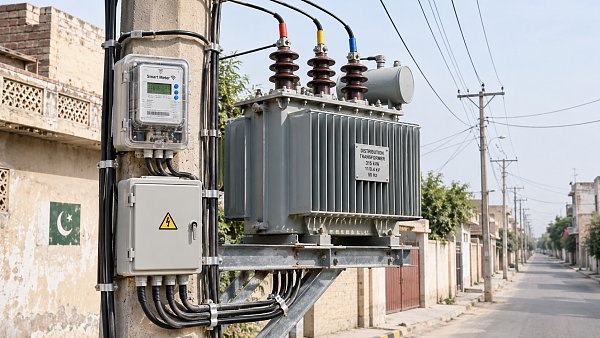
- Pakistan to Seek World Bank and ADB Funding for Smart MetersPakistan seeks World Bank and ADB funding for smart meters on distribution transformers. Explore the plan to tackle power theft and improve grid efficiency.
- What Is Precision Medicine and How Does It Guide Treatment?Discover how precision medicine uses biomarkers and genetic insights to guide treatment, where it can help, and what to ask before testing.
New Policy to Boost Overseas Technical Talent for Automated Looms


Amid growing global demand for smart textile machinery, a newly launched inter-ministerial initiative is set to reshape talent supply chains for export-oriented advanced manufacturing firms. Though the exact launch date remains unspecified, the campaign — officially named ‘Policy Escorting the Employment Path’ — begins implementation in May 2026 and targets structural bottlenecks in overseas technical service capacity, particularly for automated weaving equipment suppliers.
Event Overview
Starting in May 2026, China’s Ministry of Education and Ministry of Human Resources and Social Security jointly launched the ‘Policy Escorting the Employment Path’ special action. The initiative promotes internships and employment placements for university graduates majoring in intelligent manufacturing and mechatronics engineering at advanced manufacturing enterprises’ overseas service positions. Its explicit aim is to alleviate long-standing shortages of certified, on-site engineers capable of machine installation, commissioning, and localized maintenance for Automated Looms exporters — especially across Southeast Asia and Latin America.
Industries Affected

Direct Export Enterprises
Automated loom manufacturers exporting to emerging markets face heightened client expectations: procurement decisions increasingly weigh whether Chinese suppliers can deploy certified engineers onsite. This policy directly addresses that competitive gap by expanding the pipeline of bilingual, technically trained graduates qualified for overseas deployment. Impact manifests in shorter response times, higher first-time-right installation rates, and improved post-sale service reputation — all critical in tender evaluations.
Raw Material Procurement Enterprises
Firms sourcing high-precision components (e.g., servo motors, motion controllers, industrial sensors) for automated looms are indirectly affected. As overseas service reliability improves, demand for higher-specification, service-integrated subsystems rises — prompting procurement strategies to shift toward vendors offering extended technical support documentation, modular diagnostics interfaces, and localization-ready firmware. This may accelerate vendor consolidation among component suppliers with embedded engineering capabilities.
Contract Manufacturing & Assembly Enterprises
Domestic OEM/ODM partners assembling Automated Looms for international brands must now align training curricula with field-service readiness — including cross-cultural communication modules, basic troubleshooting certification pathways, and familiarity with regional electrical safety standards (e.g., IEC 60204-1, UL 508A). Their role evolves from pure production execution to co-developing service-enabling design features (e.g., remote diagnostic ports, standardized mounting brackets).
Supply Chain Service Providers
Logistics integrators, technical training platforms, and localization agencies face new collaboration mandates. For example, freight forwarders handling ‘engineer-in-cargo’ deployments must formalize visa coordination, tool-kit customs clearance protocols, and temporary work permit support packages. Meanwhile, vocational training providers are incentivized to co-certify curricula with industry associations — bridging academic theory and ASEAN/MERCOSUR regulatory requirements.
Key Focus Areas & Recommended Actions
Align Academic Partnerships with Regional Certification Standards
Exporters should proactively engage universities participating in the initiative to co-develop internship syllabi incorporating region-specific compliance benchmarks (e.g., Singapore’s SS 530:2017 for industrial automation safety or Brazil’s NR-12). Doing so ensures graduates arrive onsite with pre-recognized competencies — reducing client-side validation delays.
Integrate Field-Service Metrics into Product Development Cycles
Engineering teams must treat overseas serviceability as a core KPI — not an afterthought. This includes designing for modularity, standardizing diagnostic interfaces across product lines, and embedding multilingual error-code libraries. Early involvement of field engineers in R&D reviews strengthens alignment between hardware design and real-world deployment constraints.
Develop Tiered Engineer Deployment Frameworks
Rather than relying solely on senior engineers for all markets, firms should build tiered response models: junior engineers (trained under the policy) handle routine commissioning in mature markets; mid-level specialists manage complex integration in growth regions; and senior mentors rotate regionally for knowledge transfer. This balances cost, scalability, and capability retention.
Editorial Perspective / Industry Observation
Observably, this policy marks a strategic pivot from viewing overseas service as a cost center to treating it as a differentiating capability pillar. Analysis shows that in Southeast Asian textile clusters, clients now assign ~23% weight to vendor-provided engineer availability during bid evaluation — up from <10% in 2022. However, success hinges less on headcount expansion than on systemic coherence: curriculum reform, certification portability, and real-time feedback loops between field engineers and product teams. Current implementation risks remain uneven — particularly in language training depth and recognition of Chinese-issued technical credentials abroad. A more robust outcome would require bilateral MOUs with host-country accreditation bodies, not just domestic policy alignment.
Conclusion
This initiative does not eliminate technical service challenges overnight — but it signals a maturing approach to global competitiveness in advanced textile machinery. Rather than reacting to market-driven service demands, Chinese exporters are now co-shaping talent infrastructure with national education policy. The longer-term significance lies not in immediate headcount gains, but in institutionalizing service-readiness as a non-negotiable dimension of product excellence.
Source Attribution
Official announcements issued jointly by the Ministry of Education of the People’s Republic of China and the Ministry of Human Resources and Social Security (May 2026 framework document); supplementary data drawn from 2025 ASEAN Textile Machinery Buyers’ Survey (published by China Textile Machinery Association). Note: Recognition status of graduate certifications in target countries remains subject to ongoing bilateral negotiations — to be monitored through diplomatic and industry channels.
Recommended for You
 Digital SeaHow Does a Ballast Cleaner Screening System Separate Track Ballast?Discover how a ballast cleaner screening system separates reusable stone from fines, what affects performance, and how to assess the results.By: Captain Kenji SatoNov 14, 2026
 Smart MetersPakistan to Seek World Bank and ADB Funding for Smart MetersPakistan seeks World Bank and ADB funding for smart meters on distribution transformers. Explore the plan to tackle power theft and improve grid efficiency.By: Dr. Elena VoltNov 13, 2026
 Digital SeaWhat Is Precision Medicine and How Does It Guide Treatment?Discover how precision medicine uses biomarkers and genetic insights to guide treatment, where it can help, and what to ask before testing.By: Captain Kenji SatoNov 13, 2026
 Grid Resilience2026 CSEE Annual Meeting Opens with Focus on AI and Power SystemsThe 2026 CSEE Annual Meeting explores AI, low-carbon power systems and ultra-high-voltage transmission. Discover why these discussions matter.By: Dr. Elena VoltNov 12, 2026
 Digital SeaShip Radar Detection Range: How Far Can It See and What Limits It?Ship radar detection range depends on more than the display scale. Discover how antenna height, weather, target size, and settings affect what radar can see.By: Captain Kenji SatoNov 12, 2026
 UHV TransformersGE Vernova to Invest $34.5 Million in Louisiana Transformer Plant ExpansionGE Vernova plans a $34.5 million transformer plant expansion in Louisiana. Explore its potential impact on North American supply and procurement.By: Dr. Elena VoltNov 11, 2026
 Digital SeaMetro Station Noise Criteria: Limits and Measurement MethodsExplore metro station noise criteria, applicable limits and measurement methods. Learn how to select metrics and assess compliance with confidence.By: Captain Kenji SatoNov 11, 2026
 Digital SeaKongsberg Maritime Unveils Arctic Hunter Unmanned Surface VesselKongsberg Maritime's Arctic Hunter unmanned surface vessel is proposed for the Royal Navy's Type 92 programme. Explore its technology and procurement implications.By: Captain Kenji SatoNov 10, 2026
 Sorting RobotsHow Accurate Is AI in Food Quality Control? Metrics and Testing MethodsExplore AI in food quality control accuracy, from recall and false negatives to validation methods. Learn how to assess real-world inspection reliability.By: Marcus SterlingNov 10, 2026
 UHV TransformersGE Vernova Selected for 6 GW HVDC Link in IndiaGE Vernova will design a 6 GW HVDC link for PGCIL, connecting Rajasthan and South Kalamb to support India's clean energy transition. Discover the project.By: Dr. Elena VoltNov 09, 2026
 Grid ResilienceEurope's Grid Compliance Standards in 2026: Generator Connection RequirementsExplore new grid compliance standards 2026 Europe projects must address, from generator connection rules to testing and documentation. Prepare for approval.By: Dr. Elena VoltNov 09, 2026
 Technical FabricsNonwoven Bonding Cost Data: Comparing Thermal and Chemical ProcessesExplore nonwoven bonding cost data to compare thermal and chemical processes, assess usable yield, and choose the best-value option for your application.By: Chloe DuboisNov 08, 2026
 Fiber LasersIndustrial Lasers to 2035: Automotive Lightweighting and Precision Welding Drive DemandExplore the industrial laser market outlook to 2035 and discover how automotive lightweighting and precision welding could shape demand and procurement.By: Dr. Hideo TanakaNov 07, 2026
 Technical FabricsChoosing Geotextile Under Railway Ballast: Key Performance RequirementsChoosing geotextile under railway ballast? Explore essential filtration, drainage, strength and durability criteria to make a confident, project-specific selection.By: Chloe DuboisNov 07, 2026
 Digital SeaChoosing Rail Welding Equipment for Maintenance: Field Conditions and Weld TypesChoose rail welding equipment for maintenance with confidence. Compare welding methods, field constraints, inspection needs, and lifecycle costs.By: Captain Kenji SatoNov 06, 2026
 Digital SeaIndia Broadband Forum Urges Stronger Submarine Cable ResilienceIndia’s submarine cable resilience is in focus as the Broadband India Forum urges faster repairs, more vessels and stronger landing infrastructure.By: Captain Kenji SatoNov 06, 2026
 Digital SeaChoosing a Railway Network Switch Supplier: Reliability and Support CriteriaChoosing a railway network switch supplier? Compare reliability, standards evidence, cybersecurity, and lifecycle support to reduce project risk.By: Captain Kenji SatoNov 05, 2026
 Grid ResilienceUS Grid Equipment Import Ban Raises Cost and Implementation ConcernsThe US grid equipment import ban raises concerns over costs and delivery delays. Explore how unclear criteria could affect procurement and supply chains.By: Dr. Elena VoltNov 05, 2026
 Digital SeaRailway Coupler Price: How Type and Specifications Affect QuotesRailway coupler price depends on type, specifications, and order scope. Learn how to compare quotes, avoid hidden costs, and make a confident buying decision.By: Captain Kenji SatoNov 04, 2026
 Grid ResilienceGlobal Smart Grid Companies Raise $3 Billion in First Nine Months of 2026Global smart grid companies raised $3 billion in the first nine months of 2026. Explore the funding breakdown and potential implications for buyers and suppliers.By: Dr. Elena VoltNov 04, 2026
 Digital SeaChoosing Wholesale Pet Toys: How to Evaluate Suppliers and Minimum OrdersWholesale pet toys: learn how to assess suppliers, compare minimum orders and landed costs, and reduce inventory risk before you buy.By: Captain Kenji SatoNov 03, 2026
 Digital SeaSustainable Packaging Design: How to Choose Materials and Reduce WasteDiscover how sustainable packaging design helps reduce waste, protect products, and control costs with practical material choices and proven testing strategies.By: Captain Kenji SatoNov 02, 2026
 Technical FabricsUSMCA's First Joint Review Puts Textile Supply Chain Rules in FocusUSMCA's first joint review puts textile supply chain rules in focus. Explore potential impacts on origin compliance, sourcing and tariff treatment.By: Chloe DuboisNov 02, 2026
 Digital SeaManufacturing KPI Benchmarking: How to Compare Production PerformanceBenchmarking KPI manufacturing performance? Learn how to compare OEE, quality and downtime, identify meaningful gaps, and turn insights into practical improvements.By: Captain Kenji SatoNov 01, 2026
 Smart MetersCCI Approves Adani Energy Solutions' ₹305 Billion Acquisition of IntelliSmartCCI approves Adani Energy Solutions' ₹305 billion acquisition of IntelliSmart. Discover what the deal could mean for India's smart meter market.By: Dr. Elena VoltNov 01, 2026
 Digital SeaChoosing a Coin Laundry Machinery OEM: What Buyers Should EvaluateChoosing a coin laundry machinery OEM? Compare machine specifications, payment integration, lifecycle costs, and support to make a confident buying decision.By: Captain Kenji SatoOct 31, 2026
 Grid ResilienceUS Energy Department Announces $237 Million Grid SCALED Funding ProgramExplore the DOE's $237 million Grid SCALED funding program and its goals to strengthen grid equipment supply chains, lower electricity costs, and improve resilience.By: Dr. Elena VoltOct 31, 2026
 UHV TransformersA Decade of UHV Power in Shandong: Province Leads in Station NumbersShandong UHV power leads China in station numbers. Explore a decade of grid development and its implications for electricity supply and business planning.By: Dr. Elena VoltOct 30, 2026
 Digital SeaChoosing a Composite Train Body Panel Manufacturer: Fire Safety and Quality ChecksChoosing a composite train body panels manufacturer? Learn how to verify fire test evidence, audit production quality, and avoid costly approval gaps before you buy.By: Captain Kenji SatoOct 29, 2026
 Subsea ROV/AUVOcean Infinity Deploys Six AUVs Together Beyond 5,000 MetresOcean Infinity reportedly deployed six HUGIN AUVs beyond 5,200 metres. Explore what concurrent deepwater missions could mean for seabed surveys and procurement.By: Captain Kenji SatoOct 29, 2026
 Grid ResilienceRenewable Energy Grid Balancing: How Storage and Demand Response Work TogetherExplore renewable energy grid balancing with storage and demand response. Learn how coordinated controls manage shortfalls, absorb surplus power, and improve grid reliability.By: Dr. Elena VoltOct 28, 2026