BDI: 1,842 ▼ 1.2%
COTTON NO.2: 84.12 ▲ 0.4%
LME COPPER: 8,432.50 ▲ 2.1%
FOOD SAFETY INDEX: 94.2 ARCHIVE_SECURED
OPTICAL INDEX: 11,204.09 STABLE
BDI: 1,842 ▼ 1.2%

SECTOR INDEX
V.24.08 ARCHIVE
Hot Articles
- When Is a Straddle Monorail System a Good Fit for Urban Transit Corridors?Is a straddle monorail system right for your urban corridor? Explore capacity, space, station access, safety, and lifecycle costs to make a confident transit investment.
- EU Textile Waste Reporting: Who Must Report and What Data Is Required?EU textile waste reporting explained: discover who must report, what data is required, and how to verify EPR, waste records, and shipment compliance across EU markets.
- Yarn Strength Benchmarks for Weaving: Setting Warp and Weft RequirementsSet yarn strength benchmarks for weaving with practical warp and weft criteria. Learn how tenacity, variability, and loom loads inform specifications that help reduce breaks and improve reliability.
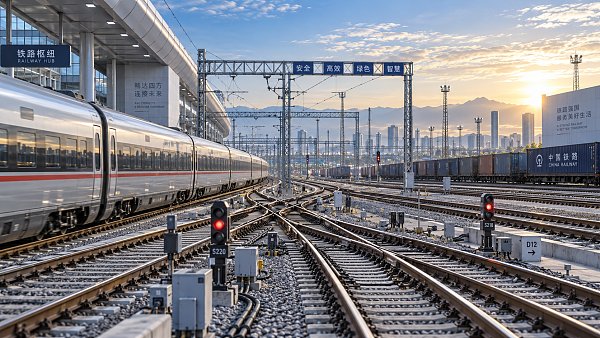
What rail manufacturing prowess really looks like in 2026


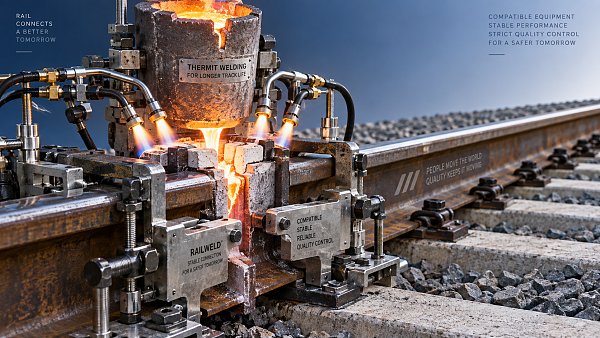
In 2026, rail manufacturing prowess is no longer defined by output alone, but by traceable quality, standards compliance, supply-chain resilience, and lifecycle efficiency. For commercial evaluators, the real benchmark lies in how manufacturers align engineering capability with procurement risk control, global certification demands, and long-term asset performance—turning rail production from a volume game into a strategic industrial advantage.
What does rail manufacturing prowess actually mean in 2026?
For many buyers, the phrase rail manufacturing prowess once suggested scale, mill capacity, and the ability to meet large infrastructure orders. In 2026, that definition is too narrow. Commercial evaluators now use the term to describe a manufacturer’s full industrial capability across metallurgy, process consistency, digital traceability, standards adherence, logistics reliability, and post-delivery performance support.
In practical terms, a strong producer is not only able to roll rails at the required profile and hardness. It must also control chemistry, microstructure, straightness, ultrasonic testing quality, dimensional tolerances, and fatigue behavior under real operating loads. It must document every heat, every inspection point, and every deviation response. This shift matters because rail is a safety-critical asset with long service cycles and high replacement cost.
For business assessment teams, true rail manufacturing prowess also includes procurement visibility. Can the supplier prove origin of raw material? Can it maintain output during energy shocks or freight disruption? Does it understand different market frameworks such as EN, AREMA, UIC, ISO, and customer-specific technical specifications? In short, prowess now means industrial depth plus commercial reliability.
Why has rail manufacturing prowess become such a critical evaluation factor for buyers?
The short answer is risk. Rail procurement is tied to major public infrastructure, mining logistics, metro expansion, heavy haul corridors, and cross-border transport systems. A weak supplier may still offer a competitive price, but hidden quality gaps can trigger installation delays, premature wear, warranty disputes, or costly maintenance shutdowns years later.
Several market shifts have made rail manufacturing prowess more visible in sourcing decisions. First, asset owners are moving toward lifecycle procurement rather than lowest initial bid. Second, regulators and project financiers increasingly demand documentation, ESG accountability, and verified quality systems. Third, supply chains have become less predictable, so continuity of supply is now part of technical qualification. Finally, rail operators want materials optimized for higher axle loads, tighter maintenance windows, and more demanding service conditions.
This is especially relevant to procurement directors, infrastructure investors, and technical benchmarking teams. In a multi-sector B2B environment such as the one G-MCE addresses, the same principles used to assess transformers, automated industrial systems, or precision modules now apply to rail products as well: measurable performance, standards conformity, and documented resilience.
Which indicators best reveal real rail manufacturing prowess instead of marketing claims?
Commercial evaluators should avoid relying on brand reputation alone. The strongest way to assess rail manufacturing prowess is to test a supplier across a clear set of operational and technical indicators. The key is to combine plant capability evidence with risk-control evidence.
Start with production fundamentals: steelmaking route, rolling line capability, heat treatment control, profile accuracy, and capacity stability. Then move to quality proof: laboratory testing, non-destructive inspection, defect rejection rates, and third-party certifications. After that, assess supply-chain performance: lead-time consistency, access to alloy inputs, export handling, and contingency planning.
A useful benchmark table can help separate strong candidates from average ones:
A manufacturer with genuine rail manufacturing prowess usually performs well across all five areas, not just one or two. Buyers should also ask for case evidence from heavy haul, urban transit, high-speed, or industrial freight projects that match intended use.

How should commercial evaluators compare suppliers when technical documents look similar?
This is one of the most common sourcing problems. On paper, multiple manufacturers may claim compliance with the same standards, similar hardness ranges, and comparable production capacity. Yet the real difference in rail manufacturing prowess often appears in execution discipline rather than headline specifications.
A practical comparison should focus on four layers. First, verify whether the supplier’s quality data is batch-specific and traceable. Second, assess whether its testing regime is preventive or merely corrective. Third, review how it handles deviations, claims, and field feedback. Fourth, test commercial responsiveness: quotation clarity, technical answer speed, Incoterms understanding, and change management.
For example, two suppliers may both provide rails compliant with a required standard. The stronger one will show mill certificates linked to heat number, ultrasonic test records by batch, dimensional inspection history, and clear corrective action workflows. The weaker one may only provide a compliance statement and a sample certificate unrelated to the shipment in question.
Commercial teams should therefore score suppliers not only by price and nominal specification, but also by evidence maturity. This is where a structured intelligence approach becomes valuable. G-MCE-style benchmarking helps evaluators compare different industrial vendors through a common lens: standards integrity, process transparency, and performance confidence.
What common mistakes lead buyers to overestimate rail manufacturing prowess?
One major mistake is confusing capacity with capability. High annual tonnage can indicate scale, but it does not prove process stability for demanding applications. A producer may be efficient in commodity rolling while lacking control over premium rail grades, head-hardened products, or specialized track requirements.
Another mistake is treating certification as a complete quality guarantee. Certifications matter, but they are only part of the picture. Real rail manufacturing prowess requires evidence that standards are embedded in daily production, not simply displayed in a sales deck. Buyers should ask how often audits occur, what non-conformities were found, and how corrective measures were closed.
A third mistake is ignoring logistics engineering. Rail is heavy, long, and transport-sensitive. Packaging, handling, port access, vessel planning, and inland freight coordination all influence whether the product arrives in usable condition and on schedule. Even technically strong producers can become risky partners if export execution is weak.
A fourth mistake is evaluating only procurement cost instead of total ownership cost. Low acquisition price may be offset by faster wear, more grinding, higher replacement frequency, or operational downtime. Commercial evaluators should connect manufacturing quality to lifecycle economics, especially in projects where maintenance disruptions are expensive.
How do standards, traceability, and resilience reshape rail manufacturing prowess?
In 2026, these three elements are central. Standards determine whether a manufacturer can enter regulated or technically demanding markets. Traceability determines whether quality can be trusted and defended in audits or disputes. Resilience determines whether a supplier can keep serving through volatility.
Standards compliance is no longer just about passing final inspection. It involves disciplined process control from raw materials to final shipment. Traceability strengthens that process by linking every batch to heat records, test results, inspection logs, and shipping documents. This is especially important in cross-border B2B procurement, where stakeholders may include EPC firms, public authorities, operators, insurers, and financiers.
Resilience adds a further layer to rail manufacturing prowess. Buyers now ask whether the supplier has backup energy arrangements, alternate raw material channels, geographically diversified logistics routes, and realistic recovery plans. These questions may have seemed secondary in the past, but today they directly affect delivery certainty and project continuity.
The strongest suppliers therefore behave less like mills and more like integrated industrial partners. They provide technical assurance, regulatory awareness, and commercial predictability in one package.
If a company wants to shortlist suppliers, what should it confirm first?
Before launching deep negotiations, buyers should confirm whether each supplier is fit for the actual operating environment. This means defining application type, axle load, speed profile, climate exposure, maintenance strategy, and required standards. Without that context, even a capable manufacturer cannot be properly assessed.
A good shortlist process usually starts with these questions:
- Does the supplier have proven experience in the same rail category and service conditions?
- Can it provide traceable mill documentation and inspection records for each batch?
- Which standards and third-party validations can it demonstrate for the target market?
- What are the realistic lead times, and what buffers exist for disruption?
- How does it manage claims, technical clarifications, and field performance follow-up?
These questions help turn the broad idea of rail manufacturing prowess into a measurable supplier scorecard. They also protect commercial teams from selecting on price alone or overvaluing generic credentials.
What is the clearest takeaway for business evaluators in 2026?
The clearest takeaway is that rail manufacturing prowess is now a strategic procurement metric, not a branding phrase. It reflects whether a manufacturer can consistently convert steel, standards, testing, and logistics into dependable infrastructure performance. Buyers that assess this well reduce lifecycle cost, improve project certainty, and strengthen long-term asset value.
For commercial evaluators, the best approach is to combine technical due diligence with broader industrial intelligence. That means looking beyond brochures to traceability systems, compliance depth, delivery resilience, and real project evidence. In complex B2B ecosystems, this style of evaluation aligns closely with the G-MCE philosophy: benchmark rigorously, compare across decision-critical variables, and build sourcing decisions on verifiable data rather than assumptions.
If you need to confirm a specific sourcing path, technical parameter set, project timeline, budget range, or cooperation model, it is best to first clarify the operating standard, rail grade, inspection requirements, lead-time tolerance, logistics terms, and after-sales accountability expected from the supplier. Those questions will reveal very quickly whether claimed rail manufacturing prowess is real, relevant, and commercially dependable.
Recommended for You
 Digital SeaWhen Is a Straddle Monorail System a Good Fit for Urban Transit Corridors?Is a straddle monorail system right for your urban corridor? Explore capacity, space, station access, safety, and lifecycle costs to make a confident transit investment.By: Captain Kenji SatoOct 19, 2026
 Fabric LogicEU Textile Waste Reporting: Who Must Report and What Data Is Required?EU textile waste reporting explained: discover who must report, what data is required, and how to verify EPR, waste records, and shipment compliance across EU markets.By: Chloe DuboisOct 18, 2026
 Fabric LogicYarn Strength Benchmarks for Weaving: Setting Warp and Weft RequirementsSet yarn strength benchmarks for weaving with practical warp and weft criteria. Learn how tenacity, variability, and loom loads inform specifications that help reduce breaks and improve reliability.By: Chloe DuboisOct 17, 2026
 Fabric LogicEnergy-Saving Textile Machinery: How to Calculate Payback for Your MillEvaluate energy saving textile machinery with a practical payback formula, real-world cost factors, and a worked example. Discover how to verify savings and invest confidently in your mill.By: Chloe DuboisOct 16, 2026
 Digital SeaETSC Adoption in Europe: Policy Drivers, Costs, and Implementation BarriersExplore ETSC adoption Europe-wide: uncover policy drivers, installed costs, and implementation barriers to evaluate solar thermal investments and identify projects with stronger returns.By: Captain Kenji SatoOct 15, 2026
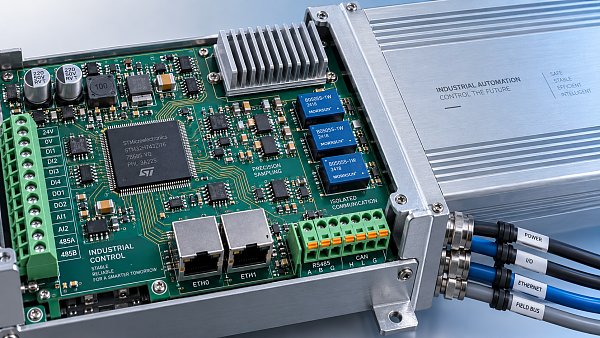
 Digital SeaChoosing Semiconductor Solutions for Industrial Controls: Key Design CriteriaChoose semiconductor solutions for industrial controls with confidence. Explore key criteria for timing, accuracy, power, safety, and lifecycle support to make smarter design decisions.By: Captain Kenji SatoOct 14, 2026
 Aseptic FillingWhen Should Compliance Checks Start for Aseptic Filling Procurement?How early should compliance checks start in procurement planning? Learn why aseptic filling reviews should begin before supplier shortlisting to reduce risks, rework, and costly delays.By: Marcus SterlingOct 13, 2026
 Smart MetersHow Do You Assess Market Demand Before Sourcing New Smart Meters?How do I assess market demand before sourcing a new industrial product? Discover how to validate smart meter demand, check technical fit, and reduce inventory risk before committing to bulk orders.By: Dr. Elena VoltOct 13, 2026
 GIS SwitchgearWhat Should You Compare Besides Price When Selecting GIS Switchgear?What should I compare besides price when selecting an industrial product? Explore GIS switchgear ratings, IEC compliance, maintenance and lifecycle costs to make a confident procurement decision.By: Dr. Elena VoltOct 13, 2026
 Optical SensorsHow Do You Choose Optical Sensors for Harsh Industrial Environments?How do I choose components for harsh industrial environments? Discover how to select optical sensors for dust, heat, vibration, and washdown—and prevent costly missed detections.By: Dr. Hideo TanakaOct 13, 2026
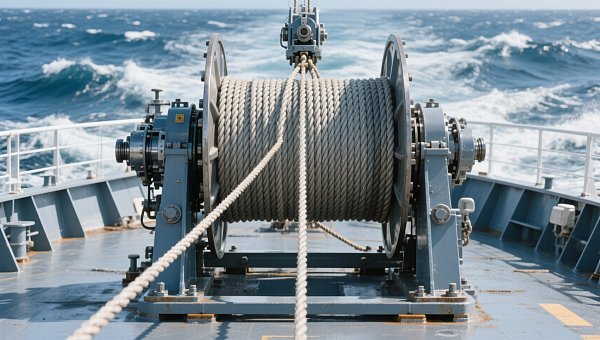
 Marine WinchesWhich Operating Conditions Can Change Marine Winch Selection?Which industrial application conditions can change product selection? Explore how loads, sea state, duty cycle and power shape marine winch selection to make a smarter investment.By: Captain Kenji SatoOct 13, 2026
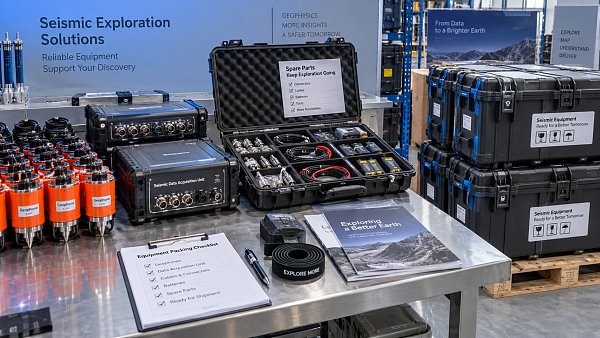
 Digital SeaChoosing a Seismic Survey Equipment Distributor: Lead Times and Spare PartsChoosing a seismic survey equipment distributor? Learn how to verify lead times, secure critical spare parts, and compare support to reduce downtime and buy with confidence.By: Captain Kenji SatoOct 13, 2026
 Digital SeaHow to Use Industrial Benchmarking Data to Evaluate Supplier Risk and CapabilityIndustrial benchmarking data for supplier evaluation helps buyers assess capability, compliance, capacity, and delivery risk. Learn how to make smarter, evidence-based sourcing decisions.By: Captain Kenji SatoOct 12, 2026
 Fabric LogicFashion Supply Chain Cost Trends: What Is Driving Margins in 2026?Fashion supply chain cost trends for 2026: discover how materials, freight, labor, compliance, and inventory are reshaping margins—and the strategies leaders need to protect profitability.By: Chloe DuboisOct 11, 2026
 Lumen VisionHow Smart Street Lighting Cuts Energy Use Without Compromising Road SafetySmart street lighting reduces energy use while protecting road safety through adaptive controls, reliable monitoring, and risk-based lighting design. Learn the key strategies.By: Dr. Hideo TanakaOct 10, 2026
 Digital SeaDouble Platinum Spark Plugs: When Their Longer Service Life Justifies the CostDouble platinum spark plugs offer longer service life, stable gaps, and lower labor costs. Learn when their premium price is worth it for your vehicle.By: Captain Kenji SatoOct 08, 2026
 Sorting RobotsHow to Benchmark Linear Guide Load Ratings for High-Cycle Automation AxesLinear guide load rating benchmarks for high-cycle automation axes: compare loads, moments, stiffness, lubrication, and life calculations to select reliable guides.By: Marcus SterlingOct 07, 2026
 Digital SeaWhich Rail Data Transparency Metrics Improve Capacity Planning and Service Reliability?Rail data transparency metrics reveal usable capacity, dwell, recovery, and asset risks—helping rail leaders plan more reliable, resilient services.By: Captain Kenji SatoOct 06, 2026
 Digital SeaHow to Select a Marine Piston Air Compressor for High-Demand Shipboard ServiceMarine piston air compressor selection guide for high-demand shipboard service—compare capacity, redundancy, air quality, maintenance, and compliance requirements.By: Captain Kenji SatoOct 05, 2026
 Grid ResilienceIEC 61850 Monitoring Latency: How to Set Performance Limits for Protection SystemsIEC 61850 monitoring latency explained: learn how to set, test, and verify end-to-end performance limits that protect critical GOOSE and Sampled Values systems.By: Dr. Elena VoltOct 04, 2026
 Digital SeaHow to Select Bulldozers by Blade Type, Ground Conditions, and Earthmoving OutputBulldozers selection made practical: compare blade types, track setups, ground conditions, and cycle output to choose the right dozer for lower costs and reliable earthmoving.By: Captain Kenji SatoOct 03, 2026
 Dyeing MachinesHow Sustainable Dyeing Cuts Water Use and Chemical Risk in Textile ProductionSustainable dyeing cuts water use and chemical risk through smarter liquor control, efficient rinsing, safer inputs, and repeatable textile quality.By: Chloe DuboisOct 02, 2026
 Optical SensorsSingle-Mode Fiber Loss in Railway Networks: Causes, Budgets, and Test MethodsSingle mode railway fiber loss explained: identify causes, calculate realistic loss budgets, and apply OTDR and insertion-loss tests for reliable rail networks.By: Dr. Hideo TanakaOct 01, 2026
 Digital SeaIntegrated Transit Hub Planning: How to Balance Passenger Flow and Future CapacityIntegrated transit hub planning strategies for balancing passenger flow, resilient operations, phased delivery, and future capacity—explore practical insights for smarter hubs.By: Captain Kenji SatoSep 30, 2026
 Digital SeaWhat to Evaluate When Selecting a MaaS Ticketing Platform for Multimodal NetworksMaaS ticketing platform selection guide: evaluate interoperability, fare control, settlement, resilience, privacy, and scalability for multimodal networks.By: Captain Kenji SatoSep 29, 2026
 Digital SeaWhat Does Train Control Center Software Cost? Budgeting for Integration and SupportTrain control center software cost explained: compare integration, cybersecurity, commissioning, and long-term support to build a realistic rail operations budget.By: Captain Kenji SatoSep 28, 2026
 Digital SeaWhat to Evaluate in Thermite Rail Welding Equipment for Field Track RepairsThermite rail welding equipment: evaluate compatibility, preheating, alignment, safety, and supplier support for reliable field track repairs.By: Captain Kenji SatoSep 27, 2026
 Aseptic FillingISO 22000 Food Safety Certification: What Food Manufacturers Must PrepareISO 22000 food safety certification: discover the essential steps manufacturers need to build a robust FSMS, control hazards, and prepare confidently for audit success.By: Marcus SterlingSep 26, 2026
 UHV TransformersWhat Makes an Electrification Factory Ready for High-Voltage Equipment Production?Electrification factory readiness for high-voltage equipment: discover the essential standards, testing, traceability, safety, and workforce controls that drive reliable production.By: Dr. Elena VoltSep 25, 2026
 Digital SeaRail Signal Visibility: Sighting Distance, Contrast, and Verification RequirementsRail signal visibility: learn how sighting distance, contrast, weather, and verification controls help ensure safe, compliant signal recognition.By: Captain Kenji SatoSep 24, 2026
![]() GIS SwitchgearHow Do You Compare GIS Switchgear Suppliers When Certifications Differ?How do I compare industrial suppliers when certifications are not equivalent? Learn how to assess GIS switchgear test evidence, compliance scope, traceability, and project risk.By: Dr. Elena VoltSep 24, 2026
GIS SwitchgearHow Do You Compare GIS Switchgear Suppliers When Certifications Differ?How do I compare industrial suppliers when certifications are not equivalent? Learn how to assess GIS switchgear test evidence, compliance scope, traceability, and project risk.By: Dr. Elena VoltSep 24, 2026