BDI: 1,842 ▼ 1.2%
COTTON NO.2: 84.12 ▲ 0.4%
LME COPPER: 8,432.50 ▲ 2.1%
FOOD SAFETY INDEX: 94.2 ARCHIVE_SECURED
OPTICAL INDEX: 11,204.09 STABLE
BDI: 1,842 ▼ 1.2%

SECTOR INDEX
V.24.08 ARCHIVE
Hot Articles
- When Is a Straddle Monorail System a Good Fit for Urban Transit Corridors?Is a straddle monorail system right for your urban corridor? Explore capacity, space, station access, safety, and lifecycle costs to make a confident transit investment.
- EU Textile Waste Reporting: Who Must Report and What Data Is Required?EU textile waste reporting explained: discover who must report, what data is required, and how to verify EPR, waste records, and shipment compliance across EU markets.
- Yarn Strength Benchmarks for Weaving: Setting Warp and Weft RequirementsSet yarn strength benchmarks for weaving with practical warp and weft criteria. Learn how tenacity, variability, and loom loads inform specifications that help reduce breaks and improve reliability.
2026 Asia Wood Construction Expo Opens in Guangzhou



The 2026 Asia Wood Construction Expo (AMBE 2026) opened on May 15, 2026, at the Canton Fair Complex in Guangzhou, marking a pivotal moment for low-carbon building material trade between Asia and global markets. The event signals growing regulatory convergence—and commercial pressure—around fire safety and environmental performance standards, particularly for wood-plastic composites and prefabricated timber systems.
Event Overview
On May 15, 2026, the Asia Wood Construction Expo (AMBE 2026) opened in Guangzhou, drawing procurement delegations from 20 countries including Germany, Canada, and Australia. On opening day, Technical Fabrics-integrated solutions—including WPC-FR (wood-plastic composite fire-rated panels) and prefabricated timber waterproof breathable membranes—received concentrated inquiry from overseas buyers. Multiple delegations explicitly stated that bulk procurement is contingent upon dual certification to EN 13501-1 B-s1,d0 (EU fire classification) and GB/T 39117-2020 (China’s standard for fire performance of wood-based panels).
Industries Affected
Direct trading enterprises: Export-oriented distributors and trading companies face immediate operational friction. Dual-standard compliance is no longer optional for market access—it directly determines order volume and lead time. Buyers’ insistence on concurrent EN and GB certification means documentation, lab testing coordination, and customs pre-clearance processes must now be synchronized across jurisdictions, increasing administrative overhead and delaying shipment cycles.
Raw material procurement enterprises: Suppliers of base polymers, modified wood fibers, and flame-retardant additives are seeing revised specification demands. For instance, WPC-FR formulations require halogen-free FR agents certified to both EU REACH Annex XIV and China’s GB/T 39117-2020 test protocols—narrowing the pool of qualified upstream vendors and prompting renegotiation of supply agreements.
Processing and manufacturing enterprises: Producers of finished WPC panels or membrane laminates must now validate production batches against two distinct test methodologies (e.g., single-burner vs. cone calorimeter protocols under EN 13501-1 and GB/T 39117-2020 respectively). This necessitates recalibration of quality control workflows, investment in dual-certified third-party lab partnerships, and potential retooling of extrusion or coating lines to meet dimensional and thermal stability tolerances required by both standards.
Supply chain service enterprises: Certification consultants, logistics providers offering bonded warehousing for pre-shipment testing, and technical translation/localization firms are experiencing rising demand for integrated support packages. Notably, services covering simultaneous CE marking dossier preparation and Chinese CCC/CPSC-aligned documentation are now being bundled—not as add-ons, but as baseline offerings.
Key Focus Areas and Recommended Actions
Verify dual-standard test report validity across labs
Buyers cited EN 13501-1 B-s1,d0 and GB/T 39117-2020 as non-negotiable. However, test reports issued by labs accredited only under one national scheme may not satisfy mutual recognition requirements. Enterprises should confirm whether their current reports originate from labs jointly recognized by CNAS (China) and DAkkS (Germany) or UKAS (UK), and where gaps exist, initiate cross-validation studies before Q3 2026.
Map certification timelines against upcoming tender windows
Several European public-sector timber construction tenders scheduled for Q4 2026 explicitly reference EN 13501-1 B-s1,d0 + GB/T 39117-2020 co-compliance. Firms targeting those bids must complete full certification cycles—including factory audits and surveillance testing—by late August to avoid disqualification.
Assess technical feasibility of harmonized formulation design
WPC-FR products achieving B-s1,d0 typically rely on phosphorus-nitrogen synergists, whereas GB/T 39117-2020 emphasizes smoke density suppression. Analysis shows that blending intumescent char formers with surface-active smoke suppressants can achieve both targets—but requires reformulation trials validated under both test conditions. Pilot batches should begin in June 2026.
Editorial Perspective / Industry Observation
Observably, AMBE 2026 did not merely showcase products—it crystallized a structural shift: regulatory alignment is increasingly driven by buyer-led specification mandates rather than intergovernmental harmonization efforts. This ‘de facto standard stacking’—where procurement contracts enforce parallel compliance—is accelerating convergence but also raising barriers for SMEs lacking technical compliance capacity. From an industry perspective, this trend is better understood not as temporary friction, but as the emergence of a new benchmark for global timber construction supply chains.
Conclusion
The Guangzhou expo underscores that low-carbon timber construction is no longer defined solely by embodied carbon metrics—but by verifiable, interoperable safety performance. Dual-standard readiness is rapidly transitioning from competitive advantage to market entry prerequisite. Rational observation suggests that firms treating EN and GB certifications as complementary—not competing—requirements will gain first-mover leverage in transnational public infrastructure projects over the next 18 months.
Source Attribution
Official data sourced from AMBE 2026 Organizing Committee press release (May 15, 2026); EN 13501-1:2018+A1:2020 and GB/T 39117-2020 full texts published by CEN and SAC respectively. Ongoing monitoring recommended for: (1) updates to China’s voluntary certification program for export-oriented green building materials (expected Q3 2026); (2) EU Commission’s draft delegated act on sustainable timber product labeling (consultation closes July 2026).
Recommended for You
 Digital SeaWhen Is a Straddle Monorail System a Good Fit for Urban Transit Corridors?Is a straddle monorail system right for your urban corridor? Explore capacity, space, station access, safety, and lifecycle costs to make a confident transit investment.By: Captain Kenji SatoOct 19, 2026
 Fabric LogicEU Textile Waste Reporting: Who Must Report and What Data Is Required?EU textile waste reporting explained: discover who must report, what data is required, and how to verify EPR, waste records, and shipment compliance across EU markets.By: Chloe DuboisOct 18, 2026
 Fabric LogicYarn Strength Benchmarks for Weaving: Setting Warp and Weft RequirementsSet yarn strength benchmarks for weaving with practical warp and weft criteria. Learn how tenacity, variability, and loom loads inform specifications that help reduce breaks and improve reliability.By: Chloe DuboisOct 17, 2026
 Fabric LogicEnergy-Saving Textile Machinery: How to Calculate Payback for Your MillEvaluate energy saving textile machinery with a practical payback formula, real-world cost factors, and a worked example. Discover how to verify savings and invest confidently in your mill.By: Chloe DuboisOct 16, 2026
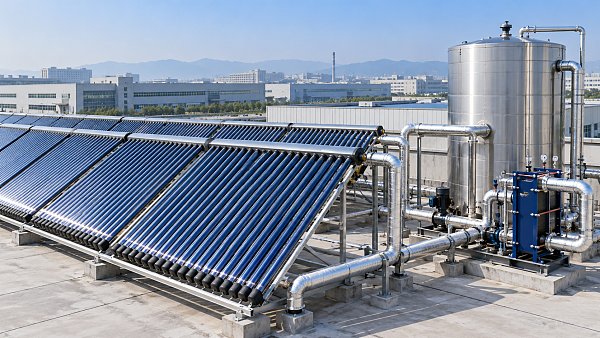
 Digital SeaETSC Adoption in Europe: Policy Drivers, Costs, and Implementation BarriersExplore ETSC adoption Europe-wide: uncover policy drivers, installed costs, and implementation barriers to evaluate solar thermal investments and identify projects with stronger returns.By: Captain Kenji SatoOct 15, 2026
 Digital SeaChoosing Semiconductor Solutions for Industrial Controls: Key Design CriteriaChoose semiconductor solutions for industrial controls with confidence. Explore key criteria for timing, accuracy, power, safety, and lifecycle support to make smarter design decisions.By: Captain Kenji SatoOct 14, 2026
 Aseptic FillingWhen Should Compliance Checks Start for Aseptic Filling Procurement?How early should compliance checks start in procurement planning? Learn why aseptic filling reviews should begin before supplier shortlisting to reduce risks, rework, and costly delays.By: Marcus SterlingOct 13, 2026
 Smart MetersHow Do You Assess Market Demand Before Sourcing New Smart Meters?How do I assess market demand before sourcing a new industrial product? Discover how to validate smart meter demand, check technical fit, and reduce inventory risk before committing to bulk orders.By: Dr. Elena VoltOct 13, 2026
 GIS SwitchgearWhat Should You Compare Besides Price When Selecting GIS Switchgear?What should I compare besides price when selecting an industrial product? Explore GIS switchgear ratings, IEC compliance, maintenance and lifecycle costs to make a confident procurement decision.By: Dr. Elena VoltOct 13, 2026
 Optical SensorsHow Do You Choose Optical Sensors for Harsh Industrial Environments?How do I choose components for harsh industrial environments? Discover how to select optical sensors for dust, heat, vibration, and washdown—and prevent costly missed detections.By: Dr. Hideo TanakaOct 13, 2026
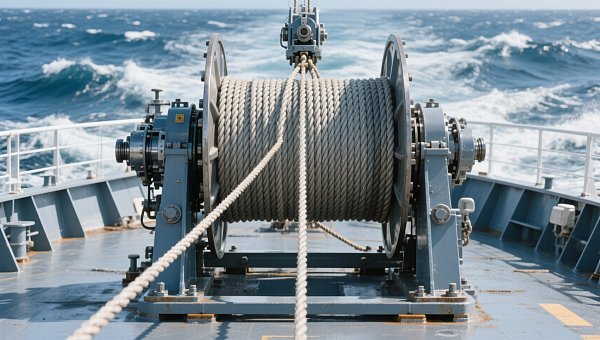
 Marine WinchesWhich Operating Conditions Can Change Marine Winch Selection?Which industrial application conditions can change product selection? Explore how loads, sea state, duty cycle and power shape marine winch selection to make a smarter investment.By: Captain Kenji SatoOct 13, 2026
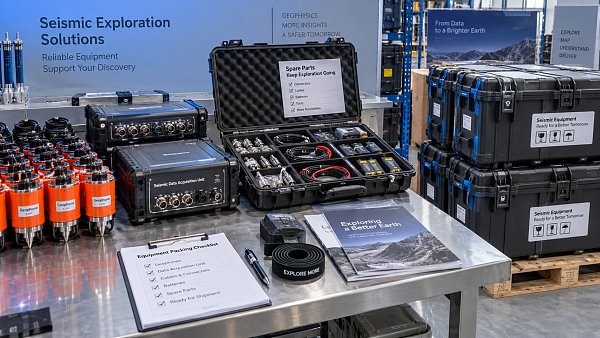
 Digital SeaChoosing a Seismic Survey Equipment Distributor: Lead Times and Spare PartsChoosing a seismic survey equipment distributor? Learn how to verify lead times, secure critical spare parts, and compare support to reduce downtime and buy with confidence.By: Captain Kenji SatoOct 13, 2026
 Digital SeaHow to Use Industrial Benchmarking Data to Evaluate Supplier Risk and CapabilityIndustrial benchmarking data for supplier evaluation helps buyers assess capability, compliance, capacity, and delivery risk. Learn how to make smarter, evidence-based sourcing decisions.By: Captain Kenji SatoOct 12, 2026
 Fabric LogicFashion Supply Chain Cost Trends: What Is Driving Margins in 2026?Fashion supply chain cost trends for 2026: discover how materials, freight, labor, compliance, and inventory are reshaping margins—and the strategies leaders need to protect profitability.By: Chloe DuboisOct 11, 2026
 Lumen VisionHow Smart Street Lighting Cuts Energy Use Without Compromising Road SafetySmart street lighting reduces energy use while protecting road safety through adaptive controls, reliable monitoring, and risk-based lighting design. Learn the key strategies.By: Dr. Hideo TanakaOct 10, 2026
 Digital SeaDouble Platinum Spark Plugs: When Their Longer Service Life Justifies the CostDouble platinum spark plugs offer longer service life, stable gaps, and lower labor costs. Learn when their premium price is worth it for your vehicle.By: Captain Kenji SatoOct 08, 2026
 Sorting RobotsHow to Benchmark Linear Guide Load Ratings for High-Cycle Automation AxesLinear guide load rating benchmarks for high-cycle automation axes: compare loads, moments, stiffness, lubrication, and life calculations to select reliable guides.By: Marcus SterlingOct 07, 2026
 Digital SeaWhich Rail Data Transparency Metrics Improve Capacity Planning and Service Reliability?Rail data transparency metrics reveal usable capacity, dwell, recovery, and asset risks—helping rail leaders plan more reliable, resilient services.By: Captain Kenji SatoOct 06, 2026
 Digital SeaHow to Select a Marine Piston Air Compressor for High-Demand Shipboard ServiceMarine piston air compressor selection guide for high-demand shipboard service—compare capacity, redundancy, air quality, maintenance, and compliance requirements.By: Captain Kenji SatoOct 05, 2026
 Grid ResilienceIEC 61850 Monitoring Latency: How to Set Performance Limits for Protection SystemsIEC 61850 monitoring latency explained: learn how to set, test, and verify end-to-end performance limits that protect critical GOOSE and Sampled Values systems.By: Dr. Elena VoltOct 04, 2026
 Digital SeaHow to Select Bulldozers by Blade Type, Ground Conditions, and Earthmoving OutputBulldozers selection made practical: compare blade types, track setups, ground conditions, and cycle output to choose the right dozer for lower costs and reliable earthmoving.By: Captain Kenji SatoOct 03, 2026
 Dyeing MachinesHow Sustainable Dyeing Cuts Water Use and Chemical Risk in Textile ProductionSustainable dyeing cuts water use and chemical risk through smarter liquor control, efficient rinsing, safer inputs, and repeatable textile quality.By: Chloe DuboisOct 02, 2026
 Optical SensorsSingle-Mode Fiber Loss in Railway Networks: Causes, Budgets, and Test MethodsSingle mode railway fiber loss explained: identify causes, calculate realistic loss budgets, and apply OTDR and insertion-loss tests for reliable rail networks.By: Dr. Hideo TanakaOct 01, 2026
 Digital SeaIntegrated Transit Hub Planning: How to Balance Passenger Flow and Future CapacityIntegrated transit hub planning strategies for balancing passenger flow, resilient operations, phased delivery, and future capacity—explore practical insights for smarter hubs.By: Captain Kenji SatoSep 30, 2026
 Digital SeaWhat to Evaluate When Selecting a MaaS Ticketing Platform for Multimodal NetworksMaaS ticketing platform selection guide: evaluate interoperability, fare control, settlement, resilience, privacy, and scalability for multimodal networks.By: Captain Kenji SatoSep 29, 2026
 Digital SeaWhat Does Train Control Center Software Cost? Budgeting for Integration and SupportTrain control center software cost explained: compare integration, cybersecurity, commissioning, and long-term support to build a realistic rail operations budget.By: Captain Kenji SatoSep 28, 2026
 Digital SeaWhat to Evaluate in Thermite Rail Welding Equipment for Field Track RepairsThermite rail welding equipment: evaluate compatibility, preheating, alignment, safety, and supplier support for reliable field track repairs.By: Captain Kenji SatoSep 27, 2026
 Aseptic FillingISO 22000 Food Safety Certification: What Food Manufacturers Must PrepareISO 22000 food safety certification: discover the essential steps manufacturers need to build a robust FSMS, control hazards, and prepare confidently for audit success.By: Marcus SterlingSep 26, 2026
 UHV TransformersWhat Makes an Electrification Factory Ready for High-Voltage Equipment Production?Electrification factory readiness for high-voltage equipment: discover the essential standards, testing, traceability, safety, and workforce controls that drive reliable production.By: Dr. Elena VoltSep 25, 2026
 Digital SeaRail Signal Visibility: Sighting Distance, Contrast, and Verification RequirementsRail signal visibility: learn how sighting distance, contrast, weather, and verification controls help ensure safe, compliant signal recognition.By: Captain Kenji SatoSep 24, 2026
![]() GIS SwitchgearHow Do You Compare GIS Switchgear Suppliers When Certifications Differ?How do I compare industrial suppliers when certifications are not equivalent? Learn how to assess GIS switchgear test evidence, compliance scope, traceability, and project risk.By: Dr. Elena VoltSep 24, 2026
GIS SwitchgearHow Do You Compare GIS Switchgear Suppliers When Certifications Differ?How do I compare industrial suppliers when certifications are not equivalent? Learn how to assess GIS switchgear test evidence, compliance scope, traceability, and project risk.By: Dr. Elena VoltSep 24, 2026