BDI: 1,842 ▼ 1.2%
COTTON NO.2: 84.12 ▲ 0.4%
LME COPPER: 8,432.50 ▲ 2.1%
FOOD SAFETY INDEX: 94.2 ARCHIVE_SECURED
OPTICAL INDEX: 11,204.09 STABLE
BDI: 1,842 ▼ 1.2%

SECTOR INDEX
V.24.08 ARCHIVE
Hot Articles
- How reliable is food processing water usage data?Food processing water usage data can shape audits, hygiene validation, and cost control. Learn how to verify reliability, reduce risk, and make smarter facility decisions.
- What affects CNC machines cost beyond the sticker price?CNC machines cost goes far beyond the quote. Learn how tooling, installation, software, downtime, energy, and productivity shape true ROI before you buy.
- Which wellness tips actually fit a busy workday?Wellness tips for busy workdays: discover simple hydration, movement, posture, and breathing habits that boost focus, reduce stress, and protect energy without disrupting productivity.
CDE Adds 74 External Experts to Boost Aseptic Filling Device Export Support


CDE’s April 28, 2026 announcement of 74 newly appointed external experts—specializing in aseptic filling, isolator qualification, and PUPSIT testing—marks a notable development for Chinese manufacturers of sterile processing equipment seeking regulatory alignment in FDA- and EMA-governed clinical trial markets.
Event Overview
On April 28, 2026, the Center for Drug Evaluation (CDE) under China’s National Medical Products Administration (NMPA) published an updated list of external experts. The list includes 74 newly added experts, 32 of whom hold prior review experience with the U.S. Food and Drug Administration (FDA) or the European Medicines Agency (EMA). Their expertise spans aseptic filling process validation, isolator system verification, and pre-use post-sterilization integrity testing (PUPSIT).
Industries Affected
Direct Exporters of Aseptic Filling Equipment
These companies supply clinical-trial-grade aseptic filling systems—including vial fillers, isolators, and RABS—to sponsors conducting first-in-human or early-phase trials overseas. The addition of FDA/EMA-experienced experts at CDE signals stronger institutional capacity to assess technical documentation against international expectations. As a result, exporters may face more precise and consistent feedback during CDE-led pre-submission consultations—potentially reducing rework cycles when preparing parallel submissions to FDA or EMA.
Contract Manufacturing Organizations (CMOs) Supporting Clinical Supply
CMOs that integrate aseptic filling hardware into clinical manufacturing services—especially those marketing dual-compliance (China + FDA/EMA) capabilities—are indirectly affected. With CDE’s enhanced internal review depth, expectations for vendor qualification packages, equipment traceability, and process-specific risk assessments (e.g., PUPSIT justification) may become more aligned with international norms. This could influence how CMOs select, qualify, and document their equipment suppliers.
Domestic Suppliers of Critical Subsystems and Components
Vendors providing isolator glove ports, HEPA filter housings, sterilizable sensors, or single-use fluid path components may observe downstream pressure for improved traceability and test-ready documentation. While not directly regulated by CDE as standalone devices, these subsystems increasingly appear in equipment dossiers reviewed by CDE’s new expert cohort. Their inclusion in validation narratives—particularly around containment assurance and sterility maintenance—may attract closer scrutiny.
What Relevant Enterprises or Practitioners Should Focus On
Monitor CDE’s upcoming guidance updates on equipment-related CMC submissions
Analysis shows CDE has not yet released revised technical documents explicitly referencing PUPSIT or isolator lifecycle validation. However, the expert appointments suggest forthcoming refinements—especially in sections covering equipment qualification and process-specific controls. Stakeholders should track CDE’s public consultation notices over Q3–Q4 2026.
Review current clinical submission packages for alignment with FDA/EMA expectations on equipment narrative
Observably, many Chinese-origin equipment dossiers still emphasize design compliance over operational risk mitigation (e.g., describing isolator construction but omitting real-time monitoring strategies for glove integrity or environmental excursions). Companies preparing for overseas clinical filings should audit whether their equipment descriptions meet ICH Q5A(R2), ASTM E2503, and EU Annex 1 (2022) benchmarks—not just NMPA requirements.
Distinguish between policy signal and immediate procedural change
The expert appointments reflect capacity-building—not an immediate revision of submission rules. From industry perspective, this is not a trigger for urgent filing resubmissions, but rather a cue to strengthen internal technical writing standards, especially for cross-border clinical supply dossiers. No new mandatory templates or deadlines have been announced.
Prepare internal alignment between engineering, QA, and regulatory affairs teams on equipment validation scope
Current more appropriate action is cross-functional review of existing aseptic equipment validation protocols—particularly for PUPSIT rationale, isolator decontamination cycle mapping, and worst-case challenge studies. Where gaps exist relative to FDA/EMA precedents (e.g., lack of dynamic particulate monitoring during interventions), prioritization should be based on target clinical trial geography.
Editorial Perspective / Industry Observation
This development is better understood as a structural signal—not an operational shift. Analysis shows CDE is reinforcing its ability to engage critically with complex equipment-related data, rather than introducing new compliance thresholds overnight. It reflects growing recognition that clinical-grade aseptic equipment is no longer a ‘black box’ in biologics development; its performance characteristics directly impact product quality attributes. Observably, the focus on PUPSIT and isolator verification suggests increasing emphasis on *process-specific* sterility assurance—not just generic GMP adherence. Industry should view this as a long-term calibration toward harmonized review practices, not a short-term compliance event.
Conclusion: The CDE expert expansion does not alter current submission requirements, but it does indicate where future technical expectations are likely to converge—with FDA and EMA standards serving as de facto reference points. For stakeholders, the most rational interpretation is proactive alignment: treating international regulatory logic as a benchmark for documentation rigor, even when filing solely in China.
Information Source: Official notice published by the Center for Drug Evaluation (CDE), National Medical Products Administration (NMPA), dated April 28, 2026. No additional implementation guidelines or timelines have been issued as of publication. Ongoing observation is recommended for CDE’s upcoming technical guidance drafts related to manufacturing equipment qualification in clinical-stage applications.

Recommended for You
 SafeStreamHow reliable is food processing water usage data?Food processing water usage data can shape audits, hygiene validation, and cost control. Learn how to verify reliability, reduce risk, and make smarter facility decisions.By: Marcus SterlingMay 29, 2026
 Fabric LogicWhat affects CNC machines cost beyond the sticker price?CNC machines cost goes far beyond the quote. Learn how tooling, installation, software, downtime, energy, and productivity shape true ROI before you buy.By: Chloe DuboisMay 29, 2026
 Digital SeaWhich wellness tips actually fit a busy workday?Wellness tips for busy workdays: discover simple hydration, movement, posture, and breathing habits that boost focus, reduce stress, and protect energy without disrupting productivity.By: Captain Kenji SatoMay 29, 2026
 Digital SeaWhy industrial asset management fails without clean dataIndustrial asset management depends on clean data. Learn how trusted records reduce downtime, control costs, improve compliance, and drive measurable value.By: Captain Kenji SatoMay 29, 2026
 Digital SeaWhat drives library shelving systems wholesale prices?Library shelving systems wholesale pricing depends on materials, load capacity, finishes, customization, logistics, and usage scenarios—learn how to compare quotes with confidence.By: Captain Kenji SatoMay 29, 2026
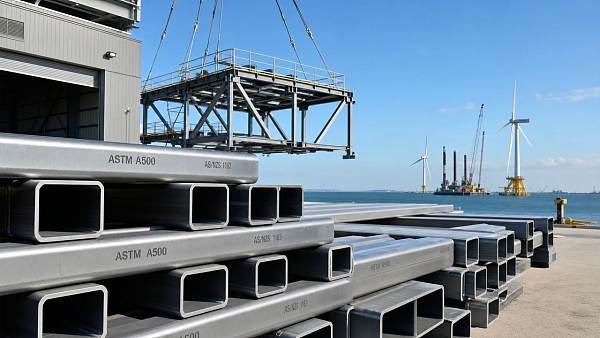
 Default CategoryAustralia’s Anti-Dumping Measures on Chinese Welded Hollow Structural Sections to Expire in July 2027Australia’s anti-dumping duties on Chinese welded hollow structural sections expire July 2027—key insight for marine engineers, fabricators & procurement teams.By:May 29, 2026
 Default CategoryEU REACH Adds New SVHCs: Exporters of Optical Sensors and Precision Lenses Must Update SCIP & Compliance DeclarationsEU REACH adds new SVHCs—optical sensors & precision lenses exporters must urgently update SCIP submissions and compliance declarations to avoid EU market access delays.By:May 29, 2026
 Default CategoryUS Slashes Section 232 Tariffs on Steel, Aluminum Derivatives; Grid Equipment Granted Temporary ExemptionUS slashes Section 232 tariffs on steel & aluminum derivatives—key relief for UHV transformers, GIS switchgear, and grid resilience equipment until 2027.By:May 29, 2026
 Default CategoryChina Grants Zero Tariffs to 20 African Nations on Technical Fabrics & Smart MetersChina grants zero tariffs on technical fabrics & smart meters for 20 African nations—boost export opportunities, cut costs, and accelerate green infrastructure partnerships.By:May 29, 2026
 Default CategoryChina’s Revised Maritime Code Shifts No-Collection Liability to ShippersChina’s Revised Maritime Code shifts no-collection liability to shippers—critical for FOB/CIF exporters, ROV/UHV transformer & technical fabric traders. Learn implications before May 1, 2026.By:May 29, 2026
 Digital SeaIs ballastless vs ballast track cost worth the tradeoff?Ballastless vs ballast track cost: compare upfront spend, lifecycle maintenance, reliability, and ROI to see which rail solution delivers better long-term value.By: Captain Kenji SatoMay 28, 2026
 Digital SeaWhat railway bridge rehabilitation news signals higher risk?Railway bridge rehabilitation news reveals early risk signals like repeated repairs, load limits, and inspection gaps. Learn how QC and safety teams can act faster.By: Captain Kenji SatoMay 28, 2026
 Digital SeaWhy modular railway bridge trends are reshaping upgradesModular railway bridge trends are reshaping rail upgrades with faster installation, lower disruption, and stronger lifecycle value. See why asset owners are making the shift.By: Captain Kenji SatoMay 28, 2026
 Digital SeaWhat does the low-noise track solutions report reveal?Low-noise track solutions report reveals key noise-control technologies, procurement signals, lifecycle cost factors, and compliance trends—helping researchers compare options and make smarter infrastructure decisions.By: Captain Kenji SatoMay 28, 2026
 Digital SeaWhat smart track monitoring innovations matter most in 2026?Smart track monitoring innovations in 2026: explore the edge AI, fiber optics, digital twins, and LiDAR solutions that boost safety, uptime, and ROI before you invest.By: Captain Kenji SatoMay 28, 2026
 Default CategoryShanghai Crude Futures Drop 3.22%: Short-Term Relief for Energy-Intensive Industrial Equipment ExportersShanghai crude futures drop 3.22%—key relief for energy-intensive industrial equipment exporters. See how this impacts OEMs, procurement teams & Q3 cost planning.By:May 28, 2026
 Default CategoryAccelerated Standards Upgrade in Petrochemical Sector Focuses on Green, Low-Carbon ComplianceGreen, low-carbon compliance is accelerating in petrochemical standards—impacting CE, FDA & SASO certification for technical fabrics, tubing, and seals. Act now.By:May 28, 2026
 Default CategoryWanhua Chemical to Reach 1M-Ton LFP Capacity in 2026 Amid Supply StabilizationWanhua Chemical’s 1M-ton LFP capacity by 2026 boosts supply stability for grid resilience, industrial power & sorting robots—key for global integrators.By:May 28, 2026
 Default CategoryChina Implements Unilateral 30-Day Visa-Free Access for GCC Business TravelersChina’s new 30-day visa-free policy for GCC business travelers boosts procurement, audits & tech collaboration in grid, marine & smart metering sectors—act now.By:May 28, 2026
 Default CategoryU.S.-Iran Ceasefire Draft Boosts Strait of Hormuz Transit OutlookU.S.-Iran ceasefire draft eases Strait of Hormuz transit concerns—critical for energy, UHV transformers, GIS switchgear & subsea ROV logistics. Act now.By:May 28, 2026
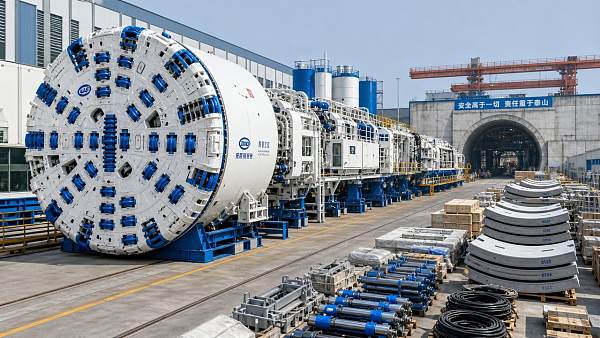
 Digital SeaWhy TBM market growth in Asia matters for project costsTBM market growth in Asia is reshaping tunnel project costs through equipment pricing, lead times, contractor availability, and risk. Learn how to protect budgets and improve procurement strategy.By: Captain Kenji SatoMay 27, 2026
 Fiber LasersIs new rail welding technology in 2026 worth the switchNew rail welding technology 2026: Is the switch worth it? Explore lifecycle cost, weld quality, compliance, and reliability factors to make a smarter rail investment decision.By: Dr. Hideo TanakaMay 27, 2026
 SafeStreamWhat global rail fastening market share says in 2026Global rail fastening market share in 2026 reveals supplier strength, regional demand, and procurement risk. Discover practical insights to compare vendors and make smarter rail sourcing decisions.By: Marcus SterlingMay 27, 2026
 Fabric LogicWhat 3D printing can really change in rail builds3d printing in rail infrastructure delivers real value in prototyping, low-volume parts, tooling, and supply-chain resilience. Discover where it speeds rail builds and where limits still apply.By: Chloe DuboisMay 27, 2026
 Grid ResilienceHow climate change is reshaping track safety and upkeepImpact of climate change on track is reshaping rail safety, inspections, and maintenance. Discover key risks, smarter upkeep strategies, and practical actions for resilient infrastructure.By: Dr. Elena VoltMay 27, 2026
 Default CategoryMultinational ROV Mine-Clearing Deployment in Strait of Hormuz Extends Marine Winches Lead Times to 22 WeeksMarine winches lead times surge to 22 weeks amid multinational ROV mine-clearing ops in Strait of Hormuz — assess supply chain resilience now.By:May 26, 2026
 Default CategoryChina Cracks Down on Unlicensed Offshore Brokers; Sorting Robots' Overseas M&A Gains StabilityChina cracks down on unlicensed offshore brokers—boosting stability for Sorting Robots' overseas M&A and strategic EU/ASEAN expansion.By:May 26, 2026
 Default CategorySouth Korea to Open KOSPI ETF Access for Foreign Investors, Boosting Optical Module ExportsSouth Korea opens KOSPI ETF access for foreign investors—boosting demand for Chinese optical modules in automotive HUDs and AR eyewear. Act now.By:May 26, 2026
 Default Category12 New Innovation Consortia in Yangtze River Delta; UHV Transformer Localization Rate Surpasses 82%12 new Yangtze River Delta innovation consortia launched; UHV transformer localization exceeds 82% — boosting export readiness, supply chain resilience & global compliance.By:May 26, 2026
 Default CategoryJapan’s 45% Medical Supply Dependence on China Spurs Surge in SafeStream & Aseptic Filling ImportsSafeStream & Aseptic Filling imports surge in Japan as 45% medical supply dependence on China triggers urgent GMP-compliant production shifts.By:May 26, 2026
 Default CategoryChina Cuts Tariffs to Zero for Technical Fabrics Exported to 20 African NationsChina cuts tariffs to zero for Technical Fabrics exported to 20 African nations—unlocking new growth in infrastructure and medical PPE markets. Act now.By:May 26, 2026