BDI: 1,842 ▼ 1.2%
COTTON NO.2: 84.12 ▲ 0.4%
LME COPPER: 8,432.50 ▲ 2.1%
FOOD SAFETY INDEX: 94.2 ARCHIVE_SECURED
OPTICAL INDEX: 11,204.09 STABLE
BDI: 1,842 ▼ 1.2%

SECTOR INDEX
V.24.08 ARCHIVE
Hot Articles
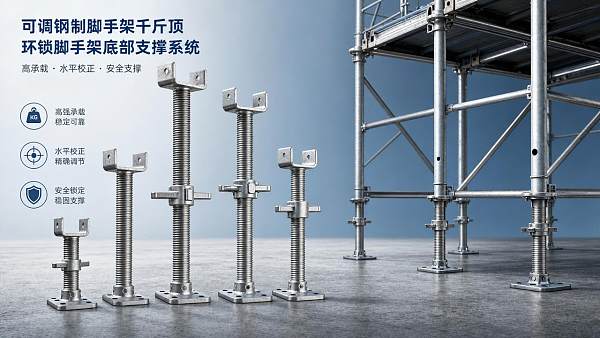
- Adjustable Steel Scaffolding Jacks: Load Capacity, Height Range, and Site Safety BasicsAdjustable steel scaffolding jacks explained: compare load capacity, height range, and site safety basics to choose safer, compliant options for demanding projects.
- Sensors Manufacturer Evaluation Checklist: Certifications, Tolerances, and Testing CapacitySensors manufacturer evaluation starts with proof, not promises. Discover how certifications, tolerances, and testing capacity help you shortlist reliable suppliers with confidence.
- Textile Humidifier OEM Guide: Key Specs, Customization Options, and Factory QuestionsTextile humidifier OEM guide covering key specs, smart customization, factory evaluation questions, cost factors, and buying tips to help you choose a reliable supplier with confidence.
Hydraulic Press Selection: Tonnage, Stroke, Bed Size, and Safety Checks


Selecting the right hydraulic press is a high-impact decision that affects production capacity, tooling flexibility, operator safety, and long-term cost of ownership.
Beyond headline tonnage, selection must match stroke length, bed size, frame design, controls, and safety systems to real production requirements.
This guide provides a practical hydraulic press checklist for comparing specifications, reducing sourcing risk, and aligning equipment with quality and throughput goals.
Why a Hydraulic Press Selection Checklist Matters
A hydraulic press is often purchased around tonnage, yet tonnage alone rarely defines successful forming, punching, bending, straightening, or assembly performance.
A checklist forces every key variable into the review: load, daylight, stroke, speed, tooling interface, guarding, maintenance access, and compliance evidence.
It also improves cross-sector comparison, especially when equipment is sourced for metalworking, composites, electronics, optics, textiles, food processing, or infrastructure components.
For global projects, a structured hydraulic press evaluation helps benchmark machines against ISO, IEC, OSHA, CE, ANSI, or local safety expectations.
Core Hydraulic Press Selection Checklist
Use the following checklist before comparing quotations. Each item should be verified against process data, tooling drawings, and workplace safety requirements.
- Define the actual pressing operation, including forming, trimming, compression molding, assembly, calibration, or straightening, because each process creates different force and control demands.
- Calculate required tonnage from material strength, contact area, forming depth, and safety factor, rather than selecting a hydraulic press by catalog size alone.
- Confirm whether full tonnage is needed through the complete stroke or only near bottom dead center, as this changes hydraulic system requirements.
- Check stroke length against part geometry, die travel, ejector movement, loading clearance, and any future tooling requiring deeper movement.
- Measure daylight carefully, including die height, part height, adapter plates, cushions, sensors, and safe hand or fixture clearance.
- Match bed size to tool footprint, clamping zones, feed direction, part overhang, bolster design, and maintenance access around the tooling.
- Select frame style according to rigidity needs, with H-frame, C-frame, four-column, and straight-side designs offering different deflection behavior.
- Review ram parallelism, bed flatness, guide quality, and allowable deflection, especially for precision pressing or multi-cavity tooling.
- Specify approach, pressing, dwell, return, and opening speeds to balance throughput with heat generation, noise, control accuracy, and operator safety.
- Require pressure control, position control, or force-distance profiling when parts need repeatable forming depth, controlled compression, or traceable quality data.
- Verify hydraulic pump type, reservoir capacity, filtration, cooling, seals, hose ratings, and service intervals before accepting a low-cost quotation.
- Inspect safety features, including light curtains, two-hand controls, interlocks, emergency stops, pressure relief valves, guards, and lockout provisions.
Tonnage: Avoid Undersizing and Oversizing
Tonnage defines the maximum pressing force, but the correct hydraulic press tonnage depends on the workpiece, die geometry, and required deformation.
Undersizing causes incomplete forming, overload alarms, slow cycles, pump stress, and tool damage. Oversizing can reduce sensitivity and waste capital.
A common approach is to calculate process force, then add a practical safety margin. Excessive margin should still be avoided.
For precision assembly, a smaller hydraulic press with accurate force control may outperform a larger machine with basic hydraulic regulation.
Stroke, Daylight, and Bed Size Checks
Stroke determines how far the ram travels. Daylight determines the available vertical space when the hydraulic press is fully open.
Both values must be checked together. A long stroke is not useful if daylight cannot accommodate the die and part.
Bed size affects tool mounting, material handling, and part stability. It should match current tooling and likely future tooling.
- Confirm maximum die height and minimum closing height before approving a hydraulic press frame or cylinder configuration.
- Add clearance for loading devices, conveyors, transfer arms, inspection gauges, or manual placement fixtures.
- Check whether the bolster supports T-slots, drilled patterns, quick clamps, or custom adapter plates.
- Evaluate off-center loading limits when the part or tool applies force away from the bed centerline.
A hydraulic press used for mixed production should have enough bed flexibility without creating excessive footprint or handling complexity.
Frame Design and Control System Decisions
Frame design determines stiffness, access, maintenance layout, and suitability for off-center loads. No single design fits every process.
C-frame machines provide open access for smaller work. H-frame machines are versatile for repair, forming, and workshop applications.
Four-column and straight-side hydraulic press designs provide stronger guidance, better load distribution, and improved repeatability for production lines.
Control systems should match quality requirements. Basic manual controls suit simple work, while PLC or servo-hydraulic controls support traceability.
- Choose manual control for low-volume maintenance tasks where simple force application and operator judgment are acceptable.
- Choose PLC control when recipes, alarms, interlocks, cycle counters, and repeatable production settings are required.
- Choose servo-hydraulic control when speed, pressure, position, energy use, and quality records must be tightly managed.
Application Notes Across Industrial Settings
Metal Forming and Fabrication
For metal forming, the hydraulic press must handle peak force, die deflection, lubrication conditions, and springback control.
Look closely at ram guidance, pressure repeatability, bed flatness, and overload protection. These factors directly affect dimensional consistency.
Composite, Rubber, and Textile-Related Processing
Compression molding and lamination require stable dwell pressure, temperature integration, and controlled closing speed to protect material structure.
A hydraulic press in these processes may need heated platens, vacuum support, recipe control, and clean maintenance practices.
Electronics, Optics, and Precision Assembly
Precision assembly often values feedback resolution more than raw force. Excessive tonnage can damage fragile components.
Select a hydraulic press with force sensors, position monitoring, soft-touch approach, and data export where verification is required.
Infrastructure, Maritime, and Heavy Repair
Heavy repair applications often need large daylight, robust frames, adjustable beds, and strong off-center load tolerance.
The hydraulic press should also provide safe access for large parts, lifting equipment, and lockout during setup.
Commonly Overlooked Hydraulic Press Risks
Ignoring usable tonnage: Rated force may not be available at every point of travel. Confirm the force curve before ordering.
Underestimating heat: High cycle rates generate heat in pumps, valves, and oil. Poor cooling reduces seal life and control stability.
Accepting weak guarding: A hydraulic press without suitable guards, interlocks, or light curtains creates serious safety and compliance exposure.
Overlooking maintenance access: Filters, pumps, valves, cylinders, and hoses should be reachable without dismantling major structures.
Skipping documentation: Request drawings, hydraulic schematics, electrical diagrams, certificates, manuals, and spare parts lists before acceptance.
Forgetting noise and ergonomics: Pump noise, loading height, control placement, and visibility influence productivity and workplace acceptance.
Practical Execution Steps Before Purchase
- Create a process sheet listing material, dimensions, operation type, tonnage estimate, stroke, cycle time, and quality acceptance criteria.
- Send tooling drawings and part samples to shortlisted hydraulic press suppliers for technical validation, not only price confirmation.
- Request a written specification covering force, stroke, daylight, bed size, speeds, controls, safety devices, and warranty terms.
- Ask for factory testing with measured pressure, position, cycle time, emergency stop response, and sample part results.
- Review installation needs, including foundation, power, oil type, ventilation, lifting access, operator training, and spare parts availability.
A hydraulic press purchase should end with measurable acceptance criteria. This prevents disputes after delivery and supports faster commissioning.
Summary and Action Guide
The best hydraulic press is not the largest machine available. It is the machine that matches force, motion, tooling, safety, and workflow.
Start with the real application, then verify tonnage, stroke, daylight, bed size, frame rigidity, control accuracy, and safety compliance.
Before signing any order, compare suppliers using the same checklist, the same drawings, and the same acceptance tests.
A disciplined hydraulic press selection process reduces hidden cost, protects operators, and improves long-term production reliability across industrial applications.
Recommended for You
 Grid ResilienceAdjustable Steel Scaffolding Jacks: Load Capacity, Height Range, and Site Safety BasicsAdjustable steel scaffolding jacks explained: compare load capacity, height range, and site safety basics to choose safer, compliant options for demanding projects.By: Dr. Elena VoltJun 13, 2026
 Optical SensorsSensors Manufacturer Evaluation Checklist: Certifications, Tolerances, and Testing CapacitySensors manufacturer evaluation starts with proof, not promises. Discover how certifications, tolerances, and testing capacity help you shortlist reliable suppliers with confidence.By: Dr. Hideo TanakaJun 13, 2026
 Fabric LogicTextile Humidifier OEM Guide: Key Specs, Customization Options, and Factory QuestionsTextile humidifier OEM guide covering key specs, smart customization, factory evaluation questions, cost factors, and buying tips to help you choose a reliable supplier with confidence.By: Chloe DuboisJun 13, 2026
 Digital SeaWhat Is Sustainable Tourism and How Can Destinations Reduce Environmental Impact?Sustainable tourism explained: learn how destinations can reduce environmental impact with smarter transport, water, waste, and infrastructure strategies.By: Captain Kenji SatoJun 13, 2026
 SafeStreamHow to Choose Wireless Security Systems for Warehouses, Offices, and Retail StoresWireless security systems for warehouses, offices, and retail stores: learn how to compare coverage, scalability, compliance, and ROI to choose a smarter, safer solution.By: Marcus SterlingJun 13, 2026
 Smart MetersEnergy Efficiency Upgrades: How to Prioritize Projects by Payback, Load, and RiskEnergy efficiency upgrades made practical: learn how to prioritize projects by payback, load impact, and implementation risk to cut costs, protect uptime, and make smarter capital decisions.By: Dr. Elena VoltJun 12, 2026
 Digital SeaInbound Tourism Trends: What Destinations, Travelers, and Spending Patterns RevealInbound tourism trends reveal more than arrivals. Discover how destinations, traveler segments, and spending patterns signal market resilience, infrastructure readiness, and cross-sector growth opportunities.By: Captain Kenji SatoJun 12, 2026
 Grid ResilienceESS Benchmarking Explained: Which KPIs Matter for Performance, Safety, and Lifecycle Cost?ESS Benchmarking explained: discover the KPIs that truly drive storage performance, safety, and lifecycle cost—so you can compare systems smarter and choose with confidence.By: Dr. Elena VoltJun 12, 2026
 Fabric LogicSustainable Packaging Solutions for Food and Retail: Materials, Trade-Offs, and Use CasesSustainable packaging solutions for food and retail: compare fiber, recyclable plastics, compostables, and reusable formats to balance cost, compliance, performance, and brand impact.By: Chloe DuboisJun 12, 2026
 SafeStreamBlood Pressure Monitor Wholesale: How to Compare Accuracy, Certifications, and MOQBlood pressure monitor wholesale guide: compare accuracy validation, certifications, and MOQ terms to avoid hidden costs, reduce sourcing risk, and choose suppliers with confidence.By: Marcus SterlingJun 12, 2026
 Technical FabricsIndonesia Adds BPS Pre-Clearance for Technical FabricsIndonesia Adds BPS Pre-Clearance for Technical Fabrics: learn how mandatory SNI certification and INATRADE filing now impact exports, customs clearance, and shipment planning.By: Chloe DuboisJun 12, 2026
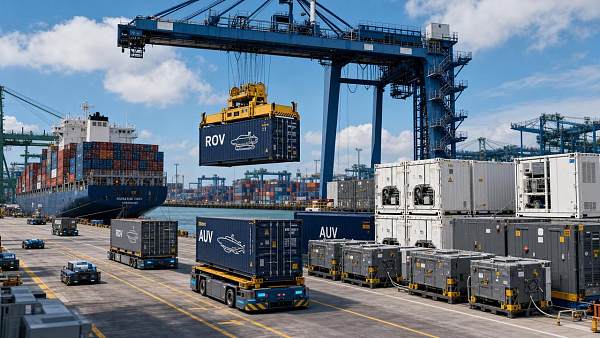
 Subsea ROV/AUVPSA AI Scheduling Cuts ROV/AUV Shipping Time 18%PSA AI scheduling cuts ROV/AUV shipping time 18%, boosting delivery reliability to 99.2%. Discover what this means for exporters, buyers, and logistics planning.By: Captain Kenji SatoJun 12, 2026
 Sorting RobotsNew Outbound Investment Rules Aid Overseas Service SetupNew Outbound Investment Rules clarify support for overseas service setup, helping Sorting Robots and Lumen Vision providers expand local centers, spare parts hubs, and faster after-sales response.By: Marcus SterlingJun 12, 2026
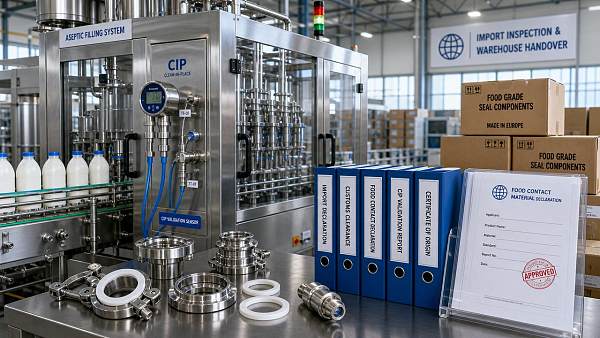
 SafeStreamChina Customs Rule Hits SafeStream Aseptic ImportsChina customs rule impacts SafeStream aseptic imports as food-contact equipment documents become a clearance issue. Learn the risks, compliance steps, and how to avoid delays.By: Marcus SterlingJun 12, 2026
 Marine WinchesJapan Opens Steel Probe Affecting Winch and UHV PartsJapan opens a steel probe affecting Marine Winches, UHV transformer tanks, and GIS Switchgear parts. Learn scope, HS codes, risks, and compliance steps for Japan-bound exports.By: Captain Kenji SatoJun 12, 2026
 Grid ResilienceClimate Technology Explained: Main Categories, Use Cases, and Buying PrioritiesClimate technology explained: explore key categories, real industrial use cases, and smart buying priorities to cut risk, improve efficiency, and make better low-carbon investment decisions.By: Dr. Elena VoltJun 11, 2026
 Fabric LogicWhat Affects Bedding Sets Price? Fabric, Thread Count, Size, and Brand ComparedBedding sets price explained: compare fabric, thread count, size, and brand to find the best value. Learn what truly affects cost and shop smarter before you buy.By: Chloe DuboisJun 11, 2026
 Grid ResilienceIndustrial Database for Energy Sector: What Data Teams Need for Grid Asset PlanningIndustrial database for energy sector planning helps data teams improve grid asset decisions with cleaner asset, risk, and supply-chain visibility for faster, smarter capital planning.By: Dr. Elena VoltJun 11, 2026
 Industrial OvensHow to Choose CNC Machines for Small-Batch Production: Axes, Spindle, and ToleranceCNC machines for small-batch production: learn how to compare axes, spindle performance, and tolerance control to cut setup time, improve accuracy, and choose the right machine with confidence.By: Marcus SterlingJun 11, 2026
 Precision LensesDNA Sequencer OEM Checklist: Key Specs, Compliance, and Integration Questionsdna sequencer oem checklist: compare key specs, compliance proof, software integration, service risk, and total cost to choose a reliable partner with confidence.By: Dr. Hideo TanakaJun 11, 2026
 Technical FabricsHormuz Strait Disruption Lifts Technical Fabrics Input CostsHormuz Strait disruption lifts Technical Fabrics input costs as caprolactam prices surge, pressuring nylon 6 sourcing, lead times, and delivery planning. See what buyers and manufacturers should do now.By: Chloe DuboisJun 11, 2026
 Subsea ROV/AUVPSA AI Scheduling Cuts ROV/AUV Shipping TimePSA AI scheduling cuts ROV/AUV shipping time by streamlining berth and slot allocation for high-value cargo. See how faster, more predictable delivery can reshape planning.By: Captain Kenji SatoJun 11, 2026
 UHV TransformersBangladesh Sets UHV Tender Path at South Asia Procurement ForumBangladesh UHV tender roadmap revealed: BPDB plans 42 ±800kV converter transformers for 2026–2027, highlighting dual-standard compliance and South Asia service readiness. See what suppliers must prepare now.By: Dr. Elena VoltJun 11, 2026
 GIS SwitchgearEU Plans Green Label Rule for GIS SwitchgearEU plans a green label rule for GIS switchgear from 2027, linking CE compliance to built-in EMC real-time monitoring. See what exporters, buyers, and manufacturers must prepare now.By: Dr. Elena VoltJun 11, 2026
 Automated LoomsSmart Manufacturing Trends 2026: Why Modular Systems Are Reshaping Automated LoomsSmart manufacturing trends 2026 modular systems are transforming automated looms with flexible upgrades, lower risk, and better ROI. See why modular design is shaping smarter industrial decisions.By: Chloe DuboisJun 10, 2026
 Smart MetersCommercial Optimization Strategies for Smart Meters: Where Utilities Gain ROI FirstCommercial optimization strategies for smart meters reveal where utilities gain ROI first—from revenue protection and service savings to tariff intelligence and smarter asset planning.By: Dr. Elena VoltJun 10, 2026
 Grid ResilienceHow to Evaluate an Elastic Rail Clip Supplier: Quality Control, Lead Times, and ComplianceElastic rail clip supplier evaluation made practical: learn how to compare quality control, lead times, and compliance to reduce risk, avoid delays, and source with confidence.By: Dr. Elena VoltJun 10, 2026
 Industrial OvensHow to Read Product Specifications for Industrial Ovens: 8 Parameters That Affect OutputProduct specifications decoded: learn the 8 industrial oven parameters that impact output, stability, energy use, and compliance—compare models smarter and avoid costly mistakes.By: Marcus SterlingJun 10, 2026
 Aseptic FillingHealth Standards in Aseptic Filling: Which Certifications and Audit Points Matter Most?Health standards in aseptic filling: discover the certifications, audit points, and hidden risks that matter most to boost compliance, export readiness, and audit confidence.By: Marcus SterlingJun 10, 2026
 Technical FabricsHormuz Strait Curbs Raise Technical Fabrics Input CostsHormuz Strait curbs push Technical Fabrics input costs higher as fertilizer-linked additives surge. See how exporters and manufacturers can manage pricing, lead times, and Q3 risk.By: Chloe DuboisJun 10, 2026
 SafeStreamFDA Updates SafeStream Audit Rules for China Cloud DataFDA updates SafeStream audit rules to accept China cloud data for remote audits. Learn how this policy shift may speed FDA registration, cut audit prep time, and impact suppliers serving the U.S. market.By: Marcus SterlingJun 10, 2026