BDI: 1,842 ▼ 1.2%
COTTON NO.2: 84.12 ▲ 0.4%
LME COPPER: 8,432.50 ▲ 2.1%
FOOD SAFETY INDEX: 94.2 ARCHIVE_SECURED
OPTICAL INDEX: 11,204.09 STABLE
BDI: 1,842 ▼ 1.2%

SECTOR INDEX
V.24.08 ARCHIVE
Hot Articles
- When Is a Straddle Monorail System a Good Fit for Urban Transit Corridors?Is a straddle monorail system right for your urban corridor? Explore capacity, space, station access, safety, and lifecycle costs to make a confident transit investment.
- EU Textile Waste Reporting: Who Must Report and What Data Is Required?EU textile waste reporting explained: discover who must report, what data is required, and how to verify EPR, waste records, and shipment compliance across EU markets.
- Yarn Strength Benchmarks for Weaving: Setting Warp and Weft RequirementsSet yarn strength benchmarks for weaving with practical warp and weft criteria. Learn how tenacity, variability, and loom loads inform specifications that help reduce breaks and improve reliability.
What smart irrigation water savings data can prove


For technical evaluators, smart irrigation water savings data is only useful when it can withstand scrutiny: calibrated sensors, comparable baselines, transparent algorithms, and field-verified outcomes.
As water stress, energy costs, and regulatory pressure reshape infrastructure and agritech decisions, evidence must separate marketing claims from measurable efficiency gains.
This article explains what credible smart irrigation water savings data can prove, how validation works, and where cross-sector benchmarking improves decisions.
What does smart irrigation water savings data actually prove?
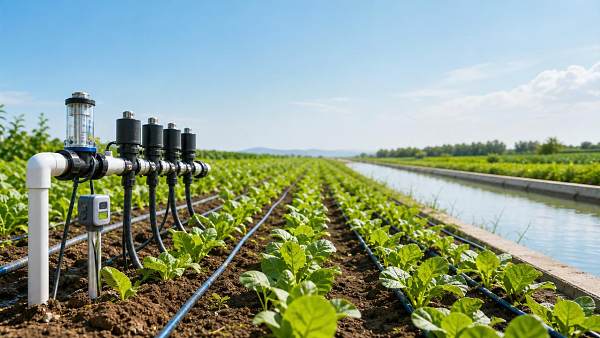
Reliable smart irrigation water savings data proves the relationship between water applied, crop or landscape response, and avoided waste under defined conditions.
It does not simply show that less water was used. It shows whether reduced application preserved performance, yield, health, or service quality.
A credible dataset answers three connected questions. What was the baseline? What changed? What external variables were controlled?
In agricultural fields, the proof may include evapotranspiration response, soil moisture stability, root-zone availability, and yield consistency.
In municipal landscapes, proof may involve turf quality, runoff reduction, pressure stability, and compliance with watering restrictions.
In industrial campuses, it may show reduced water intake, lower pumping energy, and fewer manual interventions across distributed irrigation zones.
The strongest smart irrigation water savings data links sensor readings, control actions, weather inputs, and metered water volumes in one audit trail.
Which proof points matter most?
- Volume reduction compared with a documented baseline.
- Maintained agronomic, landscape, or operational performance.
- Reduced irrigation during rainfall, high humidity, or low evapotranspiration periods.
- Lower runoff, leakage, overspray, or deep percolation losses.
- Repeatable results across seasons, zones, and operating teams.
These indicators turn smart irrigation water savings data into evidence suitable for technical comparison, financing models, and compliance reporting.
How should a water savings baseline be built?
A weak baseline weakens every claimed result. Baselines must reflect normal operating behavior before automation, optimization, or sensor-based scheduling.
The baseline should include historical water bills, flow meter logs, weather records, irrigation schedules, crop plans, and maintenance events.
For field agriculture, acreage, crop variety, soil texture, planting density, and irrigation method must be recorded before comparison begins.
For commercial landscapes, zone size, sprinkler type, slope, shade, plant mix, and local restrictions can change expected demand.
Smart irrigation water savings data becomes more credible when the baseline covers at least one comparable season or a weather-normalized reference period.
Why weather normalization matters
A rainy year can create apparent savings without better control. A hot season can hide real efficiency gains behind higher demand.
Weather normalization adjusts comparisons using rainfall, temperature, solar radiation, humidity, wind speed, and evapotranspiration estimates.
Without normalization, smart irrigation water savings data may reward luck rather than system performance.
What makes a baseline questionable?
- It uses unusually dry or wasteful years as the only reference.
- It excludes changes in planted area or operating hours.
- It ignores repaired leaks, pressure changes, or nozzle replacements.
- It relies only on invoices without zone-level metering.
A defensible baseline makes smart irrigation water savings data comparable across farms, campuses, public landscapes, and controlled-environment facilities.
Which sensors and controls support credible evidence?
Smart irrigation systems commonly combine soil sensors, weather stations, flow meters, pressure sensors, valves, gateways, and control software.
Each component influences the quality of smart irrigation water savings data. A faulty sensor can distort both scheduling and reporting.
Soil moisture sensors reveal root-zone availability, but installation depth and soil contact affect accuracy. Calibration is essential.
Flow meters confirm actual water delivery. They can expose leaks, stuck valves, blocked filters, or unexpected night consumption.
Weather data supports evapotranspiration-based scheduling. Local stations usually outperform distant public data in microclimates.
Pressure sensors help detect hydraulic instability. Stable pressure improves distribution uniformity and avoids misleading savings claims.
How transparent should algorithms be?
Algorithms do not need to reveal proprietary code, but they should disclose decision logic, inputs, thresholds, and override conditions.
Smart irrigation water savings data is easier to trust when recommendations can be traced to soil, weather, flow, or crop parameters.
Black-box scheduling may be acceptable for convenience, but it creates risk in regulated, high-value, or contract-driven environments.
What data quality checks are useful?
- Sensor calibration records and replacement dates.
- Data gaps, communication failures, and manual overrides.
- Meter reconciliation against utility bills or pump logs.
- Anomaly flags for leaks, pressure drops, or unexpected runtime.
These checks strengthen smart irrigation water savings data by showing that measurement systems are controlled, not assumed.
Where can smart irrigation water savings data be applied?
The value of smart irrigation water savings data extends beyond traditional farming. It supports broader infrastructure and sustainability decisions.
Agricultural operations use it to refine irrigation cycles, protect yields, reduce pumping energy, and prioritize zones with poor distribution.
Food processing sites may use it around wastewater reuse fields, buffer landscapes, and facility grounds requiring documented water stewardship.
Smart grid projects can connect irrigation loads with energy optimization, especially where pumping schedules affect peak demand charges.
Advanced manufacturing campuses may use the same data discipline applied to utilities, compressed air, cooling water, and process monitoring.
Optical sensing, remote imaging, and machine vision can add canopy stress indicators, plant vigor indexes, and spatial variability maps.
Marine and coastal infrastructure may require salt-tolerant landscaping, reclaimed water controls, and corrosion-aware sensor deployment.
Why cross-sector benchmarking improves decisions
Cross-sector benchmarking compares irrigation evidence with measurement practices from power, optics, manufacturing, and process industries.
This approach rewards traceability, calibration, interoperability, and lifecycle reliability rather than headline savings alone.
Smart irrigation water savings data becomes more persuasive when it follows the same discipline used for industrial performance verification.
How can systems be compared before investment?
Comparing systems requires more than a claimed percentage reduction. The evaluation should examine environment, hydraulics, controls, and reporting depth.
A 30% saving in one site may be less impressive than 12% in an already efficient site.
Smart irrigation water savings data must therefore be judged against starting condition, operational complexity, and acceptable risk.
What cost and payback factors should be included?
Cost analysis should include hardware, installation, connectivity, software, calibration, training, maintenance, and replacement cycles.
Savings may come from water reduction, energy reduction, labor efficiency, leak avoidance, compliance protection, and healthier assets.
Smart irrigation water savings data improves payback modeling when it separates recurring savings from one-time repairs or seasonal effects.
A practical model should test conservative, expected, and high-performance scenarios before final approval.
What risks can distort water savings claims?
Several risks can make smart irrigation water savings data look stronger than it is. Most involve baseline bias or incomplete measurement.
One common mistake is treating reduced runtime as reduced water use. Flow rate changes can invalidate that assumption.
Another risk is ignoring distribution uniformity. Uneven irrigation may save water in total while stressing specific areas.
Manual overrides can also distort results. If operators frequently bypass automation, the reported algorithm impact becomes uncertain.
Connectivity gaps may hide missed events, valve failures, or unrecorded irrigation cycles. Data completeness should be reviewed.
How can under-irrigation be avoided?
Water saving is not the same as water starving. Root-zone thresholds and plant response indicators must guide control limits.
Smart irrigation water savings data should include stress indicators, not only lower consumption charts.
For high-value crops, soil moisture trends should be paired with agronomic inspection, yield records, and quality measurements.
Which standards and practices help validation?
Useful validation practices include calibrated metering, documented commissioning, data retention policies, and independent field verification.
Relevant frameworks may include ISO quality management, IEC electrical safety practices, and regional water-efficiency protocols.
The goal is not paperwork alone. The goal is repeatable smart irrigation water savings data that survives technical review.
What should be requested before adoption?
Before adoption, request evidence from sites with similar climate, water source, hydraulic design, and operational scale.
Ask whether savings were measured by flow meters, utility bills, pump logs, or modeled estimates.
Modeled estimates can help planning, but field-measured smart irrigation water savings data carries more decision value.
Also confirm data ownership, export formats, cybersecurity controls, offline behavior, and long-term software support.
Practical request checklist
- Baseline methodology and weather-normalization approach.
- Metered savings reports with raw data access.
- Sensor calibration and maintenance documentation.
- Case studies showing preserved performance outcomes.
- Integration details for valves, pumps, SCADA, or cloud platforms.
- Service-level expectations for alerts, updates, and support.
This checklist helps turn smart irrigation water savings data into a structured comparison instead of a sales discussion.
FAQ: How should smart irrigation water savings data be interpreted?
Smart irrigation water savings data can prove real efficiency only when measurement, context, and outcomes are connected.
The strongest evidence shows reduced water use, stable performance, reliable sensors, transparent controls, and auditable reporting.
Organizations evaluating intelligent irrigation should start with a baseline audit, define success metrics, and require field-verified reports.
When reviewed through cross-sector benchmarking, smart irrigation water savings data becomes more than an efficiency claim.
It becomes a practical decision tool for resilient water management, energy-aware operations, and accountable infrastructure investment.
Recommended for You
 Digital SeaWhen Is a Straddle Monorail System a Good Fit for Urban Transit Corridors?Is a straddle monorail system right for your urban corridor? Explore capacity, space, station access, safety, and lifecycle costs to make a confident transit investment.By: Captain Kenji SatoOct 19, 2026
 Fabric LogicEU Textile Waste Reporting: Who Must Report and What Data Is Required?EU textile waste reporting explained: discover who must report, what data is required, and how to verify EPR, waste records, and shipment compliance across EU markets.By: Chloe DuboisOct 18, 2026
 Fabric LogicYarn Strength Benchmarks for Weaving: Setting Warp and Weft RequirementsSet yarn strength benchmarks for weaving with practical warp and weft criteria. Learn how tenacity, variability, and loom loads inform specifications that help reduce breaks and improve reliability.By: Chloe DuboisOct 17, 2026
 Fabric LogicEnergy-Saving Textile Machinery: How to Calculate Payback for Your MillEvaluate energy saving textile machinery with a practical payback formula, real-world cost factors, and a worked example. Discover how to verify savings and invest confidently in your mill.By: Chloe DuboisOct 16, 2026
 Digital SeaETSC Adoption in Europe: Policy Drivers, Costs, and Implementation BarriersExplore ETSC adoption Europe-wide: uncover policy drivers, installed costs, and implementation barriers to evaluate solar thermal investments and identify projects with stronger returns.By: Captain Kenji SatoOct 15, 2026
 Digital SeaChoosing Semiconductor Solutions for Industrial Controls: Key Design CriteriaChoose semiconductor solutions for industrial controls with confidence. Explore key criteria for timing, accuracy, power, safety, and lifecycle support to make smarter design decisions.By: Captain Kenji SatoOct 14, 2026
 Aseptic FillingWhen Should Compliance Checks Start for Aseptic Filling Procurement?How early should compliance checks start in procurement planning? Learn why aseptic filling reviews should begin before supplier shortlisting to reduce risks, rework, and costly delays.By: Marcus SterlingOct 13, 2026
 Smart MetersHow Do You Assess Market Demand Before Sourcing New Smart Meters?How do I assess market demand before sourcing a new industrial product? Discover how to validate smart meter demand, check technical fit, and reduce inventory risk before committing to bulk orders.By: Dr. Elena VoltOct 13, 2026
 GIS SwitchgearWhat Should You Compare Besides Price When Selecting GIS Switchgear?What should I compare besides price when selecting an industrial product? Explore GIS switchgear ratings, IEC compliance, maintenance and lifecycle costs to make a confident procurement decision.By: Dr. Elena VoltOct 13, 2026
 Optical SensorsHow Do You Choose Optical Sensors for Harsh Industrial Environments?How do I choose components for harsh industrial environments? Discover how to select optical sensors for dust, heat, vibration, and washdown—and prevent costly missed detections.By: Dr. Hideo TanakaOct 13, 2026
 Marine WinchesWhich Operating Conditions Can Change Marine Winch Selection?Which industrial application conditions can change product selection? Explore how loads, sea state, duty cycle and power shape marine winch selection to make a smarter investment.By: Captain Kenji SatoOct 13, 2026
 Digital SeaChoosing a Seismic Survey Equipment Distributor: Lead Times and Spare PartsChoosing a seismic survey equipment distributor? Learn how to verify lead times, secure critical spare parts, and compare support to reduce downtime and buy with confidence.By: Captain Kenji SatoOct 13, 2026
 Digital SeaHow to Use Industrial Benchmarking Data to Evaluate Supplier Risk and CapabilityIndustrial benchmarking data for supplier evaluation helps buyers assess capability, compliance, capacity, and delivery risk. Learn how to make smarter, evidence-based sourcing decisions.By: Captain Kenji SatoOct 12, 2026
 Fabric LogicFashion Supply Chain Cost Trends: What Is Driving Margins in 2026?Fashion supply chain cost trends for 2026: discover how materials, freight, labor, compliance, and inventory are reshaping margins—and the strategies leaders need to protect profitability.By: Chloe DuboisOct 11, 2026
 Lumen VisionHow Smart Street Lighting Cuts Energy Use Without Compromising Road SafetySmart street lighting reduces energy use while protecting road safety through adaptive controls, reliable monitoring, and risk-based lighting design. Learn the key strategies.By: Dr. Hideo TanakaOct 10, 2026
 Digital SeaDouble Platinum Spark Plugs: When Their Longer Service Life Justifies the CostDouble platinum spark plugs offer longer service life, stable gaps, and lower labor costs. Learn when their premium price is worth it for your vehicle.By: Captain Kenji SatoOct 08, 2026
 Sorting RobotsHow to Benchmark Linear Guide Load Ratings for High-Cycle Automation AxesLinear guide load rating benchmarks for high-cycle automation axes: compare loads, moments, stiffness, lubrication, and life calculations to select reliable guides.By: Marcus SterlingOct 07, 2026
 Digital SeaWhich Rail Data Transparency Metrics Improve Capacity Planning and Service Reliability?Rail data transparency metrics reveal usable capacity, dwell, recovery, and asset risks—helping rail leaders plan more reliable, resilient services.By: Captain Kenji SatoOct 06, 2026
 Digital SeaHow to Select a Marine Piston Air Compressor for High-Demand Shipboard ServiceMarine piston air compressor selection guide for high-demand shipboard service—compare capacity, redundancy, air quality, maintenance, and compliance requirements.By: Captain Kenji SatoOct 05, 2026
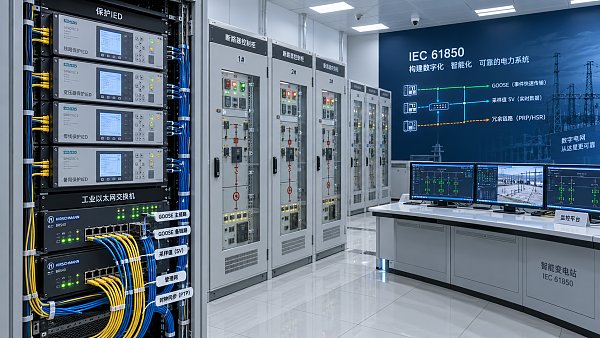
 Grid ResilienceIEC 61850 Monitoring Latency: How to Set Performance Limits for Protection SystemsIEC 61850 monitoring latency explained: learn how to set, test, and verify end-to-end performance limits that protect critical GOOSE and Sampled Values systems.By: Dr. Elena VoltOct 04, 2026
 Digital SeaHow to Select Bulldozers by Blade Type, Ground Conditions, and Earthmoving OutputBulldozers selection made practical: compare blade types, track setups, ground conditions, and cycle output to choose the right dozer for lower costs and reliable earthmoving.By: Captain Kenji SatoOct 03, 2026
 Dyeing MachinesHow Sustainable Dyeing Cuts Water Use and Chemical Risk in Textile ProductionSustainable dyeing cuts water use and chemical risk through smarter liquor control, efficient rinsing, safer inputs, and repeatable textile quality.By: Chloe DuboisOct 02, 2026
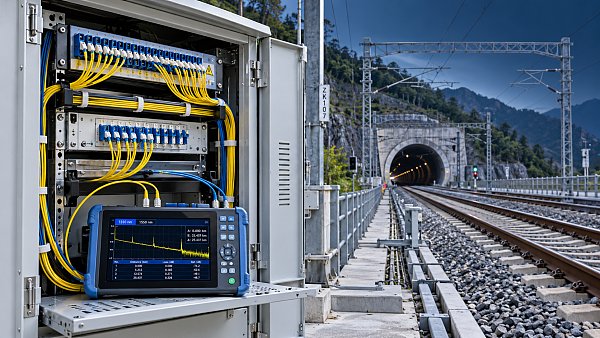
 Optical SensorsSingle-Mode Fiber Loss in Railway Networks: Causes, Budgets, and Test MethodsSingle mode railway fiber loss explained: identify causes, calculate realistic loss budgets, and apply OTDR and insertion-loss tests for reliable rail networks.By: Dr. Hideo TanakaOct 01, 2026
 Digital SeaIntegrated Transit Hub Planning: How to Balance Passenger Flow and Future CapacityIntegrated transit hub planning strategies for balancing passenger flow, resilient operations, phased delivery, and future capacity—explore practical insights for smarter hubs.By: Captain Kenji SatoSep 30, 2026
 Digital SeaWhat to Evaluate When Selecting a MaaS Ticketing Platform for Multimodal NetworksMaaS ticketing platform selection guide: evaluate interoperability, fare control, settlement, resilience, privacy, and scalability for multimodal networks.By: Captain Kenji SatoSep 29, 2026
 Digital SeaWhat Does Train Control Center Software Cost? Budgeting for Integration and SupportTrain control center software cost explained: compare integration, cybersecurity, commissioning, and long-term support to build a realistic rail operations budget.By: Captain Kenji SatoSep 28, 2026
 Digital SeaWhat to Evaluate in Thermite Rail Welding Equipment for Field Track RepairsThermite rail welding equipment: evaluate compatibility, preheating, alignment, safety, and supplier support for reliable field track repairs.By: Captain Kenji SatoSep 27, 2026
 Aseptic FillingISO 22000 Food Safety Certification: What Food Manufacturers Must PrepareISO 22000 food safety certification: discover the essential steps manufacturers need to build a robust FSMS, control hazards, and prepare confidently for audit success.By: Marcus SterlingSep 26, 2026
 UHV TransformersWhat Makes an Electrification Factory Ready for High-Voltage Equipment Production?Electrification factory readiness for high-voltage equipment: discover the essential standards, testing, traceability, safety, and workforce controls that drive reliable production.By: Dr. Elena VoltSep 25, 2026
 Digital SeaRail Signal Visibility: Sighting Distance, Contrast, and Verification RequirementsRail signal visibility: learn how sighting distance, contrast, weather, and verification controls help ensure safe, compliant signal recognition.By: Captain Kenji SatoSep 24, 2026
![]() GIS SwitchgearHow Do You Compare GIS Switchgear Suppliers When Certifications Differ?How do I compare industrial suppliers when certifications are not equivalent? Learn how to assess GIS switchgear test evidence, compliance scope, traceability, and project risk.By: Dr. Elena VoltSep 24, 2026
GIS SwitchgearHow Do You Compare GIS Switchgear Suppliers When Certifications Differ?How do I compare industrial suppliers when certifications are not equivalent? Learn how to assess GIS switchgear test evidence, compliance scope, traceability, and project risk.By: Dr. Elena VoltSep 24, 2026