

Many shoppers choose LEDs expecting years of reliable lighting, yet product labels often make very different LED lights long lifespan claims.
One bulb may promise 15,000 hours, while another advertises 50,000 hours or more, even when both look similar on the shelf.
The short answer is that LED lifespan is not a fixed expiration date. It is an estimate shaped by testing, design, heat, and usage.
Understanding these differences helps consumers compare products realistically, avoid overpaying for inflated claims, and choose lighting that lasts in real homes.
Why the same LED can be advertised with different lifespans
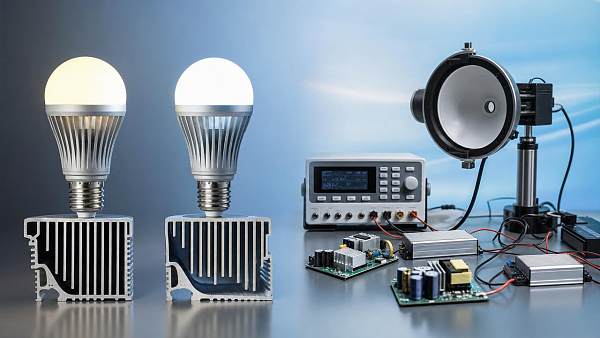
LED lifespan claims vary because manufacturers may define “end of life” differently, test products under different conditions, or emphasize different components.
Unlike old incandescent bulbs, LEDs usually do not suddenly burn out. They gradually become dimmer as materials age and heat accumulates.
Many reputable claims are based on lumen maintenance, meaning how long the lamp keeps a certain percentage of its original brightness.
A common benchmark is L70, which means the LED is considered at lifespan end when it reaches 70 percent brightness.
However, some product packaging does not clearly explain whether the stated hours refer to L70, complete failure, or another internal standard.
This is why two products with similar chips can show different numbers, even before considering heat sinks, drivers, fixtures, and user behavior.
What “LED lights long lifespan” usually means on a label
When a package says an LED lasts 25,000 hours, it does not mean the bulb will definitely shine perfectly until that hour.
It usually means the product is expected to maintain usable light output under controlled laboratory or rated operating conditions.
If the claim is based on L70, the bulb may still work after that point, but it may look noticeably dimmer.
Some premium products also publish L80 or L90 ratings, which are stricter because they measure higher retained brightness levels.
For home buyers, this matters because a dim lamp in a kitchen or study can become unsatisfactory long before it fails electrically.
A lifespan number is therefore best viewed as a performance estimate, not a warranty that guarantees identical brightness for years.
Testing standards make claims look different
Reliable LED lifespan data often comes from standardized testing methods, but even these methods require projections rather than waiting decades.
Standards such as IES LM-80 test LED packages, arrays, or modules for lumen maintenance under controlled temperatures and currents.
Another method, TM-21, uses LM-80 data to project future lumen maintenance beyond the actual test period.
These methods are useful, but they usually evaluate the LED light source rather than every finished bulb in every possible fixture.
A complete consumer lamp also includes optics, solder joints, housing materials, and the electronic driver, all of which affect real service life.
Brands that follow recognized methods and disclose assumptions tend to provide more trustworthy claims than brands using vague marketing language.
Heat is the biggest reason real lifespan changes
Heat is one of the most important reasons LED lights long lifespan claims vary in real homes and commercial spaces.
LEDs are efficient, but they still produce heat at the semiconductor junction and inside the driver electronics.
If that heat is not removed effectively, brightness declines faster and electronic components experience more stress.
A bulb used in an open table lamp may last much longer than the same bulb sealed inside a small enclosed fixture.
Recessed ceiling cans, glass domes, outdoor housings, and decorative enclosed fittings can trap heat around the lamp body.
This is why many LED packages state whether the bulb is rated for enclosed fixtures, damp locations, or specific operating temperatures.
Ignoring those notes can turn a 25,000-hour product into a much shorter-lived purchase, especially in kitchens, bathrooms, or hot climates.
The driver may fail before the LED chip does
Consumers often focus on the LED chip, but the driver is frequently the weak point in low-cost bulbs.
The driver converts household electricity into the controlled current LEDs need, while managing voltage fluctuations and sometimes dimming behavior.
Cheap drivers may use lower-grade capacitors, weaker thermal design, or less protection against power surges and voltage instability.
When the driver fails, the lamp may flicker, buzz, dim unevenly, or stop working even if the LED chips remain healthy.
This explains why some bulbs with impressive advertised chip lifespans still disappoint buyers after only a few years.
For better reliability, look for established brands, clear certifications, longer warranties, and product lines designed for the intended fixture type.
Usage patterns change the practical lifespan
LED lifespan claims are often calculated using average daily operation assumptions, such as three hours per day in residential settings.
A 15,000-hour bulb used three hours daily could theoretically last more than thirteen years under suitable conditions.
The same bulb used twelve hours daily in a hallway, shop, or security fixture may reach that hour rating much sooner.
Frequent switching is usually less damaging to LEDs than to incandescent or fluorescent lamps, but poor drivers may still suffer stress.
Dimming can also affect longevity, especially when bulbs are paired with incompatible dimmer switches that cause flicker or unstable current.
Consumers should match bulbs not only by brightness and color temperature, but also by usage hours, dimmer compatibility, and fixture design.
Why premium LEDs often have more conservative claims
It may seem strange when a reputable brand claims 25,000 hours while a cheaper unknown bulb claims 50,000 hours.
In many cases, the lower number may actually be more credible because it is based on stricter testing and warranty risk.
Responsible manufacturers avoid extreme claims unless the whole lamp system, not only the chip, supports that level of durability.
Premium products may also prioritize color consistency, low flicker, high power factor, better heat sinking, and safer electronics.
Those qualities improve the user experience, even if the headline lifespan number looks less dramatic on the package.
When comparing products, a realistic 25,000-hour claim with a strong warranty can be better than an unsupported 50,000-hour promise.
How to compare LED lifespan claims before buying
The most useful approach is to read lifespan claims together with warranty, application rating, brand reputation, and fixture compatibility.
First, check whether the bulb is suitable for enclosed fixtures if you plan to use it inside a covered fitting.
Second, compare warranty length. A five-year warranty usually shows more manufacturer confidence than a short or unclear policy.
Third, look for safety and performance marks relevant to your market, such as UL, ETL, CE, Energy Star, or similar programs.
Fourth, review the operating temperature range if the bulb will be installed outdoors, in garages, or near heat sources.
Finally, avoid relying only on the largest hour number. Balance expected lifespan with brightness, comfort, efficiency, and safety.
Common label details consumers should not ignore
Brightness, measured in lumens, tells you how much light the product produces, which is more useful than wattage alone.
Color temperature affects how the space feels, with warm white suited to living areas and cooler tones common in task spaces.
CRI, or color rendering index, indicates how naturally colors appear under the light, which matters in kitchens, closets, and bathrooms.
Rated wattage shows energy use, but a very low wattage with poor thermal design can still deliver disappointing durability.
Dimmable labeling should be checked carefully, because not all dimmable LEDs work smoothly with older wall dimmers.
These details do not replace lifespan ratings, but they help identify a product designed for real performance rather than marketing appeal.
When a shorter lifespan claim may still be the right choice
Not every room needs the highest claimed lifespan. Sometimes the better choice is the lamp that fits the environment and budget.
For rarely used closets, storage areas, or guest rooms, a moderate-rated bulb from a reliable manufacturer may be completely sufficient.
For kitchens, home offices, stairways, and outdoor security lights, durability, heat tolerance, and driver quality become more important.
If replacement is difficult, such as in high ceilings or exterior fixtures, paying more for proven reliability often makes sense.
Consumers should think in terms of total value, including replacement effort, electricity savings, comfort, and the risk of early failure.
The best LED is not always the one with the biggest claim, but the one most appropriate for the location.
Warning signs of misleading lifespan marketing
Be cautious when a product advertises extremely long life without explaining testing conditions, warranty coverage, or fixture limitations.
Vague phrases such as “lasts forever” or “up to 100,000 hours” should be treated as promotional language, not engineering evidence.
Very cheap multipacks with huge lifespan claims may cut costs in driver components, heat dissipation, or quality control.
Also watch for missing certification marks, unclear company information, limited return policies, or inconsistent specifications across seller listings.
Online reviews can help, but focus on patterns involving flicker, early failure, overheating, or color shift after months of use.
A few negative reviews are normal, but repeated complaints about the same failure mode suggest a real product weakness.
Practical ways to make LED lights last longer
Choose bulbs rated for the exact fixture type, especially when using enclosed, recessed, outdoor, or damp-location lighting.
Avoid exceeding fixture wattage limits, even with efficient LEDs, because heat and electrical design still matter.
Use compatible dimmers listed by the bulb or dimmer manufacturer to reduce flicker and driver stress.
Keep fixtures clean and ventilated, since dust buildup can reduce heat dissipation and increase internal temperatures.
In areas with unstable power or frequent surges, consider surge protection for valuable lighting systems and electronics.
These simple habits will not make a poor bulb excellent, but they can help a good LED reach its realistic service life.
Conclusion: treat lifespan claims as comparisons, not promises
LED lights long lifespan claims vary because they depend on definitions, testing standards, thermal design, driver quality, and real usage conditions.
For consumers, the key is not finding the largest number, but understanding what supports that number.
A trustworthy LED should combine reasonable hour ratings, suitable fixture approval, recognized certifications, a clear warranty, and positive long-term feedback.
If a bulb will run for many hours or sit inside a hot enclosure, choose quality over the most aggressive claim.
By reading labels carefully and matching products to the installation, shoppers can get better value and more reliable lighting over time.