BDI: 1,842 ▼ 1.2%
COTTON NO.2: 84.12 ▲ 0.4%
LME COPPER: 8,432.50 ▲ 2.1%
FOOD SAFETY INDEX: 94.2 ARCHIVE_SECURED
OPTICAL INDEX: 11,204.09 STABLE
BDI: 1,842 ▼ 1.2%

SECTOR INDEX
V.24.08 ARCHIVE
Hot Articles
- When Is a Straddle Monorail System a Good Fit for Urban Transit Corridors?Is a straddle monorail system right for your urban corridor? Explore capacity, space, station access, safety, and lifecycle costs to make a confident transit investment.
- EU Textile Waste Reporting: Who Must Report and What Data Is Required?EU textile waste reporting explained: discover who must report, what data is required, and how to verify EPR, waste records, and shipment compliance across EU markets.
- Yarn Strength Benchmarks for Weaving: Setting Warp and Weft RequirementsSet yarn strength benchmarks for weaving with practical warp and weft criteria. Learn how tenacity, variability, and loom loads inform specifications that help reduce breaks and improve reliability.
New Maritime Code Shifts No-Pickup Liability to Shippers from May 1, 2026


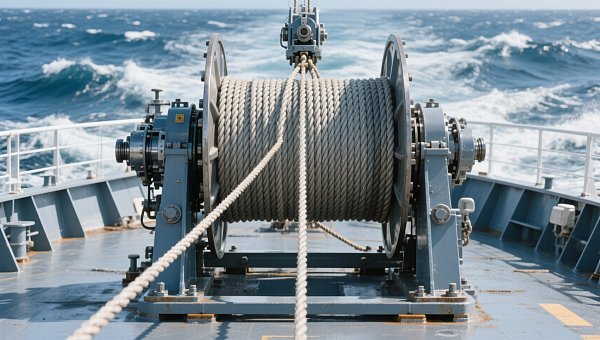
Effective May 1, 2026, the revised People’s Republic of China Maritime Code introduces a fundamental shift in liability for uncollected cargo at discharge ports—transferring primary responsibility from consignees to shippers under Article 93. This change directly affects global trade in high-value subsea equipment, including Subsea ROV/AUV systems and Marine Winches, particularly under FOB and CIF delivery terms.

Key Legal Change Effective May 1, 2026
As of May 1, 2026, Article 93 of the newly amended Maritime Code of the People’s Republic of China reassigns primary legal responsibility for cargo remaining uncollected at the port of discharge from the consignee to the shipper. This statutory revision applies uniformly to all maritime shipments governed by Chinese law, including exports of specialized marine engineering equipment. The provision does not introduce new definitions or exceptions for specific equipment categories but establishes a clear default liability framework applicable to FOB and CIF contracts where Chinese law governs or applies by agreement.
Impact Across Supply Chain Roles
Export-oriented trading enterprises
These entities now bear direct legal and financial exposure for demurrage, storage, and potential disposal costs if overseas buyers fail to collect cargo. The change affects core contractual execution—especially documentation handling, letter-of-credit verification, and pre-shipment risk allocation clauses.
Manufacturing enterprises
Producers of Subsea ROV/AUV and Marine Winches must reassess delivery timelines, shipping coordination protocols, and contractual language used in sales agreements. Since equipment value often exceeds USD 500,000 per unit, even short-term port detention can trigger material cost exposure previously assumed by buyers.
Supply chain service providers
Freight forwarders, customs brokers, and logistics coordinators face heightened due diligence requirements—notably in verifying consignee readiness, confirming import permits, and documenting handover conditions prior to vessel departure. Their role shifts toward proactive risk signaling rather than passive documentation processing.
Procurement and sourcing organizations
Buyers’ procurement departments must now anticipate updated Incoterms® interpretations and revised commercial terms from Chinese suppliers—including mandatory inclusion of cargo collection guarantees, extended validity windows for letters of credit, and explicit allocation of post-discharge responsibilities in purchase orders.
Priority Actions for Exporting Companies
Strengthen pre-shipment LC clause review
Verify that letters of credit explicitly require consignee confirmation of readiness to receive goods prior to shipment—and include fallback mechanisms (e.g., time-bound acceptance declarations or bank-guaranteed collection commitments) to mitigate no-pickup risk.
Integrate port滞港 risk-sharing clauses into contracts
Revise standard FOB/CIF terms to define time-bound obligations for consignee action, specify cost caps for detention beyond agreed windows, and outline procedures for cargo redirection or return—ensuring enforceability under both Chinese and destination-country law.
Update trade terminology communications with overseas clients
Proactively distribute revised explanatory notes on Incoterms® usage—highlighting how Article 93 modifies traditional expectations under CIF/FOB, especially regarding responsibility transfer upon arrival, not just delivery to carrier.
Industry Perspective: A Structural Realignment of Trade Risk
Analysis shows this amendment reflects a broader regulatory emphasis on strengthening shipper accountability in cross-border logistics—a trend increasingly visible in recent revisions to customs valuation rules and export control frameworks. From an industry perspective, it is more appropriate to understand this not as a punitive measure, but as a structural recalibration aligning legal liability with practical control: shippers retain greater influence over consignee selection, contract design, and documentation sequencing than consignees exert over final port operations. What deserves closer attention is how quickly international counterparties adapt their purchasing workflows—and whether multilateral trade bodies will initiate harmonization discussions to avoid jurisdictional friction in high-value marine equipment transactions.
Strategic Implications for the Subsea Equipment Sector
This update signals a maturing phase in China’s maritime regulatory architecture—one where legal frameworks increasingly reflect operational realities of complex, capital-intensive equipment logistics. For Subsea ROV/AUV exporters, it elevates contract governance from a back-office compliance task to a frontline commercial competency. Long-term, the change may accelerate adoption of digital trade platforms with embedded milestone tracking (e.g., consignee acknowledgment triggers), reduce reliance on paper-based handovers, and reinforce the need for bilingual legal-commercial teams fluent in both maritime law and technical delivery protocols.
Source Information and Verification Notes
This article was generated exclusively from the user-provided information: title, event date (2026-05-01), and summary text. Specific official source links were not provided in the input and should be verified continuously. Stakeholders are advised to monitor forthcoming judicial interpretations, Ministry of Transport implementation guidelines, updates to the China International Economic and Trade Arbitration Commission (CIETAC) model clauses, and evolving practice among major shipping lines and freight insurers—particularly regarding force majeure carve-outs and consignee default definitions.
Recommended for You
 Digital SeaWhen Is a Straddle Monorail System a Good Fit for Urban Transit Corridors?Is a straddle monorail system right for your urban corridor? Explore capacity, space, station access, safety, and lifecycle costs to make a confident transit investment.By: Captain Kenji SatoOct 19, 2026
 Fabric LogicEU Textile Waste Reporting: Who Must Report and What Data Is Required?EU textile waste reporting explained: discover who must report, what data is required, and how to verify EPR, waste records, and shipment compliance across EU markets.By: Chloe DuboisOct 18, 2026
 Fabric LogicYarn Strength Benchmarks for Weaving: Setting Warp and Weft RequirementsSet yarn strength benchmarks for weaving with practical warp and weft criteria. Learn how tenacity, variability, and loom loads inform specifications that help reduce breaks and improve reliability.By: Chloe DuboisOct 17, 2026
 Fabric LogicEnergy-Saving Textile Machinery: How to Calculate Payback for Your MillEvaluate energy saving textile machinery with a practical payback formula, real-world cost factors, and a worked example. Discover how to verify savings and invest confidently in your mill.By: Chloe DuboisOct 16, 2026
 Digital SeaETSC Adoption in Europe: Policy Drivers, Costs, and Implementation BarriersExplore ETSC adoption Europe-wide: uncover policy drivers, installed costs, and implementation barriers to evaluate solar thermal investments and identify projects with stronger returns.By: Captain Kenji SatoOct 15, 2026
 Digital SeaChoosing Semiconductor Solutions for Industrial Controls: Key Design CriteriaChoose semiconductor solutions for industrial controls with confidence. Explore key criteria for timing, accuracy, power, safety, and lifecycle support to make smarter design decisions.By: Captain Kenji SatoOct 14, 2026
 Aseptic FillingWhen Should Compliance Checks Start for Aseptic Filling Procurement?How early should compliance checks start in procurement planning? Learn why aseptic filling reviews should begin before supplier shortlisting to reduce risks, rework, and costly delays.By: Marcus SterlingOct 13, 2026
 Smart MetersHow Do You Assess Market Demand Before Sourcing New Smart Meters?How do I assess market demand before sourcing a new industrial product? Discover how to validate smart meter demand, check technical fit, and reduce inventory risk before committing to bulk orders.By: Dr. Elena VoltOct 13, 2026
 GIS SwitchgearWhat Should You Compare Besides Price When Selecting GIS Switchgear?What should I compare besides price when selecting an industrial product? Explore GIS switchgear ratings, IEC compliance, maintenance and lifecycle costs to make a confident procurement decision.By: Dr. Elena VoltOct 13, 2026
 Optical SensorsHow Do You Choose Optical Sensors for Harsh Industrial Environments?How do I choose components for harsh industrial environments? Discover how to select optical sensors for dust, heat, vibration, and washdown—and prevent costly missed detections.By: Dr. Hideo TanakaOct 13, 2026
 Marine WinchesWhich Operating Conditions Can Change Marine Winch Selection?Which industrial application conditions can change product selection? Explore how loads, sea state, duty cycle and power shape marine winch selection to make a smarter investment.By: Captain Kenji SatoOct 13, 2026
 Digital SeaChoosing a Seismic Survey Equipment Distributor: Lead Times and Spare PartsChoosing a seismic survey equipment distributor? Learn how to verify lead times, secure critical spare parts, and compare support to reduce downtime and buy with confidence.By: Captain Kenji SatoOct 13, 2026
 Digital SeaHow to Use Industrial Benchmarking Data to Evaluate Supplier Risk and CapabilityIndustrial benchmarking data for supplier evaluation helps buyers assess capability, compliance, capacity, and delivery risk. Learn how to make smarter, evidence-based sourcing decisions.By: Captain Kenji SatoOct 12, 2026
 Fabric LogicFashion Supply Chain Cost Trends: What Is Driving Margins in 2026?Fashion supply chain cost trends for 2026: discover how materials, freight, labor, compliance, and inventory are reshaping margins—and the strategies leaders need to protect profitability.By: Chloe DuboisOct 11, 2026
 Lumen VisionHow Smart Street Lighting Cuts Energy Use Without Compromising Road SafetySmart street lighting reduces energy use while protecting road safety through adaptive controls, reliable monitoring, and risk-based lighting design. Learn the key strategies.By: Dr. Hideo TanakaOct 10, 2026
 Digital SeaDouble Platinum Spark Plugs: When Their Longer Service Life Justifies the CostDouble platinum spark plugs offer longer service life, stable gaps, and lower labor costs. Learn when their premium price is worth it for your vehicle.By: Captain Kenji SatoOct 08, 2026
 Sorting RobotsHow to Benchmark Linear Guide Load Ratings for High-Cycle Automation AxesLinear guide load rating benchmarks for high-cycle automation axes: compare loads, moments, stiffness, lubrication, and life calculations to select reliable guides.By: Marcus SterlingOct 07, 2026
 Digital SeaWhich Rail Data Transparency Metrics Improve Capacity Planning and Service Reliability?Rail data transparency metrics reveal usable capacity, dwell, recovery, and asset risks—helping rail leaders plan more reliable, resilient services.By: Captain Kenji SatoOct 06, 2026
 Digital SeaHow to Select a Marine Piston Air Compressor for High-Demand Shipboard ServiceMarine piston air compressor selection guide for high-demand shipboard service—compare capacity, redundancy, air quality, maintenance, and compliance requirements.By: Captain Kenji SatoOct 05, 2026
 Grid ResilienceIEC 61850 Monitoring Latency: How to Set Performance Limits for Protection SystemsIEC 61850 monitoring latency explained: learn how to set, test, and verify end-to-end performance limits that protect critical GOOSE and Sampled Values systems.By: Dr. Elena VoltOct 04, 2026
 Digital SeaHow to Select Bulldozers by Blade Type, Ground Conditions, and Earthmoving OutputBulldozers selection made practical: compare blade types, track setups, ground conditions, and cycle output to choose the right dozer for lower costs and reliable earthmoving.By: Captain Kenji SatoOct 03, 2026
 Dyeing MachinesHow Sustainable Dyeing Cuts Water Use and Chemical Risk in Textile ProductionSustainable dyeing cuts water use and chemical risk through smarter liquor control, efficient rinsing, safer inputs, and repeatable textile quality.By: Chloe DuboisOct 02, 2026
 Optical SensorsSingle-Mode Fiber Loss in Railway Networks: Causes, Budgets, and Test MethodsSingle mode railway fiber loss explained: identify causes, calculate realistic loss budgets, and apply OTDR and insertion-loss tests for reliable rail networks.By: Dr. Hideo TanakaOct 01, 2026
 Digital SeaIntegrated Transit Hub Planning: How to Balance Passenger Flow and Future CapacityIntegrated transit hub planning strategies for balancing passenger flow, resilient operations, phased delivery, and future capacity—explore practical insights for smarter hubs.By: Captain Kenji SatoSep 30, 2026
 Digital SeaWhat to Evaluate When Selecting a MaaS Ticketing Platform for Multimodal NetworksMaaS ticketing platform selection guide: evaluate interoperability, fare control, settlement, resilience, privacy, and scalability for multimodal networks.By: Captain Kenji SatoSep 29, 2026
 Digital SeaWhat Does Train Control Center Software Cost? Budgeting for Integration and SupportTrain control center software cost explained: compare integration, cybersecurity, commissioning, and long-term support to build a realistic rail operations budget.By: Captain Kenji SatoSep 28, 2026
 Digital SeaWhat to Evaluate in Thermite Rail Welding Equipment for Field Track RepairsThermite rail welding equipment: evaluate compatibility, preheating, alignment, safety, and supplier support for reliable field track repairs.By: Captain Kenji SatoSep 27, 2026
 Aseptic FillingISO 22000 Food Safety Certification: What Food Manufacturers Must PrepareISO 22000 food safety certification: discover the essential steps manufacturers need to build a robust FSMS, control hazards, and prepare confidently for audit success.By: Marcus SterlingSep 26, 2026
 UHV TransformersWhat Makes an Electrification Factory Ready for High-Voltage Equipment Production?Electrification factory readiness for high-voltage equipment: discover the essential standards, testing, traceability, safety, and workforce controls that drive reliable production.By: Dr. Elena VoltSep 25, 2026
 Digital SeaRail Signal Visibility: Sighting Distance, Contrast, and Verification RequirementsRail signal visibility: learn how sighting distance, contrast, weather, and verification controls help ensure safe, compliant signal recognition.By: Captain Kenji SatoSep 24, 2026
![]() GIS SwitchgearHow Do You Compare GIS Switchgear Suppliers When Certifications Differ?How do I compare industrial suppliers when certifications are not equivalent? Learn how to assess GIS switchgear test evidence, compliance scope, traceability, and project risk.By: Dr. Elena VoltSep 24, 2026
GIS SwitchgearHow Do You Compare GIS Switchgear Suppliers When Certifications Differ?How do I compare industrial suppliers when certifications are not equivalent? Learn how to assess GIS switchgear test evidence, compliance scope, traceability, and project risk.By: Dr. Elena VoltSep 24, 2026