BDI: 1,842 ▼ 1.2%
COTTON NO.2: 84.12 ▲ 0.4%
LME COPPER: 8,432.50 ▲ 2.1%
FOOD SAFETY INDEX: 94.2 ARCHIVE_SECURED
OPTICAL INDEX: 11,204.09 STABLE
BDI: 1,842 ▼ 1.2%

SECTOR INDEX
V.24.08 ARCHIVE
Hot Articles
- When Is a Straddle Monorail System a Good Fit for Urban Transit Corridors?Is a straddle monorail system right for your urban corridor? Explore capacity, space, station access, safety, and lifecycle costs to make a confident transit investment.
- EU Textile Waste Reporting: Who Must Report and What Data Is Required?EU textile waste reporting explained: discover who must report, what data is required, and how to verify EPR, waste records, and shipment compliance across EU markets.
- Yarn Strength Benchmarks for Weaving: Setting Warp and Weft RequirementsSet yarn strength benchmarks for weaving with practical warp and weft criteria. Learn how tenacity, variability, and loom loads inform specifications that help reduce breaks and improve reliability.
How much rail communication bandwidth is enough today?


As rail networks adopt CBTC, onboard video, condition monitoring, and edge analytics, the question is no longer whether capacity matters, but how much rail communication bandwidth needs are enough for safe, scalable operations.
The answer is rarely a single number.
Modern rail communication bandwidth needs depend on service type, latency tolerance, redundancy design, train density, and expected digital expansion over the asset lifecycle.
In practice, bandwidth planning is an engineering decision tied to safety, resilience, and future interoperability across complex infrastructure programs.
What does rail communication bandwidth really include today?

Rail communication bandwidth needs now cover far more than voice and basic signaling.
They include train control data, operational telemetry, CCTV streams, passenger information updates, maintenance diagnostics, cybersecurity logging, and remote software support.
Some applications are bandwidth-light but latency-critical.
Others consume significant throughput but can tolerate buffering, scheduling, or non-real-time transfer windows.
This distinction matters because safe design is not based on peak megabits alone.
A rail system may function poorly even with high capacity if jitter, packet loss, or handover behavior are uncontrolled.
Typical communication layers include:
- mission-critical signaling and control traffic
- operations voice and dispatch coordination
- onboard and wayside video
- predictive maintenance and sensor uploads
- passenger Wi-Fi or infotainment in selected systems
- security, logging, and remote management traffic
Therefore, evaluating rail communication bandwidth needs starts with traffic classification, not only total throughput assumptions.
How much rail communication bandwidth is enough for different applications?
Enough bandwidth depends on the application mix and service philosophy.
CBTC and train control usually require modest throughput compared with video, yet demand very strict latency, determinism, and availability.
Onboard CCTV can rapidly dominate total usage.
A few compressed streams may be manageable, but higher resolutions, frame rates, or simultaneous live backhaul can multiply rail communication bandwidth needs.
Condition monitoring usually sits between those extremes.
Small sensor packets are light, but richer diagnostics, event-triggered uploads, and edge-generated files raise recurring capacity demand.
A useful planning framework is to separate traffic into three groups:
- Critical real-time traffic that must always pass first.
- Operational traffic that needs reliability but can be prioritized below control.
- Elastic traffic that can be delayed, compressed, or offloaded.
This structure prevents overbuilding every layer while protecting safety-related services.
For many projects, the real question is not one minimum figure.
It is the sustained bandwidth available per train, per cell, during worst-case density, tunnel transitions, and failure scenarios.
Why are latency, redundancy, and handover often more important than headline throughput?
Bandwidth numbers can look comfortable on paper while operational performance remains fragile.
That happens when design reviews focus on aggregate capacity and ignore motion, interference, and failover behavior.
Rail communication bandwidth needs must be measured alongside:
- end-to-end latency
- jitter under load
- packet loss at handover points
- redundancy switching time
- coverage continuity in tunnels, stations, and depots
A network supporting moving trains experiences dynamic radio conditions.
As more applications share the same bearer, contention grows and service classes must be enforced consistently.
Redundancy also changes the calculation.
Dual networks, parallel paths, and resilient backhaul improve safety and availability, yet they may reduce usable headroom if poorly segmented.
This is why mature engineering teams evaluate quality of service and failure behavior before declaring rail communication bandwidth needs sufficient.
How should future growth affect bandwidth planning decisions?
Rail assets often remain in service for decades.
A network sized only for current traffic may become a bottleneck long before rolling stock or signaling reaches end of life.
Future-oriented rail communication bandwidth needs should consider several likely growth drivers.
- more cameras per train and higher video resolution
- expanded health monitoring from traction, braking, and door systems
- software updates delivered over the air
- cybersecurity telemetry and audit retention requirements
- edge analytics sending event clips or exception files
- migration toward FRMCS, private LTE, or 5G architectures
The practical goal is not unlimited oversizing.
It is to design modular upgrade paths in spectrum use, radios, backhaul, switching, and application prioritization.
Scalability becomes especially important where rail systems intersect with wider smart infrastructure programs.
In a cross-sector environment, lessons from smart grid, industrial automation, and photonics sensing can improve rail communication bandwidth needs forecasting.
What are the most common mistakes when estimating rail communication bandwidth needs?
Several planning errors appear repeatedly.
The first is treating average traffic as if it represented operating risk.
Rail networks should be assessed against peak density, degraded modes, station dwell concentration, and emergency video demand.
The second mistake is counting bandwidth without service hierarchy.
If every application is treated equally, noncritical traffic can crowd out essential flows during contention.
A third mistake is ignoring uplink demand.
Many rail communication bandwidth needs are uplink-heavy because trains generate telemetry, video, and event data back to control centers.
Another error is underestimating integration overhead.
Encryption, protocol wrappers, retries, and logging all consume capacity and processing resources.
Finally, teams sometimes plan for current compliance only.
They miss how standards evolution, cybersecurity requirements, and digital maintenance practices expand rail communication bandwidth needs over time.
How can teams evaluate whether current or proposed capacity is enough?
A structured review is more reliable than a single vendor figure.
Start with an application inventory and define traffic behavior for each service.
Then model normal, peak, and degraded scenarios.
Include moving handovers, tunnel sections, dense station zones, depot operations, and incident response conditions.
Next, compare measured or simulated performance against these questions:
This method turns rail communication bandwidth needs into a lifecycle decision rather than a one-time estimate.
FAQ: quick answers on rail communication bandwidth needs
Is more bandwidth always better?
No. Uncontrolled latency, poor prioritization, or weak redundancy can undermine performance even when raw capacity looks high.
Which application usually drives upgrades?
Video often becomes the largest contributor, especially with live streaming, higher resolutions, and broader security retention policies.
Should planning focus on average or peak usage?
Peak and degraded conditions matter more because they expose whether rail communication bandwidth needs remain safe during operational stress.
Do predictive maintenance systems change capacity requirements?
Yes. They may add steady telemetry plus burst uploads triggered by faults, analytics events, or remote diagnostics.
How much future headroom is reasonable?
There is no universal figure. Headroom should match roadmap uncertainty, upgrade cost, and expected expansion of digital services.
Conclusion: what is enough today?
Enough means the network supports critical services first, remains stable during failures, and scales for emerging applications without major redesign.
That is the most practical answer to current rail communication bandwidth needs.
For infrastructure programs with long lifecycles, the best next step is to audit traffic classes, test worst-case scenarios, and map realistic upgrade paths early.
A disciplined assessment today reduces safety risk, avoids stranded investment, and keeps rail communication bandwidth needs aligned with tomorrow’s operational demands.
Recommended for You
 Digital SeaWhen Is a Straddle Monorail System a Good Fit for Urban Transit Corridors?Is a straddle monorail system right for your urban corridor? Explore capacity, space, station access, safety, and lifecycle costs to make a confident transit investment.By: Captain Kenji SatoOct 19, 2026
 Fabric LogicEU Textile Waste Reporting: Who Must Report and What Data Is Required?EU textile waste reporting explained: discover who must report, what data is required, and how to verify EPR, waste records, and shipment compliance across EU markets.By: Chloe DuboisOct 18, 2026
 Fabric LogicYarn Strength Benchmarks for Weaving: Setting Warp and Weft RequirementsSet yarn strength benchmarks for weaving with practical warp and weft criteria. Learn how tenacity, variability, and loom loads inform specifications that help reduce breaks and improve reliability.By: Chloe DuboisOct 17, 2026
 Fabric LogicEnergy-Saving Textile Machinery: How to Calculate Payback for Your MillEvaluate energy saving textile machinery with a practical payback formula, real-world cost factors, and a worked example. Discover how to verify savings and invest confidently in your mill.By: Chloe DuboisOct 16, 2026
 Digital SeaETSC Adoption in Europe: Policy Drivers, Costs, and Implementation BarriersExplore ETSC adoption Europe-wide: uncover policy drivers, installed costs, and implementation barriers to evaluate solar thermal investments and identify projects with stronger returns.By: Captain Kenji SatoOct 15, 2026
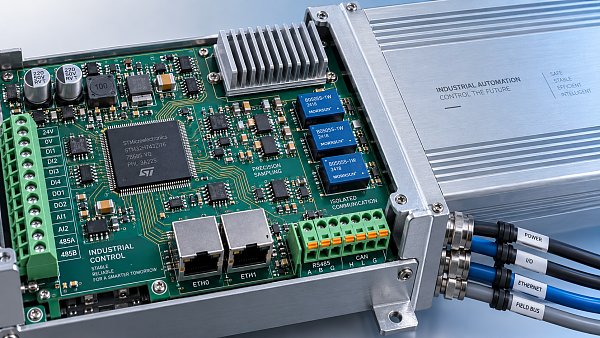
 Digital SeaChoosing Semiconductor Solutions for Industrial Controls: Key Design CriteriaChoose semiconductor solutions for industrial controls with confidence. Explore key criteria for timing, accuracy, power, safety, and lifecycle support to make smarter design decisions.By: Captain Kenji SatoOct 14, 2026
 Aseptic FillingWhen Should Compliance Checks Start for Aseptic Filling Procurement?How early should compliance checks start in procurement planning? Learn why aseptic filling reviews should begin before supplier shortlisting to reduce risks, rework, and costly delays.By: Marcus SterlingOct 13, 2026
 Smart MetersHow Do You Assess Market Demand Before Sourcing New Smart Meters?How do I assess market demand before sourcing a new industrial product? Discover how to validate smart meter demand, check technical fit, and reduce inventory risk before committing to bulk orders.By: Dr. Elena VoltOct 13, 2026
 GIS SwitchgearWhat Should You Compare Besides Price When Selecting GIS Switchgear?What should I compare besides price when selecting an industrial product? Explore GIS switchgear ratings, IEC compliance, maintenance and lifecycle costs to make a confident procurement decision.By: Dr. Elena VoltOct 13, 2026
 Optical SensorsHow Do You Choose Optical Sensors for Harsh Industrial Environments?How do I choose components for harsh industrial environments? Discover how to select optical sensors for dust, heat, vibration, and washdown—and prevent costly missed detections.By: Dr. Hideo TanakaOct 13, 2026
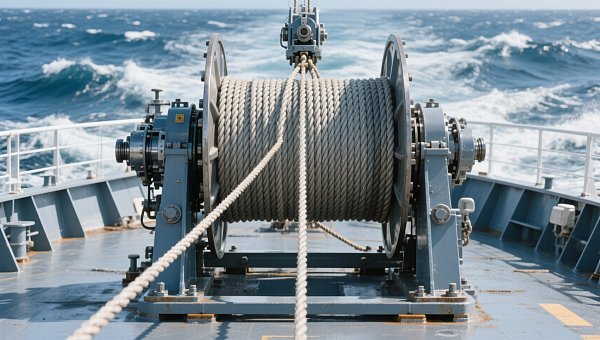
 Marine WinchesWhich Operating Conditions Can Change Marine Winch Selection?Which industrial application conditions can change product selection? Explore how loads, sea state, duty cycle and power shape marine winch selection to make a smarter investment.By: Captain Kenji SatoOct 13, 2026
 Digital SeaChoosing a Seismic Survey Equipment Distributor: Lead Times and Spare PartsChoosing a seismic survey equipment distributor? Learn how to verify lead times, secure critical spare parts, and compare support to reduce downtime and buy with confidence.By: Captain Kenji SatoOct 13, 2026
 Digital SeaHow to Use Industrial Benchmarking Data to Evaluate Supplier Risk and CapabilityIndustrial benchmarking data for supplier evaluation helps buyers assess capability, compliance, capacity, and delivery risk. Learn how to make smarter, evidence-based sourcing decisions.By: Captain Kenji SatoOct 12, 2026
 Fabric LogicFashion Supply Chain Cost Trends: What Is Driving Margins in 2026?Fashion supply chain cost trends for 2026: discover how materials, freight, labor, compliance, and inventory are reshaping margins—and the strategies leaders need to protect profitability.By: Chloe DuboisOct 11, 2026
 Lumen VisionHow Smart Street Lighting Cuts Energy Use Without Compromising Road SafetySmart street lighting reduces energy use while protecting road safety through adaptive controls, reliable monitoring, and risk-based lighting design. Learn the key strategies.By: Dr. Hideo TanakaOct 10, 2026
 Digital SeaDouble Platinum Spark Plugs: When Their Longer Service Life Justifies the CostDouble platinum spark plugs offer longer service life, stable gaps, and lower labor costs. Learn when their premium price is worth it for your vehicle.By: Captain Kenji SatoOct 08, 2026
 Sorting RobotsHow to Benchmark Linear Guide Load Ratings for High-Cycle Automation AxesLinear guide load rating benchmarks for high-cycle automation axes: compare loads, moments, stiffness, lubrication, and life calculations to select reliable guides.By: Marcus SterlingOct 07, 2026
 Digital SeaWhich Rail Data Transparency Metrics Improve Capacity Planning and Service Reliability?Rail data transparency metrics reveal usable capacity, dwell, recovery, and asset risks—helping rail leaders plan more reliable, resilient services.By: Captain Kenji SatoOct 06, 2026
 Digital SeaHow to Select a Marine Piston Air Compressor for High-Demand Shipboard ServiceMarine piston air compressor selection guide for high-demand shipboard service—compare capacity, redundancy, air quality, maintenance, and compliance requirements.By: Captain Kenji SatoOct 05, 2026
 Grid ResilienceIEC 61850 Monitoring Latency: How to Set Performance Limits for Protection SystemsIEC 61850 monitoring latency explained: learn how to set, test, and verify end-to-end performance limits that protect critical GOOSE and Sampled Values systems.By: Dr. Elena VoltOct 04, 2026
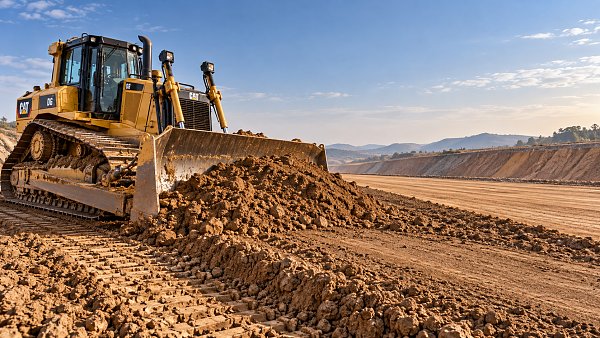
 Digital SeaHow to Select Bulldozers by Blade Type, Ground Conditions, and Earthmoving OutputBulldozers selection made practical: compare blade types, track setups, ground conditions, and cycle output to choose the right dozer for lower costs and reliable earthmoving.By: Captain Kenji SatoOct 03, 2026
 Dyeing MachinesHow Sustainable Dyeing Cuts Water Use and Chemical Risk in Textile ProductionSustainable dyeing cuts water use and chemical risk through smarter liquor control, efficient rinsing, safer inputs, and repeatable textile quality.By: Chloe DuboisOct 02, 2026
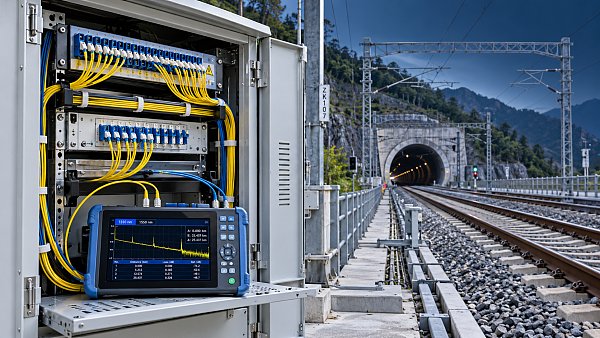
 Optical SensorsSingle-Mode Fiber Loss in Railway Networks: Causes, Budgets, and Test MethodsSingle mode railway fiber loss explained: identify causes, calculate realistic loss budgets, and apply OTDR and insertion-loss tests for reliable rail networks.By: Dr. Hideo TanakaOct 01, 2026
 Digital SeaIntegrated Transit Hub Planning: How to Balance Passenger Flow and Future CapacityIntegrated transit hub planning strategies for balancing passenger flow, resilient operations, phased delivery, and future capacity—explore practical insights for smarter hubs.By: Captain Kenji SatoSep 30, 2026
 Digital SeaWhat to Evaluate When Selecting a MaaS Ticketing Platform for Multimodal NetworksMaaS ticketing platform selection guide: evaluate interoperability, fare control, settlement, resilience, privacy, and scalability for multimodal networks.By: Captain Kenji SatoSep 29, 2026
 Digital SeaWhat Does Train Control Center Software Cost? Budgeting for Integration and SupportTrain control center software cost explained: compare integration, cybersecurity, commissioning, and long-term support to build a realistic rail operations budget.By: Captain Kenji SatoSep 28, 2026
 Digital SeaWhat to Evaluate in Thermite Rail Welding Equipment for Field Track RepairsThermite rail welding equipment: evaluate compatibility, preheating, alignment, safety, and supplier support for reliable field track repairs.By: Captain Kenji SatoSep 27, 2026
 Aseptic FillingISO 22000 Food Safety Certification: What Food Manufacturers Must PrepareISO 22000 food safety certification: discover the essential steps manufacturers need to build a robust FSMS, control hazards, and prepare confidently for audit success.By: Marcus SterlingSep 26, 2026
 UHV TransformersWhat Makes an Electrification Factory Ready for High-Voltage Equipment Production?Electrification factory readiness for high-voltage equipment: discover the essential standards, testing, traceability, safety, and workforce controls that drive reliable production.By: Dr. Elena VoltSep 25, 2026
 Digital SeaRail Signal Visibility: Sighting Distance, Contrast, and Verification RequirementsRail signal visibility: learn how sighting distance, contrast, weather, and verification controls help ensure safe, compliant signal recognition.By: Captain Kenji SatoSep 24, 2026
![]() GIS SwitchgearHow Do You Compare GIS Switchgear Suppliers When Certifications Differ?How do I compare industrial suppliers when certifications are not equivalent? Learn how to assess GIS switchgear test evidence, compliance scope, traceability, and project risk.By: Dr. Elena VoltSep 24, 2026
GIS SwitchgearHow Do You Compare GIS Switchgear Suppliers When Certifications Differ?How do I compare industrial suppliers when certifications are not equivalent? Learn how to assess GIS switchgear test evidence, compliance scope, traceability, and project risk.By: Dr. Elena VoltSep 24, 2026