BDI: 1,842 ▼ 1.2%
COTTON NO.2: 84.12 ▲ 0.4%
LME COPPER: 8,432.50 ▲ 2.1%
FOOD SAFETY INDEX: 94.2 ARCHIVE_SECURED
OPTICAL INDEX: 11,204.09 STABLE
BDI: 1,842 ▼ 1.2%

SECTOR INDEX
V.24.08 ARCHIVE
Hot Articles
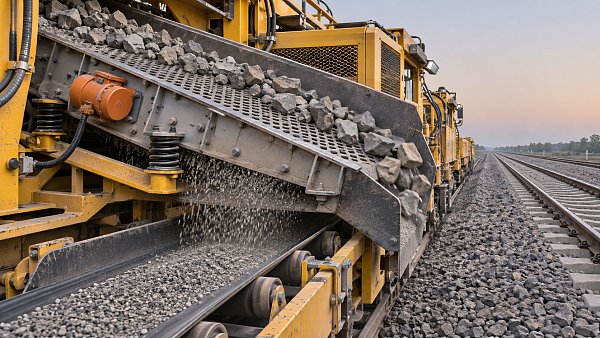
- How Does a Ballast Cleaner Screening System Separate Track Ballast?Discover how a ballast cleaner screening system separates reusable stone from fines, what affects performance, and how to assess the results.
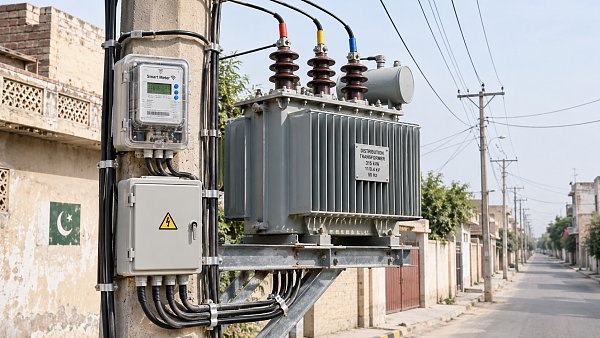
- Pakistan to Seek World Bank and ADB Funding for Smart MetersPakistan seeks World Bank and ADB funding for smart meters on distribution transformers. Explore the plan to tackle power theft and improve grid efficiency.
- What Is Precision Medicine and How Does It Guide Treatment?Discover how precision medicine uses biomarkers and genetic insights to guide treatment, where it can help, and what to ask before testing.
What Makes an Electrification Factory Ready for High-Voltage Equipment Production?


A project schedule can look convincing on paper until the first high-voltage enclosure reaches the test bay. At that point, a facility’s real level of preparedness becomes visible: whether clearances are workable, whether material traceability survives handoffs, whether the testing team can safely reproduce acceptance conditions, and whether one failed inspection will stall an entire production sequence.
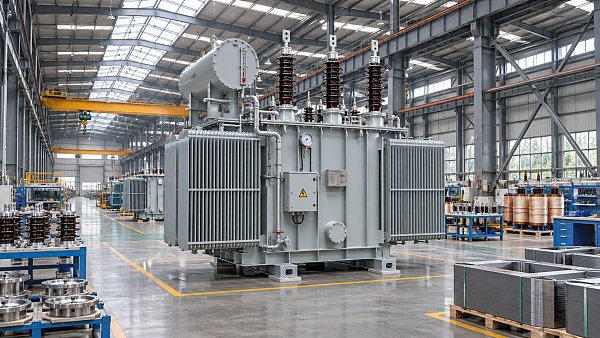
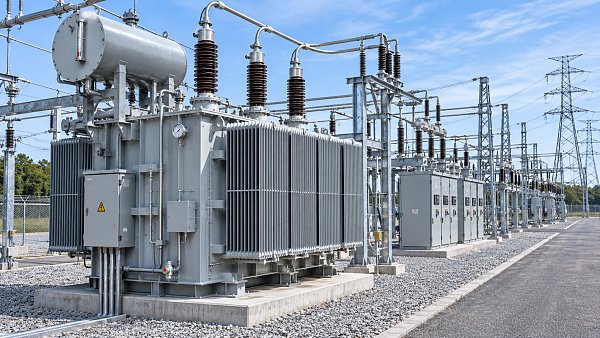
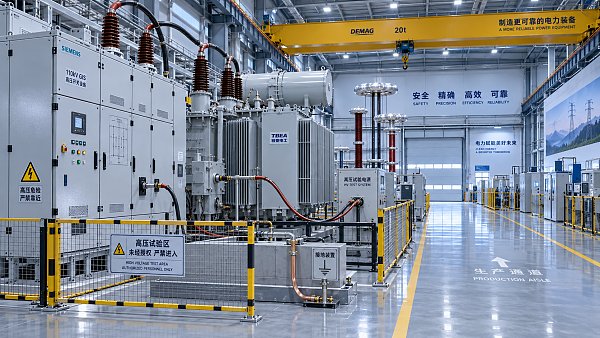
An Electrification factory built for high-voltage equipment production is not simply a large industrial building with more cranes and heavier doors. It is a controlled manufacturing system where electrical safety, mechanical handling, insulation integrity, testing discipline, and documentation must work together. For project managers responsible for transformers, switchgear, grid connection systems, power conversion skids, or related smart-grid assets, factory readiness should be assessed long before production release.
The central question is practical: can the facility manufacture the intended equipment repeatedly, safely, and with evidence that each unit meets its specified duty? The answer depends on far more than installed capacity.
Start with the production reality, not the building footprint
High-voltage equipment differs substantially from general electrical assembly. A low-voltage panel can often be produced in a flexible workshop using standardized benches, conventional inspection, and relatively simple final tests. A high-voltage transformer, GIS component, vacuum switchgear lineup, or power-quality module introduces a different set of constraints: high stored-energy hazards, controlled insulation systems, precise torque and alignment requirements, sensitive dielectric interfaces, and often complex transport geometry.
Before approving an Electrification factory layout, the project team should translate the product portfolio into actual manufacturing flows. This means mapping the journey of a unit from incoming inspection through fabrication, winding or assembly, drying or curing where applicable, enclosure integration, wiring, routine testing, packing, and dispatch. Each stage should be tested against the heaviest, longest, cleanest, most hazardous, and most schedule-critical item expected in the program—not against an average unit.
That distinction matters. A factory may have adequate floor area but no turning radius for a large transformer tank. It may have a rated overhead crane but no safe lifting plan for awkward bushings or assembled switchgear sections. It may have a test room, yet lack isolation procedures that permit parallel work elsewhere in the facility. Readiness begins when these constraints are made visible early.
The factory should be designed as a sequence of controlled zones
High-voltage production works best when the physical arrangement reflects the risk profile of each process. Rather than treating the workshop as one open space, a mature facility separates activities that can contaminate, damage, delay, or endanger one another.
Incoming materials require a protected receiving and inspection area. Conductors, insulation paper, resin systems, vacuum interrupters, instrument transformers, control electronics, and sealing components all need different storage conditions and verification routines. Moisture-sensitive insulation materials, for example, should not wait in the same uncontrolled area as fabricated steelwork. Likewise, electronic protection relays should not be exposed to dust, vibration, or temperature swings associated with heavy fabrication.
Fabrication and welding zones need effective control of fumes, grinding debris, and heat. These activities should be physically and operationally separated from clean assembly, insulation application, and final electrical testing. In transformer manufacturing, even apparently minor contamination can affect oil cleanliness or insulation performance later in the process. In medium- and high-voltage switchgear assembly, conductive debris left inside an enclosure can become a serious reliability issue during dielectric testing or service.
Clean assembly areas deserve particular attention. They should support disciplined component staging, identifiable work-in-progress locations, adequate lighting, calibrated tooling, and access for quality checks without forcing technicians to improvise around partially completed units. The aim is not a showroom-like space. It is a repeatable environment where the correct material, revision-controlled drawing, torque value, and inspection point are available when needed.
Finally, testing must occupy a deliberately controlled zone, not a corner of the assembly floor. Barriers, interlocks, warning systems, remote monitoring, emergency stop arrangements, and documented exclusion distances are fundamental. The exact arrangement will depend on voltage class and test method, but the principle is consistent: testing activity must be isolated in a way that protects people without making the process so cumbersome that teams bypass controls under schedule pressure.
Material handling is an engineering decision, not a logistics afterthought
Many production ramp-up problems begin with a quiet assumption: “The crane can handle it.” Rated lifting capacity is only one part of the question. Project leaders should examine hook height, span coverage, travel paths, lift speed control, tandem-lift requirements, floor loading, sling access, and the ability to rotate or position equipment without exposing operators to pinch points.
High-voltage equipment often contains components that are heavy yet vulnerable. Transformer active parts, porcelain or composite bushings, instrument transformers, cast-resin coils, and precision-machined interrupter mechanisms cannot be handled like generic fabricated goods. A handling incident may not cause immediate visible damage, but it can introduce alignment issues, microcracks, insulation stress, or latent defects that surface during final testing.
Good readiness planning also separates “movement” from “storage.” Components waiting for assembly need stable, labeled, protected locations. Finished equipment may need climate protection, shock monitoring, or special packing before shipment. If the factory does not have defined buffers, production lanes become storage lanes; then material flow becomes unpredictable, inspections are missed, and rework starts competing for the same space as new production.
Testing capability defines the credibility of high-voltage production
For most buyers and project owners, the factory test process is where confidence is either earned or lost. An Electrification factory cannot claim high-voltage readiness solely because it owns standard electrical instruments. Its test capability must match the product’s applicable requirements, contractual specifications, and expected operating environment.
Depending on the equipment category, routine and special testing may involve insulation resistance, winding resistance, ratio verification, contact resistance, timing tests, partial discharge measurement, power-frequency withstand tests, impulse-related assessments, dielectric loss measurements, functional control checks, temperature-rise verification, leakage checks, or mechanical endurance validation. Not every factory performs every type of test in-house, and that is not automatically a weakness. The important point is that the boundary between internal capability and qualified external testing is explicit, managed, and acceptable to the project specification.
Test readiness also includes utility supply quality, grounding design, electromagnetic compatibility considerations, instrument calibration, data capture, and safe discharge procedures. A sophisticated test set connected to an inadequate ground grid is not a reliable system. Nor is a test result persuasive if the configuration, environmental conditions, instrument status, and product serial number cannot be tied together in the production record.
Project managers should ask a simple but revealing question: Can the factory reproduce this test next month, on the next unit, with the same controlled method and a complete audit trail? If the answer depends on one individual’s memory or an improvised wiring arrangement, the facility is not yet fully ready.
Standards must be built into work instructions
International standards such as IEC, ISO, ASTM, and relevant local electrical codes provide an essential framework, but compliance is not achieved by displaying standards on a shelf. It must appear in the daily operating detail of the facility.
For high-voltage transmission and smart-grid equipment, the applicable IEC product standards commonly shape design verification, dielectric testing, temperature limits, short-circuit considerations, ingress protection, and documentation. ISO-based quality and environmental management systems may govern how nonconformities, suppliers, calibration, and corrective actions are managed. ASTM methods can also be relevant to material testing and characterization. The exact standard set varies by product, destination market, and contract, so it should be reviewed as part of the project’s technical baseline rather than added late during inspection preparation.
A ready factory converts these requirements into practical controls: approved drawings at point of use, inspection and test plans, torque records, traveler documents, hold points, material certificates, calibration registers, and defined release authority. This reduces the recurring risk of discovering, near shipment, that a component substitution was not formally approved or that a required test record cannot be reconstructed.
Digital traceability should follow the asset, not merely the order number
High-voltage assets are expected to remain in service for years, often in infrastructure environments where an outage has consequences far beyond the equipment itself. That long operating life changes the value of factory data. A production record is not just an internal administrative file; it may later support commissioning, warranty review, maintenance decisions, failure analysis, and asset lifecycle planning.
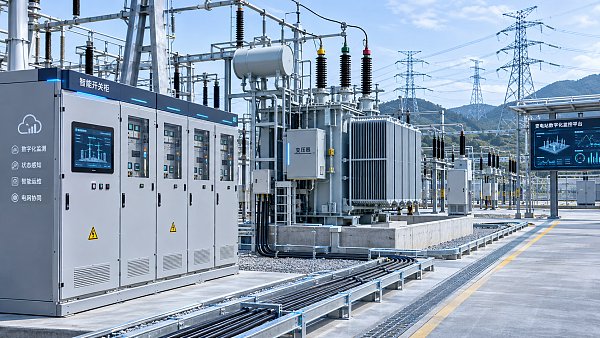
The strongest approach is to connect serial-level identification with material batches, critical process steps, test results, engineering revisions, and approved deviations. This does not require every facility to deploy an overly complex digital platform from day one. A disciplined system that technicians can actually use is more valuable than an impressive dashboard fed by incomplete data.
Particular attention should be given to components with safety or performance significance: insulation systems, copper or aluminum conductors, vacuum interrupters, protective devices, bushings, gaskets, control relays, and embedded sensors. When a field issue occurs, teams should be able to determine what was installed, who verified it, which approved process was used, and whether similar units may be affected.
People readiness is often the limiting factor
Equipment can be purchased, and layouts can be redrawn. Skilled high-voltage manufacturing capability takes longer to build. The factory needs more than electricians and assemblers; it needs people who understand why cleanliness matters around insulation, why a torque sequence is controlled, why a test boundary cannot be crossed, and why a small documentation gap can become a project-level risk.
Competency planning should identify roles that cannot be treated as interchangeable: winding specialists, HV test engineers, certified welders, quality inspectors, lifting supervisors, protection-and-control technicians, and production planners familiar with long-lead electrical components. Cross-training is valuable, but it should not blur accountability in safety-critical steps.
Shift planning deserves equal care. A test bay operated by an experienced daytime team and an under-supported evening team does not have consistent capacity. Similarly, a factory that depends on a single expert for fault diagnosis or final release carries a hidden continuity risk. Readiness reviews should therefore look at training matrices, authorization levels, supervision coverage, and contingency plans—not just headcount.
A practical readiness review before production release
For engineering leaders, the most useful assessment is usually a walk-through tied to a real unit configuration. Follow the proposed product route and challenge every handoff. Can materials be received and verified against the bill of materials? Is there enough controlled space for assembly? Can the heaviest item be lifted safely at every required point? Are work instructions current? Does the test area support the specified acceptance tests? Can a nonconforming unit be quarantined without blocking production?
It is also wise to run a “failure rehearsal.” Consider a failed dielectric test, a delayed bushing delivery, a rejected weld inspection, or an engineering change after assembly has begun. The response reveals whether the factory has practical containment, rework, document-control, and scheduling mechanisms. Facilities are rarely judged by whether problems occur; they are judged by whether problems remain controlled.
G-MCE’s cross-sector benchmarking perspective is useful here because high-voltage production does not exist in isolation. Lessons from precision optics clean handling, maritime equipment traceability, automated industrial processing, and advanced manufacturing quality systems can expose blind spots that a single-sector review may miss. The most resilient facilities borrow disciplined practices while adapting them to the electrical hazards and infrastructure demands of their own product range.
Factory readiness is ultimately a promise that must be repeatable
A high-voltage manufacturing site becomes truly ready when its layout, people, equipment, controls, and records support the same result under normal production pressure. The goal is not to create a flawless demonstration unit for a customer visit. It is to build a dependable system capable of producing compliant transformers, switchgear, and grid equipment across changing schedules, supplier conditions, and project requirements.
For project managers, that is the standard worth applying. Evaluate the Electrification factory as an integrated production and verification environment. Look beyond floor space, machine lists, and stated capacity. Ask how safety is protected, how defects are contained, how tests are evidenced, how materials are traced, and how expertise is sustained. Those answers will say far more about delivery confidence than a facility brochure ever can.
Recommended for You
 Digital SeaHow Does a Ballast Cleaner Screening System Separate Track Ballast?Discover how a ballast cleaner screening system separates reusable stone from fines, what affects performance, and how to assess the results.By: Captain Kenji SatoNov 14, 2026
 Smart MetersPakistan to Seek World Bank and ADB Funding for Smart MetersPakistan seeks World Bank and ADB funding for smart meters on distribution transformers. Explore the plan to tackle power theft and improve grid efficiency.By: Dr. Elena VoltNov 13, 2026
 Digital SeaWhat Is Precision Medicine and How Does It Guide Treatment?Discover how precision medicine uses biomarkers and genetic insights to guide treatment, where it can help, and what to ask before testing.By: Captain Kenji SatoNov 13, 2026
 Grid Resilience2026 CSEE Annual Meeting Opens with Focus on AI and Power SystemsThe 2026 CSEE Annual Meeting explores AI, low-carbon power systems and ultra-high-voltage transmission. Discover why these discussions matter.By: Dr. Elena VoltNov 12, 2026
 Digital SeaShip Radar Detection Range: How Far Can It See and What Limits It?Ship radar detection range depends on more than the display scale. Discover how antenna height, weather, target size, and settings affect what radar can see.By: Captain Kenji SatoNov 12, 2026
 UHV TransformersGE Vernova to Invest $34.5 Million in Louisiana Transformer Plant ExpansionGE Vernova plans a $34.5 million transformer plant expansion in Louisiana. Explore its potential impact on North American supply and procurement.By: Dr. Elena VoltNov 11, 2026
 Digital SeaMetro Station Noise Criteria: Limits and Measurement MethodsExplore metro station noise criteria, applicable limits and measurement methods. Learn how to select metrics and assess compliance with confidence.By: Captain Kenji SatoNov 11, 2026
 Digital SeaKongsberg Maritime Unveils Arctic Hunter Unmanned Surface VesselKongsberg Maritime's Arctic Hunter unmanned surface vessel is proposed for the Royal Navy's Type 92 programme. Explore its technology and procurement implications.By: Captain Kenji SatoNov 10, 2026
 Sorting RobotsHow Accurate Is AI in Food Quality Control? Metrics and Testing MethodsExplore AI in food quality control accuracy, from recall and false negatives to validation methods. Learn how to assess real-world inspection reliability.By: Marcus SterlingNov 10, 2026
 UHV TransformersGE Vernova Selected for 6 GW HVDC Link in IndiaGE Vernova will design a 6 GW HVDC link for PGCIL, connecting Rajasthan and South Kalamb to support India's clean energy transition. Discover the project.By: Dr. Elena VoltNov 09, 2026
 Grid ResilienceEurope's Grid Compliance Standards in 2026: Generator Connection RequirementsExplore new grid compliance standards 2026 Europe projects must address, from generator connection rules to testing and documentation. Prepare for approval.By: Dr. Elena VoltNov 09, 2026
 Technical FabricsNonwoven Bonding Cost Data: Comparing Thermal and Chemical ProcessesExplore nonwoven bonding cost data to compare thermal and chemical processes, assess usable yield, and choose the best-value option for your application.By: Chloe DuboisNov 08, 2026
 Fiber LasersIndustrial Lasers to 2035: Automotive Lightweighting and Precision Welding Drive DemandExplore the industrial laser market outlook to 2035 and discover how automotive lightweighting and precision welding could shape demand and procurement.By: Dr. Hideo TanakaNov 07, 2026
 Technical FabricsChoosing Geotextile Under Railway Ballast: Key Performance RequirementsChoosing geotextile under railway ballast? Explore essential filtration, drainage, strength and durability criteria to make a confident, project-specific selection.By: Chloe DuboisNov 07, 2026
 Digital SeaChoosing Rail Welding Equipment for Maintenance: Field Conditions and Weld TypesChoose rail welding equipment for maintenance with confidence. Compare welding methods, field constraints, inspection needs, and lifecycle costs.By: Captain Kenji SatoNov 06, 2026
 Digital SeaIndia Broadband Forum Urges Stronger Submarine Cable ResilienceIndia’s submarine cable resilience is in focus as the Broadband India Forum urges faster repairs, more vessels and stronger landing infrastructure.By: Captain Kenji SatoNov 06, 2026
 Digital SeaChoosing a Railway Network Switch Supplier: Reliability and Support CriteriaChoosing a railway network switch supplier? Compare reliability, standards evidence, cybersecurity, and lifecycle support to reduce project risk.By: Captain Kenji SatoNov 05, 2026
 Grid ResilienceUS Grid Equipment Import Ban Raises Cost and Implementation ConcernsThe US grid equipment import ban raises concerns over costs and delivery delays. Explore how unclear criteria could affect procurement and supply chains.By: Dr. Elena VoltNov 05, 2026
 Digital SeaRailway Coupler Price: How Type and Specifications Affect QuotesRailway coupler price depends on type, specifications, and order scope. Learn how to compare quotes, avoid hidden costs, and make a confident buying decision.By: Captain Kenji SatoNov 04, 2026
 Grid ResilienceGlobal Smart Grid Companies Raise $3 Billion in First Nine Months of 2026Global smart grid companies raised $3 billion in the first nine months of 2026. Explore the funding breakdown and potential implications for buyers and suppliers.By: Dr. Elena VoltNov 04, 2026
 Digital SeaChoosing Wholesale Pet Toys: How to Evaluate Suppliers and Minimum OrdersWholesale pet toys: learn how to assess suppliers, compare minimum orders and landed costs, and reduce inventory risk before you buy.By: Captain Kenji SatoNov 03, 2026
 Digital SeaSustainable Packaging Design: How to Choose Materials and Reduce WasteDiscover how sustainable packaging design helps reduce waste, protect products, and control costs with practical material choices and proven testing strategies.By: Captain Kenji SatoNov 02, 2026
 Technical FabricsUSMCA's First Joint Review Puts Textile Supply Chain Rules in FocusUSMCA's first joint review puts textile supply chain rules in focus. Explore potential impacts on origin compliance, sourcing and tariff treatment.By: Chloe DuboisNov 02, 2026
 Digital SeaManufacturing KPI Benchmarking: How to Compare Production PerformanceBenchmarking KPI manufacturing performance? Learn how to compare OEE, quality and downtime, identify meaningful gaps, and turn insights into practical improvements.By: Captain Kenji SatoNov 01, 2026
 Smart MetersCCI Approves Adani Energy Solutions' ₹305 Billion Acquisition of IntelliSmartCCI approves Adani Energy Solutions' ₹305 billion acquisition of IntelliSmart. Discover what the deal could mean for India's smart meter market.By: Dr. Elena VoltNov 01, 2026
 Digital SeaChoosing a Coin Laundry Machinery OEM: What Buyers Should EvaluateChoosing a coin laundry machinery OEM? Compare machine specifications, payment integration, lifecycle costs, and support to make a confident buying decision.By: Captain Kenji SatoOct 31, 2026
 Grid ResilienceUS Energy Department Announces $237 Million Grid SCALED Funding ProgramExplore the DOE's $237 million Grid SCALED funding program and its goals to strengthen grid equipment supply chains, lower electricity costs, and improve resilience.By: Dr. Elena VoltOct 31, 2026
 UHV TransformersA Decade of UHV Power in Shandong: Province Leads in Station NumbersShandong UHV power leads China in station numbers. Explore a decade of grid development and its implications for electricity supply and business planning.By: Dr. Elena VoltOct 30, 2026
 Digital SeaChoosing a Composite Train Body Panel Manufacturer: Fire Safety and Quality ChecksChoosing a composite train body panels manufacturer? Learn how to verify fire test evidence, audit production quality, and avoid costly approval gaps before you buy.By: Captain Kenji SatoOct 29, 2026
 Subsea ROV/AUVOcean Infinity Deploys Six AUVs Together Beyond 5,000 MetresOcean Infinity reportedly deployed six HUGIN AUVs beyond 5,200 metres. Explore what concurrent deepwater missions could mean for seabed surveys and procurement.By: Captain Kenji SatoOct 29, 2026
 Grid ResilienceRenewable Energy Grid Balancing: How Storage and Demand Response Work TogetherExplore renewable energy grid balancing with storage and demand response. Learn how coordinated controls manage shortfalls, absorb surplus power, and improve grid reliability.By: Dr. Elena VoltOct 28, 2026