BDI: 1,842 ▼ 1.2%
COTTON NO.2: 84.12 ▲ 0.4%
LME COPPER: 8,432.50 ▲ 2.1%
FOOD SAFETY INDEX: 94.2 ARCHIVE_SECURED
OPTICAL INDEX: 11,204.09 STABLE
BDI: 1,842 ▼ 1.2%

SECTOR INDEX
V.24.08 ARCHIVE
Hot Articles
- How Does a Ballast Cleaner Screening System Separate Track Ballast?Discover how a ballast cleaner screening system separates reusable stone from fines, what affects performance, and how to assess the results.
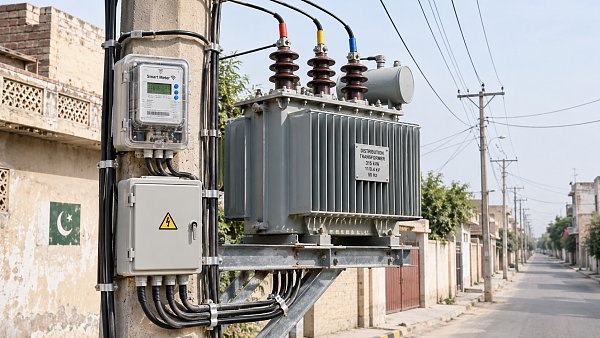
- Pakistan to Seek World Bank and ADB Funding for Smart MetersPakistan seeks World Bank and ADB funding for smart meters on distribution transformers. Explore the plan to tackle power theft and improve grid efficiency.
- What Is Precision Medicine and How Does It Guide Treatment?Discover how precision medicine uses biomarkers and genetic insights to guide treatment, where it can help, and what to ask before testing.
Can UHV Transformer Supplier Data Be Trusted Without Independent Verification?


When a utility or EPC team is reviewing a UHV transformer bid, the supplier’s technical schedule may appear complete: rated voltage, MVA capacity, impedance, no-load loss, load loss, insulation levels, cooling arrangement, tap changer details, and claimed IEC conformity. The immediate temptation is to treat a polished datasheet as a reliable engineering baseline. It is not.
Supplier technical data can be used as a starting point, but it should not be trusted as final evidence without independent verification. In UHV transformer procurement, a single unverified value can affect network studies, civil design, protection coordination, transport planning, acceptance testing, and long-term operating risk. The question, “Can supplier technical data be trusted without independent verification?” matters because datasheets are declarations; they are not automatically proof that a specific transformer design can be manufactured, tested, delivered, and operated under the stated conditions.
Why a credible-looking datasheet can still create exposure
Transformer documentation often combines several different kinds of information. Some values are contractual design targets. Others are calculated estimates, standard catalogue limits, test results from a similar unit, or statements copied from a general compliance matrix. They may all be presented in the same table, even though they have very different evidentiary weight.
This distinction becomes important when the transformer is at the boundary of a supplier’s established capability. A manufacturer may have experience with high-voltage units but limited evidence at the requested voltage class, transport mass, bushing configuration, short-circuit duty, or insulation coordination level. The submitted figures may be technically plausible, yet plausibility is not the same as demonstrated performance.
For UHV equipment, the consequences are rarely limited to a minor specification deviation. A change in impedance can alter fault-current calculations and parallel operation. Higher-than-expected losses can affect guaranteed-loss evaluation and thermal margins. An incomplete insulation design can lead to partial discharge concerns or withstand-test failure. A bushing, tap changer, cooling bank, or transport interface that was not fully engineered at bid stage can delay delivery after the purchase order is already placed.
Independent verification does not mean assuming that every supplier statement is inaccurate. It means separating information that has been proven from information that still needs technical substantiation.
Read the data by evidence level, not by presentation quality
A practical review starts by classifying each important declaration. Procurement teams often focus on whether all requested fields are filled in. Engineering review should instead ask what supports each field and whether that support applies to the proposed unit.
A routine test report from a smaller or lower-voltage transformer should not be treated as proof for a UHV design. Similarly, a generic statement that a factory “manufactures transformers to IEC standards” does not confirm that all requirements for the offered transformer have been met. The relevant question is always narrower: What evidence shows that this proposed unit, or a demonstrably equivalent design, meets this specific duty?

Start with the parameters that affect the entire project
Not every nameplate field deserves the same verification effort. Review effort should be concentrated where an inaccurate declaration would change system design, commercial liability, safety margin, or manufacturability.
Rated power, voltage ratio, and tapping range
Confirm the full rating basis rather than reading only the headline MVA value. Check whether the stated rating applies at all specified cooling stages, ambient conditions, tap positions, and power-factor assumptions. A transformer may meet its principal rating under one cooling mode while the project requires continuous operation under another. Tapping range, step size, regulation method, and tap changer duty must align with the system study and with the specified control philosophy.
Voltage ratio also needs a consistent reference point. A mismatch between nominal voltage, maximum system voltage, and winding insulation level can appear minor in a bid table but become serious during insulation coordination or bushing selection.
Losses, impedance, and sound level
Guaranteed loss figures should be reviewed with their stated tolerances, temperature correction method, and measurement basis. Buyers should determine whether no-load loss includes auxiliary effects where relevant, whether load loss is quoted at a defined reference temperature, and whether stray losses have been considered. The commercial evaluation formula should use the same basis as the guarantee.
Impedance requires equally careful treatment. It affects fault levels, voltage regulation, load sharing, and protection settings. Confirm the tolerance permitted by the contract and whether the declared value applies to the required tap position. A supplier may offer an impedance value that is achievable but not ideal for the actual network arrangement.
Sound values should be associated with a measurement distance, operating condition, cooling equipment status, and applicable test method. A bare transformer figure is not necessarily representative of the installed equipment, particularly where fans, pumps, coolers, or site acoustic constraints are involved.
Insulation coordination and dielectric performance
UHV transformer dielectric design cannot be validated by a simple “IEC compliant” entry. Verify the declared lightning impulse withstand level, switching impulse withstand level, power-frequency withstand level, neutral requirements, and clearances against the project insulation coordination study. Confirm that bushings, surge arresters, terminal arrangements, and line connections are compatible with the same assumptions.
Partial discharge requirements deserve attention because reported values may depend on test voltage, measurement sensitivity, background noise, test circuit, and acceptance criteria. Ask for the proposed test sequence and for clarification of which measurements are routine, special, or design-validation tests. A low stated partial discharge value is useful only when the test conditions are clear.
Compare the offer against the governing documents
Independent verification is most effective when it follows a controlled document hierarchy. The purchase specification, single-line diagram, system studies, site conditions, applicable IEC requirements, and tender clarifications should be reconciled before a supplier’s data are accepted. Otherwise, a reviewer may verify that a transformer matches its own datasheet without noticing that the datasheet has departed from the project requirement.
A deviation register is particularly valuable. It should not contain only explicit exceptions. It should also identify missing information, statements such as “as per manufacturer standard,” alternative component arrangements, unconfirmed interfaces, and values stated as “to be finalized.” These are not necessarily disqualifying issues, but they should not disappear into the technical correspondence.
- Match each declared rating to the required operating scenario and cooling duty.
- Check that insulation levels match the approved system coordination basis, not just a familiar voltage class.
- Identify which components are supplier-designed and which are sourced from external manufacturers.
- Reconcile transformer dimensions, mass, center of gravity, and shipping splits with site access and transport constraints.
- Review auxiliary supply, control, protection, SCADA, fire-protection, and monitoring interfaces as engineering requirements rather than late-stage accessories.
Document consistency is itself a useful diagnostic. Different winding vectors in the datasheet and drawings, different loss values in commercial and technical schedules, or inconsistent bushing current ratings often indicate that the design is still evolving. Those discrepancies should be resolved before technical acceptance, not interpreted generously after award.
Use test reports correctly
Test reports are powerful evidence, but only when reviewed in context. A report should identify the transformer or component tested, the date, the applicable standard, the test arrangement, relevant ratings, and the recorded result. A summary page without test conditions does not give enough information to establish equivalence.
For a proposed UHV transformer, ask whether submitted reports relate to the same voltage class, comparable MVA rating, similar winding arrangement, equivalent insulation system, and a similar tap changer and bushing duty. Differences do not automatically invalidate the report, but the supplier should explain why the evidence remains applicable.
Factory acceptance testing should also be planned before production begins. The approved inspection and test plan needs clear hold points, witness points, document-review stages, test procedures, and acceptance criteria. Buyers should know in advance which tests will be witnessed, what raw or detailed records will be available, and how nonconformities will be documented. Treating FAT as the first moment when technical questions are asked is too late; by then, many design decisions are fixed.
Factory capability is part of data verification
A transformer’s declared performance depends on more than design calculations. Core cutting and stacking, winding equipment, conductor handling, insulation drying, vapor-phase or hot-oil processing, tank fabrication, lifting capacity, test-bay capability, and quality controls all affect whether the proposed design can be repeated reliably.
A factory assessment should focus on the proposed unit’s manufacturing route. It is reasonable to examine whether the facility can handle the transformer’s active-part dimensions and mass, whether its test bay can perform the required dielectric tests, and whether critical processes are performed in-house or depend on subcontracting. The aim is not to judge a factory by appearance; it is to establish that declared capabilities correspond to the actual production and test scope.
Where a supplier proposes an unfamiliar design feature, verification may require a design review of the relevant subsystem. Examples include nonstandard cooling arrangements, unusually high current leads, transportable bushing assemblies, special seismic provisions, or digital monitoring equipment integrated into the transformer control architecture.
Build verification into the procurement sequence
The strongest approach is staged. Before shortlist selection, screen offers for missing data, material deviations, unsupported claims, and obvious incompatibilities. During technical clarification, require responses that are traceable to drawings, calculations, reports, or controlled procedures rather than broad assurances.
Before contract award, convert essential promises into unambiguous contractual requirements: guaranteed values, tolerances, test scope, applicable standards, document submittals, approval gates, liquidated-damages mechanisms where applicable, and the treatment of failed or repeated tests. After award, conduct design reviews early enough for meaningful correction, then maintain traceability from approved design documents through manufacturing records and final test evidence.
Independent review is especially valuable at three moments: when evaluating bid compliance, when approving the detailed design, and when accepting final test results. Each stage answers a different question. Bid review asks whether the offer is suitable. Design review asks whether the final configuration remains suitable. Test review asks whether the manufactured unit has met the agreed evidence requirements.
Questions that often arise during technical evaluation
Is a third-party certificate enough to accept the supplier’s figures?
No. A certificate may confirm a management system, a component test, or a defined inspection activity. It does not automatically validate all nameplate values, design calculations, site interfaces, or the applicability of a test result to the offered transformer. Review the scope, issuing body, document identity, and relationship to the actual unit.
Must every UHV transformer be independently type tested?
Not necessarily. The appropriate evidence depends on the specification, the governing standard, the design similarity, and the criticality of the duty. Some requirements can be addressed through routine tests, validated design records, component evidence, or special tests. The procurement specification should state which evidence is required and when equivalent prior evidence may be considered acceptable.
What should trigger deeper verification before award?
Escalate when values are unusually favorable without supporting detail, when reports are not traceable to comparable equipment, when key fields are marked “to be confirmed,” or when factory and test capability is unclear. Late changes to voltage ratio, losses, impedance, insulation levels, dimensions, or transport weight should receive the same attention because they can affect multiple downstream disciplines.
Can project references replace technical testing?
References and testing answer different questions. A relevant operating reference can support confidence in design maturity and service experience. It does not replace evidence that the proposed unit meets the specified ratings and test duties. Conversely, a satisfactory test report does not prove long-term operational history. Both should be considered, with relevance assessed carefully.
The appropriate standard is not blind distrust of supplier data. It is disciplined acceptance: use declared information for comparison, demand traceable proof for critical commitments, and preserve enough review time to resolve gaps before manufacture. For equipment that anchors a high-voltage network, verification is not an administrative layer added after engineering; it is part of establishing whether the offered transformer is genuinely fit for the duty described.
Recommended for You
 Digital SeaHow Does a Ballast Cleaner Screening System Separate Track Ballast?Discover how a ballast cleaner screening system separates reusable stone from fines, what affects performance, and how to assess the results.By: Captain Kenji SatoNov 14, 2026
 Smart MetersPakistan to Seek World Bank and ADB Funding for Smart MetersPakistan seeks World Bank and ADB funding for smart meters on distribution transformers. Explore the plan to tackle power theft and improve grid efficiency.By: Dr. Elena VoltNov 13, 2026
 Digital SeaWhat Is Precision Medicine and How Does It Guide Treatment?Discover how precision medicine uses biomarkers and genetic insights to guide treatment, where it can help, and what to ask before testing.By: Captain Kenji SatoNov 13, 2026
 Grid Resilience2026 CSEE Annual Meeting Opens with Focus on AI and Power SystemsThe 2026 CSEE Annual Meeting explores AI, low-carbon power systems and ultra-high-voltage transmission. Discover why these discussions matter.By: Dr. Elena VoltNov 12, 2026
 Digital SeaShip Radar Detection Range: How Far Can It See and What Limits It?Ship radar detection range depends on more than the display scale. Discover how antenna height, weather, target size, and settings affect what radar can see.By: Captain Kenji SatoNov 12, 2026
 UHV TransformersGE Vernova to Invest $34.5 Million in Louisiana Transformer Plant ExpansionGE Vernova plans a $34.5 million transformer plant expansion in Louisiana. Explore its potential impact on North American supply and procurement.By: Dr. Elena VoltNov 11, 2026
 Digital SeaMetro Station Noise Criteria: Limits and Measurement MethodsExplore metro station noise criteria, applicable limits and measurement methods. Learn how to select metrics and assess compliance with confidence.By: Captain Kenji SatoNov 11, 2026
 Digital SeaKongsberg Maritime Unveils Arctic Hunter Unmanned Surface VesselKongsberg Maritime's Arctic Hunter unmanned surface vessel is proposed for the Royal Navy's Type 92 programme. Explore its technology and procurement implications.By: Captain Kenji SatoNov 10, 2026
 Sorting RobotsHow Accurate Is AI in Food Quality Control? Metrics and Testing MethodsExplore AI in food quality control accuracy, from recall and false negatives to validation methods. Learn how to assess real-world inspection reliability.By: Marcus SterlingNov 10, 2026
 UHV TransformersGE Vernova Selected for 6 GW HVDC Link in IndiaGE Vernova will design a 6 GW HVDC link for PGCIL, connecting Rajasthan and South Kalamb to support India's clean energy transition. Discover the project.By: Dr. Elena VoltNov 09, 2026
 Grid ResilienceEurope's Grid Compliance Standards in 2026: Generator Connection RequirementsExplore new grid compliance standards 2026 Europe projects must address, from generator connection rules to testing and documentation. Prepare for approval.By: Dr. Elena VoltNov 09, 2026
 Technical FabricsNonwoven Bonding Cost Data: Comparing Thermal and Chemical ProcessesExplore nonwoven bonding cost data to compare thermal and chemical processes, assess usable yield, and choose the best-value option for your application.By: Chloe DuboisNov 08, 2026
 Fiber LasersIndustrial Lasers to 2035: Automotive Lightweighting and Precision Welding Drive DemandExplore the industrial laser market outlook to 2035 and discover how automotive lightweighting and precision welding could shape demand and procurement.By: Dr. Hideo TanakaNov 07, 2026
 Technical FabricsChoosing Geotextile Under Railway Ballast: Key Performance RequirementsChoosing geotextile under railway ballast? Explore essential filtration, drainage, strength and durability criteria to make a confident, project-specific selection.By: Chloe DuboisNov 07, 2026
 Digital SeaChoosing Rail Welding Equipment for Maintenance: Field Conditions and Weld TypesChoose rail welding equipment for maintenance with confidence. Compare welding methods, field constraints, inspection needs, and lifecycle costs.By: Captain Kenji SatoNov 06, 2026
 Digital SeaIndia Broadband Forum Urges Stronger Submarine Cable ResilienceIndia’s submarine cable resilience is in focus as the Broadband India Forum urges faster repairs, more vessels and stronger landing infrastructure.By: Captain Kenji SatoNov 06, 2026
 Digital SeaChoosing a Railway Network Switch Supplier: Reliability and Support CriteriaChoosing a railway network switch supplier? Compare reliability, standards evidence, cybersecurity, and lifecycle support to reduce project risk.By: Captain Kenji SatoNov 05, 2026
 Grid ResilienceUS Grid Equipment Import Ban Raises Cost and Implementation ConcernsThe US grid equipment import ban raises concerns over costs and delivery delays. Explore how unclear criteria could affect procurement and supply chains.By: Dr. Elena VoltNov 05, 2026
 Digital SeaRailway Coupler Price: How Type and Specifications Affect QuotesRailway coupler price depends on type, specifications, and order scope. Learn how to compare quotes, avoid hidden costs, and make a confident buying decision.By: Captain Kenji SatoNov 04, 2026
 Grid ResilienceGlobal Smart Grid Companies Raise $3 Billion in First Nine Months of 2026Global smart grid companies raised $3 billion in the first nine months of 2026. Explore the funding breakdown and potential implications for buyers and suppliers.By: Dr. Elena VoltNov 04, 2026
 Digital SeaChoosing Wholesale Pet Toys: How to Evaluate Suppliers and Minimum OrdersWholesale pet toys: learn how to assess suppliers, compare minimum orders and landed costs, and reduce inventory risk before you buy.By: Captain Kenji SatoNov 03, 2026
 Digital SeaSustainable Packaging Design: How to Choose Materials and Reduce WasteDiscover how sustainable packaging design helps reduce waste, protect products, and control costs with practical material choices and proven testing strategies.By: Captain Kenji SatoNov 02, 2026
 Technical FabricsUSMCA's First Joint Review Puts Textile Supply Chain Rules in FocusUSMCA's first joint review puts textile supply chain rules in focus. Explore potential impacts on origin compliance, sourcing and tariff treatment.By: Chloe DuboisNov 02, 2026
 Digital SeaManufacturing KPI Benchmarking: How to Compare Production PerformanceBenchmarking KPI manufacturing performance? Learn how to compare OEE, quality and downtime, identify meaningful gaps, and turn insights into practical improvements.By: Captain Kenji SatoNov 01, 2026
 Smart MetersCCI Approves Adani Energy Solutions' ₹305 Billion Acquisition of IntelliSmartCCI approves Adani Energy Solutions' ₹305 billion acquisition of IntelliSmart. Discover what the deal could mean for India's smart meter market.By: Dr. Elena VoltNov 01, 2026
 Digital SeaChoosing a Coin Laundry Machinery OEM: What Buyers Should EvaluateChoosing a coin laundry machinery OEM? Compare machine specifications, payment integration, lifecycle costs, and support to make a confident buying decision.By: Captain Kenji SatoOct 31, 2026
 Grid ResilienceUS Energy Department Announces $237 Million Grid SCALED Funding ProgramExplore the DOE's $237 million Grid SCALED funding program and its goals to strengthen grid equipment supply chains, lower electricity costs, and improve resilience.By: Dr. Elena VoltOct 31, 2026
 UHV TransformersA Decade of UHV Power in Shandong: Province Leads in Station NumbersShandong UHV power leads China in station numbers. Explore a decade of grid development and its implications for electricity supply and business planning.By: Dr. Elena VoltOct 30, 2026
 Digital SeaChoosing a Composite Train Body Panel Manufacturer: Fire Safety and Quality ChecksChoosing a composite train body panels manufacturer? Learn how to verify fire test evidence, audit production quality, and avoid costly approval gaps before you buy.By: Captain Kenji SatoOct 29, 2026
 Subsea ROV/AUVOcean Infinity Deploys Six AUVs Together Beyond 5,000 MetresOcean Infinity reportedly deployed six HUGIN AUVs beyond 5,200 metres. Explore what concurrent deepwater missions could mean for seabed surveys and procurement.By: Captain Kenji SatoOct 29, 2026
 Grid ResilienceRenewable Energy Grid Balancing: How Storage and Demand Response Work TogetherExplore renewable energy grid balancing with storage and demand response. Learn how coordinated controls manage shortfalls, absorb surplus power, and improve grid reliability.By: Dr. Elena VoltOct 28, 2026