BDI: 1,842 ▼ 1.2%
COTTON NO.2: 84.12 ▲ 0.4%
LME COPPER: 8,432.50 ▲ 2.1%
FOOD SAFETY INDEX: 94.2 ARCHIVE_SECURED
OPTICAL INDEX: 11,204.09 STABLE
BDI: 1,842 ▼ 1.2%

SECTOR INDEX
V.24.08 ARCHIVE
Hot Articles
- How Does a Ballast Cleaner Screening System Separate Track Ballast?Discover how a ballast cleaner screening system separates reusable stone from fines, what affects performance, and how to assess the results.
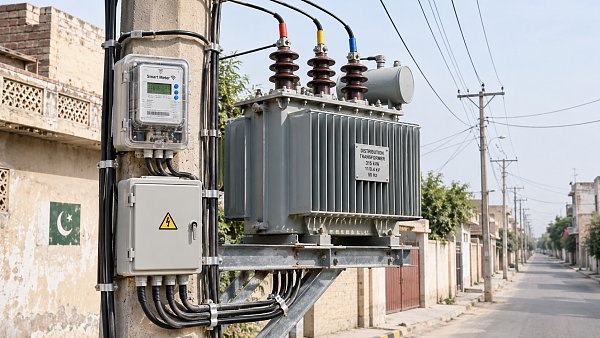
- Pakistan to Seek World Bank and ADB Funding for Smart MetersPakistan seeks World Bank and ADB funding for smart meters on distribution transformers. Explore the plan to tackle power theft and improve grid efficiency.
- What Is Precision Medicine and How Does It Guide Treatment?Discover how precision medicine uses biomarkers and genetic insights to guide treatment, where it can help, and what to ask before testing.
What Should Buyers Check Before Sourcing Smart Meter Components Internationally?


International sourcing of smart meter components fails less often because a part is unavailable than because it is technically “close enough” but not truly compatible with the meter design, utility specification, certification route, or long-term service model. A lower unit price can be quickly outweighed by requalification work, firmware changes, field failures, customs delays, or the inability to obtain replacement parts after a design revision.
Before issuing a purchase order, buyers should treat each component as part of a controlled metering system rather than as a standalone electronic item. The practical question is not simply whether a module, relay, metering IC, current sensor, or communication board meets its own datasheet. It is whether the delivered part will continue to meet the final meter’s accuracy, safety, electromagnetic compatibility, cybersecurity, and market-access requirements across its declared operating life.
Start with the meter architecture, not the supplier catalogue
The phrase “What should I check before sourcing smart device components internationally?” is especially important in smart metering because component selection is closely tied to the design architecture. A communication module may determine the antenna layout, power budget, cloud protocol, SIM or eSIM arrangement, and radio approval pathway. A relay may affect load-switching performance, thermal behavior, terminal design, and safety spacing. A metering IC, current transformer, shunt, or voltage divider may directly affect calibration capability and declared accuracy class.
Procurement documentation should therefore define the component in the context of the finished meter. A useful controlled specification normally includes:
- meter type: single-phase, polyphase, direct-connected, CT-operated, prepaid, or multi-utility;
- rated voltage, current range, frequency, wiring configuration, and maximum load conditions;
- required accuracy class and the applicable test standard or utility requirement;
- operating temperature, humidity, altitude, pollution degree, and enclosure conditions;
- mechanical interfaces, pinout, dimensions, mounting method, connector family, and terminal constraints;
- firmware, bootloader, protocol, encryption, and remote-update requirements for intelligent components;
- approved alternates, prohibited substitutions, and required notice periods for engineering changes.
A vague requirement such as “4G smart meter module” leaves too much room for interpretation. It does not establish regional band support, fallback behavior, peak transmission current, antenna connector type, carrier certification, embedded software version, or lifecycle availability. The same problem applies to metering chips described only by nominal accuracy, without defining reference design conditions, calibration method, temperature drift, or compatibility with the existing analog front end.
Part-number control matters. The purchase order, technical drawing, bill of materials, revision level, approved sample, and inspection plan should point to the same controlled item. International supply disputes frequently begin when the buyer approved one sample but ordered under a broad commercial description that permits a different revision, material, firmware release, or manufacturing location.
Separate component conformity from final-meter compliance
Certificates can be valuable evidence, but they do not automatically prove that a component makes the finished meter compliant. This distinction is central to international sourcing.
For electricity metering equipment, IEC 62052-11 covers general requirements, tests, and test conditions for electricity metering equipment. IEC 62052-31 addresses product safety requirements and tests. Accuracy requirements for static active-energy meters may be assessed against relevant parts of the IEC 62053 series, depending on meter type and declared class. Data exchange for meter reading and control is commonly associated with the IEC 62056 series, including DLMS/COSEM-related specifications where required by the project.
These standards apply at defined equipment and system levels. A current transformer supplier may provide material, ratio, and accuracy data, but the assembled meter still requires validation as a complete measurement chain. A wireless module may have prior radio test evidence, while the host meter can still need assessment because enclosure materials, antenna placement, power supply noise, and installed configuration influence final radio performance.
Market rules also differ by destination. In the European Union, the Measuring Instruments Directive 2014/32/EU may apply to complete measuring instruments placed on the market for regulated uses; buying individually compliant parts is not equivalent to placing a compliant meter on the market. Connected products containing radio equipment may also fall within the scope of the Radio Equipment Directive 2014/53/EU. Material restrictions such as RoHS and REACH can require supply-chain declarations and supporting evidence, but their relevance must be checked against the product category and destination-market obligations.
The right question for a supplier is not “Do you have IEC or CE certification?” It is: “Which exact product, revision, test configuration, laboratory, standard edition, and report scope does this document cover?” Request the full report or a controlled extract when the component is critical. Check model identity, rated conditions, dates, signatory organization, and whether the report actually covers the supplied factory and configuration.

Verify measurement performance as a chain of tolerances
Smart meter accuracy is not produced by a single “accurate” IC. It comes from the interaction of the voltage sensing network, current sensor or shunt, analog front end, reference source, PCB layout, calibration process, firmware calculation, and temperature behavior. A component that performs well on a supplier evaluation board may produce different results in a final meter enclosure.
For metering ICs and analog components, buyers should confirm the supported current range, voltage range, reference stability, phase measurement performance, startup current behavior, anti-tamper functions, calibration registers, and long-term software support. For current transformers, assess ratio, phase displacement, linearity, burden conditions, insulation, temperature characteristics, and mounting consistency. For shunts, resistance tolerance alone is insufficient; temperature coefficient, power dissipation, pulse behavior, terminal construction, and solder-joint effects can matter.
It is equally important to understand how calibration will be performed. A supplier may state that a device supports a high accuracy class, but this may assume individual calibration at multiple points, controlled test equipment, or firmware compensation. If the buyer’s production line uses a different calibration sequence, expected performance may not transfer. Calibration coefficients must also be managed securely and traceably, especially where meter identity, billing data, or anti-tamper behavior is involved.
Ask for a sample lot that represents normal production rather than an isolated engineering sample. Test it using the actual PCB, firmware, voltage and current inputs, and intended assembly process. Acceptance should cover both nominal conditions and the conditions most likely to expose variation: low current, power-factor extremes where relevant, temperature limits, supply disturbances, and repeated load switching.
Do not underestimate power quality, switching, and environmental stress
Many smart meter component issues emerge only after electrical stress testing. The input power supply must tolerate the supply range and disturbance environment specified for the intended market. A relay or contactor must be assessed not only for its headline current rating but for switching duty, inrush current, contact welding risk, heat rise, arc behavior, and endurance under the actual load profile.
Components connected to mains circuits should be evaluated within the final spacing, insulation, enclosure, and thermal arrangement. A component’s rated voltage does not remove the need to verify creepage, clearance, tracking resistance, flame behavior, and accessible-part safety at product level.
Electromagnetic immunity deserves early attention because it can expose design dependencies between parts. The IEC 61000-4 family includes commonly referenced test methods for electrostatic discharge, electrical fast transients, surge, conducted disturbances, and voltage dips or interruptions. The applicable test levels and product standards depend on the market and meter specification; they should not be copied from an unrelated product. A communication module that resets during a surge event, or a metering circuit that loses calibration data after an electrical transient, creates a system problem even if each part was individually functional.
Environmental requirements should be translated into measurable acceptance criteria. “Industrial grade” is not a sufficient requirement. Confirm the declared operating and storage ranges, condensation exposure, coating requirements, corrosion risks, UV resistance for external enclosures, ingress-protection interface requirements, and packaging protection during sea or air transport. For displays, plastics, seals, batteries, and capacitors, lifetime behavior may be more significant than initial inspection results.
Assess communications and cybersecurity as operational dependencies
A smart meter is often expected to remain deployed for many years, making connectivity choices difficult to reverse. Before sourcing cellular, RF mesh, PLC, Wi-Fi, NB-IoT, LTE-M, LoRaWAN, or other communication components, verify the exact network and protocol assumptions. Regional frequency bands, local operator support, SIM provisioning, roaming rules, antenna requirements, and permitted transmit settings must all align with the deployment country.
Interoperability should be tested through actual message exchange, not inferred from a protocol label. A component described as DLMS/COSEM capable may still need configuration work to match the meter’s object model, security suite, transport profile, or head-end implementation. PLC and RF products require similar caution: physical-layer compatibility does not guarantee operational interoperability with an existing network.
Cybersecurity requirements should be written into the sourcing specification. At minimum, clarify whether the component supports secure boot, signed firmware, protected key storage, authenticated debugging control, encrypted communications, vulnerability handling, and controlled remote updates. A secure element or communication module is only useful if its key-injection method, ownership model, recovery process, and certificate lifecycle are compatible with the meter manufacturer’s security architecture.
IEC 62443 is frequently used as a reference framework for industrial automation and control system cybersecurity. It can inform supplier-security expectations, but it should not be treated as a universal substitute for a meter-specific security design or for destination-market legal obligations. For connected components, obtain a software bill of materials where available, identify third-party firmware dependencies, and require a documented process for security advisories and patches.
Examine supplier control, not only production capacity
A supplier’s quoted monthly capacity says little about its ability to maintain a controlled product. The more relevant questions concern traceability, incoming-material control, test coverage, change management, and corrective-action discipline.
For critical components, request information on manufacturing location, subcontracted processes, lot coding, serialisation where applicable, functional test procedures, outgoing quality limits, and retention of production records. Clarify whether the supplier can preserve traceability from finished lot to major raw materials, semiconductor batch, firmware version, or calibration record. This is particularly important for metering ICs, communication modules, relays, power supplies, and security-related devices.
Change notification should be contractual rather than informal. Component manufacturers may alter silicon revision, embedded firmware, relay contact material, plastic resin, passive-component source, or assembly site without changing the commercial description in a way that is obvious to the buyer. Define what constitutes a controlled change and require advance written notice, sample submission, and reapproval before shipment. A formal Product Change Notification process is more useful than a general promise of “consistent quality.”
Counterfeit and grey-market exposure requires separate controls, especially for semiconductors and cellular modules. Buy through authorized channels where possible, verify traceability, prohibit unauthorized substitutions, and establish inspection or authentication procedures for high-risk parts. A shortage-driven broker purchase may solve an immediate production gap while creating an unmanageable warranty and cybersecurity liability.
Calculate landed risk, not only quoted cost
The commercial comparison should include more than EXW or FOB price. Incoterms® 2020 rules need to be specified clearly, because freight responsibility, export formalities, insurance, and risk transfer differ by term. The buyer should also account for transport mode, customs classification, import duty, local taxes, port handling, inspection costs, packaging requirements, and the cost of holding buffer inventory for long lead-time components.
Customs classification should be checked against the actual item and destination tariff schedule. Smart meter components can be difficult to classify when they combine measurement, communication, switching, and control functions. An incorrect HS classification can affect duty treatment, licensing, documentary requirements, and clearance timing.
Encryption-capable communication equipment may also require export-control screening in the exporting jurisdiction or import authorization in the destination market. The presence of cryptographic functions does not automatically prohibit trade, but it should never be assumed to be irrelevant. Responsibility for classification, licensing, and end-use information should be allocated clearly between the parties.
Lead time must be divided into its real elements: material allocation, production time, test time, export documentation, transport, customs clearance, and inbound inspection. A supplier’s stated lead time may begin only after receipt of a firm order and deposit, while the buyer’s project schedule begins when approved parts are available for manufacturing. For components with long qualification cycles, a dual-source strategy may be valuable, but only if both sources have been fully validated. Keeping an unqualified “backup supplier” is not meaningful resilience.
Use samples and contracts to close the gap between claims and deliverables
Pre-shipment samples should be treated as evidence, not as a formality. The sample approval record should identify the part number, revision, firmware, date code, factory, packaging, test conditions, and measured results. If a supplier provides a golden sample, retain it under controlled conditions and link it to the technical agreement.
The supply agreement should address acceptance criteria, defect handling, warranty scope, return-material authorization, failure analysis timing, replacement obligations, and ownership of test data. For programmable components, it should also establish firmware version control, source of update files, rollback conditions, and support availability after the component reaches end of life.
After-sales support is often overlooked in component sourcing because the item is viewed as a commodity. In smart metering, a firmware defect, calibration anomaly, or communication-network change may require rapid technical engagement long after delivery. Confirm escalation contacts, documentation access, engineering support boundaries, and end-of-life notification commitments before the first production order.
The strongest international sourcing decision is not the one with the lowest initial component cost. It is the one supported by a defined system requirement, verifiable conformity evidence, representative validation, disciplined supplier change control, and a realistic plan for service throughout the meter’s operating life.
Recommended for You
 Digital SeaHow Does a Ballast Cleaner Screening System Separate Track Ballast?Discover how a ballast cleaner screening system separates reusable stone from fines, what affects performance, and how to assess the results.By: Captain Kenji SatoNov 14, 2026
 Smart MetersPakistan to Seek World Bank and ADB Funding for Smart MetersPakistan seeks World Bank and ADB funding for smart meters on distribution transformers. Explore the plan to tackle power theft and improve grid efficiency.By: Dr. Elena VoltNov 13, 2026
 Digital SeaWhat Is Precision Medicine and How Does It Guide Treatment?Discover how precision medicine uses biomarkers and genetic insights to guide treatment, where it can help, and what to ask before testing.By: Captain Kenji SatoNov 13, 2026
 Grid Resilience2026 CSEE Annual Meeting Opens with Focus on AI and Power SystemsThe 2026 CSEE Annual Meeting explores AI, low-carbon power systems and ultra-high-voltage transmission. Discover why these discussions matter.By: Dr. Elena VoltNov 12, 2026
 Digital SeaShip Radar Detection Range: How Far Can It See and What Limits It?Ship radar detection range depends on more than the display scale. Discover how antenna height, weather, target size, and settings affect what radar can see.By: Captain Kenji SatoNov 12, 2026
 UHV TransformersGE Vernova to Invest $34.5 Million in Louisiana Transformer Plant ExpansionGE Vernova plans a $34.5 million transformer plant expansion in Louisiana. Explore its potential impact on North American supply and procurement.By: Dr. Elena VoltNov 11, 2026
 Digital SeaMetro Station Noise Criteria: Limits and Measurement MethodsExplore metro station noise criteria, applicable limits and measurement methods. Learn how to select metrics and assess compliance with confidence.By: Captain Kenji SatoNov 11, 2026
 Digital SeaKongsberg Maritime Unveils Arctic Hunter Unmanned Surface VesselKongsberg Maritime's Arctic Hunter unmanned surface vessel is proposed for the Royal Navy's Type 92 programme. Explore its technology and procurement implications.By: Captain Kenji SatoNov 10, 2026
 Sorting RobotsHow Accurate Is AI in Food Quality Control? Metrics and Testing MethodsExplore AI in food quality control accuracy, from recall and false negatives to validation methods. Learn how to assess real-world inspection reliability.By: Marcus SterlingNov 10, 2026
 UHV TransformersGE Vernova Selected for 6 GW HVDC Link in IndiaGE Vernova will design a 6 GW HVDC link for PGCIL, connecting Rajasthan and South Kalamb to support India's clean energy transition. Discover the project.By: Dr. Elena VoltNov 09, 2026
 Grid ResilienceEurope's Grid Compliance Standards in 2026: Generator Connection RequirementsExplore new grid compliance standards 2026 Europe projects must address, from generator connection rules to testing and documentation. Prepare for approval.By: Dr. Elena VoltNov 09, 2026
 Technical FabricsNonwoven Bonding Cost Data: Comparing Thermal and Chemical ProcessesExplore nonwoven bonding cost data to compare thermal and chemical processes, assess usable yield, and choose the best-value option for your application.By: Chloe DuboisNov 08, 2026
 Fiber LasersIndustrial Lasers to 2035: Automotive Lightweighting and Precision Welding Drive DemandExplore the industrial laser market outlook to 2035 and discover how automotive lightweighting and precision welding could shape demand and procurement.By: Dr. Hideo TanakaNov 07, 2026
 Technical FabricsChoosing Geotextile Under Railway Ballast: Key Performance RequirementsChoosing geotextile under railway ballast? Explore essential filtration, drainage, strength and durability criteria to make a confident, project-specific selection.By: Chloe DuboisNov 07, 2026
 Digital SeaChoosing Rail Welding Equipment for Maintenance: Field Conditions and Weld TypesChoose rail welding equipment for maintenance with confidence. Compare welding methods, field constraints, inspection needs, and lifecycle costs.By: Captain Kenji SatoNov 06, 2026
 Digital SeaIndia Broadband Forum Urges Stronger Submarine Cable ResilienceIndia’s submarine cable resilience is in focus as the Broadband India Forum urges faster repairs, more vessels and stronger landing infrastructure.By: Captain Kenji SatoNov 06, 2026
 Digital SeaChoosing a Railway Network Switch Supplier: Reliability and Support CriteriaChoosing a railway network switch supplier? Compare reliability, standards evidence, cybersecurity, and lifecycle support to reduce project risk.By: Captain Kenji SatoNov 05, 2026
 Grid ResilienceUS Grid Equipment Import Ban Raises Cost and Implementation ConcernsThe US grid equipment import ban raises concerns over costs and delivery delays. Explore how unclear criteria could affect procurement and supply chains.By: Dr. Elena VoltNov 05, 2026
 Digital SeaRailway Coupler Price: How Type and Specifications Affect QuotesRailway coupler price depends on type, specifications, and order scope. Learn how to compare quotes, avoid hidden costs, and make a confident buying decision.By: Captain Kenji SatoNov 04, 2026
 Grid ResilienceGlobal Smart Grid Companies Raise $3 Billion in First Nine Months of 2026Global smart grid companies raised $3 billion in the first nine months of 2026. Explore the funding breakdown and potential implications for buyers and suppliers.By: Dr. Elena VoltNov 04, 2026
 Digital SeaChoosing Wholesale Pet Toys: How to Evaluate Suppliers and Minimum OrdersWholesale pet toys: learn how to assess suppliers, compare minimum orders and landed costs, and reduce inventory risk before you buy.By: Captain Kenji SatoNov 03, 2026
 Digital SeaSustainable Packaging Design: How to Choose Materials and Reduce WasteDiscover how sustainable packaging design helps reduce waste, protect products, and control costs with practical material choices and proven testing strategies.By: Captain Kenji SatoNov 02, 2026
 Technical FabricsUSMCA's First Joint Review Puts Textile Supply Chain Rules in FocusUSMCA's first joint review puts textile supply chain rules in focus. Explore potential impacts on origin compliance, sourcing and tariff treatment.By: Chloe DuboisNov 02, 2026
 Digital SeaManufacturing KPI Benchmarking: How to Compare Production PerformanceBenchmarking KPI manufacturing performance? Learn how to compare OEE, quality and downtime, identify meaningful gaps, and turn insights into practical improvements.By: Captain Kenji SatoNov 01, 2026
 Smart MetersCCI Approves Adani Energy Solutions' ₹305 Billion Acquisition of IntelliSmartCCI approves Adani Energy Solutions' ₹305 billion acquisition of IntelliSmart. Discover what the deal could mean for India's smart meter market.By: Dr. Elena VoltNov 01, 2026
 Digital SeaChoosing a Coin Laundry Machinery OEM: What Buyers Should EvaluateChoosing a coin laundry machinery OEM? Compare machine specifications, payment integration, lifecycle costs, and support to make a confident buying decision.By: Captain Kenji SatoOct 31, 2026
 Grid ResilienceUS Energy Department Announces $237 Million Grid SCALED Funding ProgramExplore the DOE's $237 million Grid SCALED funding program and its goals to strengthen grid equipment supply chains, lower electricity costs, and improve resilience.By: Dr. Elena VoltOct 31, 2026
 UHV TransformersA Decade of UHV Power in Shandong: Province Leads in Station NumbersShandong UHV power leads China in station numbers. Explore a decade of grid development and its implications for electricity supply and business planning.By: Dr. Elena VoltOct 30, 2026
 Digital SeaChoosing a Composite Train Body Panel Manufacturer: Fire Safety and Quality ChecksChoosing a composite train body panels manufacturer? Learn how to verify fire test evidence, audit production quality, and avoid costly approval gaps before you buy.By: Captain Kenji SatoOct 29, 2026
 Subsea ROV/AUVOcean Infinity Deploys Six AUVs Together Beyond 5,000 MetresOcean Infinity reportedly deployed six HUGIN AUVs beyond 5,200 metres. Explore what concurrent deepwater missions could mean for seabed surveys and procurement.By: Captain Kenji SatoOct 29, 2026
 Grid ResilienceRenewable Energy Grid Balancing: How Storage and Demand Response Work TogetherExplore renewable energy grid balancing with storage and demand response. Learn how coordinated controls manage shortfalls, absorb surplus power, and improve grid reliability.By: Dr. Elena VoltOct 28, 2026