BDI: 1,842 ▼ 1.2%
COTTON NO.2: 84.12 ▲ 0.4%
LME COPPER: 8,432.50 ▲ 2.1%
FOOD SAFETY INDEX: 94.2 ARCHIVE_SECURED
OPTICAL INDEX: 11,204.09 STABLE
BDI: 1,842 ▼ 1.2%

SECTOR INDEX
V.24.08 ARCHIVE
Hot Articles
- How Does a Ballast Cleaner Screening System Separate Track Ballast?Discover how a ballast cleaner screening system separates reusable stone from fines, what affects performance, and how to assess the results.
- Pakistan to Seek World Bank and ADB Funding for Smart MetersPakistan seeks World Bank and ADB funding for smart meters on distribution transformers. Explore the plan to tackle power theft and improve grid efficiency.
- What Is Precision Medicine and How Does It Guide Treatment?Discover how precision medicine uses biomarkers and genetic insights to guide treatment, where it can help, and what to ask before testing.
How Do You Assess Market Demand Before Sourcing New Smart Meters?


Before sourcing new smart meters, assess demand at the level of identifiable buyers, funded projects, and technically compatible installations—not just national rollout targets. A utility may announce a modernization program while its procurement budget, communications architecture, or meter specifications remain undecided. Ordering against that announcement can leave a distributor holding inventory that cannot qualify for the eventual tender.
The practical answer to “How do I assess market demand before sourcing a new industrial product?” is to build a bottom-up demand forecast, test it against purchasing evidence, and remove opportunities your proposed product cannot serve. For smart electricity meters, this means connecting rollout schedules and replacement needs with buyer requirements, procurement access, and realistic delivery windows before committing to supplier volumes.
Define the opportunity narrowly enough to measure it
“Smart meter demand” is too broad to support a sourcing decision. Residential single-phase meters, three-phase commercial meters, and transformer-operated industrial meters serve different installations and purchasing processes. A market can have substantial meter demand without needing the configuration you intend to source.
Start with a written market boundary: the geography, buyer type, meter category, application, and forecast period. State whether you are supplying utilities directly, selling through an approved integrator, or serving private building owners. Each route changes which demand you can reach and what qualification costs belong in the forecast.
Separate hardware purchases from complete advanced metering infrastructure projects. An AMI tender may include meters, communications equipment, a head-end system, integration, installation, and ongoing support. Its headline contract value is not a reliable estimate of meter hardware demand, and a hardware-only supplier may need a qualified delivery partner.
- Deployment demand: meters for approved new rollouts, network expansion, or new connections.
- Replacement demand: purchases arising from retirement schedules, verification requirements, failures, or technology migration.
- Specialized demand: configurations for commercial sites, distributed generation, prepaid service, or other defined applications.
Keep these categories separate. Combining them too early can count the same installation twice or hide different delivery schedules.
Build an evidence register, not a collection of forecasts
Use utility procurement notices, tender documents, published investment plans, regulator decisions, and direct buyer discussions to identify opportunities. Broad market reports can provide context, but they should not determine the initial purchase quantity. A national penetration estimate does not tell you which buyer has funding or which supplier can win access.
For every opportunity, record the source, publication date, buyer, expected meter quantity, procurement stage, delivery window, and unresolved conditions. Track revisions as well as original announcements. A project that repeatedly moves its tender date deserves a different forecast treatment from one with an active purchasing process.
De-duplicate records by buyer, project, and procurement reference. A rollout announcement, its tender, and a subsequent award are usually stages of one opportunity—not three separate sources of demand. Check whether the relevant supply lot has already been awarded before treating it as open business.
Ask buyers what will actually trigger an order
Expressions of interest are useful for discovery, but they are not purchasing commitments. A buyer may be collecting prices to prepare a budget, benchmark an incumbent, or explore an architecture that has not been approved. Identify the purpose of the inquiry before adding its stated volume to your forecast.
Discussions should include procurement and the teams responsible for metering, communications, billing integration, and field deployment. Procurement can explain the buying route; engineering can identify disqualifying requirements; operations can reveal whether installation capacity will constrain deliveries.
Useful questions are specific:
- What event releases the purchase: budget approval, pilot acceptance, regulatory clearance, or completion of system integration?
- Are meter quantities fixed, indicative, or dependent on installation progress?
- Must suppliers already be approved, and can a new manufacturer qualify before bidding closes?
- Which specifications are mandatory, and which remain open to alternatives?
- Who owns the head-end system, and who approves interoperability testing?
- What would cause the buyer to delay, reduce, or cancel the purchase?
Record answers as buyer statements, distinguishing confirmed requirements from provisional preferences. When procurement and engineering give conflicting information, leave the issue unresolved rather than selecting the answer that makes the forecast look stronger.
Filter demand through technical and regulatory fit
A project becomes addressable only when the proposed meter can meet its requirements within the available qualification window. A low purchase price does not compensate for an incompatible communications stack, missing local metrology approval, or an enclosure unsuitable for the installation environment.
Create a requirements matrix linking each opportunity to a proposed configuration. Check electrical ratings, phase arrangement, direct or transformer connection, accuracy requirements, environmental conditions, enclosure protection, and installation dimensions. Include import/export measurement or disconnect functions only where the application requires them.
Then examine the system interfaces. Stating support for DLMS/COSEM, for example, does not by itself demonstrate compatibility with a utility’s implementation. Required object models, communication profiles, security settings, and head-end integration must also align. Radio frequency permissions, cellular coverage, or power-line communications performance can further restrict deployable volumes.
Regulatory obligations are market-specific. Identify applicable metrology approvals, conformity assessment requirements, communications approvals, and tender-specific tests. Relevant IEC standards may provide a technical baseline, but standards compliance alone should not be treated as permission to sell or install a meter in every jurisdiction.
Cybersecurity belongs in this filter. Confirm expectations for key provisioning, authentication, firmware updates, vulnerability handling, and support duration. A meter that passes measurement tests may still fail a utility’s security review. Obtain documented evidence and use qualified testing where required.
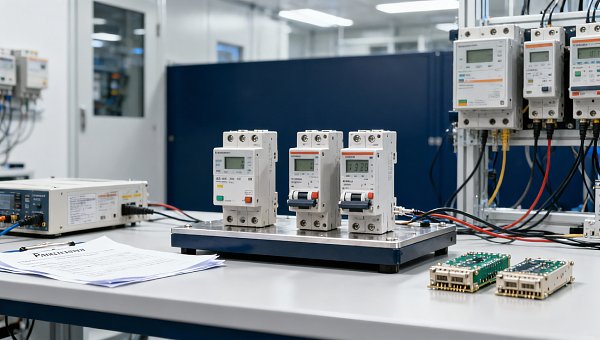
Classify opportunities as compatible now, compatible after a defined qualification step, or currently incompatible. For conditional opportunities, record the cost, responsible party, and expected completion date. Do not include them in immediate inventory demand merely because modification appears possible.
Convert project activity into a purchasing forecast
Build the forecast from individual opportunities rather than applying a growth rate to an entire market. For each project, estimate the meters needed during your chosen delivery period—not necessarily the project’s lifetime quantity. Allocate phased deployments across the expected purchasing schedule.
A useful planning relationship is:
Expected order volume = in-period project quantity × technical eligibility factor × accessible share × procurement probability.
Use these factors carefully. Technical eligibility can represent the share of installations compatible with your product, or a clearly defined qualification condition. Accessible share reflects lot structure, competitive access, and delivery capacity. Procurement probability represents the likelihood that the purchase proceeds within the period. If supplier selection is uncertain, account for it separately rather than assuming every accessible meter becomes your order.
These are planning estimates, not objective measurements. Document the evidence behind each assumption and avoid counting the same risk in several factors. An unapproved supplier, for example, should not receive arbitrary reductions in eligibility, access, and selection probability without a clear reason.
Maintain three scenarios:
- Committed: contracted quantities, adjusted for delivery and cancellation conditions.
- Base case: credible opportunities with a defensible procurement path and achievable qualification.
- Upside: additional volume dependent on unresolved funding, approval, or competitive outcomes.
Model timing shifts separately from lost demand. A delayed deployment may remain commercially attractive while offering no justification for stocking meters now. Replacement demand also needs evidence: the installed fleet is not equal to annual replacement volume, and existing supply agreements may already cover that requirement.
Check whether the demand is commercially serviceable
Technical compatibility does not guarantee an economically viable opportunity. Compare the buyer’s accepted price structure with the full cost of serving the project. Include testing, customization, logistics, duties where applicable, installation support, warranty exposure, financing, and local service obligations—not only the factory quotation.
Some configurations create recurring costs for connectivity, software access, or support. Establish who pays those costs and whether they are included in the tender price. A buyer’s total-cost-of-ownership comparison may favor a different architecture even when your meter has a lower unit price.
Payment terms and acceptance procedures matter. Delivery may not trigger payment if acceptance depends on installation, integration, or field performance. Match that cash-flow exposure against supplier deposits, minimum order quantities, and lead times before classifying the opportunity as attractive.
Also distinguish demand for savings from willingness to fund a purchase. Benefits such as remote reading or improved outage visibility require supporting systems and operational processes. Ask whether the buyer has budgeted for those dependencies; an unfunded integration layer can stall an otherwise credible meter requirement.
Use validation orders to answer unresolved questions
Where demand is credible but qualification remains incomplete, source evaluation units or a limited pilot batch rather than speculative bulk inventory. Define what the validation must establish: head-end compatibility, communications performance, installation suitability, data accuracy, or acceptance of the commercial offer.
A successful bench demonstration is not evidence of rollout demand. The next purchasing step should be explicit, with an identified decision owner, acceptance criteria, and funding route. Pilot quantities should remain separate from deployment quantities until the buyer authorizes expansion.
Supplier arrangements can reduce exposure through staged releases or agreed configuration checkpoints. Verify which features can genuinely be finalized later. Meter variants may differ in hardware, radio modules, approvals, or security provisioning; they are not necessarily interchangeable through firmware alone.
Set sourcing limits and review triggers
Finish the assessment with a decision record stating which segments to pursue, which configurations to qualify, and what evidence must exist before bulk purchasing. Keep supplier minimum order quantities separate from market demand: a factory’s preferred batch size is not proof that buyers will absorb it.
Set sourcing exposure according to committed requirements, defensible replenishment needs, and the cost of unsold stock. For uncertain projects, supplier capacity reservations may be more appropriate than finished inventory, provided the agreement clearly defines pricing, release obligations, and cancellation exposure.
Update the forecast when funding changes, tenders are amended, qualification results arrive, or deployment schedules move. Each review should explain whether the change affects quantity, timing, technical fit, or commercial viability. Release larger orders only when the evidence supporting that specific configuration and delivery period has strengthened—not simply because the overall smart meter market appears to be growing.
Recommended for You
 Digital SeaHow Does a Ballast Cleaner Screening System Separate Track Ballast?Discover how a ballast cleaner screening system separates reusable stone from fines, what affects performance, and how to assess the results.By: Captain Kenji SatoNov 14, 2026
 Smart MetersPakistan to Seek World Bank and ADB Funding for Smart MetersPakistan seeks World Bank and ADB funding for smart meters on distribution transformers. Explore the plan to tackle power theft and improve grid efficiency.By: Dr. Elena VoltNov 13, 2026
 Digital SeaWhat Is Precision Medicine and How Does It Guide Treatment?Discover how precision medicine uses biomarkers and genetic insights to guide treatment, where it can help, and what to ask before testing.By: Captain Kenji SatoNov 13, 2026
 Grid Resilience2026 CSEE Annual Meeting Opens with Focus on AI and Power SystemsThe 2026 CSEE Annual Meeting explores AI, low-carbon power systems and ultra-high-voltage transmission. Discover why these discussions matter.By: Dr. Elena VoltNov 12, 2026
 Digital SeaShip Radar Detection Range: How Far Can It See and What Limits It?Ship radar detection range depends on more than the display scale. Discover how antenna height, weather, target size, and settings affect what radar can see.By: Captain Kenji SatoNov 12, 2026
 UHV TransformersGE Vernova to Invest $34.5 Million in Louisiana Transformer Plant ExpansionGE Vernova plans a $34.5 million transformer plant expansion in Louisiana. Explore its potential impact on North American supply and procurement.By: Dr. Elena VoltNov 11, 2026
 Digital SeaMetro Station Noise Criteria: Limits and Measurement MethodsExplore metro station noise criteria, applicable limits and measurement methods. Learn how to select metrics and assess compliance with confidence.By: Captain Kenji SatoNov 11, 2026
 Digital SeaKongsberg Maritime Unveils Arctic Hunter Unmanned Surface VesselKongsberg Maritime's Arctic Hunter unmanned surface vessel is proposed for the Royal Navy's Type 92 programme. Explore its technology and procurement implications.By: Captain Kenji SatoNov 10, 2026
 Sorting RobotsHow Accurate Is AI in Food Quality Control? Metrics and Testing MethodsExplore AI in food quality control accuracy, from recall and false negatives to validation methods. Learn how to assess real-world inspection reliability.By: Marcus SterlingNov 10, 2026
 UHV TransformersGE Vernova Selected for 6 GW HVDC Link in IndiaGE Vernova will design a 6 GW HVDC link for PGCIL, connecting Rajasthan and South Kalamb to support India's clean energy transition. Discover the project.By: Dr. Elena VoltNov 09, 2026
 Grid ResilienceEurope's Grid Compliance Standards in 2026: Generator Connection RequirementsExplore new grid compliance standards 2026 Europe projects must address, from generator connection rules to testing and documentation. Prepare for approval.By: Dr. Elena VoltNov 09, 2026
 Technical FabricsNonwoven Bonding Cost Data: Comparing Thermal and Chemical ProcessesExplore nonwoven bonding cost data to compare thermal and chemical processes, assess usable yield, and choose the best-value option for your application.By: Chloe DuboisNov 08, 2026
 Fiber LasersIndustrial Lasers to 2035: Automotive Lightweighting and Precision Welding Drive DemandExplore the industrial laser market outlook to 2035 and discover how automotive lightweighting and precision welding could shape demand and procurement.By: Dr. Hideo TanakaNov 07, 2026
 Technical FabricsChoosing Geotextile Under Railway Ballast: Key Performance RequirementsChoosing geotextile under railway ballast? Explore essential filtration, drainage, strength and durability criteria to make a confident, project-specific selection.By: Chloe DuboisNov 07, 2026
 Digital SeaChoosing Rail Welding Equipment for Maintenance: Field Conditions and Weld TypesChoose rail welding equipment for maintenance with confidence. Compare welding methods, field constraints, inspection needs, and lifecycle costs.By: Captain Kenji SatoNov 06, 2026
 Digital SeaIndia Broadband Forum Urges Stronger Submarine Cable ResilienceIndia’s submarine cable resilience is in focus as the Broadband India Forum urges faster repairs, more vessels and stronger landing infrastructure.By: Captain Kenji SatoNov 06, 2026
 Digital SeaChoosing a Railway Network Switch Supplier: Reliability and Support CriteriaChoosing a railway network switch supplier? Compare reliability, standards evidence, cybersecurity, and lifecycle support to reduce project risk.By: Captain Kenji SatoNov 05, 2026
 Grid ResilienceUS Grid Equipment Import Ban Raises Cost and Implementation ConcernsThe US grid equipment import ban raises concerns over costs and delivery delays. Explore how unclear criteria could affect procurement and supply chains.By: Dr. Elena VoltNov 05, 2026
 Digital SeaRailway Coupler Price: How Type and Specifications Affect QuotesRailway coupler price depends on type, specifications, and order scope. Learn how to compare quotes, avoid hidden costs, and make a confident buying decision.By: Captain Kenji SatoNov 04, 2026
 Grid ResilienceGlobal Smart Grid Companies Raise $3 Billion in First Nine Months of 2026Global smart grid companies raised $3 billion in the first nine months of 2026. Explore the funding breakdown and potential implications for buyers and suppliers.By: Dr. Elena VoltNov 04, 2026
 Digital SeaChoosing Wholesale Pet Toys: How to Evaluate Suppliers and Minimum OrdersWholesale pet toys: learn how to assess suppliers, compare minimum orders and landed costs, and reduce inventory risk before you buy.By: Captain Kenji SatoNov 03, 2026
 Digital SeaSustainable Packaging Design: How to Choose Materials and Reduce WasteDiscover how sustainable packaging design helps reduce waste, protect products, and control costs with practical material choices and proven testing strategies.By: Captain Kenji SatoNov 02, 2026
 Technical FabricsUSMCA's First Joint Review Puts Textile Supply Chain Rules in FocusUSMCA's first joint review puts textile supply chain rules in focus. Explore potential impacts on origin compliance, sourcing and tariff treatment.By: Chloe DuboisNov 02, 2026
 Digital SeaManufacturing KPI Benchmarking: How to Compare Production PerformanceBenchmarking KPI manufacturing performance? Learn how to compare OEE, quality and downtime, identify meaningful gaps, and turn insights into practical improvements.By: Captain Kenji SatoNov 01, 2026
 Smart MetersCCI Approves Adani Energy Solutions' ₹305 Billion Acquisition of IntelliSmartCCI approves Adani Energy Solutions' ₹305 billion acquisition of IntelliSmart. Discover what the deal could mean for India's smart meter market.By: Dr. Elena VoltNov 01, 2026
 Digital SeaChoosing a Coin Laundry Machinery OEM: What Buyers Should EvaluateChoosing a coin laundry machinery OEM? Compare machine specifications, payment integration, lifecycle costs, and support to make a confident buying decision.By: Captain Kenji SatoOct 31, 2026
 Grid ResilienceUS Energy Department Announces $237 Million Grid SCALED Funding ProgramExplore the DOE's $237 million Grid SCALED funding program and its goals to strengthen grid equipment supply chains, lower electricity costs, and improve resilience.By: Dr. Elena VoltOct 31, 2026
 UHV TransformersA Decade of UHV Power in Shandong: Province Leads in Station NumbersShandong UHV power leads China in station numbers. Explore a decade of grid development and its implications for electricity supply and business planning.By: Dr. Elena VoltOct 30, 2026
 Digital SeaChoosing a Composite Train Body Panel Manufacturer: Fire Safety and Quality ChecksChoosing a composite train body panels manufacturer? Learn how to verify fire test evidence, audit production quality, and avoid costly approval gaps before you buy.By: Captain Kenji SatoOct 29, 2026
 Subsea ROV/AUVOcean Infinity Deploys Six AUVs Together Beyond 5,000 MetresOcean Infinity reportedly deployed six HUGIN AUVs beyond 5,200 metres. Explore what concurrent deepwater missions could mean for seabed surveys and procurement.By: Captain Kenji SatoOct 29, 2026
 Grid ResilienceRenewable Energy Grid Balancing: How Storage and Demand Response Work TogetherExplore renewable energy grid balancing with storage and demand response. Learn how coordinated controls manage shortfalls, absorb surplus power, and improve grid reliability.By: Dr. Elena VoltOct 28, 2026






























