BDI: 1,842 ▼ 1.2%
COTTON NO.2: 84.12 ▲ 0.4%
LME COPPER: 8,432.50 ▲ 2.1%
FOOD SAFETY INDEX: 94.2 ARCHIVE_SECURED
OPTICAL INDEX: 11,204.09 STABLE
BDI: 1,842 ▼ 1.2%

SECTOR INDEX
V.24.08 ARCHIVE
Hot Articles
- How Does a Ballast Cleaner Screening System Separate Track Ballast?Discover how a ballast cleaner screening system separates reusable stone from fines, what affects performance, and how to assess the results.
- Pakistan to Seek World Bank and ADB Funding for Smart MetersPakistan seeks World Bank and ADB funding for smart meters on distribution transformers. Explore the plan to tackle power theft and improve grid efficiency.
- What Is Precision Medicine and How Does It Guide Treatment?Discover how precision medicine uses biomarkers and genetic insights to guide treatment, where it can help, and what to ask before testing.
Harmonic Distortion Benchmarks: Acceptable THD Levels for Industrial Power Systems


Harmonic Distortion Benchmarks: Acceptable THD Levels for Industrial Power Systems
For technical evaluators managing industrial power quality, harmonic distortion benchmarks provide a practical baseline for judging system reliability, compliance, and long-term equipment performance.
Understanding acceptable THD levels for industrial power systems is essential when comparing transformers, drives, converters, and sensitive loads against IEC- and utility-driven expectations.
In practice, harmonic distortion benchmarks are not just numbers on a report. They shape maintenance risk, energy efficiency, and asset life across complex industrial networks.
For organizations tracking equipment performance across sectors, a clear view of acceptable THD levels helps separate manageable distortion from conditions that quietly damage system resilience.
Why Harmonic Distortion Benchmarks Matter
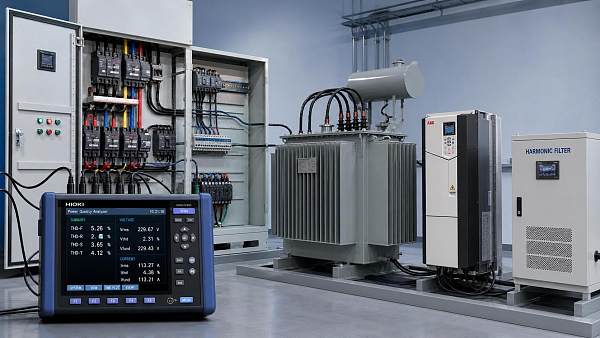
Harmonics are voltage or current components at multiples of the fundamental frequency. They usually come from non-linear loads such as VFDs, UPS units, rectifiers, welders, and switched power supplies.
That sounds familiar, but the real issue is cumulative impact. Small distortion from many devices can push a stable plant into overheating, nuisance tripping, or poor control behavior.
This is where harmonic distortion benchmarks become useful. They create a common language for comparing different sites, vendors, and retrofit options against the same technical expectations.
In broader industrial benchmarking work, G-MCE often sees the same pattern. Distortion issues rarely stay isolated within one panel or feeder. They move across interconnected assets.
A transformer may run hotter. Capacitor banks may fail early. Protective devices may misread actual conditions. The commercial cost appears later, often as downtime or shortened replacement cycles.
What THD Actually Measures
THD means total harmonic distortion. It is commonly expressed as a percentage of the fundamental waveform.
Two figures matter most:
- Voltage THD, or THDv, shows waveform distortion at the bus or load terminals.
- Current THD, or THDi, shows distortion created by the connected load.
The distinction matters because plants often focus on THDi first, while utilities and compliance reviews focus more heavily on voltage quality at the point of common coupling.
A drive can produce high current distortion, yet the system voltage may remain acceptable if source impedance is low and filtering is effective.
The opposite can also happen. Moderate current harmonics can create serious voltage distortion in weak networks, especially where long feeders or undersized transformers are involved.
Common Harmonic Distortion Benchmarks in Industrial Systems
When discussing harmonic distortion benchmarks, most evaluations start with IEEE 519 and local utility requirements, then align findings with IEC-based equipment tolerances.
A practical reading looks like this:
Those numbers are not universal pass-fail lines for every device. They are system-level harmonic distortion benchmarks used to judge whether the network remains inside a healthy operating envelope.
In actual plants, many teams use internal alert bands. For example, voltage THD below 3% is often treated as comfortable. Between 3% and 5% deserves trend monitoring. Above 5% triggers corrective review.
That approach works well because acceptable THD levels depend on the sensitivity of connected assets, not just the standard itself.
Acceptable THD Levels by Equipment Sensitivity
Industrial power systems are rarely uniform. One bus may feed rugged motors, while another supports PLCs, instrumentation, or optical process controls that react badly to waveform distortion.
As a rule, acceptable THD levels tighten as load sensitivity increases.
- Heavy motor loads can often tolerate moderate distortion for limited periods, though heat rise remains a concern.
- Transformers and neutral conductors face higher stress from triplen harmonics and sustained current distortion.
- Control systems, metering, and communications equipment usually require tighter harmonic distortion benchmarks.
- Capacitor banks are especially vulnerable where resonance magnifies specific harmonic orders.
This is why one site can appear compliant on paper while still suffering equipment issues. The network average may look acceptable, but local nodes can exceed usable THD limits.
A sound evaluation therefore checks distortion at the PCC and at critical internal buses, especially near sensitive or high-value assets.
Where Benchmarks Go Wrong in Real Facilities
Recent changes in industrial electrification make this more visible. Plants are adding drives, chargers, converters, and digital control layers faster than older distribution designs expected.
The clearer signal is that harmonic distortion benchmarks are sometimes applied too broadly, without checking system context.
Typical mistakes include:
- Using only spot measurements during light load conditions.
- Reviewing THD without examining individual harmonic orders.
- Ignoring capacitor bank switching and resonance behavior.
- Assuming low voltage THD means all current distortion is acceptable.
- Evaluating new equipment without modeling the full network.
These gaps distort procurement choices. A low-cost drive package may seem acceptable until the wider system cost appears through overheating, trips, or filter retrofits.
For cross-sector operators, that matters. Similar distortion mechanisms show up in smart grid installations, textile automation lines, food processing plants, and precision sensing environments.
How to Evaluate Harmonic Distortion Benchmarks Correctly
A useful review process is simple, but it has to be disciplined. The best results come from combining measured data, equipment context, and benchmark references.
- Define the evaluation point, including PCC, main switchboard, and critical internal buses.
- Measure both THDv and THDi across representative operating periods.
- Check individual harmonic orders, especially 3rd, 5th, 7th, and 11th.
- Compare results against IEEE 519, utility limits, and equipment maker guidance.
- Review thermal loading, neutral current, transformer derating, and capacitor exposure.
- Model future distortion after expansions, retrofits, or load mix changes.
This also means not treating harmonic distortion benchmarks as a one-time acceptance item. They work better as part of an ongoing asset performance baseline.
Where projects involve multiple vendors, benchmark consistency becomes even more valuable. It helps keep technical evaluation grounded in evidence rather than sales claims.
Mitigation Options When THD Exceeds Acceptable Levels
Once distortion rises above acceptable THD levels, the right response depends on source location, harmonic order, and network strength.
Common solutions include:
- Passive filters for stable, known harmonic profiles.
- Active harmonic filters where loads vary dynamically.
- Line reactors or DC chokes on drives.
- Phase-shifting transformer arrangements.
- Multi-pulse or low-harmonic drive topologies.
- System reconfiguration to separate sensitive and non-linear loads.
The practical point is to match mitigation to the actual benchmark failure. Lowering total THD is useful, but removing the dominant harmful component is often more important.
For example, a site with acceptable average THD may still need targeted action if 5th harmonic voltage is destabilizing drives or causing extra transformer heating.
A Practical Decision Framework
When applying harmonic distortion benchmarks, the best decisions usually come from three linked questions.
- Is the system currently inside recognized THD limits?
- Are the connected assets more sensitive than the general benchmark assumes?
- Will the next equipment change shift the harmonic profile materially?
If any answer raises doubt, the benchmark review should move beyond a simple pass-fail judgment. That is where the real technical value sits.
Harmonic distortion benchmarks work best when they support procurement, design review, maintenance planning, and expansion strategy at the same time.
In industrial power systems, acceptable THD levels are not abstract compliance targets. They are operating boundaries that protect uptime, efficiency, and equipment life.
A disciplined benchmark process makes distortion visible early, before it becomes a cost problem hidden inside routine operations.
Recommended for You
 Digital SeaHow Does a Ballast Cleaner Screening System Separate Track Ballast?Discover how a ballast cleaner screening system separates reusable stone from fines, what affects performance, and how to assess the results.By: Captain Kenji SatoNov 14, 2026
 Smart MetersPakistan to Seek World Bank and ADB Funding for Smart MetersPakistan seeks World Bank and ADB funding for smart meters on distribution transformers. Explore the plan to tackle power theft and improve grid efficiency.By: Dr. Elena VoltNov 13, 2026
 Digital SeaWhat Is Precision Medicine and How Does It Guide Treatment?Discover how precision medicine uses biomarkers and genetic insights to guide treatment, where it can help, and what to ask before testing.By: Captain Kenji SatoNov 13, 2026
 Grid Resilience2026 CSEE Annual Meeting Opens with Focus on AI and Power SystemsThe 2026 CSEE Annual Meeting explores AI, low-carbon power systems and ultra-high-voltage transmission. Discover why these discussions matter.By: Dr. Elena VoltNov 12, 2026
 Digital SeaShip Radar Detection Range: How Far Can It See and What Limits It?Ship radar detection range depends on more than the display scale. Discover how antenna height, weather, target size, and settings affect what radar can see.By: Captain Kenji SatoNov 12, 2026
 UHV TransformersGE Vernova to Invest $34.5 Million in Louisiana Transformer Plant ExpansionGE Vernova plans a $34.5 million transformer plant expansion in Louisiana. Explore its potential impact on North American supply and procurement.By: Dr. Elena VoltNov 11, 2026
 Digital SeaMetro Station Noise Criteria: Limits and Measurement MethodsExplore metro station noise criteria, applicable limits and measurement methods. Learn how to select metrics and assess compliance with confidence.By: Captain Kenji SatoNov 11, 2026
 Digital SeaKongsberg Maritime Unveils Arctic Hunter Unmanned Surface VesselKongsberg Maritime's Arctic Hunter unmanned surface vessel is proposed for the Royal Navy's Type 92 programme. Explore its technology and procurement implications.By: Captain Kenji SatoNov 10, 2026
 Sorting RobotsHow Accurate Is AI in Food Quality Control? Metrics and Testing MethodsExplore AI in food quality control accuracy, from recall and false negatives to validation methods. Learn how to assess real-world inspection reliability.By: Marcus SterlingNov 10, 2026
 UHV TransformersGE Vernova Selected for 6 GW HVDC Link in IndiaGE Vernova will design a 6 GW HVDC link for PGCIL, connecting Rajasthan and South Kalamb to support India's clean energy transition. Discover the project.By: Dr. Elena VoltNov 09, 2026
 Grid ResilienceEurope's Grid Compliance Standards in 2026: Generator Connection RequirementsExplore new grid compliance standards 2026 Europe projects must address, from generator connection rules to testing and documentation. Prepare for approval.By: Dr. Elena VoltNov 09, 2026
 Technical FabricsNonwoven Bonding Cost Data: Comparing Thermal and Chemical ProcessesExplore nonwoven bonding cost data to compare thermal and chemical processes, assess usable yield, and choose the best-value option for your application.By: Chloe DuboisNov 08, 2026
 Fiber LasersIndustrial Lasers to 2035: Automotive Lightweighting and Precision Welding Drive DemandExplore the industrial laser market outlook to 2035 and discover how automotive lightweighting and precision welding could shape demand and procurement.By: Dr. Hideo TanakaNov 07, 2026
 Technical FabricsChoosing Geotextile Under Railway Ballast: Key Performance RequirementsChoosing geotextile under railway ballast? Explore essential filtration, drainage, strength and durability criteria to make a confident, project-specific selection.By: Chloe DuboisNov 07, 2026
 Digital SeaChoosing Rail Welding Equipment for Maintenance: Field Conditions and Weld TypesChoose rail welding equipment for maintenance with confidence. Compare welding methods, field constraints, inspection needs, and lifecycle costs.By: Captain Kenji SatoNov 06, 2026
 Digital SeaIndia Broadband Forum Urges Stronger Submarine Cable ResilienceIndia’s submarine cable resilience is in focus as the Broadband India Forum urges faster repairs, more vessels and stronger landing infrastructure.By: Captain Kenji SatoNov 06, 2026
 Digital SeaChoosing a Railway Network Switch Supplier: Reliability and Support CriteriaChoosing a railway network switch supplier? Compare reliability, standards evidence, cybersecurity, and lifecycle support to reduce project risk.By: Captain Kenji SatoNov 05, 2026
 Grid ResilienceUS Grid Equipment Import Ban Raises Cost and Implementation ConcernsThe US grid equipment import ban raises concerns over costs and delivery delays. Explore how unclear criteria could affect procurement and supply chains.By: Dr. Elena VoltNov 05, 2026
 Digital SeaRailway Coupler Price: How Type and Specifications Affect QuotesRailway coupler price depends on type, specifications, and order scope. Learn how to compare quotes, avoid hidden costs, and make a confident buying decision.By: Captain Kenji SatoNov 04, 2026
 Grid ResilienceGlobal Smart Grid Companies Raise $3 Billion in First Nine Months of 2026Global smart grid companies raised $3 billion in the first nine months of 2026. Explore the funding breakdown and potential implications for buyers and suppliers.By: Dr. Elena VoltNov 04, 2026
 Digital SeaChoosing Wholesale Pet Toys: How to Evaluate Suppliers and Minimum OrdersWholesale pet toys: learn how to assess suppliers, compare minimum orders and landed costs, and reduce inventory risk before you buy.By: Captain Kenji SatoNov 03, 2026
 Digital SeaSustainable Packaging Design: How to Choose Materials and Reduce WasteDiscover how sustainable packaging design helps reduce waste, protect products, and control costs with practical material choices and proven testing strategies.By: Captain Kenji SatoNov 02, 2026
 Technical FabricsUSMCA's First Joint Review Puts Textile Supply Chain Rules in FocusUSMCA's first joint review puts textile supply chain rules in focus. Explore potential impacts on origin compliance, sourcing and tariff treatment.By: Chloe DuboisNov 02, 2026
 Digital SeaManufacturing KPI Benchmarking: How to Compare Production PerformanceBenchmarking KPI manufacturing performance? Learn how to compare OEE, quality and downtime, identify meaningful gaps, and turn insights into practical improvements.By: Captain Kenji SatoNov 01, 2026
 Smart MetersCCI Approves Adani Energy Solutions' ₹305 Billion Acquisition of IntelliSmartCCI approves Adani Energy Solutions' ₹305 billion acquisition of IntelliSmart. Discover what the deal could mean for India's smart meter market.By: Dr. Elena VoltNov 01, 2026
 Digital SeaChoosing a Coin Laundry Machinery OEM: What Buyers Should EvaluateChoosing a coin laundry machinery OEM? Compare machine specifications, payment integration, lifecycle costs, and support to make a confident buying decision.By: Captain Kenji SatoOct 31, 2026
 Grid ResilienceUS Energy Department Announces $237 Million Grid SCALED Funding ProgramExplore the DOE's $237 million Grid SCALED funding program and its goals to strengthen grid equipment supply chains, lower electricity costs, and improve resilience.By: Dr. Elena VoltOct 31, 2026
 UHV TransformersA Decade of UHV Power in Shandong: Province Leads in Station NumbersShandong UHV power leads China in station numbers. Explore a decade of grid development and its implications for electricity supply and business planning.By: Dr. Elena VoltOct 30, 2026
 Digital SeaChoosing a Composite Train Body Panel Manufacturer: Fire Safety and Quality ChecksChoosing a composite train body panels manufacturer? Learn how to verify fire test evidence, audit production quality, and avoid costly approval gaps before you buy.By: Captain Kenji SatoOct 29, 2026
 Subsea ROV/AUVOcean Infinity Deploys Six AUVs Together Beyond 5,000 MetresOcean Infinity reportedly deployed six HUGIN AUVs beyond 5,200 metres. Explore what concurrent deepwater missions could mean for seabed surveys and procurement.By: Captain Kenji SatoOct 29, 2026
 Grid ResilienceRenewable Energy Grid Balancing: How Storage and Demand Response Work TogetherExplore renewable energy grid balancing with storage and demand response. Learn how coordinated controls manage shortfalls, absorb surplus power, and improve grid reliability.By: Dr. Elena VoltOct 28, 2026






























