BDI: 1,842 ▼ 1.2%
COTTON NO.2: 84.12 ▲ 0.4%
LME COPPER: 8,432.50 ▲ 2.1%
FOOD SAFETY INDEX: 94.2 ARCHIVE_SECURED
OPTICAL INDEX: 11,204.09 STABLE
BDI: 1,842 ▼ 1.2%

SECTOR INDEX
V.24.08 ARCHIVE
Hot Articles
- How Does a Ballast Cleaner Screening System Separate Track Ballast?Discover how a ballast cleaner screening system separates reusable stone from fines, what affects performance, and how to assess the results.
- Pakistan to Seek World Bank and ADB Funding for Smart MetersPakistan seeks World Bank and ADB funding for smart meters on distribution transformers. Explore the plan to tackle power theft and improve grid efficiency.
- What Is Precision Medicine and How Does It Guide Treatment?Discover how precision medicine uses biomarkers and genetic insights to guide treatment, where it can help, and what to ask before testing.
What Should You Compare Besides Price When Selecting GIS Switchgear?


What Should You Compare Besides Price When Selecting GIS Switchgear?
What should I compare besides price when selecting an industrial product? For procurement teams evaluating gas-insulated switchgear (GIS), the answer can determine decades of grid reliability, operating costs, and regulatory exposure. Beyond the initial quote, compare rated performance, applicable IEC compliance, verified type-test evidence, insulation technology, maintenance requirements, and supplier support. Installation constraints, spare-parts availability, and lifecycle environmental obligations also deserve scrutiny.
The difficult part is not collecting more specifications. It is deciding which differences matter to your network. Two offers may carry the same voltage rating while creating very different obligations for civil works, outage planning, gas handling, and future extensions. A useful comparison starts with a common technical baseline, then examines the risks each proposal leaves with the owner.
Start with network duty, not the supplier’s standard configuration
Rated voltage is only the first filter. GIS must suit the network’s insulation requirements, continuous loading, fault levels, switching duties, and operating environment. Ask the engineering team to establish these requirements before commercial bids arrive; otherwise, procurement may end up comparing equipment designed for different service conditions.
Check rated normal current alongside site temperature and the proposed installation arrangement. Compare short-time withstand current and its duration, peak withstand current, and circuit-breaker breaking capability against the system study. These ratings describe different duties and should not be treated as interchangeable. Where relevant, examine transient recovery voltage requirements and duties involving cables, capacitor banks, reactors, or transformers.
Insulation coordination also needs project-specific attention. Lightning impulse withstand levels, switching impulse withstand levels where applicable, and external connection clearances must align with the network design. Altitude can affect external insulation and cooling conditions even when the main insulation is enclosed. Seismic exposure, humidity, pollution at outdoor interfaces, and minimum ambient temperature deserve explicit treatment rather than a generic “suitable for outdoor use” statement.
Avoid paying for unexplained overrating, but do not size equipment only for today’s load. Ask whether planned generation connections, network reinforcement, or operating changes could raise future fault levels. The comparison should show where extra capacity is justified and where it merely increases cost.
Treat compliance as an evidence question
“IEC compliant” is not enough to evaluate a bid. IEC 62271-203 addresses AC gas-insulated metal-enclosed switchgear for rated voltages above 52 kV. For metal-enclosed equipment rated above 1 kV and up to and including 52 kV, IEC 62271-200 is generally relevant. Common requirements and component-specific standards also apply. The correct standard set depends on the equipment, voltage class, contract, and local utility requirements.
Request the applicable editions, a clause-level compliance schedule, and declared deviations. Then examine the underlying type-test reports. The important question is whether the evidence supports the offered design—not simply whether the manufacturer has tested something in the same product family.
- Identify the tested ratings, insulation medium, enclosure arrangement, and major components.
- Ask how differences between the tested assembly and the offered configuration are justified.
- Confirm the testing organization, report traceability, and scope of any claimed accreditation or certification.
- Separate type-test evidence from routine factory tests and site acceptance tests; each serves a different purpose.
A management-system certificate does not demonstrate GIS electrical performance. Likewise, a successful factory acceptance test does not replace the relevant type tests. Make documentary acceptance a defined milestone, rather than discovering evidence gaps after manufacturing has begun.
Look closely at compartment design and outage consequences
GIS earns its place in space-constrained substations through compact construction, but compactness alone says little about service continuity. Compare the single-line diagram with the gas-compartment layout. Determine what must be isolated, depressurized, or taken out of service to inspect a breaker, replace an instrument transformer, repair a leak, or add a future bay.
A smaller arrangement may save building area while making an intervention more disruptive. Conversely, additional compartmentalization can introduce more interfaces and monitoring points. Neither approach is automatically better; the judgment depends on the bus scheme, redundancy requirements, maintenance access, and acceptable outage duration.
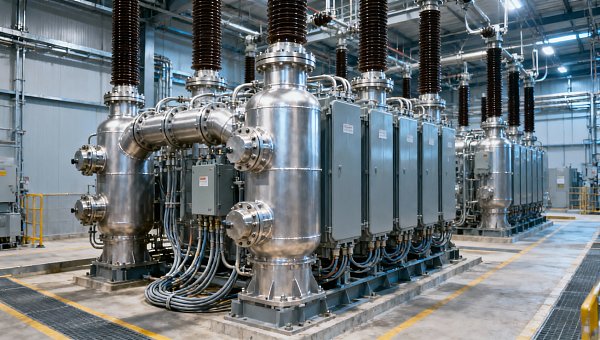
Ask bidders to mark isolation boundaries, gas zones, maintenance access, pressure-relief provisions, and extension points on their drawings. This exposes operational differences more effectively than comparing overall dimensions. Internal-arc performance and pressure-relief arrangements should be assessed against the applicable standard and actual installation conditions, including where discharged gases could travel.
Personnel safety also depends on interlocking, position indication, earthing arrangements, and operating procedures. Have operators review the proposed switching sequence. An interlock philosophy that looks complete on paper can still create practical difficulties during testing or maintenance.
Compare insulation technologies through their operating requirements
SF6 has been widely used in GIS because of its insulating and switching properties, but its high global-warming impact makes leakage control, recovery, and end-of-life handling material procurement concerns. Alternative technologies are available, although their suitability must be checked for the required voltage, current, switching duty, ambient conditions, and market.
Do not treat “SF6-free” as a complete environmental or technical specification. Ask what medium is used, whether switching and insulation rely on different technologies, and what operating restrictions apply. Gas mixtures may require specific filling procedures, composition checks, recovery equipment, or low-temperature provisions. Other designs may have different enclosure dimensions or service requirements.
For every proposal, compare the declared leakage performance, monitoring method, alarm and lockout thresholds, and the operating response required when density or pressure falls. Obtain instructions covering gas quality, moisture limits where relevant, safe handling, and disposal. Confirm who can perform these tasks locally and what equipment they need.
Environmental rules are jurisdiction- and date-dependent. Verify restrictions, exemptions, reporting obligations, and placing-on-market requirements for the project’s location and schedule. A supplier’s global brochure is not a substitute for reviewing the rules applicable to commissioning, operation, and eventual replacement.
Define the delivered system before comparing quotations
A low GIS equipment price can exclude substantial work. Cable terminations, transformer interfaces, surge arresters, local control cabinets, protection equipment, gas-handling tools, transport insurance, and site supervision may appear in different packages. Normalize these boundaries before ranking offers.
Where IEC 61850 communication is specified, check the actual functions and interoperability requirements rather than accepting a protocol label. Agree device models, configuration-file responsibilities, time synchronization, and integration testing. For connected monitoring systems, also define access control, firmware support, cybersecurity responsibilities, and ownership of diagnostic data.
Delivery schedules should identify design approval, long-lead components, factory testing, shipment, assembly, and commissioning. “Lead time” may start only after approved drawings and payment milestones. Ask which dependencies remain outside the supplier’s control and how schedule changes will be communicated.
Price the maintenance reality, not the maintenance slogan
“Low maintenance” does not mean no inspection, no testing, or no specialist intervention. Request the maintenance plan, its assumptions, and the triggers for additional work. Breaker operating duty, mechanism condition, gas monitoring, and service environment can affect requirements.
Compare tasks as well as intervals. Can your technicians perform routine checks? Which activities require proprietary tools or supplier personnel? How long would a major intervention take, and which neighboring circuits must be unavailable? These answers influence both direct maintenance expense and operational exposure.
Supplier support becomes tangible when expressed as commitments: local service coverage, escalation procedures, emergency response arrangements, spare-parts lead times, and repair capability. Warranty terms should explain when coverage starts, what exclusions apply, and who pays for labor, travel, gas recovery, and transport. A replacement component supplied free of charge may still leave substantial recovery costs with the owner.
For long-life assets, ask about obsolescence management and future extension compatibility. Do not assume another manufacturer’s bay can be connected later. Mechanical interfaces, dielectric design, testing requirements, and responsibility for the combined assembly can make extensions technically and commercially complex.
Make the decision with comparable evidence and explicit assumptions
Use technical and regulatory requirements as pass-or-fail gates before applying a weighted commercial score. A lower price should not offset an unresolved breaking-capacity shortfall or missing mandatory evidence. For compliant bids, compare installed cost, maintenance, spares, training, environmental handling, expected intervention needs, and end-of-life work over a common evaluation period.
Keep lifecycle assumptions visible. Discount rates, load growth, outage costs, service intervals, and spare-parts prices can change the ranking. Where reliability data are not comparable, use scenario analysis rather than inventing precise failure probabilities.
This evidence-led approach fits Global Multi-Core Enterprise’s role as a cross-disciplinary B2B intelligence and technical benchmarking hub. Within its high-voltage transmission and smart-grid coverage, the useful contribution is connecting technical evidence with procurement boundaries, supplier capability, and policy exposure—not replacing project engineering with a generic product ranking.
Before awarding the contract, close the deviations register and attach the agreed drawings, test requirements, scope boundaries, service commitments, and acceptance criteria. The strongest GIS offer is the one whose performance and delivery obligations are demonstrable—and whose remaining risks your organization understands and can manage.
Recommended for You
 Digital SeaHow Does a Ballast Cleaner Screening System Separate Track Ballast?Discover how a ballast cleaner screening system separates reusable stone from fines, what affects performance, and how to assess the results.By: Captain Kenji SatoNov 14, 2026
 Smart MetersPakistan to Seek World Bank and ADB Funding for Smart MetersPakistan seeks World Bank and ADB funding for smart meters on distribution transformers. Explore the plan to tackle power theft and improve grid efficiency.By: Dr. Elena VoltNov 13, 2026
 Digital SeaWhat Is Precision Medicine and How Does It Guide Treatment?Discover how precision medicine uses biomarkers and genetic insights to guide treatment, where it can help, and what to ask before testing.By: Captain Kenji SatoNov 13, 2026
 Grid Resilience2026 CSEE Annual Meeting Opens with Focus on AI and Power SystemsThe 2026 CSEE Annual Meeting explores AI, low-carbon power systems and ultra-high-voltage transmission. Discover why these discussions matter.By: Dr. Elena VoltNov 12, 2026
 Digital SeaShip Radar Detection Range: How Far Can It See and What Limits It?Ship radar detection range depends on more than the display scale. Discover how antenna height, weather, target size, and settings affect what radar can see.By: Captain Kenji SatoNov 12, 2026
 UHV TransformersGE Vernova to Invest $34.5 Million in Louisiana Transformer Plant ExpansionGE Vernova plans a $34.5 million transformer plant expansion in Louisiana. Explore its potential impact on North American supply and procurement.By: Dr. Elena VoltNov 11, 2026
 Digital SeaMetro Station Noise Criteria: Limits and Measurement MethodsExplore metro station noise criteria, applicable limits and measurement methods. Learn how to select metrics and assess compliance with confidence.By: Captain Kenji SatoNov 11, 2026
 Digital SeaKongsberg Maritime Unveils Arctic Hunter Unmanned Surface VesselKongsberg Maritime's Arctic Hunter unmanned surface vessel is proposed for the Royal Navy's Type 92 programme. Explore its technology and procurement implications.By: Captain Kenji SatoNov 10, 2026
 Sorting RobotsHow Accurate Is AI in Food Quality Control? Metrics and Testing MethodsExplore AI in food quality control accuracy, from recall and false negatives to validation methods. Learn how to assess real-world inspection reliability.By: Marcus SterlingNov 10, 2026
 UHV TransformersGE Vernova Selected for 6 GW HVDC Link in IndiaGE Vernova will design a 6 GW HVDC link for PGCIL, connecting Rajasthan and South Kalamb to support India's clean energy transition. Discover the project.By: Dr. Elena VoltNov 09, 2026
 Grid ResilienceEurope's Grid Compliance Standards in 2026: Generator Connection RequirementsExplore new grid compliance standards 2026 Europe projects must address, from generator connection rules to testing and documentation. Prepare for approval.By: Dr. Elena VoltNov 09, 2026
 Technical FabricsNonwoven Bonding Cost Data: Comparing Thermal and Chemical ProcessesExplore nonwoven bonding cost data to compare thermal and chemical processes, assess usable yield, and choose the best-value option for your application.By: Chloe DuboisNov 08, 2026
 Fiber LasersIndustrial Lasers to 2035: Automotive Lightweighting and Precision Welding Drive DemandExplore the industrial laser market outlook to 2035 and discover how automotive lightweighting and precision welding could shape demand and procurement.By: Dr. Hideo TanakaNov 07, 2026
 Technical FabricsChoosing Geotextile Under Railway Ballast: Key Performance RequirementsChoosing geotextile under railway ballast? Explore essential filtration, drainage, strength and durability criteria to make a confident, project-specific selection.By: Chloe DuboisNov 07, 2026
 Digital SeaChoosing Rail Welding Equipment for Maintenance: Field Conditions and Weld TypesChoose rail welding equipment for maintenance with confidence. Compare welding methods, field constraints, inspection needs, and lifecycle costs.By: Captain Kenji SatoNov 06, 2026
 Digital SeaIndia Broadband Forum Urges Stronger Submarine Cable ResilienceIndia’s submarine cable resilience is in focus as the Broadband India Forum urges faster repairs, more vessels and stronger landing infrastructure.By: Captain Kenji SatoNov 06, 2026
 Digital SeaChoosing a Railway Network Switch Supplier: Reliability and Support CriteriaChoosing a railway network switch supplier? Compare reliability, standards evidence, cybersecurity, and lifecycle support to reduce project risk.By: Captain Kenji SatoNov 05, 2026
 Grid ResilienceUS Grid Equipment Import Ban Raises Cost and Implementation ConcernsThe US grid equipment import ban raises concerns over costs and delivery delays. Explore how unclear criteria could affect procurement and supply chains.By: Dr. Elena VoltNov 05, 2026
 Digital SeaRailway Coupler Price: How Type and Specifications Affect QuotesRailway coupler price depends on type, specifications, and order scope. Learn how to compare quotes, avoid hidden costs, and make a confident buying decision.By: Captain Kenji SatoNov 04, 2026
 Grid ResilienceGlobal Smart Grid Companies Raise $3 Billion in First Nine Months of 2026Global smart grid companies raised $3 billion in the first nine months of 2026. Explore the funding breakdown and potential implications for buyers and suppliers.By: Dr. Elena VoltNov 04, 2026
 Digital SeaChoosing Wholesale Pet Toys: How to Evaluate Suppliers and Minimum OrdersWholesale pet toys: learn how to assess suppliers, compare minimum orders and landed costs, and reduce inventory risk before you buy.By: Captain Kenji SatoNov 03, 2026
 Digital SeaSustainable Packaging Design: How to Choose Materials and Reduce WasteDiscover how sustainable packaging design helps reduce waste, protect products, and control costs with practical material choices and proven testing strategies.By: Captain Kenji SatoNov 02, 2026
 Technical FabricsUSMCA's First Joint Review Puts Textile Supply Chain Rules in FocusUSMCA's first joint review puts textile supply chain rules in focus. Explore potential impacts on origin compliance, sourcing and tariff treatment.By: Chloe DuboisNov 02, 2026
 Digital SeaManufacturing KPI Benchmarking: How to Compare Production PerformanceBenchmarking KPI manufacturing performance? Learn how to compare OEE, quality and downtime, identify meaningful gaps, and turn insights into practical improvements.By: Captain Kenji SatoNov 01, 2026
 Smart MetersCCI Approves Adani Energy Solutions' ₹305 Billion Acquisition of IntelliSmartCCI approves Adani Energy Solutions' ₹305 billion acquisition of IntelliSmart. Discover what the deal could mean for India's smart meter market.By: Dr. Elena VoltNov 01, 2026
 Digital SeaChoosing a Coin Laundry Machinery OEM: What Buyers Should EvaluateChoosing a coin laundry machinery OEM? Compare machine specifications, payment integration, lifecycle costs, and support to make a confident buying decision.By: Captain Kenji SatoOct 31, 2026
 Grid ResilienceUS Energy Department Announces $237 Million Grid SCALED Funding ProgramExplore the DOE's $237 million Grid SCALED funding program and its goals to strengthen grid equipment supply chains, lower electricity costs, and improve resilience.By: Dr. Elena VoltOct 31, 2026
 UHV TransformersA Decade of UHV Power in Shandong: Province Leads in Station NumbersShandong UHV power leads China in station numbers. Explore a decade of grid development and its implications for electricity supply and business planning.By: Dr. Elena VoltOct 30, 2026
 Digital SeaChoosing a Composite Train Body Panel Manufacturer: Fire Safety and Quality ChecksChoosing a composite train body panels manufacturer? Learn how to verify fire test evidence, audit production quality, and avoid costly approval gaps before you buy.By: Captain Kenji SatoOct 29, 2026
 Subsea ROV/AUVOcean Infinity Deploys Six AUVs Together Beyond 5,000 MetresOcean Infinity reportedly deployed six HUGIN AUVs beyond 5,200 metres. Explore what concurrent deepwater missions could mean for seabed surveys and procurement.By: Captain Kenji SatoOct 29, 2026
 Grid ResilienceRenewable Energy Grid Balancing: How Storage and Demand Response Work TogetherExplore renewable energy grid balancing with storage and demand response. Learn how coordinated controls manage shortfalls, absorb surplus power, and improve grid reliability.By: Dr. Elena VoltOct 28, 2026






























