BDI: 1,842 ▼ 1.2%
COTTON NO.2: 84.12 ▲ 0.4%
LME COPPER: 8,432.50 ▲ 2.1%
FOOD SAFETY INDEX: 94.2 ARCHIVE_SECURED
OPTICAL INDEX: 11,204.09 STABLE
BDI: 1,842 ▼ 1.2%

SECTOR INDEX
V.24.08 ARCHIVE
Hot Articles
- How Does a Ballast Cleaner Screening System Separate Track Ballast?Discover how a ballast cleaner screening system separates reusable stone from fines, what affects performance, and how to assess the results.
- Pakistan to Seek World Bank and ADB Funding for Smart MetersPakistan seeks World Bank and ADB funding for smart meters on distribution transformers. Explore the plan to tackle power theft and improve grid efficiency.
- What Is Precision Medicine and How Does It Guide Treatment?Discover how precision medicine uses biomarkers and genetic insights to guide treatment, where it can help, and what to ask before testing.
Microscope Objective Lens Price Guide: What Affects Cost from NA to Magnification


Microscope Objective Lens Price Guide: What Affects Cost from NA to Magnification
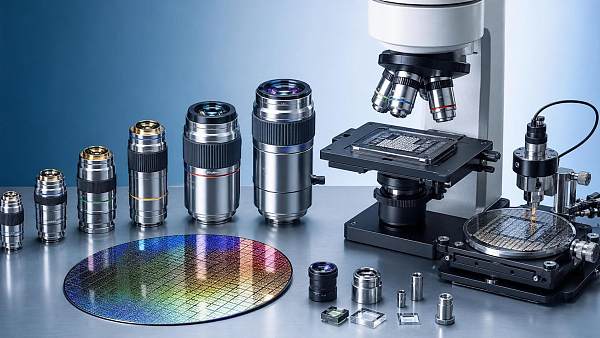
Understanding microscope objective lens price starts with one simple fact: cost follows performance, correction level, and production tolerance. Two lenses may share the same magnification, yet differ sharply in price.
That gap usually comes from numerical aperture, correction design, coating quality, field flatness, working distance, and application fit. In technical purchasing, these variables matter more than catalog headlines.
A realistic microscope objective lens price evaluation also looks beyond unit cost. Downtime risk, compatibility issues, replacement frequency, and inspection accuracy can shift the total decision value.
In practice, buyers compare not only image quality, but also repeatability, compliance evidence, and how well a lens supports the intended process. That is where pricing becomes easier to explain.
Why microscope objective lens price can vary so much
The broadest driver is optical complexity. A low-cost achromat for routine viewing is easier to manufacture than an apochromat built for color correction across a wider spectral range.
The next driver is tolerance control. High-end lenses require tighter centering, polishing, coating uniformity, and assembly precision. Those steps increase rejection rates, inspection effort, and final microscope objective lens price.
Brand position also plays a role, but less than many assume. In serious procurement, the larger price differences usually come from specification depth and application reliability, not branding alone.
From recent buying patterns, a clearer signal is this: users now pay more attention to measured performance consistency than to nominal magnification. That changes how objective lenses are priced and compared.
NA often drives microscope objective lens price more than magnification
Many buyers start with magnification, such as 10x, 20x, 50x, or 100x. That is understandable, but magnification alone rarely explains microscope objective lens price.
Numerical aperture, or NA, has a stronger effect. Higher NA improves resolution and light-gathering ability, but it also demands stricter optical design and tighter manufacturing control.
For example, a 20x objective with a modest NA may cost less than a premium 10x objective with exceptional flatness and higher NA. This surprises teams that screen suppliers by magnification first.
This also means the right question is not “What is the magnification?” It is “What resolution and contrast are required under actual illumination and sample conditions?”
- Higher NA usually increases microscope objective lens price.
- High NA may reduce working distance, affecting handling.
- High NA often needs better alignment and cleaner operating conditions.
Correction type and optical design shape cost
A major pricing layer comes from correction class. Common categories include achromat, plan achromat, fluorite, semi-apochromat, and apochromat. Each step improves image correction and usually raises microscope objective lens price.
Plan correction matters in industrial imaging because edge clarity affects measurement confidence. If the field edge is soft, users may crop images or recheck samples, which slows throughput.
Apochromatic correction is especially relevant for multi-wavelength work, fluorescence, and precision inspection. It is more expensive because it controls chromatic and spherical aberration to a much higher level.
So, when comparing microscope objective lens price, it helps to ask whether the correction level is actually needed. Over-specification is common, and it ties up budget without improving the process outcome.
Typical correction classes and cost tendency
Coatings, materials, and illumination compatibility
Lens coatings are an easy detail to overlook. Yet they have a direct effect on transmission, glare control, contrast, and long-term stability. Better coatings usually raise microscope objective lens price for good reasons.
Specialized glasses and low-dispersion materials also add cost. They become more important when the application involves demanding color fidelity, laser use, UV response, or fluorescence imaging.
More importantly, illumination compatibility affects procurement risk. A lens optimized for brightfield may not perform as expected under phase contrast, DIC, confocal, or machine vision integration.
In real purchasing workflows, the better move is to match the optical stack first. Then compare microscope objective lens price inside that narrower technical window.
Working distance, immersion type, and mechanical format
Working distance is another cost factor that often gets underestimated. Long working distance objectives are harder to design when resolution must remain high, so microscope objective lens price can rise quickly.
Immersion design matters too. Oil, water, and glycerol objectives demand different correction behavior and handling expectations. These versions usually cost more than dry objectives at similar magnification levels.
Mechanical format also affects total cost. Thread standard, parfocal distance, cover glass requirement, and tube length compatibility can determine whether a lens is plug-and-play or needs broader system changes.
That is where a low initial microscope objective lens price may become misleading. A cheaper lens that forces adapters, recalibration, or workflow changes can cost more over time.
Application fit matters more than catalog hierarchy
The right lens for semiconductor inspection is not automatically the right lens for biological imaging, metallography, textile analysis, or photonics assembly review. Application fit shapes microscope objective lens price expectations.
In industrial settings, the real question is usually tied to defect size, substrate reflectivity, throughput targets, and pass-fail tolerance. A premium lens is justified only when it improves those outcomes.
This is especially relevant for buyers comparing OEM optics, branded objectives, and third-party alternatives. The microscope objective lens price should be judged against measurable process value, not feature prestige.
Questions that improve lens selection accuracy
- What minimum feature size must be resolved consistently?
- What illumination mode will be used most often?
- Is edge-to-edge flatness required for measurement or stitching?
- What working distance is needed for sample safety and handling?
- What compatibility constraints exist in the current optical system?
How to compare microscope objective lens price without missing hidden cost
A useful comparison method is to separate direct price from operating value. Direct price is the quoted lens cost. Operating value includes uptime, repeatability, maintenance effort, and inspection confidence.
Ask suppliers for more than catalog sheets. Request MTF data, transmission details, coating durability notes, environmental limits, and compatibility confirmation. These details explain microscope objective lens price more clearly than marketing language.
It is also worth checking replacement lead time and supply continuity. In many industries, procurement delay creates a bigger cost than the lens premium itself.
- Compare NA, correction, and field flatness together.
- Verify mounting and optical path compatibility.
- Review lifecycle cost, not only unit microscope objective lens price.
- Use trial imaging when the application risk is high.
A practical decision framework for better purchasing
A strong buying decision usually follows a simple order. First, define the image task. Second, lock the optical and mechanical constraints. Third, compare microscope objective lens price within that approved range.
This approach prevents two common errors. One is buying a low-cost objective that underperforms. The other is paying for a premium lens whose extra capability never gets used.
In the end, microscope objective lens price makes sense when tied to resolution need, correction demand, process risk, and system fit. The best choice is rarely the cheapest or the most advanced.
A disciplined review of NA, magnification, correction class, coating quality, and compatibility will lead to a more accurate shortlist. That also makes supplier discussions faster, cleaner, and easier to defend internally.
Recommended for You
 Digital SeaHow Does a Ballast Cleaner Screening System Separate Track Ballast?Discover how a ballast cleaner screening system separates reusable stone from fines, what affects performance, and how to assess the results.By: Captain Kenji SatoNov 14, 2026
 Smart MetersPakistan to Seek World Bank and ADB Funding for Smart MetersPakistan seeks World Bank and ADB funding for smart meters on distribution transformers. Explore the plan to tackle power theft and improve grid efficiency.By: Dr. Elena VoltNov 13, 2026
 Digital SeaWhat Is Precision Medicine and How Does It Guide Treatment?Discover how precision medicine uses biomarkers and genetic insights to guide treatment, where it can help, and what to ask before testing.By: Captain Kenji SatoNov 13, 2026
 Grid Resilience2026 CSEE Annual Meeting Opens with Focus on AI and Power SystemsThe 2026 CSEE Annual Meeting explores AI, low-carbon power systems and ultra-high-voltage transmission. Discover why these discussions matter.By: Dr. Elena VoltNov 12, 2026
 Digital SeaShip Radar Detection Range: How Far Can It See and What Limits It?Ship radar detection range depends on more than the display scale. Discover how antenna height, weather, target size, and settings affect what radar can see.By: Captain Kenji SatoNov 12, 2026
 UHV TransformersGE Vernova to Invest $34.5 Million in Louisiana Transformer Plant ExpansionGE Vernova plans a $34.5 million transformer plant expansion in Louisiana. Explore its potential impact on North American supply and procurement.By: Dr. Elena VoltNov 11, 2026
 Digital SeaMetro Station Noise Criteria: Limits and Measurement MethodsExplore metro station noise criteria, applicable limits and measurement methods. Learn how to select metrics and assess compliance with confidence.By: Captain Kenji SatoNov 11, 2026
 Digital SeaKongsberg Maritime Unveils Arctic Hunter Unmanned Surface VesselKongsberg Maritime's Arctic Hunter unmanned surface vessel is proposed for the Royal Navy's Type 92 programme. Explore its technology and procurement implications.By: Captain Kenji SatoNov 10, 2026
 Sorting RobotsHow Accurate Is AI in Food Quality Control? Metrics and Testing MethodsExplore AI in food quality control accuracy, from recall and false negatives to validation methods. Learn how to assess real-world inspection reliability.By: Marcus SterlingNov 10, 2026
 UHV TransformersGE Vernova Selected for 6 GW HVDC Link in IndiaGE Vernova will design a 6 GW HVDC link for PGCIL, connecting Rajasthan and South Kalamb to support India's clean energy transition. Discover the project.By: Dr. Elena VoltNov 09, 2026
 Grid ResilienceEurope's Grid Compliance Standards in 2026: Generator Connection RequirementsExplore new grid compliance standards 2026 Europe projects must address, from generator connection rules to testing and documentation. Prepare for approval.By: Dr. Elena VoltNov 09, 2026
 Technical FabricsNonwoven Bonding Cost Data: Comparing Thermal and Chemical ProcessesExplore nonwoven bonding cost data to compare thermal and chemical processes, assess usable yield, and choose the best-value option for your application.By: Chloe DuboisNov 08, 2026
 Fiber LasersIndustrial Lasers to 2035: Automotive Lightweighting and Precision Welding Drive DemandExplore the industrial laser market outlook to 2035 and discover how automotive lightweighting and precision welding could shape demand and procurement.By: Dr. Hideo TanakaNov 07, 2026
 Technical FabricsChoosing Geotextile Under Railway Ballast: Key Performance RequirementsChoosing geotextile under railway ballast? Explore essential filtration, drainage, strength and durability criteria to make a confident, project-specific selection.By: Chloe DuboisNov 07, 2026
 Digital SeaChoosing Rail Welding Equipment for Maintenance: Field Conditions and Weld TypesChoose rail welding equipment for maintenance with confidence. Compare welding methods, field constraints, inspection needs, and lifecycle costs.By: Captain Kenji SatoNov 06, 2026
 Digital SeaIndia Broadband Forum Urges Stronger Submarine Cable ResilienceIndia’s submarine cable resilience is in focus as the Broadband India Forum urges faster repairs, more vessels and stronger landing infrastructure.By: Captain Kenji SatoNov 06, 2026
 Digital SeaChoosing a Railway Network Switch Supplier: Reliability and Support CriteriaChoosing a railway network switch supplier? Compare reliability, standards evidence, cybersecurity, and lifecycle support to reduce project risk.By: Captain Kenji SatoNov 05, 2026
 Grid ResilienceUS Grid Equipment Import Ban Raises Cost and Implementation ConcernsThe US grid equipment import ban raises concerns over costs and delivery delays. Explore how unclear criteria could affect procurement and supply chains.By: Dr. Elena VoltNov 05, 2026
 Digital SeaRailway Coupler Price: How Type and Specifications Affect QuotesRailway coupler price depends on type, specifications, and order scope. Learn how to compare quotes, avoid hidden costs, and make a confident buying decision.By: Captain Kenji SatoNov 04, 2026
 Grid ResilienceGlobal Smart Grid Companies Raise $3 Billion in First Nine Months of 2026Global smart grid companies raised $3 billion in the first nine months of 2026. Explore the funding breakdown and potential implications for buyers and suppliers.By: Dr. Elena VoltNov 04, 2026
 Digital SeaChoosing Wholesale Pet Toys: How to Evaluate Suppliers and Minimum OrdersWholesale pet toys: learn how to assess suppliers, compare minimum orders and landed costs, and reduce inventory risk before you buy.By: Captain Kenji SatoNov 03, 2026
 Digital SeaSustainable Packaging Design: How to Choose Materials and Reduce WasteDiscover how sustainable packaging design helps reduce waste, protect products, and control costs with practical material choices and proven testing strategies.By: Captain Kenji SatoNov 02, 2026
 Technical FabricsUSMCA's First Joint Review Puts Textile Supply Chain Rules in FocusUSMCA's first joint review puts textile supply chain rules in focus. Explore potential impacts on origin compliance, sourcing and tariff treatment.By: Chloe DuboisNov 02, 2026
 Digital SeaManufacturing KPI Benchmarking: How to Compare Production PerformanceBenchmarking KPI manufacturing performance? Learn how to compare OEE, quality and downtime, identify meaningful gaps, and turn insights into practical improvements.By: Captain Kenji SatoNov 01, 2026
 Smart MetersCCI Approves Adani Energy Solutions' ₹305 Billion Acquisition of IntelliSmartCCI approves Adani Energy Solutions' ₹305 billion acquisition of IntelliSmart. Discover what the deal could mean for India's smart meter market.By: Dr. Elena VoltNov 01, 2026
 Digital SeaChoosing a Coin Laundry Machinery OEM: What Buyers Should EvaluateChoosing a coin laundry machinery OEM? Compare machine specifications, payment integration, lifecycle costs, and support to make a confident buying decision.By: Captain Kenji SatoOct 31, 2026
 Grid ResilienceUS Energy Department Announces $237 Million Grid SCALED Funding ProgramExplore the DOE's $237 million Grid SCALED funding program and its goals to strengthen grid equipment supply chains, lower electricity costs, and improve resilience.By: Dr. Elena VoltOct 31, 2026
 UHV TransformersA Decade of UHV Power in Shandong: Province Leads in Station NumbersShandong UHV power leads China in station numbers. Explore a decade of grid development and its implications for electricity supply and business planning.By: Dr. Elena VoltOct 30, 2026
 Digital SeaChoosing a Composite Train Body Panel Manufacturer: Fire Safety and Quality ChecksChoosing a composite train body panels manufacturer? Learn how to verify fire test evidence, audit production quality, and avoid costly approval gaps before you buy.By: Captain Kenji SatoOct 29, 2026
 Subsea ROV/AUVOcean Infinity Deploys Six AUVs Together Beyond 5,000 MetresOcean Infinity reportedly deployed six HUGIN AUVs beyond 5,200 metres. Explore what concurrent deepwater missions could mean for seabed surveys and procurement.By: Captain Kenji SatoOct 29, 2026
 Grid ResilienceRenewable Energy Grid Balancing: How Storage and Demand Response Work TogetherExplore renewable energy grid balancing with storage and demand response. Learn how coordinated controls manage shortfalls, absorb surplus power, and improve grid reliability.By: Dr. Elena VoltOct 28, 2026






























