BDI: 1,842 ▼ 1.2%
COTTON NO.2: 84.12 ▲ 0.4%
LME COPPER: 8,432.50 ▲ 2.1%
FOOD SAFETY INDEX: 94.2 ARCHIVE_SECURED
OPTICAL INDEX: 11,204.09 STABLE
BDI: 1,842 ▼ 1.2%

SECTOR INDEX
V.24.08 ARCHIVE
Hot Articles
- Kongsberg Maritime Unveils Arctic Hunter Unmanned Surface VesselKongsberg Maritime's Arctic Hunter unmanned surface vessel is proposed for the Royal Navy's Type 92 programme. Explore its technology and procurement implications.
- How Accurate Is AI in Food Quality Control? Metrics and Testing MethodsExplore AI in food quality control accuracy, from recall and false negatives to validation methods. Learn how to assess real-world inspection reliability.
- GE Vernova Selected for 6 GW HVDC Link in IndiaGE Vernova will design a 6 GW HVDC link for PGCIL, connecting Rajasthan and South Kalamb to support India's clean energy transition. Discover the project.
How to Interpret Mass Spec Resolution (FMHM) for Peak Separation and Method Setup


How to Interpret Mass Spec Resolution (FMHM) for Peak Separation and Method Setup
For technical evaluators comparing analytical platforms, understanding mass spec resolution (fmhm) is essential to judging peak separation, signal clarity, and method reliability.
This article explains how resolution values shape peak separation, how settings change practical outcomes, and how to use those insights during method setup.
In real evaluation work, a strong resolution number alone is not enough. What matters is how mass spec resolution (fmhm) performs under actual sample, speed, and compliance demands.
What Mass Spec Resolution (FMHM) Really Means
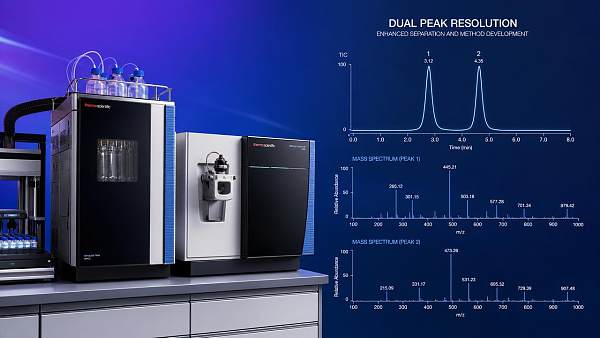
Mass spec resolution (fmhm) usually refers to how well an instrument separates two ions with close mass-to-charge values.
The term often connects to peak width measured at full width half maximum, or FWHM. Your input uses FMHM, but the practical idea stays the same.
In simple terms, resolution compares the peak center to the peak width at half of the peak height.
A narrower peak at the same mass means a higher resolution value. That usually supports cleaner separation and better confidence in ion assignment.
For example, if two compounds differ by a very small mass gap, low resolution may merge them into one broad signal.
Higher mass spec resolution (fmhm) can split that signal into two distinct peaks, making interpretation far more reliable.
This matters in industrial labs, regulated testing, failure analysis, and supplier qualification, where misidentification can distort both technical and commercial decisions.
Why Peak Separation Depends on More Than a Single Number
A published resolution specification is a starting point, not a final answer.
Vendors may report mass spec resolution (fmhm) at a specific mass, with a specific scan mode, under ideal tuning conditions.
Actual peak separation depends on several linked factors:
- mass range being measured
- ion abundance and space charge effects
- transient length or scan speed
- source stability and ion optics tuning
- matrix complexity and chemical background
- software peak detection settings
This is why two systems with similar advertised resolution can perform very differently in production-like workflows.
A more useful question is this: can the instrument separate the ions that matter in your method, at your needed throughput?
That question connects mass spec resolution (fmhm) directly to business risk, method robustness, and standards-aligned reporting.
How to Read Resolution in Practical Terms
When reviewing data, start with the visual shape of the peaks.
If two nearby ions show a clear valley between them, the separation is usually usable.
If the peaks overlap heavily, integration becomes unstable, especially when one compound is much less abundant than the other.
A practical interpretation framework can help:
- Check the target mass and the interfering mass difference.
- Review whether the stated mass spec resolution (fmhm) applies at that mass.
- Inspect peak width, symmetry, and baseline separation.
- Test low-level samples, not only calibration standards.
- Confirm that software processing does not create false separation.
This step is especially important in complex sectors such as photonics materials, food processing contaminants, textile additives, and power equipment residues.
In those cases, closely spaced ions often sit inside crowded chemical backgrounds.
Better resolution improves the odds of correct identification, but only if signal intensity and repeatability stay acceptable.
How Instrument Settings Change Mass Spec Resolution (FMHM)
From a method setup perspective, resolution is never isolated from the rest of the instrument.
Changing one parameter can improve separation while reducing speed or sensitivity.
Common settings that influence mass spec resolution (fmhm) include:
- transient or acquisition time
- scan rate and duty cycle
- ion accumulation target
- collision energy in tandem workflows
- source temperature and gas flows
- analyzer calibration and tuning status
Longer acquisition periods often improve resolution, but they may reduce the number of scans across a chromatographic peak.
That tradeoff becomes critical in fast separations, where too few data points can weaken quantitation.
Higher ion loads can also distort peak shape through space charge effects, lowering real-world separation.
So, the best method is rarely the one with the maximum possible mass spec resolution (fmhm). It is the one with the right balance.
Method Setup: A Practical Workflow
A clear workflow prevents overengineering and helps keep methods transferable across sites and instruments.
Use this sequence when building or benchmarking a method:
- Define the exact separation problem.
- List target ions and likely interferences.
- Estimate the minimum resolution needed at relevant masses.
- Set scan speed requirements from chromatography or throughput needs.
- Tune source and analyzer for stable peak shape first.
- Increase resolution only until interference risk is controlled.
- Verify repeatability with real matrix samples.
- Document acceptance criteria for auditability.
This approach keeps mass spec resolution (fmhm) tied to a measurable purpose.
That purpose may be impurity confirmation, isotopic discrimination, trace contaminant screening, or material degradation tracking.
In actual operations, methods fail more often from poor setup logic than from weak hardware.
That is why technical benchmarking should combine instrument specifications with hands-on performance checks.
Common Evaluation Mistakes
Several mistakes can make resolution data look better than it really is.
- Comparing values measured at different masses
- Ignoring the effect of matrix suppression
- Using neat standards instead of production-like samples
- Chasing maximum resolution without checking cycle time
- Accepting software-deconvoluted peaks as physical separation
- Skipping calibration drift and maintenance effects
These issues are easy to miss during procurement reviews or factory acceptance testing.
A disciplined review of mass spec resolution (fmhm) should always include both specification context and use-case relevance.
More importantly, it should define what separation quality is necessary for a pass or fail decision.
A Simple Decision Table for Technical Benchmarking
This kind of framework is useful when reviewing platforms across multi-sector environments, where procurement, engineering, and quality teams need a common language.
How to Turn Resolution Data Into Better Decisions
The main takeaway is straightforward.
Mass spec resolution (fmhm) is valuable only when it improves a decision that matters.
That may mean separating a trace contaminant from a matrix ion, confirming a critical degradation product, or reducing false positives in release testing.
The best evaluations connect resolution, peak separation, sensitivity, scan speed, and method control into one practical picture.
When comparing platforms, ask for application-specific data, not just brochure values.
When building methods, define the minimum acceptable separation before maximizing settings.
And when reporting results, document how the chosen mass spec resolution (fmhm) supports reliable, standards-aware interpretation.
That is the most dependable path to consistent peak separation, stable methods, and higher confidence in analytical decisions.
Recommended for You
 Digital SeaKongsberg Maritime Unveils Arctic Hunter Unmanned Surface VesselKongsberg Maritime's Arctic Hunter unmanned surface vessel is proposed for the Royal Navy's Type 92 programme. Explore its technology and procurement implications.By: Captain Kenji SatoNov 10, 2026
 Sorting RobotsHow Accurate Is AI in Food Quality Control? Metrics and Testing MethodsExplore AI in food quality control accuracy, from recall and false negatives to validation methods. Learn how to assess real-world inspection reliability.By: Marcus SterlingNov 10, 2026
 UHV TransformersGE Vernova Selected for 6 GW HVDC Link in IndiaGE Vernova will design a 6 GW HVDC link for PGCIL, connecting Rajasthan and South Kalamb to support India's clean energy transition. Discover the project.By: Dr. Elena VoltNov 09, 2026
 Grid ResilienceEurope's Grid Compliance Standards in 2026: Generator Connection RequirementsExplore new grid compliance standards 2026 Europe projects must address, from generator connection rules to testing and documentation. Prepare for approval.By: Dr. Elena VoltNov 09, 2026
 Technical FabricsNonwoven Bonding Cost Data: Comparing Thermal and Chemical ProcessesExplore nonwoven bonding cost data to compare thermal and chemical processes, assess usable yield, and choose the best-value option for your application.By: Chloe DuboisNov 08, 2026
 Fiber LasersIndustrial Lasers to 2035: Automotive Lightweighting and Precision Welding Drive DemandExplore the industrial laser market outlook to 2035 and discover how automotive lightweighting and precision welding could shape demand and procurement.By: Dr. Hideo TanakaNov 07, 2026
 Technical FabricsChoosing Geotextile Under Railway Ballast: Key Performance RequirementsChoosing geotextile under railway ballast? Explore essential filtration, drainage, strength and durability criteria to make a confident, project-specific selection.By: Chloe DuboisNov 07, 2026
 Digital SeaChoosing Rail Welding Equipment for Maintenance: Field Conditions and Weld TypesChoose rail welding equipment for maintenance with confidence. Compare welding methods, field constraints, inspection needs, and lifecycle costs.By: Captain Kenji SatoNov 06, 2026
 Digital SeaIndia Broadband Forum Urges Stronger Submarine Cable ResilienceIndia’s submarine cable resilience is in focus as the Broadband India Forum urges faster repairs, more vessels and stronger landing infrastructure.By: Captain Kenji SatoNov 06, 2026
 Digital SeaChoosing a Railway Network Switch Supplier: Reliability and Support CriteriaChoosing a railway network switch supplier? Compare reliability, standards evidence, cybersecurity, and lifecycle support to reduce project risk.By: Captain Kenji SatoNov 05, 2026
 Grid ResilienceUS Grid Equipment Import Ban Raises Cost and Implementation ConcernsThe US grid equipment import ban raises concerns over costs and delivery delays. Explore how unclear criteria could affect procurement and supply chains.By: Dr. Elena VoltNov 05, 2026
 Digital SeaRailway Coupler Price: How Type and Specifications Affect QuotesRailway coupler price depends on type, specifications, and order scope. Learn how to compare quotes, avoid hidden costs, and make a confident buying decision.By: Captain Kenji SatoNov 04, 2026
 Grid ResilienceGlobal Smart Grid Companies Raise $3 Billion in First Nine Months of 2026Global smart grid companies raised $3 billion in the first nine months of 2026. Explore the funding breakdown and potential implications for buyers and suppliers.By: Dr. Elena VoltNov 04, 2026
 Digital SeaChoosing Wholesale Pet Toys: How to Evaluate Suppliers and Minimum OrdersWholesale pet toys: learn how to assess suppliers, compare minimum orders and landed costs, and reduce inventory risk before you buy.By: Captain Kenji SatoNov 03, 2026
 Digital SeaSustainable Packaging Design: How to Choose Materials and Reduce WasteDiscover how sustainable packaging design helps reduce waste, protect products, and control costs with practical material choices and proven testing strategies.By: Captain Kenji SatoNov 02, 2026
 Technical FabricsUSMCA's First Joint Review Puts Textile Supply Chain Rules in FocusUSMCA's first joint review puts textile supply chain rules in focus. Explore potential impacts on origin compliance, sourcing and tariff treatment.By: Chloe DuboisNov 02, 2026
 Digital SeaManufacturing KPI Benchmarking: How to Compare Production PerformanceBenchmarking KPI manufacturing performance? Learn how to compare OEE, quality and downtime, identify meaningful gaps, and turn insights into practical improvements.By: Captain Kenji SatoNov 01, 2026
 Smart MetersCCI Approves Adani Energy Solutions' ₹305 Billion Acquisition of IntelliSmartCCI approves Adani Energy Solutions' ₹305 billion acquisition of IntelliSmart. Discover what the deal could mean for India's smart meter market.By: Dr. Elena VoltNov 01, 2026
 Digital SeaChoosing a Coin Laundry Machinery OEM: What Buyers Should EvaluateChoosing a coin laundry machinery OEM? Compare machine specifications, payment integration, lifecycle costs, and support to make a confident buying decision.By: Captain Kenji SatoOct 31, 2026
 Grid ResilienceUS Energy Department Announces $237 Million Grid SCALED Funding ProgramExplore the DOE's $237 million Grid SCALED funding program and its goals to strengthen grid equipment supply chains, lower electricity costs, and improve resilience.By: Dr. Elena VoltOct 31, 2026
 UHV TransformersA Decade of UHV Power in Shandong: Province Leads in Station NumbersShandong UHV power leads China in station numbers. Explore a decade of grid development and its implications for electricity supply and business planning.By: Dr. Elena VoltOct 30, 2026
 Digital SeaChoosing a Composite Train Body Panel Manufacturer: Fire Safety and Quality ChecksChoosing a composite train body panels manufacturer? Learn how to verify fire test evidence, audit production quality, and avoid costly approval gaps before you buy.By: Captain Kenji SatoOct 29, 2026
 Subsea ROV/AUVOcean Infinity Deploys Six AUVs Together Beyond 5,000 MetresOcean Infinity reportedly deployed six HUGIN AUVs beyond 5,200 metres. Explore what concurrent deepwater missions could mean for seabed surveys and procurement.By: Captain Kenji SatoOct 29, 2026
 Grid ResilienceRenewable Energy Grid Balancing: How Storage and Demand Response Work TogetherExplore renewable energy grid balancing with storage and demand response. Learn how coordinated controls manage shortfalls, absorb surplus power, and improve grid reliability.By: Dr. Elena VoltOct 28, 2026
 Subsea ROV/AUVSeaber Introduces 13 kg RAVEN AUV to Target Mine Countermeasure CostsSeaber’s 13 kg RAVEN AUV targets lower mine countermeasure costs with two mission configurations. Explore its potential value for naval operations and procurement.By: Captain Kenji SatoOct 28, 2026
 Digital SeaBallast Water Management Rules: IMO vs. USCG Compliance RequirementsBallast water management rules explained: compare IMO and USCG approvals, operating limits, and records. Get practical checks to reduce compliance risks and costly port delays.By: Captain Kenji SatoOct 27, 2026
 Subsea ROV/AUVEni Signs Main Cronos Contracts, Moving Gas Project into ExecutionEni’s Cronos gas project enters execution as major contracts are signed. Explore the Cyprus development, Egypt processing plans and key milestones toward first gas in 2028.By: Captain Kenji SatoOct 27, 2026
 Digital SeaBenefits of Refurbished Semiconductor Equipment: When Do Savings Justify the Risk?Explore the benefits of refurbished semiconductor equipment. Learn how to weigh savings against process risks, qualification costs, and support gaps before investing.By: Captain Kenji SatoOct 26, 2026
 Digital SeaSemiconductor Equipment Overhaul: Diagnosing Persistent Process DriftSemiconductor equipment overhaul leaving process drift unresolved? Discover how to pinpoint vacuum, sensor, thermal, and conditioning issues to restore stability and reduce repeat service calls.By: Captain Kenji SatoOct 26, 2026
 Digital SeaSemiconductor Equipment Refurbishment Process: Cleaning to QualificationExplore the semiconductor equipment refurbishment process, from precision cleaning to qualification. Learn how measurable testing helps verify production readiness and reduce risk.By: Captain Kenji SatoOct 26, 2026
 Digital SeaBidding for Offshore Decommissioning Projects: Scope and Liability ChecksBidding for offshore decommissioning projects? Discover key scope, liability, and insurance checks to avoid hidden costs, protect margins, and bid with confidence.By: Captain Kenji SatoOct 26, 2026