BDI: 1,842 ▼ 1.2%
COTTON NO.2: 84.12 ▲ 0.4%
LME COPPER: 8,432.50 ▲ 2.1%
FOOD SAFETY INDEX: 94.2 ARCHIVE_SECURED
OPTICAL INDEX: 11,204.09 STABLE
BDI: 1,842 ▼ 1.2%

SECTOR INDEX
V.24.08 ARCHIVE
Hot Articles
- What Is Precision Medicine and How Does It Guide Treatment?Discover how precision medicine uses biomarkers and genetic insights to guide treatment, where it can help, and what to ask before testing.
- 2026 CSEE Annual Meeting Opens with Focus on AI and Power SystemsThe 2026 CSEE Annual Meeting explores AI, low-carbon power systems and ultra-high-voltage transmission. Discover why these discussions matter.
- Ship Radar Detection Range: How Far Can It See and What Limits It?Ship radar detection range depends on more than the display scale. Discover how antenna height, weather, target size, and settings affect what radar can see.
Portable Fiber Optic Splicer Buying Guide: Loss Specs, Battery Life, and Field Use


Why does a portable fiber optic splicer need more than a price comparison?
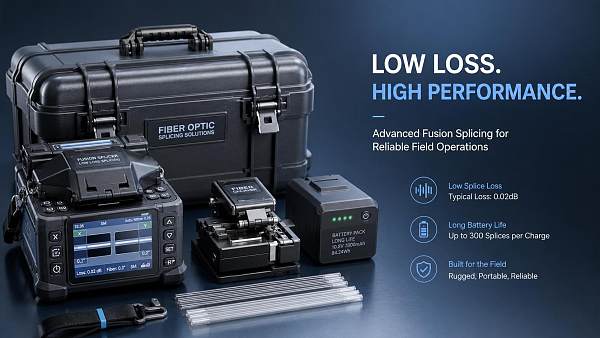
A portable fiber optic splicer is often purchased for urgent field work, not for showroom conditions.
That changes the buying logic immediately.
Low purchase price can look attractive, yet unstable splice loss, short battery runtime, and weak after-sales support usually cost more later.
In practical network builds, the real question is not only which portable fiber optic splicer is cheaper.
It is which unit keeps crews moving, limits rework, and protects service continuity across mixed environments.
This matters across more than telecom.
Precision optics, smart grid links, industrial automation, offshore systems, and secure facilities all depend on reliable fiber joins.
A portable fiber optic splicer chosen for one project may later support maintenance, expansion, and emergency restoration in very different settings.
That broader view aligns with the benchmarking approach used by G-MCE, where equipment is judged by operating performance, standards fit, and lifecycle resilience.
So the buying guide should start with field reality: loss consistency, battery life, ruggedness, and supportability are core commercial factors, not secondary features.
How much do splice loss specifications really tell you?
Splice loss numbers are useful, but they are easy to misread.
A headline spec such as 0.01 dB or 0.02 dB can reflect ideal lab conditions, clean fiber, and stable operators.
Field performance is usually less tidy.
The better question is whether the portable fiber optic splicer delivers repeatable results across different cable types, weather shifts, and technician routines.
A unit with slightly higher stated loss may still outperform a cheaper rival if its results are more consistent from splice to splice.
Buyers should also check what fibers the machine is optimized for.
Single-mode, multimode, bend-insensitive fiber, and specialty applications do not always behave the same.
If deployments include mixed fiber inventories, program compatibility and alignment method become more important than a single marketing figure.
Core alignment models usually cost more, but they often reduce uncertainty in demanding installations.
Cladding alignment units may be acceptable for lighter workloads or tighter budgets, especially where link budgets have more margin.
A short comparison table helps clarify what to ask suppliers before a shortlist is finalized.
In other words, do not buy a portable fiber optic splicer on the smallest published loss alone.
Buy on repeatability, fiber compatibility, and verified field data.
Battery life sounds simple, so why does it disrupt field schedules so often?
Battery claims often refer to a controlled number of splice and heat cycles under moderate temperature.
Actual runtime falls when crews work in cold weather, use bright screens outdoors, or perform repeated heater cycles.
That is why battery evaluation should focus on usable work hours, not brochure numbers alone.
For short service visits, a single battery may be enough.
For remote repairs, utility corridors, marine infrastructure, or large campus projects, swap time and charging logistics matter much more.
A portable fiber optic splicer becomes expensive the moment a crew pauses because power planning was too optimistic.
More careful buyers usually ask for the following details:
- Number of full splice-plus-heat cycles per battery pack
- Charging time from empty to operational level
- Battery replacement availability by region
- Performance at low or high ambient temperature
- Whether vehicle, AC, and portable power charging options exist
It is also worth checking if the battery platform is shared across related tools from the same supplier.
That can simplify spare inventory and reduce downtime across larger maintenance fleets.
What separates a field-ready portable fiber optic splicer from a bench-friendly one?
This is where many sourcing decisions become clearer.
A field-ready portable fiber optic splicer is not just compact.
It must tolerate dust, vibration, moisture exposure, uneven work surfaces, and frequent transport.
Ruggedness should be checked through actual protection claims and design details, not vague language.
Drop resistance, wind shield design, heater reliability, screen readability, and boot speed all influence daily usability.
In rough installations, small ergonomic issues accumulate fast.
A machine that is awkward with gloves or hard to navigate in bright daylight slows every splice.
The table below can be used as a quick field-use checklist during technical comparison.
Across sectors tracked by G-MCE, equipment that survives transport and site variability usually returns more value than equipment that only tests well indoors.
Where do buyers usually underestimate total cost?
The hidden cost is rarely the machine alone.
It sits in consumables, calibration, repair lead time, training, and the cost of failed field visits.
A portable fiber optic splicer with a modest upfront premium can still be the lower-cost option over three to five years.
This is especially true where service interruptions are expensive or site access is difficult.
One of the most common mistakes is ignoring service network coverage.
If electrodes, batteries, or repair parts take weeks to arrive, operating cost rises quickly.
Another blind spot is training burden.
A user-friendly portable fiber optic splicer shortens onboarding and reduces inconsistent workmanship across distributed teams.
Before awarding an order, it helps to request answers on:
- Electrode life and replacement cost
- Recommended maintenance interval
- Turnaround time for repair and calibration
- Local stock for sleeves, cleavers, batteries, and adapters
- Warranty terms tied to field damage or misuse
That set of questions often reveals more commercial truth than a basic price sheet.
So how should the final shortlist be built?
A useful shortlist starts with deployment conditions, not brand familiarity.
Map the expected fiber types, daily splice volume, travel distance, climate exposure, and response-time pressure.
Then score each portable fiber optic splicer against operational priorities.
For many teams, the weighting model looks something like this:
- Loss consistency and fiber compatibility for technical fit
- Battery endurance and charging flexibility for schedule reliability
- Durability and usability for field efficiency
- Service support and consumable access for lifecycle stability
- Total ownership cost rather than entry price alone
If possible, ask for a practical demonstration using the actual cable types and sleeves planned for the project.
A short field simulation often exposes differences that datasheets hide.
The best buying decision usually comes from combining technical benchmarks, supplier responsiveness, and realistic operating assumptions.
That is the same logic used in cross-sector sourcing intelligence: verify the numbers, test the operating context, and compare lifecycle consequences before committing.
What is the practical takeaway before placing an order?
A portable fiber optic splicer should be selected as a field asset, not as a simple catalog item.
Splice loss specs matter, but consistency matters more.
Battery life should be judged by workday reality, not headline cycle counts.
Ruggedness, ease of use, and regional support will shape long-term cost just as much as the purchase invoice.
The next step is straightforward.
Define the site conditions, build a weighted comparison sheet, request verified field data, and confirm spare-part and service timelines before approval.
That process gives a portable fiber optic splicer purchase a stronger technical basis and a much lower risk of avoidable downtime.
Recommended for You
 Digital SeaWhat Is Precision Medicine and How Does It Guide Treatment?Discover how precision medicine uses biomarkers and genetic insights to guide treatment, where it can help, and what to ask before testing.By: Captain Kenji SatoNov 13, 2026
 Grid Resilience2026 CSEE Annual Meeting Opens with Focus on AI and Power SystemsThe 2026 CSEE Annual Meeting explores AI, low-carbon power systems and ultra-high-voltage transmission. Discover why these discussions matter.By: Dr. Elena VoltNov 12, 2026
 Digital SeaShip Radar Detection Range: How Far Can It See and What Limits It?Ship radar detection range depends on more than the display scale. Discover how antenna height, weather, target size, and settings affect what radar can see.By: Captain Kenji SatoNov 12, 2026
 UHV TransformersGE Vernova to Invest $34.5 Million in Louisiana Transformer Plant ExpansionGE Vernova plans a $34.5 million transformer plant expansion in Louisiana. Explore its potential impact on North American supply and procurement.By: Dr. Elena VoltNov 11, 2026
 Digital SeaMetro Station Noise Criteria: Limits and Measurement MethodsExplore metro station noise criteria, applicable limits and measurement methods. Learn how to select metrics and assess compliance with confidence.By: Captain Kenji SatoNov 11, 2026
 Digital SeaKongsberg Maritime Unveils Arctic Hunter Unmanned Surface VesselKongsberg Maritime's Arctic Hunter unmanned surface vessel is proposed for the Royal Navy's Type 92 programme. Explore its technology and procurement implications.By: Captain Kenji SatoNov 10, 2026
 Sorting RobotsHow Accurate Is AI in Food Quality Control? Metrics and Testing MethodsExplore AI in food quality control accuracy, from recall and false negatives to validation methods. Learn how to assess real-world inspection reliability.By: Marcus SterlingNov 10, 2026
 UHV TransformersGE Vernova Selected for 6 GW HVDC Link in IndiaGE Vernova will design a 6 GW HVDC link for PGCIL, connecting Rajasthan and South Kalamb to support India's clean energy transition. Discover the project.By: Dr. Elena VoltNov 09, 2026
 Grid ResilienceEurope's Grid Compliance Standards in 2026: Generator Connection RequirementsExplore new grid compliance standards 2026 Europe projects must address, from generator connection rules to testing and documentation. Prepare for approval.By: Dr. Elena VoltNov 09, 2026
 Technical FabricsNonwoven Bonding Cost Data: Comparing Thermal and Chemical ProcessesExplore nonwoven bonding cost data to compare thermal and chemical processes, assess usable yield, and choose the best-value option for your application.By: Chloe DuboisNov 08, 2026
 Fiber LasersIndustrial Lasers to 2035: Automotive Lightweighting and Precision Welding Drive DemandExplore the industrial laser market outlook to 2035 and discover how automotive lightweighting and precision welding could shape demand and procurement.By: Dr. Hideo TanakaNov 07, 2026
 Technical FabricsChoosing Geotextile Under Railway Ballast: Key Performance RequirementsChoosing geotextile under railway ballast? Explore essential filtration, drainage, strength and durability criteria to make a confident, project-specific selection.By: Chloe DuboisNov 07, 2026
 Digital SeaChoosing Rail Welding Equipment for Maintenance: Field Conditions and Weld TypesChoose rail welding equipment for maintenance with confidence. Compare welding methods, field constraints, inspection needs, and lifecycle costs.By: Captain Kenji SatoNov 06, 2026
 Digital SeaIndia Broadband Forum Urges Stronger Submarine Cable ResilienceIndia’s submarine cable resilience is in focus as the Broadband India Forum urges faster repairs, more vessels and stronger landing infrastructure.By: Captain Kenji SatoNov 06, 2026
 Digital SeaChoosing a Railway Network Switch Supplier: Reliability and Support CriteriaChoosing a railway network switch supplier? Compare reliability, standards evidence, cybersecurity, and lifecycle support to reduce project risk.By: Captain Kenji SatoNov 05, 2026
 Grid ResilienceUS Grid Equipment Import Ban Raises Cost and Implementation ConcernsThe US grid equipment import ban raises concerns over costs and delivery delays. Explore how unclear criteria could affect procurement and supply chains.By: Dr. Elena VoltNov 05, 2026
 Digital SeaRailway Coupler Price: How Type and Specifications Affect QuotesRailway coupler price depends on type, specifications, and order scope. Learn how to compare quotes, avoid hidden costs, and make a confident buying decision.By: Captain Kenji SatoNov 04, 2026
 Grid ResilienceGlobal Smart Grid Companies Raise $3 Billion in First Nine Months of 2026Global smart grid companies raised $3 billion in the first nine months of 2026. Explore the funding breakdown and potential implications for buyers and suppliers.By: Dr. Elena VoltNov 04, 2026
 Digital SeaChoosing Wholesale Pet Toys: How to Evaluate Suppliers and Minimum OrdersWholesale pet toys: learn how to assess suppliers, compare minimum orders and landed costs, and reduce inventory risk before you buy.By: Captain Kenji SatoNov 03, 2026
 Digital SeaSustainable Packaging Design: How to Choose Materials and Reduce WasteDiscover how sustainable packaging design helps reduce waste, protect products, and control costs with practical material choices and proven testing strategies.By: Captain Kenji SatoNov 02, 2026
 Technical FabricsUSMCA's First Joint Review Puts Textile Supply Chain Rules in FocusUSMCA's first joint review puts textile supply chain rules in focus. Explore potential impacts on origin compliance, sourcing and tariff treatment.By: Chloe DuboisNov 02, 2026
 Digital SeaManufacturing KPI Benchmarking: How to Compare Production PerformanceBenchmarking KPI manufacturing performance? Learn how to compare OEE, quality and downtime, identify meaningful gaps, and turn insights into practical improvements.By: Captain Kenji SatoNov 01, 2026
 Smart MetersCCI Approves Adani Energy Solutions' ₹305 Billion Acquisition of IntelliSmartCCI approves Adani Energy Solutions' ₹305 billion acquisition of IntelliSmart. Discover what the deal could mean for India's smart meter market.By: Dr. Elena VoltNov 01, 2026
 Digital SeaChoosing a Coin Laundry Machinery OEM: What Buyers Should EvaluateChoosing a coin laundry machinery OEM? Compare machine specifications, payment integration, lifecycle costs, and support to make a confident buying decision.By: Captain Kenji SatoOct 31, 2026
 Grid ResilienceUS Energy Department Announces $237 Million Grid SCALED Funding ProgramExplore the DOE's $237 million Grid SCALED funding program and its goals to strengthen grid equipment supply chains, lower electricity costs, and improve resilience.By: Dr. Elena VoltOct 31, 2026
 UHV TransformersA Decade of UHV Power in Shandong: Province Leads in Station NumbersShandong UHV power leads China in station numbers. Explore a decade of grid development and its implications for electricity supply and business planning.By: Dr. Elena VoltOct 30, 2026
 Digital SeaChoosing a Composite Train Body Panel Manufacturer: Fire Safety and Quality ChecksChoosing a composite train body panels manufacturer? Learn how to verify fire test evidence, audit production quality, and avoid costly approval gaps before you buy.By: Captain Kenji SatoOct 29, 2026
 Subsea ROV/AUVOcean Infinity Deploys Six AUVs Together Beyond 5,000 MetresOcean Infinity reportedly deployed six HUGIN AUVs beyond 5,200 metres. Explore what concurrent deepwater missions could mean for seabed surveys and procurement.By: Captain Kenji SatoOct 29, 2026
 Grid ResilienceRenewable Energy Grid Balancing: How Storage and Demand Response Work TogetherExplore renewable energy grid balancing with storage and demand response. Learn how coordinated controls manage shortfalls, absorb surplus power, and improve grid reliability.By: Dr. Elena VoltOct 28, 2026
 Subsea ROV/AUVSeaber Introduces 13 kg RAVEN AUV to Target Mine Countermeasure CostsSeaber’s 13 kg RAVEN AUV targets lower mine countermeasure costs with two mission configurations. Explore its potential value for naval operations and procurement.By: Captain Kenji SatoOct 28, 2026
 Digital SeaBallast Water Management Rules: IMO vs. USCG Compliance RequirementsBallast water management rules explained: compare IMO and USCG approvals, operating limits, and records. Get practical checks to reduce compliance risks and costly port delays.By: Captain Kenji SatoOct 27, 2026






























