

Outdated fiber laser supplier data can turn a promising purchase into a costly mismatch in performance, compliance, or delivery. Review frequency should follow purchasing risk.
For established suppliers, quarterly reviews provide a practical baseline. During active sourcing, refresh decision-critical information monthly, then verify it again before issuing a purchase order.
How can technical sourcing support reduce procurement risk? By checking whether supplier claims remain current, apply to your exact configuration, and have credible supporting evidence.
For procurement directors, manufacturing engineers, and distributors, this guide explains what to update, when to accelerate verification, and how to turn supplier intelligence into purchasing controls.
How Often Should You Refresh Each Type of Supplier Data?
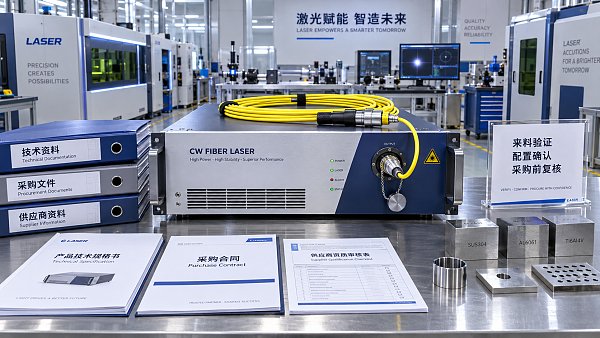
There is no universal expiration date for supplier information. A company address, an optical specification, and an available production slot can change at different speeds.
Use the following intervals as starting points for your internal policy. They are suggested purchasing controls, rather than requirements imposed by a particular industry standard.
A quarterly review suits a stable, previously qualified supplier serving a familiar application. It becomes insufficient when your project depends on rapidly changing commercial commitments.
For custom lasers, new suppliers, or production-critical installations, increase review frequency as the purchase approaches. Resolve open technical questions before allowing commercial negotiations to conclude.
Some information needs confirmation within days of commitment. Inventory, shipping arrangements, and production slots should match the quotation validity period and your actual order date.
The useful question is therefore whether evidence remains reliable for this decision. A recently downloaded brochure can still describe an obsolete or different product configuration.
Which Changes Require an Immediate Supplier Review?
Scheduled reviews keep records organized, but event-triggered checks prevent known changes from slipping between review dates. Establish triggers that procurement and engineering can both recognize.
Revalidate immediately when the supplier changes its manufacturing site, legal entity, ownership, or critical subcontractors. Determine whether previous qualification evidence still covers the revised arrangement.
A component substitution also deserves attention. Changes to pump diodes, delivery fiber, connectors, cooling requirements, or control electronics can affect integration and previously demonstrated performance.
Commercial warning signs include unexplained lead-time extensions, altered payment terms, reduced quotation validity, and inconsistent availability statements. These signals justify clarification without automatically proving supplier distress.
Application changes matter equally. Moving from occasional operation to continuous production, or changing materials and processing speeds, can invalidate assumptions used during the original supplier evaluation.
Assign someone to monitor these triggers throughout sourcing. Otherwise, procurement may negotiate against yesterday’s configuration while engineering evaluates a design that the supplier no longer offers.
Which Fiber Laser Specifications Must Be Revalidated?
Begin by defining what you are buying: a laser source, an integrated processing machine, or a subsystem. Each boundary creates different specification and acceptance responsibilities.
Confirm operating mode, wavelength, rated output, adjustment range, and stability under stated conditions. For pulsed systems, verify pulse energy, duration, repetition rate, and applicable operating limits.
Beam quality, delivery interface, and optical compatibility deserve particular attention. Ask how measurements were obtained, which configuration was tested, and whether results represent guaranteed performance.
Also verify electrical supply, cooling capacity, environmental limits, control interfaces, and installation requirements. Missing infrastructure requirements can create substantial costs after an apparently attractive purchase.
Translate important specifications into application evidence. For cutting, welding, or marking, request representative samples or trials using relevant materials, thicknesses, cycle requirements, and quality criteria.
Record the tested settings and offered configuration together. Performance demonstrated on another power class or optical setup should not automatically qualify the equipment you intend to purchase.
How Do You Check Compliance Without Trusting a Logo?
A supplier’s certification logo is a starting point for investigation. Obtain the underlying document and identify exactly which organization, location, activity, or product it covers.
For management-system certification, check the issuing body, certificate status, scope, and covered sites. ISO 9001 certification alone does not establish a laser product’s safety or performance.
For product compliance, identify requirements applicable to the equipment, intended use, and destination market. A laser source and an integrated machine may require different documentation.
IEC 60825-1 addresses laser product safety, while other requirements may apply to machinery, electrical systems, or electromagnetic compatibility. Applicability depends on the supplied equipment and jurisdiction.
Where relevant, examine declarations, technical documentation, and test reports for model identification and configuration coverage. A report for a related model may leave important differences unresolved.
Use qualified compliance support when applicability is unclear. Resolve documentation gaps before ordering, particularly when customs clearance, commissioning, or customer acceptance depends on those documents.
Can the Supplier Still Meet Your Delivery and Service Needs?
A quoted lead time can refer to manufacturing completion, dispatch, or arrival. Clarify the milestone, its starting conditions, and any dependencies on deposits or design approval.
Request written confirmation of the offered configuration, production allocation, shipping responsibilities, and delivery assumptions. Treat verbal availability claims as provisional until the supplier confirms them.
Check service coverage at the installation address, including technician availability, remote diagnostics, response commitments, and escalation contacts. Global sales coverage does not necessarily imply local technical support.
Review warranty exclusions, return procedures, and responsibility for transport or on-site labor. Confirm whether authorized integration and maintenance practices are required to preserve warranty coverage.
Ask about critical spare parts, replacement availability, repair location, and expected turnaround. These details help estimate downtime exposure when the laser supports an essential production process.
Compare suppliers using total ownership cost, including integration, training, maintenance, consumables where applicable, and disruption exposure. A lower purchase price can conceal a weaker operating proposition.
How Can Technical Sourcing Support Reduce Procurement Risk?
Technical sourcing support reduces uncertainty by connecting your application requirements with independently checked supplier evidence. Its value comes from resolving specific purchasing questions before commitment.
First, it creates comparable requirements across shortlisted suppliers. Standardized specification requests expose differences that otherwise remain hidden behind inconsistent terminology, brochures, or loosely defined performance claims.
Second, it checks evidence quality. Reviewers distinguish contractual guarantees, representative test results, historical records, and marketing statements, so procurement understands what each claim can actually support.
Third, it coordinates engineering, quality, procurement, and compliance decisions. Shared evidence prevents separate teams from approving different assumptions about configuration, delivery readiness, or installation responsibilities.
G-MCE’s stated focus on Precision Optics & Photonics, technical benchmarking, and verifiable B2B intelligence provides a relevant framework for structuring these comparisons and evidence reviews.
For an individual purchase, assess the available evidence directly. A repository or advisory service adds value when its sources, verification dates, and unresolved limitations are visible.
What Should Your Team Verify Before Issuing the Purchase Order?
Start with a controlled supplier record containing the legal entity, offered model, configuration revision, evidence sources, verification dates, and accountable owners for unresolved procurement questions.
At shortlist approval, review capability and application fit. Before technical approval, resolve specification differences and establish measurable acceptance criteria linked to your intended production process.
Before commercial approval, refresh price, quotation validity, delivery commitments, payment milestones, warranty terms, and service coverage. Ensure these terms refer to the technically approved configuration.
At purchase-order release, perform a final consistency check across the quotation, technical agreement, compliance documents, and order. Record discrepancies and require resolution before approving affected commitments.
Define factory and site acceptance responsibilities where appropriate. Specify test conditions, pass criteria, documentation deliverables, and remedies so acceptance does not depend on subjective interpretation.
Continue monitoring through shipment and commissioning when configuration or delivery remains changeable. Written change notification requirements help prevent substitutions from bypassing your original technical approval.
How Much Verification Is Worth Paying For?
Scale verification to the consequences of a wrong decision. A standard replacement from a proven supplier usually warrants less investigation than a customized production-critical system.
Consider purchase value alongside downtime, integration complexity, qualification effort, and recovery options. A modestly priced component can justify extensive checking if its failure stops a production line.
Use deeper reviews when evidence is incomplete, suppliers are unfamiliar, or application performance remains uncertain. Targeted trials, document authentication, or facility assessments may address those gaps.
A practical financial comparison weighs review cost against avoidable expected loss. Estimate credible failure scenarios, their likelihood, and business impact without treating uncertain assumptions as precise forecasts.
Measure sourcing support by useful outcomes: fewer unresolved specification gaps, clearer acceptance terms, better delivery visibility, and reduced rework. Counting updated database fields alone misses purchasing value.
Keep the process proportionate by assigning different refresh intervals to different data fields. This concentrates effort on volatile commitments and consequential uncertainties while preserving essential oversight.
Make Data Freshness Part of the Buying Decision
Use quarterly supplier reviews as a baseline, increase attention during active sourcing, and revalidate critical information before commitment. Accelerate immediately when meaningful changes affect purchasing assumptions.
For fiber lasers, prioritize configuration-specific performance, applicable compliance evidence, delivery commitments, and usable service coverage. These areas directly influence whether the purchase meets your operational needs.
Maintain a dated evidence record and clear approval ownership. When information is missing or contradictory, resolve the gap or explicitly manage its consequences before ordering.
The goal is a defensible purchase supported by current, relevant evidence. Technical sourcing creates value when it turns supplier information into reliable engineering and commercial decisions.