BDI: 1,842 ▼ 1.2%
COTTON NO.2: 84.12 ▲ 0.4%
LME COPPER: 8,432.50 ▲ 2.1%
FOOD SAFETY INDEX: 94.2 ARCHIVE_SECURED
OPTICAL INDEX: 11,204.09 STABLE
BDI: 1,842 ▼ 1.2%
SECTOR INDEX
V.24.08 ARCHIVE
Hot Articles
- How Does a Ballast Cleaner Screening System Separate Track Ballast?Discover how a ballast cleaner screening system separates reusable stone from fines, what affects performance, and how to assess the results.
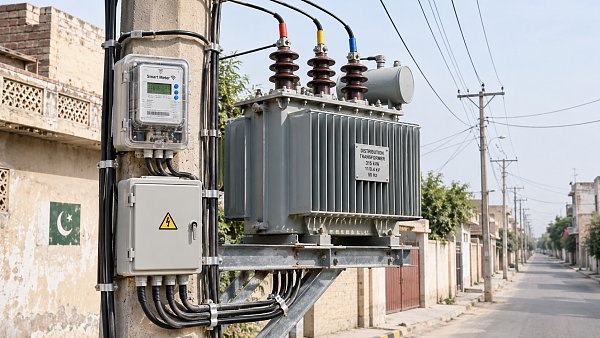
- Pakistan to Seek World Bank and ADB Funding for Smart MetersPakistan seeks World Bank and ADB funding for smart meters on distribution transformers. Explore the plan to tackle power theft and improve grid efficiency.
- What Is Precision Medicine and How Does It Guide Treatment?Discover how precision medicine uses biomarkers and genetic insights to guide treatment, where it can help, and what to ask before testing.
How Can Technical Sourcing Support Reduce ROV Procurement Risk?


Technical sourcing support reduces ROV procurement risk by turning supplier claims into requirements that can be compared, tested, and written into a contract. A remotely operated vehicle may have an impressive depth rating and an attractive price, yet still struggle with the current, payload, visibility, or deployment conditions of its intended mission. The purchase becomes easier to defend when those operating conditions determine the evaluation.
The question “How do I compare two industrial solutions with different technical standards?” is especially relevant to ROV selection. The answer is to establish a common operational baseline, identify what each standard actually covers, and examine the evidence behind each offer. Different standards do not automatically make systems incomparable, and matching standards do not automatically make them equally suitable.
Useful technical sourcing support connects engineering requirements, supplier documentation, integration planning, and commercial terms. Its value lies in exposing gaps while there is still time to change the specification, request a demonstration, or choose another system.
Start with the mission conditions that can make the purchase fail
Before reviewing quotations, describe the work the ROV must complete. “Underwater inspection” is too broad to guide a reliable purchase. Inspecting a sheltered tank, surveying a harbor structure, and examining an offshore installation place different demands on propulsion, navigation, tether management, and handling equipment.
A mission specification should identify operating depth, water conditions, visibility, inspection targets, required sensors, intervention tasks, and deployment arrangements. It should also state the expected operating duration and the facilities available for power, storage, maintenance, and launch.
Separate essential requirements from preferences. If the task requires stable positioning while using a manipulator, that capability is essential. A higher camera resolution may be a preference if turbidity limits the usefulness of optical imagery. This distinction prevents a strong specification in one area from concealing a failure in another.
Technical sourcing support should also challenge ambiguous terms. “Operates in strong currents” needs a defined operating condition, vehicle configuration, and performance expectation. Does the claim mean the vehicle can move forward, hold position, or complete a precise inspection? Those are different capabilities.
The resulting specification should describe acceptable outcomes. For example, require the vehicle to maintain a usable inspection position with the proposed payload and deployed tether under the agreed current conditions. That creates a meaningful basis for evaluating propulsion and control performance.
Compare different technical standards by scope and evidence
A supplier’s standards list is useful only when its relevance is clear. A quality management certificate concerns organizational processes within its stated scope; it does not establish the depth capability or station-keeping performance of a particular ROV. Similarly, a test covering one enclosure does not demonstrate the suitability of every component in the assembled system.
For each referenced standard, identify the equipment covered, the edition used, the requirement addressed, and the evidence supplied. Distinguish between a supplier declaration, an internal test report, an independent test report, and certification. Each supports a different level and type of assurance.
When competing systems use different standards, build a requirement-to-evidence matrix. The comparison should begin with the operational requirement and then show how each supplier demonstrates that it is met.
If two test methods differ, examine their conditions, acceptance criteria, and coverage before treating their results as equivalent. A shared pass/fail label may conceal a different test severity or system boundary. Where neither method answers the operational question, a common demonstration can close the gap.
Mandatory requirements need separate treatment. Applicable legal obligations, contractual requirements, vessel arrangements, and any required classification provisions should be identified for the intended deployment. Technical similarity cannot replace a requirement that explicitly calls for particular conformity evidence.
G-MCE’s maritime engineering and technical benchmarking focus is relevant to this comparison process: connecting hardware specifications with the scope of applicable standards and verifiable documentation. A benchmark supports selection when it explains what the evidence covers and where further demonstration is needed.
Check whether performance claims survive the working configuration
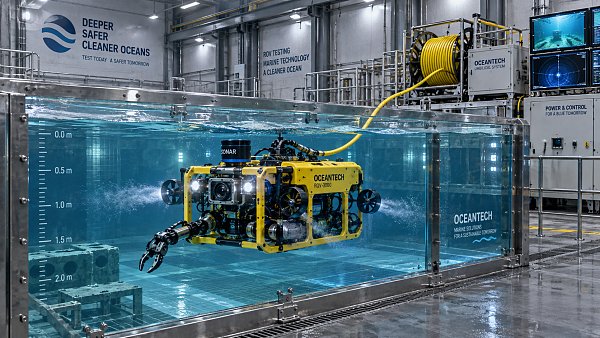
ROV specifications often describe individual capabilities without explaining how they interact. Payload capacity, thrust, endurance, and depth rating should therefore be assessed together. Adding a sonar, manipulator, or other tool can change drag, buoyancy, balance, power demand, and handling behavior.
Tether effects deserve particular attention. Available tether length is not the same as usable operating reach. Current acting on the tether can increase loading and affect maneuverability. Routing, deployment geometry, and the presence or absence of a tether management system can change performance even when the vehicle itself remains identical.
A hypothetical comparison illustrates the issue. One offer may show stronger propulsion figures measured with a lightly equipped vehicle, while another provides a trial record with the required inspection payload installed. The first system may still be suitable, but the figures alone do not establish that advantage. Both offers need assessment against the same working configuration.
Visibility creates a similar problem. A high-resolution camera cannot recover an image obscured by suspended material. Where optical inspection is unreliable, sonar capability, navigation, lighting placement, and the interpretation of acoustic data may carry more weight than camera resolution.
Ask suppliers to state the conditions and exclusions attached to each important claim. Evidence should be traceable to the proposed model and configuration, including relevant software and accessories. Successful use of another model provides context, but it does not establish the performance of the offered package.
Find integration gaps before accepting the quotation
The ROV is part of a wider operating system. A suitable vehicle can still create procurement problems if the quotation omits the equipment or engineering needed to deploy it.
Review the full package boundary: vehicle, tether, winch where required, power supply, control station, handling equipment, sensors, tooling, software, and essential spares. Identify which items are included, which are optional, and which must come from another source. An unexplained exclusion can become a cost increase or a delivery delay.
Interface reviews should go beyond connector compatibility. Electrical voltage, power demand, communication protocol, data format, timing, and control behavior all affect integration. A sensor can connect physically while producing data that the existing software cannot use effectively.
For survey or repeatable inspection work, examine how images, sonar records, navigation information, and timestamps relate to one another. Misaligned records can reduce the usefulness of an otherwise successful dive. Request representative output files and test the intended processing workflow before committing to the configuration.
Deployment constraints also belong in this review. Check equipment dimensions and weights against the handling arrangement, storage area, and available working space. Define responsibility for custom brackets, adapters, software interfaces, and commissioning so that these tasks do not emerge as unresolved obligations at delivery.
Use acceptance tests to resolve uncertainty before payment milestones
Supplier evaluation becomes more reliable when acceptance criteria are developed alongside the specification. A demonstration is valuable only if it addresses a purchase risk. Watching an ROV move through calm water provides limited evidence for a mission requiring stable inspection in current.
Tests should reflect the proposed configuration and the most consequential uncertainties. Factory acceptance testing can cover assembly, functional checks, controls, sensor operation, safety functions, and agreed interfaces. Deployment trials can address handling, tether behavior, positioning, and task completion under representative conditions.
Some operating conditions are difficult to reproduce. In that case, combine relevant component evidence, engineering assessment, and achievable system trials. Record what each supports, so a successful test is not interpreted more broadly than its conditions justify.
An effective acceptance plan specifies:
- The configuration and conditions to be tested.
- The measurements or observations required.
- The acceptance limits and who records the results.
- The process for correcting failures and conducting repeat tests.
- The documentation required before the related payment milestone.
Include recovery and fault behavior where these affect the mission. Loss of communication, loss of power, a flooded component, or a snagged tether can demand different responses. Define the relevant failure scenarios and require evidence that the proposed operating and recovery procedures address them.
These arrangements reduce ambiguity for both parties. The supplier knows what must be delivered, and acceptance rests on agreed evidence rather than an informal impression that the system appears to work.
Compare lifecycle cost through realistic operating scenarios
Purchase price remains important, but it is only one part of ROV ownership cost. A cheaper package may require additional integration, more demanding handling arrangements, or costly support during downtime. A more expensive system may also offer capabilities that the mission will rarely use.
Build the cost comparison around the intended operating pattern. Include deployment equipment, training, consumables, scheduled maintenance, replacement parts, software charges where applicable, transport, and repair arrangements. Identify which costs are firm quotations and which depend on usage assumptions.
Downtime should be assessed through practical scenarios rather than a single unsupported estimate. Consider what happens if a thruster, connector, tether section, or control component fails during planned work. Can the component be replaced locally? Are compatible spares available? Does the repair require shipment of the complete vehicle?
Support commitments should be specific. Clarify service contacts, diagnostic assistance, repair routing, warranty exclusions, and the availability of documentation needed for permitted maintenance. “Global support” has limited decision value without an explanation of how service reaches the deployment location.
The preferred system can change with utilization. Occasional inspection may favor simple deployment and straightforward storage. Frequent operations may justify additional redundancy, modular repair, and a larger spare-parts package. Compare costs using the same mission assumptions for every offer.
Turn the evaluation into a decision that can be acted on
Technical sourcing should end with a documented recommendation and a clear list of remaining conditions. Use mandatory requirements as pass/fail gates before applying weighted scores to desirable features. Otherwise, strong performance in optional areas can conceal a failure that makes the system unsuitable.
Keep evidence quality visible. A claimed capability and a demonstrated capability should not receive identical treatment. An unproven claim can remain under consideration if a defined test or deliverable will resolve it before acceptance.
The evaluation record should state which requirements are met, which gaps can be closed, who owns each action, and which uncertainties remain unacceptable. Carry those decisions into the contract through the equipment schedule, interface responsibilities, acceptance plan, documentation list, and support terms.
Before requesting final quotations, prepare a shared mission specification and evidence matrix for all shortlisted suppliers. This gives each offer the same basis for comparison and makes exceptions easier to see. The purchase can then proceed on a concrete judgment: the proposed ROV package can perform the required work, its supporting evidence is relevant, and its remaining obligations are clearly assigned.
Recommended for You
 Digital SeaHow Does a Ballast Cleaner Screening System Separate Track Ballast?Discover how a ballast cleaner screening system separates reusable stone from fines, what affects performance, and how to assess the results.By: Captain Kenji SatoNov 14, 2026
 Smart MetersPakistan to Seek World Bank and ADB Funding for Smart MetersPakistan seeks World Bank and ADB funding for smart meters on distribution transformers. Explore the plan to tackle power theft and improve grid efficiency.By: Dr. Elena VoltNov 13, 2026
 Digital SeaWhat Is Precision Medicine and How Does It Guide Treatment?Discover how precision medicine uses biomarkers and genetic insights to guide treatment, where it can help, and what to ask before testing.By: Captain Kenji SatoNov 13, 2026
 Grid Resilience2026 CSEE Annual Meeting Opens with Focus on AI and Power SystemsThe 2026 CSEE Annual Meeting explores AI, low-carbon power systems and ultra-high-voltage transmission. Discover why these discussions matter.By: Dr. Elena VoltNov 12, 2026
 Digital SeaShip Radar Detection Range: How Far Can It See and What Limits It?Ship radar detection range depends on more than the display scale. Discover how antenna height, weather, target size, and settings affect what radar can see.By: Captain Kenji SatoNov 12, 2026
 UHV TransformersGE Vernova to Invest $34.5 Million in Louisiana Transformer Plant ExpansionGE Vernova plans a $34.5 million transformer plant expansion in Louisiana. Explore its potential impact on North American supply and procurement.By: Dr. Elena VoltNov 11, 2026
 Digital SeaMetro Station Noise Criteria: Limits and Measurement MethodsExplore metro station noise criteria, applicable limits and measurement methods. Learn how to select metrics and assess compliance with confidence.By: Captain Kenji SatoNov 11, 2026
 Digital SeaKongsberg Maritime Unveils Arctic Hunter Unmanned Surface VesselKongsberg Maritime's Arctic Hunter unmanned surface vessel is proposed for the Royal Navy's Type 92 programme. Explore its technology and procurement implications.By: Captain Kenji SatoNov 10, 2026
 Sorting RobotsHow Accurate Is AI in Food Quality Control? Metrics and Testing MethodsExplore AI in food quality control accuracy, from recall and false negatives to validation methods. Learn how to assess real-world inspection reliability.By: Marcus SterlingNov 10, 2026
 UHV TransformersGE Vernova Selected for 6 GW HVDC Link in IndiaGE Vernova will design a 6 GW HVDC link for PGCIL, connecting Rajasthan and South Kalamb to support India's clean energy transition. Discover the project.By: Dr. Elena VoltNov 09, 2026
 Grid ResilienceEurope's Grid Compliance Standards in 2026: Generator Connection RequirementsExplore new grid compliance standards 2026 Europe projects must address, from generator connection rules to testing and documentation. Prepare for approval.By: Dr. Elena VoltNov 09, 2026
 Technical FabricsNonwoven Bonding Cost Data: Comparing Thermal and Chemical ProcessesExplore nonwoven bonding cost data to compare thermal and chemical processes, assess usable yield, and choose the best-value option for your application.By: Chloe DuboisNov 08, 2026
 Fiber LasersIndustrial Lasers to 2035: Automotive Lightweighting and Precision Welding Drive DemandExplore the industrial laser market outlook to 2035 and discover how automotive lightweighting and precision welding could shape demand and procurement.By: Dr. Hideo TanakaNov 07, 2026
 Technical FabricsChoosing Geotextile Under Railway Ballast: Key Performance RequirementsChoosing geotextile under railway ballast? Explore essential filtration, drainage, strength and durability criteria to make a confident, project-specific selection.By: Chloe DuboisNov 07, 2026
 Digital SeaChoosing Rail Welding Equipment for Maintenance: Field Conditions and Weld TypesChoose rail welding equipment for maintenance with confidence. Compare welding methods, field constraints, inspection needs, and lifecycle costs.By: Captain Kenji SatoNov 06, 2026
 Digital SeaIndia Broadband Forum Urges Stronger Submarine Cable ResilienceIndia’s submarine cable resilience is in focus as the Broadband India Forum urges faster repairs, more vessels and stronger landing infrastructure.By: Captain Kenji SatoNov 06, 2026
 Digital SeaChoosing a Railway Network Switch Supplier: Reliability and Support CriteriaChoosing a railway network switch supplier? Compare reliability, standards evidence, cybersecurity, and lifecycle support to reduce project risk.By: Captain Kenji SatoNov 05, 2026
 Grid ResilienceUS Grid Equipment Import Ban Raises Cost and Implementation ConcernsThe US grid equipment import ban raises concerns over costs and delivery delays. Explore how unclear criteria could affect procurement and supply chains.By: Dr. Elena VoltNov 05, 2026
 Digital SeaRailway Coupler Price: How Type and Specifications Affect QuotesRailway coupler price depends on type, specifications, and order scope. Learn how to compare quotes, avoid hidden costs, and make a confident buying decision.By: Captain Kenji SatoNov 04, 2026
 Grid ResilienceGlobal Smart Grid Companies Raise $3 Billion in First Nine Months of 2026Global smart grid companies raised $3 billion in the first nine months of 2026. Explore the funding breakdown and potential implications for buyers and suppliers.By: Dr. Elena VoltNov 04, 2026
 Digital SeaChoosing Wholesale Pet Toys: How to Evaluate Suppliers and Minimum OrdersWholesale pet toys: learn how to assess suppliers, compare minimum orders and landed costs, and reduce inventory risk before you buy.By: Captain Kenji SatoNov 03, 2026
 Digital SeaSustainable Packaging Design: How to Choose Materials and Reduce WasteDiscover how sustainable packaging design helps reduce waste, protect products, and control costs with practical material choices and proven testing strategies.By: Captain Kenji SatoNov 02, 2026
 Technical FabricsUSMCA's First Joint Review Puts Textile Supply Chain Rules in FocusUSMCA's first joint review puts textile supply chain rules in focus. Explore potential impacts on origin compliance, sourcing and tariff treatment.By: Chloe DuboisNov 02, 2026
 Digital SeaManufacturing KPI Benchmarking: How to Compare Production PerformanceBenchmarking KPI manufacturing performance? Learn how to compare OEE, quality and downtime, identify meaningful gaps, and turn insights into practical improvements.By: Captain Kenji SatoNov 01, 2026
 Smart MetersCCI Approves Adani Energy Solutions' ₹305 Billion Acquisition of IntelliSmartCCI approves Adani Energy Solutions' ₹305 billion acquisition of IntelliSmart. Discover what the deal could mean for India's smart meter market.By: Dr. Elena VoltNov 01, 2026
 Digital SeaChoosing a Coin Laundry Machinery OEM: What Buyers Should EvaluateChoosing a coin laundry machinery OEM? Compare machine specifications, payment integration, lifecycle costs, and support to make a confident buying decision.By: Captain Kenji SatoOct 31, 2026
 Grid ResilienceUS Energy Department Announces $237 Million Grid SCALED Funding ProgramExplore the DOE's $237 million Grid SCALED funding program and its goals to strengthen grid equipment supply chains, lower electricity costs, and improve resilience.By: Dr. Elena VoltOct 31, 2026
 UHV TransformersA Decade of UHV Power in Shandong: Province Leads in Station NumbersShandong UHV power leads China in station numbers. Explore a decade of grid development and its implications for electricity supply and business planning.By: Dr. Elena VoltOct 30, 2026
 Digital SeaChoosing a Composite Train Body Panel Manufacturer: Fire Safety and Quality ChecksChoosing a composite train body panels manufacturer? Learn how to verify fire test evidence, audit production quality, and avoid costly approval gaps before you buy.By: Captain Kenji SatoOct 29, 2026
 Subsea ROV/AUVOcean Infinity Deploys Six AUVs Together Beyond 5,000 MetresOcean Infinity reportedly deployed six HUGIN AUVs beyond 5,200 metres. Explore what concurrent deepwater missions could mean for seabed surveys and procurement.By: Captain Kenji SatoOct 29, 2026
 Grid ResilienceRenewable Energy Grid Balancing: How Storage and Demand Response Work TogetherExplore renewable energy grid balancing with storage and demand response. Learn how coordinated controls manage shortfalls, absorb surplus power, and improve grid reliability.By: Dr. Elena VoltOct 28, 2026