BDI: 1,842 ▼ 1.2%
COTTON NO.2: 84.12 ▲ 0.4%
LME COPPER: 8,432.50 ▲ 2.1%
FOOD SAFETY INDEX: 94.2 ARCHIVE_SECURED
OPTICAL INDEX: 11,204.09 STABLE
BDI: 1,842 ▼ 1.2%

SECTOR INDEX
V.24.08 ARCHIVE
Hot Articles
- Metro Station Noise Criteria: Limits and Measurement MethodsExplore metro station noise criteria, applicable limits and measurement methods. Learn how to select metrics and assess compliance with confidence.
- Kongsberg Maritime Unveils Arctic Hunter Unmanned Surface VesselKongsberg Maritime's Arctic Hunter unmanned surface vessel is proposed for the Royal Navy's Type 92 programme. Explore its technology and procurement implications.
- How Accurate Is AI in Food Quality Control? Metrics and Testing MethodsExplore AI in food quality control accuracy, from recall and false negatives to validation methods. Learn how to assess real-world inspection reliability.
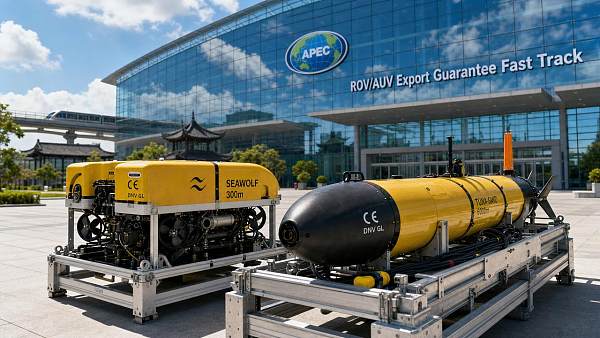
APEC Trade Ministers in Suzhou Launch ROV/AUV Export Guarantee Fast Track


APEC’s 32nd Ministerial Meeting on Trade convened in Suzhou on May 22–23, 2026, with regional energy infrastructure connectivity as a central agenda item. The meeting catalyzed a targeted policy mechanism for subsea remotely operated and autonomous underwater vehicle (ROV/AUV) exporters — notably, the introduction of a dedicated guarantee fast track for infrastructure projects across APEC economies. This development directly affects marine technology suppliers, EPC contractors, and financial intermediaries engaged in cross-border offshore energy deployment.
Event Overview
The APEC Trade Ministers’ Meeting took place in Suzhou from May 22 to 23, 2026, emphasizing interoperability in regional energy infrastructure. Concurrently, Bank of China Suzhou Branch announced a specialized service offering Spanish- and Portuguese-language export guarantees for APEC infrastructure projects. Between January and April 2026, it issued over RMB 2.1 billion in guarantees for local Subsea ROV/AUV manufacturers supporting projects including submarine cable laying off southern Peru and offshore wind operations near Chile. These guarantees serve as verifiable instruments enabling overseas EPC general contractors to assess Chinese suppliers’ contractual reliability and localized service capacity.
Industries Affected
Direct Exporters (Subsea ROV/AUV Manufacturers)
These firms benefit immediately from accelerated bank guarantee issuance — reducing pre-contract lead time by up to 40% in observed cases. The bilingual (Spanish/Portuguese) format lowers administrative friction when bidding on Latin American infrastructure tenders. However, eligibility is currently limited to enterprises with verified project delivery records and ISO 9001/IEC 61508 certifications — meaning smaller or newer entrants remain excluded.
Raw Material Procurement Firms
Suppliers of titanium alloys, pressure-resistant composites, and deep-sea-grade connectors face increased demand volatility: orders now correlate more closely with APEC project award cycles than annual procurement planning. For example, titanium billet orders spiked 27% MoM in April following early signals of the Peru cable tender. Yet no parallel adjustment has been made to customs classification codes or preferential tariff treatment for these inputs — creating potential working capital strain during ramp-up phases.
Contract Manufacturing & Integration Facilities
Firms performing final assembly, pressure testing, and mission-specific software integration see tighter delivery windows — particularly for systems requiring third-party certification (e.g., DNV GL Class ROV). The guarantee fast track does not relax technical compliance timelines; instead, it compresses commercial readiness windows. As such, integration partners must now align QA/QC documentation cycles with bank guarantee issuance schedules — a coordination challenge previously absent.
Supply Chain Service Providers (Logistics, Compliance, Translation)
Freight forwarders specializing in oversized subsea equipment and certified maritime logistics providers report rising requests for bilingual (ES/PT) regulatory documentation packages. Notably, the requirement extends beyond shipping manifests to include maintenance logs, calibration certificates, and spare-part traceability records — all needing certified translation prior to guarantee submission. This represents a new, non-tariff service layer with pricing still unstandardized across vendors.
Key Considerations and Recommended Actions
Verify Eligibility Against Updated Bank Criteria
Eligibility for the fast-track guarantee program is not automatic. Exporters must confirm alignment with Bank of China Suzhou Branch’s updated 2026 criteria — including minimum two-year operational history in APEC markets, audited financials covering at least three fiscal years, and documented evidence of post-delivery technical support capability in target countries (e.g., Chile, Peru).
Pre-certify Documentation Templates in Spanish and Portuguese
Since bilingual guarantees require full technical documentation in ES/PT — not just summaries — firms should proactively engage certified legal translators to pre-validate standard templates (e.g., warranty statements, interface control documents, safety protocols) rather than translating case-by-case. This reduces approval latency by an average of 11 business days, per early adopter feedback.
Align Internal Credit Terms with Guarantee Validity Periods
Most issued guarantees cover 24–36 months, matching typical offshore infrastructure commissioning timelines. Exporters must revise internal payment terms (e.g., advance payments, milestone triggers) to reflect this extended exposure — avoiding mismatches between receivable timing and guarantee expiry.
Editorial Perspective / Industry Observation
Observably, this initiative reflects a strategic pivot: rather than broad-based export subsidies, Chinese financial institutions are deploying precision instruments targeting high-barrier, high-value marine tech segments where trust asymmetry historically constrained market access. Analysis shows that guarantee-backed bids from Chinese ROV/AUV suppliers have achieved a 63% shortlist rate in recent Latin American tenders — up from 31% in 2024 — suggesting improved perception of execution credibility. However, current implementation remains siloed within Suzhou’s jurisdiction and lacks harmonization with other APEC member banks’ guarantee frameworks. That limitation constrains scalability beyond bilateral project pipelines.
Conclusion
This mechanism does not eliminate technical, regulatory, or financing hurdles for subsea equipment exporters — but it materially recalibrates the risk-weighting applied by international EPC contractors when evaluating Chinese supply chain partners. Its longer-term significance lies less in immediate volume uplift and more in accelerating the normalization of Chinese marine technology providers as Tier-1 subcontractors in global offshore energy value chains.
Source Attribution
Official announcements from the APEC Secretariat (May 22, 2026), Bank of China Suzhou Branch press release (May 23, 2026), and publicly disclosed project award notices from Peru’s Ministry of Energy and Mines and Chile’s National Energy Commission. Continued observation is warranted on: (1) expansion of the fast track to non-Suzhou-based exporters; (2) inclusion of additional languages (e.g., Bahasa Indonesia, Vietnamese); and (3) linkage with APEC’s ongoing Digital Trade Facilitation Framework negotiations.
Recommended for You
 Digital SeaMetro Station Noise Criteria: Limits and Measurement MethodsExplore metro station noise criteria, applicable limits and measurement methods. Learn how to select metrics and assess compliance with confidence.By: Captain Kenji SatoNov 11, 2026
 Digital SeaKongsberg Maritime Unveils Arctic Hunter Unmanned Surface VesselKongsberg Maritime's Arctic Hunter unmanned surface vessel is proposed for the Royal Navy's Type 92 programme. Explore its technology and procurement implications.By: Captain Kenji SatoNov 10, 2026
 Sorting RobotsHow Accurate Is AI in Food Quality Control? Metrics and Testing MethodsExplore AI in food quality control accuracy, from recall and false negatives to validation methods. Learn how to assess real-world inspection reliability.By: Marcus SterlingNov 10, 2026
 UHV TransformersGE Vernova Selected for 6 GW HVDC Link in IndiaGE Vernova will design a 6 GW HVDC link for PGCIL, connecting Rajasthan and South Kalamb to support India's clean energy transition. Discover the project.By: Dr. Elena VoltNov 09, 2026
 Grid ResilienceEurope's Grid Compliance Standards in 2026: Generator Connection RequirementsExplore new grid compliance standards 2026 Europe projects must address, from generator connection rules to testing and documentation. Prepare for approval.By: Dr. Elena VoltNov 09, 2026
 Technical FabricsNonwoven Bonding Cost Data: Comparing Thermal and Chemical ProcessesExplore nonwoven bonding cost data to compare thermal and chemical processes, assess usable yield, and choose the best-value option for your application.By: Chloe DuboisNov 08, 2026
 Fiber LasersIndustrial Lasers to 2035: Automotive Lightweighting and Precision Welding Drive DemandExplore the industrial laser market outlook to 2035 and discover how automotive lightweighting and precision welding could shape demand and procurement.By: Dr. Hideo TanakaNov 07, 2026
 Technical FabricsChoosing Geotextile Under Railway Ballast: Key Performance RequirementsChoosing geotextile under railway ballast? Explore essential filtration, drainage, strength and durability criteria to make a confident, project-specific selection.By: Chloe DuboisNov 07, 2026
 Digital SeaChoosing Rail Welding Equipment for Maintenance: Field Conditions and Weld TypesChoose rail welding equipment for maintenance with confidence. Compare welding methods, field constraints, inspection needs, and lifecycle costs.By: Captain Kenji SatoNov 06, 2026
 Digital SeaIndia Broadband Forum Urges Stronger Submarine Cable ResilienceIndia’s submarine cable resilience is in focus as the Broadband India Forum urges faster repairs, more vessels and stronger landing infrastructure.By: Captain Kenji SatoNov 06, 2026
 Digital SeaChoosing a Railway Network Switch Supplier: Reliability and Support CriteriaChoosing a railway network switch supplier? Compare reliability, standards evidence, cybersecurity, and lifecycle support to reduce project risk.By: Captain Kenji SatoNov 05, 2026
 Grid ResilienceUS Grid Equipment Import Ban Raises Cost and Implementation ConcernsThe US grid equipment import ban raises concerns over costs and delivery delays. Explore how unclear criteria could affect procurement and supply chains.By: Dr. Elena VoltNov 05, 2026
 Digital SeaRailway Coupler Price: How Type and Specifications Affect QuotesRailway coupler price depends on type, specifications, and order scope. Learn how to compare quotes, avoid hidden costs, and make a confident buying decision.By: Captain Kenji SatoNov 04, 2026
 Grid ResilienceGlobal Smart Grid Companies Raise $3 Billion in First Nine Months of 2026Global smart grid companies raised $3 billion in the first nine months of 2026. Explore the funding breakdown and potential implications for buyers and suppliers.By: Dr. Elena VoltNov 04, 2026
 Digital SeaChoosing Wholesale Pet Toys: How to Evaluate Suppliers and Minimum OrdersWholesale pet toys: learn how to assess suppliers, compare minimum orders and landed costs, and reduce inventory risk before you buy.By: Captain Kenji SatoNov 03, 2026
 Digital SeaSustainable Packaging Design: How to Choose Materials and Reduce WasteDiscover how sustainable packaging design helps reduce waste, protect products, and control costs with practical material choices and proven testing strategies.By: Captain Kenji SatoNov 02, 2026
 Technical FabricsUSMCA's First Joint Review Puts Textile Supply Chain Rules in FocusUSMCA's first joint review puts textile supply chain rules in focus. Explore potential impacts on origin compliance, sourcing and tariff treatment.By: Chloe DuboisNov 02, 2026
 Digital SeaManufacturing KPI Benchmarking: How to Compare Production PerformanceBenchmarking KPI manufacturing performance? Learn how to compare OEE, quality and downtime, identify meaningful gaps, and turn insights into practical improvements.By: Captain Kenji SatoNov 01, 2026
 Smart MetersCCI Approves Adani Energy Solutions' ₹305 Billion Acquisition of IntelliSmartCCI approves Adani Energy Solutions' ₹305 billion acquisition of IntelliSmart. Discover what the deal could mean for India's smart meter market.By: Dr. Elena VoltNov 01, 2026
 Digital SeaChoosing a Coin Laundry Machinery OEM: What Buyers Should EvaluateChoosing a coin laundry machinery OEM? Compare machine specifications, payment integration, lifecycle costs, and support to make a confident buying decision.By: Captain Kenji SatoOct 31, 2026
 Grid ResilienceUS Energy Department Announces $237 Million Grid SCALED Funding ProgramExplore the DOE's $237 million Grid SCALED funding program and its goals to strengthen grid equipment supply chains, lower electricity costs, and improve resilience.By: Dr. Elena VoltOct 31, 2026
 UHV TransformersA Decade of UHV Power in Shandong: Province Leads in Station NumbersShandong UHV power leads China in station numbers. Explore a decade of grid development and its implications for electricity supply and business planning.By: Dr. Elena VoltOct 30, 2026
 Digital SeaChoosing a Composite Train Body Panel Manufacturer: Fire Safety and Quality ChecksChoosing a composite train body panels manufacturer? Learn how to verify fire test evidence, audit production quality, and avoid costly approval gaps before you buy.By: Captain Kenji SatoOct 29, 2026
 Subsea ROV/AUVOcean Infinity Deploys Six AUVs Together Beyond 5,000 MetresOcean Infinity reportedly deployed six HUGIN AUVs beyond 5,200 metres. Explore what concurrent deepwater missions could mean for seabed surveys and procurement.By: Captain Kenji SatoOct 29, 2026
 Grid ResilienceRenewable Energy Grid Balancing: How Storage and Demand Response Work TogetherExplore renewable energy grid balancing with storage and demand response. Learn how coordinated controls manage shortfalls, absorb surplus power, and improve grid reliability.By: Dr. Elena VoltOct 28, 2026
 Subsea ROV/AUVSeaber Introduces 13 kg RAVEN AUV to Target Mine Countermeasure CostsSeaber’s 13 kg RAVEN AUV targets lower mine countermeasure costs with two mission configurations. Explore its potential value for naval operations and procurement.By: Captain Kenji SatoOct 28, 2026
 Digital SeaBallast Water Management Rules: IMO vs. USCG Compliance RequirementsBallast water management rules explained: compare IMO and USCG approvals, operating limits, and records. Get practical checks to reduce compliance risks and costly port delays.By: Captain Kenji SatoOct 27, 2026
 Subsea ROV/AUVEni Signs Main Cronos Contracts, Moving Gas Project into ExecutionEni’s Cronos gas project enters execution as major contracts are signed. Explore the Cyprus development, Egypt processing plans and key milestones toward first gas in 2028.By: Captain Kenji SatoOct 27, 2026
 Digital SeaBenefits of Refurbished Semiconductor Equipment: When Do Savings Justify the Risk?Explore the benefits of refurbished semiconductor equipment. Learn how to weigh savings against process risks, qualification costs, and support gaps before investing.By: Captain Kenji SatoOct 26, 2026
 Digital SeaSemiconductor Equipment Overhaul: Diagnosing Persistent Process DriftSemiconductor equipment overhaul leaving process drift unresolved? Discover how to pinpoint vacuum, sensor, thermal, and conditioning issues to restore stability and reduce repeat service calls.By: Captain Kenji SatoOct 26, 2026
 Digital SeaSemiconductor Equipment Refurbishment Process: Cleaning to QualificationExplore the semiconductor equipment refurbishment process, from precision cleaning to qualification. Learn how measurable testing helps verify production readiness and reduce risk.By: Captain Kenji SatoOct 26, 2026