BDI: 1,842 ▼ 1.2%
COTTON NO.2: 84.12 ▲ 0.4%
LME COPPER: 8,432.50 ▲ 2.1%
FOOD SAFETY INDEX: 94.2 ARCHIVE_SECURED
OPTICAL INDEX: 11,204.09 STABLE
BDI: 1,842 ▼ 1.2%

SECTOR INDEX
V.24.08 ARCHIVE
Hot Articles
- Metro Station Noise Criteria: Limits and Measurement MethodsExplore metro station noise criteria, applicable limits and measurement methods. Learn how to select metrics and assess compliance with confidence.
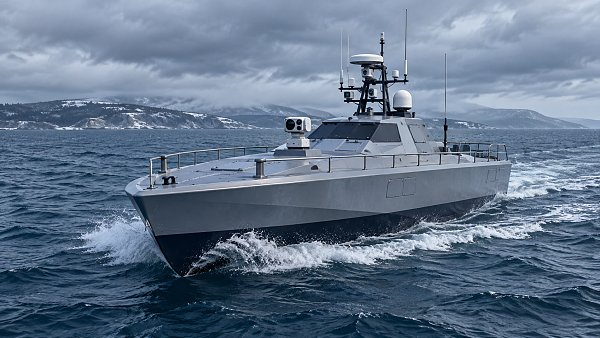
- Kongsberg Maritime Unveils Arctic Hunter Unmanned Surface VesselKongsberg Maritime's Arctic Hunter unmanned surface vessel is proposed for the Royal Navy's Type 92 programme. Explore its technology and procurement implications.
- How Accurate Is AI in Food Quality Control? Metrics and Testing MethodsExplore AI in food quality control accuracy, from recall and false negatives to validation methods. Learn how to assess real-world inspection reliability.
PSA Launches World's First Commercial ROV Scheduling Center


Singapore’s Port of Singapore Authority (PSA) officially launched its Remote Operated Vehicle (ROV) Intelligent Scheduling Center on May 23, 2026 — the world’s first commercially operational facility of its kind. The center integrates AI-driven path planning and real-time underwater corrosion assessment capabilities. Its deployment, coupled with the award of the first port infrastructure inspection contracts to two Chinese hull robotics firms, signals a pivotal shift in how maritime infrastructure maintenance is conducted across the Asia-Pacific region — particularly for port operators, marine equipment integrators, and corrosion management service providers.
Event Overview
On May 23, 2026, PSA commenced operations of its ROV Intelligent Scheduling Center. The center is designed for commercial-scale coordination of underwater robotic inspections at port facilities. It features AI-based navigation optimization and real-time corrosion evaluation modules. PSA awarded the first batch of underwater hull inspection contracts to two China-based Hull Robots manufacturers, specifically for anti-corrosion condition monitoring of submerged steel structures in码头 environments. No further technical specifications, contract values, or vendor names were publicly disclosed.
Industries Affected by This Development
Port Operations & Terminal Management Firms
These entities are directly responsible for structural integrity assurance of submerged infrastructure such as piles, fenders, and mooring systems. The introduction of automated, AI-guided ROV scheduling reduces reliance on diver-based inspections — which are weather-dependent, labor-intensive, and subject to safety constraints. Impact manifests in revised maintenance planning cycles, updated compliance documentation requirements, and potential recalibration of CAPEX allocation toward robotic fleet integration.
Marine Robotics System Integrators
Firms specializing in end-to-end underwater inspection solutions — including hardware integration, sensor fusion, data analytics, and reporting interfaces — face both opportunity and pressure. PSA’s center sets a new benchmark for interoperability (e.g., standardized data formats, API compatibility with port management systems) and performance validation (e.g., corrosion grading accuracy under turbid conditions). Adoption by other major ports may hinge on alignment with PSA’s technical and operational protocols.
Corrosion Monitoring & Protective Coating Service Providers
Traditional coating inspection and life-cycle assessment services — often delivered via manual NDT or diver-assisted visual surveys — now confront a scalable, repeatable alternative. ROV-based assessments generate structured, timestamped, georeferenced corrosion datasets that feed predictive maintenance models. This shifts demand from episodic reporting toward continuous data subscription and algorithmic interpretation services.
Underwater Inspection Equipment Manufacturers
Suppliers of sonar, multibeam echosounders, laser scanners, and high-resolution imaging systems must align product output with the data ingestion requirements of intelligent scheduling platforms. PSA’s center emphasizes real-time processing — implying tighter latency tolerances, onboard edge computing readiness, and standardized metadata tagging for corrosion features (e.g., pitting depth, rust coverage %).
What Relevant Enterprises or Practitioners Should Focus On
Monitor PSA’s Public Technical Specifications and Interface Standards
The center’s architecture — especially its API documentation, data schema for corrosion reports, and ROV telemetry requirements — will likely inform future procurement frameworks across APAC ports. Early access to these materials enables vendors to pre-align development roadmaps.
Track Contract Scope Details Beyond Initial Announcements
The first orders cover “underwater anti-corrosion status inspection” of steel structures. Subsequent phases may expand to include cathodic protection verification, coating adhesion testing, or integration with digital twin platforms. Distinguishing between current scope and anticipated evolution avoids overcommitting R&D resources prematurely.
Differentiate Between Policy Signal and Operational Readiness
While PSA’s launch is a strong signal of institutional endorsement, widespread adoption depends on verified ROI metrics — e.g., reduction in inspection downtime, cost per linear meter surveyed, false-negative rates in early-stage pitting detection. Stakeholders should prioritize field validation data over announcement language when assessing scalability.
Prepare for Interoperability Testing and Certification Requirements
Future tenders from PSA or similar authorities may mandate conformance to specific communication protocols (e.g., MQTT over secure TLS), data provenance standards (e.g., ISO/IEC 17025 traceability for corrosion measurements), or cybersecurity certifications (e.g., IEC 62443). Proactive engagement with certification bodies and test labs is advisable.
Editorial Perspective / Industry Observation
Observably, this milestone is less about immediate market displacement and more about infrastructure standardization. PSA’s center functions as a reference implementation — not just a tool, but a framework for how robotic inspection data enters port asset management workflows. Analysis shows it accelerates convergence between marine robotics, predictive maintenance, and digital infrastructure governance. It is currently best understood as a strong policy and operational signal — one that validates technical feasibility and regulatory acceptability, but whose broader commercial replication remains contingent on cost efficiency and cross-vendor interoperability. The industry should treat it as an inflection point for specification-setting, not a finished template.
This development underscores a quiet but consequential transition: from viewing underwater inspection as a periodic compliance task to treating it as a continuous, data-generating operational function. For stakeholders, the priority is no longer whether robots will replace divers — but how inspection data flows, who owns it, and how it integrates into lifecycle decision-making. Current evidence suggests the latter remains the critical bottleneck.
Information Source: Official announcement by PSA (May 23, 2026); no third-party verification or supplementary technical documentation has been released. Ongoing observation is warranted for subsequent publication of interface specifications, performance benchmarks, and follow-up contract awards.
Recommended for You
 Digital SeaMetro Station Noise Criteria: Limits and Measurement MethodsExplore metro station noise criteria, applicable limits and measurement methods. Learn how to select metrics and assess compliance with confidence.By: Captain Kenji SatoNov 11, 2026
 Digital SeaKongsberg Maritime Unveils Arctic Hunter Unmanned Surface VesselKongsberg Maritime's Arctic Hunter unmanned surface vessel is proposed for the Royal Navy's Type 92 programme. Explore its technology and procurement implications.By: Captain Kenji SatoNov 10, 2026
 Sorting RobotsHow Accurate Is AI in Food Quality Control? Metrics and Testing MethodsExplore AI in food quality control accuracy, from recall and false negatives to validation methods. Learn how to assess real-world inspection reliability.By: Marcus SterlingNov 10, 2026
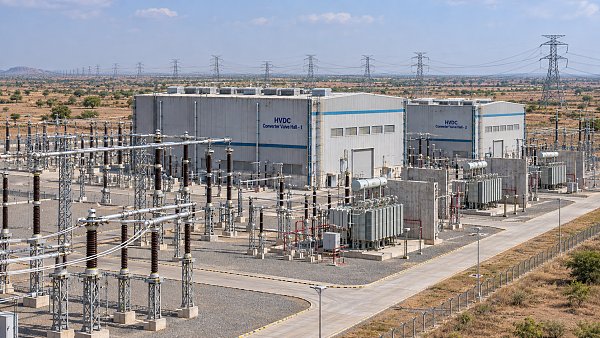
 UHV TransformersGE Vernova Selected for 6 GW HVDC Link in IndiaGE Vernova will design a 6 GW HVDC link for PGCIL, connecting Rajasthan and South Kalamb to support India's clean energy transition. Discover the project.By: Dr. Elena VoltNov 09, 2026
 Grid ResilienceEurope's Grid Compliance Standards in 2026: Generator Connection RequirementsExplore new grid compliance standards 2026 Europe projects must address, from generator connection rules to testing and documentation. Prepare for approval.By: Dr. Elena VoltNov 09, 2026
 Technical FabricsNonwoven Bonding Cost Data: Comparing Thermal and Chemical ProcessesExplore nonwoven bonding cost data to compare thermal and chemical processes, assess usable yield, and choose the best-value option for your application.By: Chloe DuboisNov 08, 2026
 Fiber LasersIndustrial Lasers to 2035: Automotive Lightweighting and Precision Welding Drive DemandExplore the industrial laser market outlook to 2035 and discover how automotive lightweighting and precision welding could shape demand and procurement.By: Dr. Hideo TanakaNov 07, 2026
 Technical FabricsChoosing Geotextile Under Railway Ballast: Key Performance RequirementsChoosing geotextile under railway ballast? Explore essential filtration, drainage, strength and durability criteria to make a confident, project-specific selection.By: Chloe DuboisNov 07, 2026
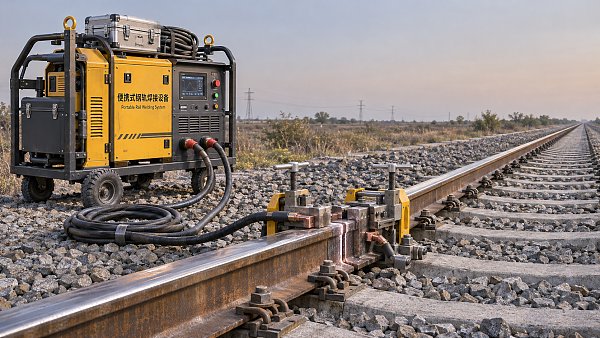
 Digital SeaChoosing Rail Welding Equipment for Maintenance: Field Conditions and Weld TypesChoose rail welding equipment for maintenance with confidence. Compare welding methods, field constraints, inspection needs, and lifecycle costs.By: Captain Kenji SatoNov 06, 2026
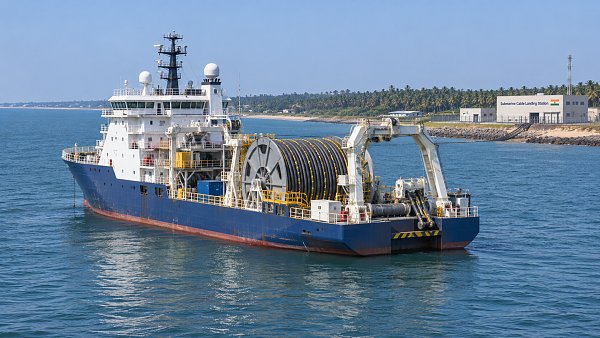
 Digital SeaIndia Broadband Forum Urges Stronger Submarine Cable ResilienceIndia’s submarine cable resilience is in focus as the Broadband India Forum urges faster repairs, more vessels and stronger landing infrastructure.By: Captain Kenji SatoNov 06, 2026
 Digital SeaChoosing a Railway Network Switch Supplier: Reliability and Support CriteriaChoosing a railway network switch supplier? Compare reliability, standards evidence, cybersecurity, and lifecycle support to reduce project risk.By: Captain Kenji SatoNov 05, 2026
 Grid ResilienceUS Grid Equipment Import Ban Raises Cost and Implementation ConcernsThe US grid equipment import ban raises concerns over costs and delivery delays. Explore how unclear criteria could affect procurement and supply chains.By: Dr. Elena VoltNov 05, 2026
 Digital SeaRailway Coupler Price: How Type and Specifications Affect QuotesRailway coupler price depends on type, specifications, and order scope. Learn how to compare quotes, avoid hidden costs, and make a confident buying decision.By: Captain Kenji SatoNov 04, 2026
 Grid ResilienceGlobal Smart Grid Companies Raise $3 Billion in First Nine Months of 2026Global smart grid companies raised $3 billion in the first nine months of 2026. Explore the funding breakdown and potential implications for buyers and suppliers.By: Dr. Elena VoltNov 04, 2026
 Digital SeaChoosing Wholesale Pet Toys: How to Evaluate Suppliers and Minimum OrdersWholesale pet toys: learn how to assess suppliers, compare minimum orders and landed costs, and reduce inventory risk before you buy.By: Captain Kenji SatoNov 03, 2026
 Digital SeaSustainable Packaging Design: How to Choose Materials and Reduce WasteDiscover how sustainable packaging design helps reduce waste, protect products, and control costs with practical material choices and proven testing strategies.By: Captain Kenji SatoNov 02, 2026
 Technical FabricsUSMCA's First Joint Review Puts Textile Supply Chain Rules in FocusUSMCA's first joint review puts textile supply chain rules in focus. Explore potential impacts on origin compliance, sourcing and tariff treatment.By: Chloe DuboisNov 02, 2026
 Digital SeaManufacturing KPI Benchmarking: How to Compare Production PerformanceBenchmarking KPI manufacturing performance? Learn how to compare OEE, quality and downtime, identify meaningful gaps, and turn insights into practical improvements.By: Captain Kenji SatoNov 01, 2026
 Smart MetersCCI Approves Adani Energy Solutions' ₹305 Billion Acquisition of IntelliSmartCCI approves Adani Energy Solutions' ₹305 billion acquisition of IntelliSmart. Discover what the deal could mean for India's smart meter market.By: Dr. Elena VoltNov 01, 2026
 Digital SeaChoosing a Coin Laundry Machinery OEM: What Buyers Should EvaluateChoosing a coin laundry machinery OEM? Compare machine specifications, payment integration, lifecycle costs, and support to make a confident buying decision.By: Captain Kenji SatoOct 31, 2026
 Grid ResilienceUS Energy Department Announces $237 Million Grid SCALED Funding ProgramExplore the DOE's $237 million Grid SCALED funding program and its goals to strengthen grid equipment supply chains, lower electricity costs, and improve resilience.By: Dr. Elena VoltOct 31, 2026
 UHV TransformersA Decade of UHV Power in Shandong: Province Leads in Station NumbersShandong UHV power leads China in station numbers. Explore a decade of grid development and its implications for electricity supply and business planning.By: Dr. Elena VoltOct 30, 2026
 Digital SeaChoosing a Composite Train Body Panel Manufacturer: Fire Safety and Quality ChecksChoosing a composite train body panels manufacturer? Learn how to verify fire test evidence, audit production quality, and avoid costly approval gaps before you buy.By: Captain Kenji SatoOct 29, 2026
 Subsea ROV/AUVOcean Infinity Deploys Six AUVs Together Beyond 5,000 MetresOcean Infinity reportedly deployed six HUGIN AUVs beyond 5,200 metres. Explore what concurrent deepwater missions could mean for seabed surveys and procurement.By: Captain Kenji SatoOct 29, 2026
 Grid ResilienceRenewable Energy Grid Balancing: How Storage and Demand Response Work TogetherExplore renewable energy grid balancing with storage and demand response. Learn how coordinated controls manage shortfalls, absorb surplus power, and improve grid reliability.By: Dr. Elena VoltOct 28, 2026
 Subsea ROV/AUVSeaber Introduces 13 kg RAVEN AUV to Target Mine Countermeasure CostsSeaber’s 13 kg RAVEN AUV targets lower mine countermeasure costs with two mission configurations. Explore its potential value for naval operations and procurement.By: Captain Kenji SatoOct 28, 2026
 Digital SeaBallast Water Management Rules: IMO vs. USCG Compliance RequirementsBallast water management rules explained: compare IMO and USCG approvals, operating limits, and records. Get practical checks to reduce compliance risks and costly port delays.By: Captain Kenji SatoOct 27, 2026
 Subsea ROV/AUVEni Signs Main Cronos Contracts, Moving Gas Project into ExecutionEni’s Cronos gas project enters execution as major contracts are signed. Explore the Cyprus development, Egypt processing plans and key milestones toward first gas in 2028.By: Captain Kenji SatoOct 27, 2026
 Digital SeaBenefits of Refurbished Semiconductor Equipment: When Do Savings Justify the Risk?Explore the benefits of refurbished semiconductor equipment. Learn how to weigh savings against process risks, qualification costs, and support gaps before investing.By: Captain Kenji SatoOct 26, 2026
 Digital SeaSemiconductor Equipment Overhaul: Diagnosing Persistent Process DriftSemiconductor equipment overhaul leaving process drift unresolved? Discover how to pinpoint vacuum, sensor, thermal, and conditioning issues to restore stability and reduce repeat service calls.By: Captain Kenji SatoOct 26, 2026
 Digital SeaSemiconductor Equipment Refurbishment Process: Cleaning to QualificationExplore the semiconductor equipment refurbishment process, from precision cleaning to qualification. Learn how measurable testing helps verify production readiness and reduce risk.By: Captain Kenji SatoOct 26, 2026