BDI: 1,842 ▼ 1.2%
COTTON NO.2: 84.12 ▲ 0.4%
LME COPPER: 8,432.50 ▲ 2.1%
FOOD SAFETY INDEX: 94.2 ARCHIVE_SECURED
OPTICAL INDEX: 11,204.09 STABLE
BDI: 1,842 ▼ 1.2%

SECTOR INDEX
V.24.08 ARCHIVE
Hot Articles
- How Does a Ballast Cleaner Screening System Separate Track Ballast?Discover how a ballast cleaner screening system separates reusable stone from fines, what affects performance, and how to assess the results.
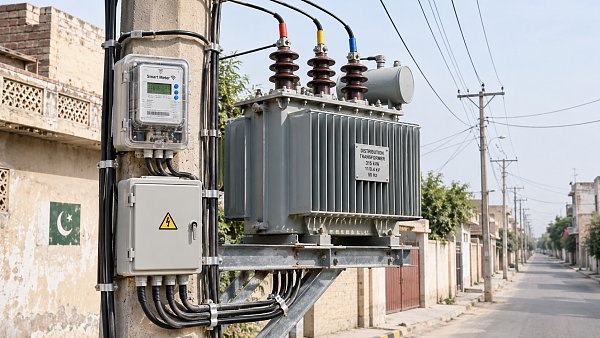
- Pakistan to Seek World Bank and ADB Funding for Smart MetersPakistan seeks World Bank and ADB funding for smart meters on distribution transformers. Explore the plan to tackle power theft and improve grid efficiency.
- What Is Precision Medicine and How Does It Guide Treatment?Discover how precision medicine uses biomarkers and genetic insights to guide treatment, where it can help, and what to ask before testing.
PSA Launches ROV Smart Dispatch Center; Hull Robots Wins First Port Anti-Corrosion Inspection Order



Singapore’s Port of Singapore Authority (PSA) has officially launched its ROV Smart Dispatch Center, enabling automated task assignment and route optimization for underwater infrastructure inspections. Though the exact launch date is not publicly specified in available information, the initiative marks a milestone in port digital operations. This development is particularly relevant for maritime infrastructure operators, underwater robotics suppliers, port maintenance service providers, and corrosion management solution vendors — as it signals a shift toward AI-integrated, certification-driven automation in critical port asset monitoring.
Event Overview
The Port of Singapore Authority (PSA) has activated its ROV Smart Dispatch Center, a system designed to automate dispatch and path planning for remotely operated vehicle (ROV)-based underwater inspections. Chinese company Hull Robots has been selected as one of the first equipment suppliers, having met IP68 ingress protection and 2000-hour salt mist resistance certification requirements. Its robots are now deployed to perform AI-powered corrosion status identification on pile foundations at PSA’s container terminals.
Industries Affected by This Development
Underwater Robotics Manufacturers
Why affected: Certification compliance (e.g., IP68 + 2000h salt mist) is now a tangible gatekeeper for entry into top-tier port operations. PSA’s selection criteria set a de facto benchmark for global port authorities.
Impact: Increased pressure to validate environmental durability under real-world marine conditions—not just lab-simulated tests—and align product documentation with internationally recognized corrosion and sealing standards.
Port Maintenance & Asset Integrity Service Providers
Why affected: Automated inspection workflows reduce reliance on manual dive teams and legacy survey methods. The integration of AI-based corrosion recognition implies demand for data-handling capabilities alongside hardware deployment.
Impact: Service contracts may increasingly require interoperability with centralized dispatch platforms and standardized reporting formats (e.g., structured corrosion severity tagging, geotagged defect mapping).
Marine Coating & Corrosion Protection Suppliers
Why affected: AI-driven pile inspection generates granular, repeatable condition data—potentially feeding predictive maintenance models and coating performance benchmarking.
Impact: Opportunities arise for data-informed product validation and lifecycle analytics, but only for suppliers able to link material performance metrics (e.g., coating adhesion loss, blistering progression) to AI-classified inspection outputs.
Port Authority Digital Transformation Units
Why affected: PSA’s move demonstrates a concrete use case for integrating autonomous underwater systems into broader port operational technology (OT) stacks.
Impact: Internal IT/OT convergence efforts may need to prioritize API readiness, cybersecurity protocols for remote robotic control, and data governance frameworks for time-series underwater inspection records.
What Relevant Enterprises or Practitioners Should Focus On
Monitor official technical specifications and certification updates from major port authorities
PSA’s published requirements (IP68 + 2000h salt mist) are now reference points. Other ports—including those in Europe and the Middle East—are likely reviewing similar thresholds. Track upcoming tender documents and technical annexes for explicit environmental resilience language.
Assess alignment between current product certifications and operational deployment scenarios
Lab-based IP68 ratings do not automatically imply field-readiness for tidal zones with biofouling, sediment abrasion, or fluctuating salinity. Review whether existing test reports cover combined stressors (e.g., mechanical wear + corrosion), not just isolated parameters.
Distinguish between pilot deployments and scalable operational integration
This is an initial order for pile foundation inspection—not full-port coverage. Observe whether PSA publishes performance KPIs (e.g., inspection cycle time reduction, false-positive rate in AI corrosion classification) before assuming broad applicability across quay walls, pipelines, or submerged mooring systems.
Prepare for interoperability expectations beyond hardware delivery
ROV deployment now includes integration with central dispatch logic. Evaluate internal capacity for secure telemetry transmission, standardized metadata tagging, and compatibility with common port data platforms (e.g., ISO/IEC 20547-compliant analytics interfaces).
Editorial Perspective / Industry Observation
Observably, this event functions less as a standalone commercial win and more as a signal of maturing acceptance criteria for autonomous underwater inspection in high-stakes maritime infrastructure. Analysis shows that PSA’s emphasis on certified environmental resilience—rather than solely on imaging resolution or navigation autonomy—highlights a pragmatic industry pivot: reliability under harsh conditions is now a prerequisite, not an optional enhancement. From an industry perspective, this is not yet evidence of widespread fleet replacement, but rather the emergence of a new evaluation layer for vendor qualification—one where materials science, AI validation, and OT integration converge. Continued attention is warranted as other global hub ports assess whether to adopt similar dispatch-center models or adapt their own inspection frameworks.
Conclusion
This development signifies a procedural and technical inflection point—not merely a procurement update. It reflects growing institutional confidence in AI-augmented underwater inspection as part of routine port asset integrity management. However, it remains early-stage: the scope is limited to pile foundations, and scalability depends on demonstrated consistency in AI classification accuracy and system uptime. For stakeholders, this is best understood not as an immediate market shift, but as a calibration point against which future tenders, certifications, and platform integrations will be measured.
Information Sources
Primary source: Public announcement by Port of Singapore Authority (PSA) regarding ROV Smart Dispatch Center activation and supplier selection. Hull Robots’ stated compliance with IP68 and 2000-hour salt mist certification, as confirmed in official project scope documentation. Note: Exact launch date and detailed performance metrics remain unconfirmed and are subject to ongoing observation.
Recommended for You
 Digital SeaHow Does a Ballast Cleaner Screening System Separate Track Ballast?Discover how a ballast cleaner screening system separates reusable stone from fines, what affects performance, and how to assess the results.By: Captain Kenji SatoNov 14, 2026
 Smart MetersPakistan to Seek World Bank and ADB Funding for Smart MetersPakistan seeks World Bank and ADB funding for smart meters on distribution transformers. Explore the plan to tackle power theft and improve grid efficiency.By: Dr. Elena VoltNov 13, 2026
 Digital SeaWhat Is Precision Medicine and How Does It Guide Treatment?Discover how precision medicine uses biomarkers and genetic insights to guide treatment, where it can help, and what to ask before testing.By: Captain Kenji SatoNov 13, 2026
 Grid Resilience2026 CSEE Annual Meeting Opens with Focus on AI and Power SystemsThe 2026 CSEE Annual Meeting explores AI, low-carbon power systems and ultra-high-voltage transmission. Discover why these discussions matter.By: Dr. Elena VoltNov 12, 2026
 Digital SeaShip Radar Detection Range: How Far Can It See and What Limits It?Ship radar detection range depends on more than the display scale. Discover how antenna height, weather, target size, and settings affect what radar can see.By: Captain Kenji SatoNov 12, 2026
 UHV TransformersGE Vernova to Invest $34.5 Million in Louisiana Transformer Plant ExpansionGE Vernova plans a $34.5 million transformer plant expansion in Louisiana. Explore its potential impact on North American supply and procurement.By: Dr. Elena VoltNov 11, 2026
 Digital SeaMetro Station Noise Criteria: Limits and Measurement MethodsExplore metro station noise criteria, applicable limits and measurement methods. Learn how to select metrics and assess compliance with confidence.By: Captain Kenji SatoNov 11, 2026
 Digital SeaKongsberg Maritime Unveils Arctic Hunter Unmanned Surface VesselKongsberg Maritime's Arctic Hunter unmanned surface vessel is proposed for the Royal Navy's Type 92 programme. Explore its technology and procurement implications.By: Captain Kenji SatoNov 10, 2026
 Sorting RobotsHow Accurate Is AI in Food Quality Control? Metrics and Testing MethodsExplore AI in food quality control accuracy, from recall and false negatives to validation methods. Learn how to assess real-world inspection reliability.By: Marcus SterlingNov 10, 2026
 UHV TransformersGE Vernova Selected for 6 GW HVDC Link in IndiaGE Vernova will design a 6 GW HVDC link for PGCIL, connecting Rajasthan and South Kalamb to support India's clean energy transition. Discover the project.By: Dr. Elena VoltNov 09, 2026
 Grid ResilienceEurope's Grid Compliance Standards in 2026: Generator Connection RequirementsExplore new grid compliance standards 2026 Europe projects must address, from generator connection rules to testing and documentation. Prepare for approval.By: Dr. Elena VoltNov 09, 2026
 Technical FabricsNonwoven Bonding Cost Data: Comparing Thermal and Chemical ProcessesExplore nonwoven bonding cost data to compare thermal and chemical processes, assess usable yield, and choose the best-value option for your application.By: Chloe DuboisNov 08, 2026
 Fiber LasersIndustrial Lasers to 2035: Automotive Lightweighting and Precision Welding Drive DemandExplore the industrial laser market outlook to 2035 and discover how automotive lightweighting and precision welding could shape demand and procurement.By: Dr. Hideo TanakaNov 07, 2026
 Technical FabricsChoosing Geotextile Under Railway Ballast: Key Performance RequirementsChoosing geotextile under railway ballast? Explore essential filtration, drainage, strength and durability criteria to make a confident, project-specific selection.By: Chloe DuboisNov 07, 2026
 Digital SeaChoosing Rail Welding Equipment for Maintenance: Field Conditions and Weld TypesChoose rail welding equipment for maintenance with confidence. Compare welding methods, field constraints, inspection needs, and lifecycle costs.By: Captain Kenji SatoNov 06, 2026
 Digital SeaIndia Broadband Forum Urges Stronger Submarine Cable ResilienceIndia’s submarine cable resilience is in focus as the Broadband India Forum urges faster repairs, more vessels and stronger landing infrastructure.By: Captain Kenji SatoNov 06, 2026
 Digital SeaChoosing a Railway Network Switch Supplier: Reliability and Support CriteriaChoosing a railway network switch supplier? Compare reliability, standards evidence, cybersecurity, and lifecycle support to reduce project risk.By: Captain Kenji SatoNov 05, 2026
 Grid ResilienceUS Grid Equipment Import Ban Raises Cost and Implementation ConcernsThe US grid equipment import ban raises concerns over costs and delivery delays. Explore how unclear criteria could affect procurement and supply chains.By: Dr. Elena VoltNov 05, 2026
 Digital SeaRailway Coupler Price: How Type and Specifications Affect QuotesRailway coupler price depends on type, specifications, and order scope. Learn how to compare quotes, avoid hidden costs, and make a confident buying decision.By: Captain Kenji SatoNov 04, 2026
 Grid ResilienceGlobal Smart Grid Companies Raise $3 Billion in First Nine Months of 2026Global smart grid companies raised $3 billion in the first nine months of 2026. Explore the funding breakdown and potential implications for buyers and suppliers.By: Dr. Elena VoltNov 04, 2026
 Digital SeaChoosing Wholesale Pet Toys: How to Evaluate Suppliers and Minimum OrdersWholesale pet toys: learn how to assess suppliers, compare minimum orders and landed costs, and reduce inventory risk before you buy.By: Captain Kenji SatoNov 03, 2026
 Digital SeaSustainable Packaging Design: How to Choose Materials and Reduce WasteDiscover how sustainable packaging design helps reduce waste, protect products, and control costs with practical material choices and proven testing strategies.By: Captain Kenji SatoNov 02, 2026
 Technical FabricsUSMCA's First Joint Review Puts Textile Supply Chain Rules in FocusUSMCA's first joint review puts textile supply chain rules in focus. Explore potential impacts on origin compliance, sourcing and tariff treatment.By: Chloe DuboisNov 02, 2026
 Digital SeaManufacturing KPI Benchmarking: How to Compare Production PerformanceBenchmarking KPI manufacturing performance? Learn how to compare OEE, quality and downtime, identify meaningful gaps, and turn insights into practical improvements.By: Captain Kenji SatoNov 01, 2026
 Smart MetersCCI Approves Adani Energy Solutions' ₹305 Billion Acquisition of IntelliSmartCCI approves Adani Energy Solutions' ₹305 billion acquisition of IntelliSmart. Discover what the deal could mean for India's smart meter market.By: Dr. Elena VoltNov 01, 2026
 Digital SeaChoosing a Coin Laundry Machinery OEM: What Buyers Should EvaluateChoosing a coin laundry machinery OEM? Compare machine specifications, payment integration, lifecycle costs, and support to make a confident buying decision.By: Captain Kenji SatoOct 31, 2026
 Grid ResilienceUS Energy Department Announces $237 Million Grid SCALED Funding ProgramExplore the DOE's $237 million Grid SCALED funding program and its goals to strengthen grid equipment supply chains, lower electricity costs, and improve resilience.By: Dr. Elena VoltOct 31, 2026
 UHV TransformersA Decade of UHV Power in Shandong: Province Leads in Station NumbersShandong UHV power leads China in station numbers. Explore a decade of grid development and its implications for electricity supply and business planning.By: Dr. Elena VoltOct 30, 2026
 Digital SeaChoosing a Composite Train Body Panel Manufacturer: Fire Safety and Quality ChecksChoosing a composite train body panels manufacturer? Learn how to verify fire test evidence, audit production quality, and avoid costly approval gaps before you buy.By: Captain Kenji SatoOct 29, 2026
 Subsea ROV/AUVOcean Infinity Deploys Six AUVs Together Beyond 5,000 MetresOcean Infinity reportedly deployed six HUGIN AUVs beyond 5,200 metres. Explore what concurrent deepwater missions could mean for seabed surveys and procurement.By: Captain Kenji SatoOct 29, 2026
 Grid ResilienceRenewable Energy Grid Balancing: How Storage and Demand Response Work TogetherExplore renewable energy grid balancing with storage and demand response. Learn how coordinated controls manage shortfalls, absorb surplus power, and improve grid reliability.By: Dr. Elena VoltOct 28, 2026