BDI: 1,842 ▼ 1.2%
COTTON NO.2: 84.12 ▲ 0.4%
LME COPPER: 8,432.50 ▲ 2.1%
FOOD SAFETY INDEX: 94.2 ARCHIVE_SECURED
OPTICAL INDEX: 11,204.09 STABLE
BDI: 1,842 ▼ 1.2%

SECTOR INDEX
V.24.08 ARCHIVE
Hot Articles
- Nonwoven Bonding Cost Data: Comparing Thermal and Chemical ProcessesExplore nonwoven bonding cost data to compare thermal and chemical processes, assess usable yield, and choose the best-value option for your application.
- Industrial Lasers to 2035: Automotive Lightweighting and Precision Welding Drive DemandExplore the industrial laser market outlook to 2035 and discover how automotive lightweighting and precision welding could shape demand and procurement.
- Choosing Geotextile Under Railway Ballast: Key Performance RequirementsChoosing geotextile under railway ballast? Explore essential filtration, drainage, strength and durability criteria to make a confident, project-specific selection.
What separates a reliable monorail system supplier from a low-risk bid?


Choosing a monorail system supplier is not just about comparing prices—it is about reducing execution risk, compliance gaps, and long-term operating costs. For business evaluators, the real difference between a reliable supplier and a seemingly low-risk bid lies in technical transparency, standards alignment, delivery capability, and lifecycle support. In practice, the safest-looking proposal on paper can still become the most expensive option if it hides design assumptions, weak project controls, or limited after-sales responsibility.
For procurement teams and commercial assessment professionals, the core search intent behind this topic is clear: how to distinguish a genuinely dependable monorail system supplier from a vendor that appears acceptable during bidding but introduces hidden operational, contractual, or compliance risk later. The right decision is less about choosing the cheapest compliant quote and more about identifying the supplier most likely to deliver a functioning, maintainable, and certifiable system on schedule.
A reliable partner demonstrates traceable engineering, realistic delivery planning, strong integration experience, and a service model that extends beyond installation. A low-risk bid, by contrast, is often defined narrowly by paperwork completeness, a familiar brand image, or a moderate price level. Those signals matter, but they are not enough. What matters more is whether the supplier can prove performance under your operating conditions, document compliance properly, manage interfaces, and support the system throughout its lifecycle.
Why a “safe-looking” bid can still be the riskier choice
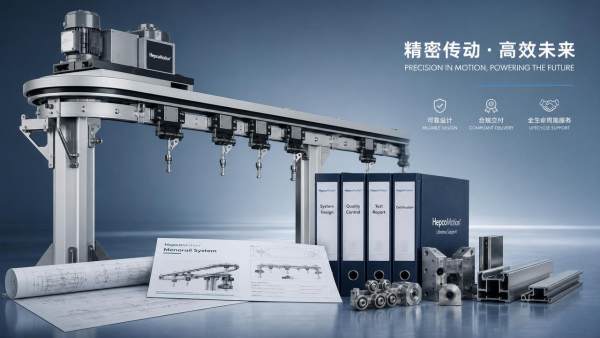
Many monorail procurement decisions fail because evaluation criteria overemphasize bid neatness and underweight execution reality. A proposal may look low risk because it is inexpensive, submitted on time, and technically “compliant” at a summary level. But business evaluators know that real project risk usually sits in the details: duty cycle assumptions, installation constraints, rail alignment tolerances, interface responsibilities, spare parts availability, and the supplier’s ability to manage commissioning under live site conditions.
In monorail applications, especially in manufacturing, warehousing, heavy material handling, processing plants, or specialized infrastructure, system failure rarely remains a local mechanical problem. It can affect productivity, worker safety, downstream equipment synchronization, and maintenance budgets. A supplier that underprices early may later recover margin through change orders, reduced engineering scope, lower-grade components, or minimal support after handover. That is why a “low-risk bid” is not automatically the same as a low-risk supplier.
The key distinction is this: reliable suppliers make risk visible early, while weak suppliers often make risk look small until the project is already committed. If a vendor clearly identifies load cases, site dependencies, compliance boundaries, and maintenance requirements before contract award, that transparency is a strong sign of maturity. If a bid remains vague in the name of flexibility, evaluators should treat that as a commercial warning rather than a convenience.
What business evaluators are really trying to verify
For commercial and procurement reviewers, the decision is usually not whether the monorail concept works in theory. The real question is whether this specific supplier can deliver the promised performance within the operational, regulatory, and financial constraints of the project. That means the evaluation must go beyond price, general brochures, and headline specifications.
Most target readers in this buying context care about five practical outcomes. First, they want confidence that the system will perform safely and consistently under real workloads. Second, they need assurance that the supplier can meet schedule and installation commitments. Third, they want clarity on total cost of ownership, not just acquisition cost. Fourth, they need to reduce legal, regulatory, and warranty disputes. Fifth, they want a supplier relationship that remains useful after commissioning, especially when uptime matters.
These concerns shape how a dependable monorail system supplier should be assessed. The most helpful content for decision-making is not abstract technology explanation. It is a structured way to evaluate engineering credibility, standards compliance, project execution discipline, lifecycle economics, and after-sales resilience. Those are the areas that most directly reduce buyer uncertainty.
Technical transparency is the first sign of a reliable monorail system supplier
Reliable suppliers explain not only what they are offering, but also the assumptions behind the offer. They provide clear load data, speed ranges, throughput expectations, environmental limitations, rail material details, drive and control architecture, safety logic, and interface definitions. They show where standard modules are used and where customization is required. This level of transparency helps evaluators understand what is fixed, what is variable, and where project risk may emerge.
By contrast, lower-quality bids often hide behind broad compliance claims such as “designed according to international standards” or “suitable for heavy-duty use” without giving the supporting design basis. These phrases may sound reassuring, but they do not help a buyer determine whether the system is actually suitable for the intended operating cycle, ambient conditions, corrosion exposure, shock loads, or future expansion needs.
Ask whether the supplier can provide calculation logic, component selection rationale, and a defined design validation process. If the answer is vague before award, it may become even less transparent afterward. A dependable supplier should also clarify exclusions. It is often the unspoken boundaries—civil work tolerance, power quality, integration with plant control systems, or customer-supplied structures—that later turn into claims, delays, or underperformance.
Standards alignment matters more than generic compliance language
For business evaluators, one of the clearest ways to separate credible suppliers from presentation-driven bidders is to examine how they handle standards and certification. A reliable supplier does not simply mention standards in a brochure. It maps the system to the applicable regulatory and technical framework for the target geography and use case, then explains how conformity will be demonstrated.
This is especially important because monorail systems may involve multiple compliance layers: structural design, mechanical integrity, lifting or conveying functions, electrical systems, controls, operator safety, guarding, emergency logic, and installation quality. Depending on the region and application, requirements may involve ISO, IEC, local machinery directives, electrical codes, or industry-specific site rules. The supplier should show how these obligations are allocated and documented.
Evaluators should pay close attention to whether compliance evidence is proactive or reactive. A dependable supplier can usually provide a documentation roadmap early: design review records, material certificates, factory acceptance test plans, site acceptance criteria, risk assessments, and operating manuals. A weaker supplier often treats compliance as something to be “completed later,” which increases project uncertainty. In high-stakes industrial procurement, incomplete compliance planning is not a minor issue; it is a major cost and delay multiplier.
Execution capability is where many bids succeed or fail
Even technically sound systems can become commercial failures if the supplier lacks disciplined project execution. For that reason, delivery capability deserves as much weight as equipment design. Buyers should look at whether the supplier has a repeatable process for engineering review, manufacturing control, logistics, site coordination, installation supervision, testing, and final handover.
A reliable supplier typically has named project managers, defined escalation paths, milestone controls, and realistic lead-time assumptions. It can explain which parts are made in-house, which are outsourced, and how quality is controlled across both. It also understands that monorail projects often depend on other trades, such as steelwork, building interfaces, electrical contractors, and automation partners. Strong suppliers actively manage these interfaces rather than assuming the customer will absorb the complexity.
One practical test is to ask for examples of schedule recovery and variation management from past projects. Anyone can present a perfect timeline in a bid. The real indicator of low execution risk is how the supplier handles disruption: design revisions, shipping delays, site access issues, or unexpected installation constraints. Mature organizations have documented methods for controlling these realities. Immature ones improvise, and the customer pays for that weakness.
Lifecycle support often reveals the true supplier quality
Business evaluators should never treat the monorail purchase as a one-time transaction. In many facilities, the long-term value of the system depends more on uptime, spare parts access, service response, and maintainability than on the initial capital cost. A reliable monorail system supplier plans for this from the beginning.
That means providing a clear spare parts strategy, maintenance schedules, wear component expectations, troubleshooting support, and training for operators and maintenance staff. It also means maintaining parts traceability and defining what happens if a component becomes obsolete. In sectors where system downtime directly affects production, the difference between a supplier with structured service support and one with limited post-sale engagement can be substantial.
Pay attention to how the supplier talks about warranties. Strong suppliers define warranty scope in operational terms and connect it to proper installation, commissioning, and maintenance practices. Weak suppliers may offer broad-sounding warranty periods that become difficult to enforce because responsibilities were poorly defined from the start. Service capability should therefore be evaluated as part of risk reduction, not as an optional extra.
Total cost of ownership is more important than bid price alone
One reason low-risk bids can be misleading is that they focus buyer attention on upfront budget comfort. But monorail systems should be assessed across their economic lifecycle. A lower purchase price can be offset quickly by higher maintenance frequency, limited spare availability, more downtime, lower energy efficiency, difficult retrofits, or repeated service interventions.
Reliable suppliers are usually more willing to discuss lifecycle cost drivers openly. They can estimate maintenance intervals, expected component life, inspection requirements, and recommended inventory for critical spares. They may not always be the cheapest at award, but they often give the buyer a more stable operating profile over time. That stability matters in business evaluation because it supports budgeting accuracy and reduces the probability of unplanned capital requests later.
When comparing bids, evaluators should normalize the offers around common assumptions: system utilization rate, maintenance labor burden, replacement part pricing, response time commitments, expected service life, and upgrade flexibility. Without that normalization, price comparisons can create false confidence. The supplier that appears cheaper may simply be transferring future cost to the buyer.
Questions that help separate dependable partners from risky proposals
Procurement teams can improve supplier selection quality by asking better questions during evaluation. Instead of only requesting a revised price or delivery date, ask the supplier to explain the design basis for load cases, rail support spacing, environmental assumptions, control system safety architecture, and integration limits. Ask what data is still missing and how that affects technical certainty.
It is also useful to request a sample documentation pack from a previous comparable project. This can include drawings, test procedures, maintenance manuals, spare lists, and commissioning records, with sensitive commercial details removed if needed. The goal is not to copy another project, but to see whether the supplier operates with process discipline and documentation maturity.
Additional high-value questions include: What failure modes have been most common in similar installations? Which components carry the longest replacement lead times? How are site changes controlled commercially and technically? What local service coverage exists? What training is included? How is system performance validated before final acceptance? The answers often reveal far more than the formal bid itself.
How to build a smarter evaluation framework
A practical way to assess a monorail system supplier is to use a weighted framework that reflects actual business risk. Price should remain one factor, but not the dominant one. Consider giving separate scoring categories to technical completeness, standards compliance, execution capability, documentation quality, lifecycle support, and commercial clarity. This makes it easier to compare suppliers on meaningful criteria rather than presentation style.
For example, a bidder that scores moderately on price but highly on engineering detail, project governance, service readiness, and compliance planning may be the better commercial decision than a lower-priced bidder with major ambiguities. The purpose of this framework is not to eliminate all uncertainty. It is to identify where uncertainty sits, whether the supplier acknowledges it, and how likely the supplier is to manage it successfully.
Business evaluators should also align the framework with project criticality. If the monorail system supports a non-critical internal transfer task, tolerance for supplier risk may be higher. If it supports production continuity, safety-sensitive handling, or a tightly scheduled facility launch, then supplier reliability deserves a premium. Good evaluation reflects operational consequence, not just procurement formality.
Conclusion: reliability is proven by visibility, not by appearance
What separates a reliable monorail system supplier from a low-risk bid is not polished language, moderate pricing, or generic compliance claims. The real difference lies in whether the supplier makes technical assumptions visible, aligns clearly with standards, manages execution professionally, and supports the asset throughout its lifecycle. In short, reliable suppliers reduce uncertainty by exposing it early and managing it structurally.
For business evaluators, the safest buying decision is rarely the bid that merely looks acceptable on paper. It is the supplier that can demonstrate engineering discipline, delivery credibility, and long-term accountability. When monorail procurement is evaluated through that lens, the distinction becomes clearer: dependable partners help you control risk before contract award, while weaker bidders leave risk hidden until the cost of correction is much higher.
If your goal is not simply to buy equipment, but to secure performance, compliance, and operational continuity, then supplier reliability should be judged by evidence, process, and lifecycle commitment—not just by the comfort of the initial quotation.
Recommended for You
 Technical FabricsNonwoven Bonding Cost Data: Comparing Thermal and Chemical ProcessesExplore nonwoven bonding cost data to compare thermal and chemical processes, assess usable yield, and choose the best-value option for your application.By: Chloe DuboisNov 08, 2026
 Fiber LasersIndustrial Lasers to 2035: Automotive Lightweighting and Precision Welding Drive DemandExplore the industrial laser market outlook to 2035 and discover how automotive lightweighting and precision welding could shape demand and procurement.By: Dr. Hideo TanakaNov 07, 2026
 Technical FabricsChoosing Geotextile Under Railway Ballast: Key Performance RequirementsChoosing geotextile under railway ballast? Explore essential filtration, drainage, strength and durability criteria to make a confident, project-specific selection.By: Chloe DuboisNov 07, 2026
 Digital SeaChoosing Rail Welding Equipment for Maintenance: Field Conditions and Weld TypesChoose rail welding equipment for maintenance with confidence. Compare welding methods, field constraints, inspection needs, and lifecycle costs.By: Captain Kenji SatoNov 06, 2026
 Digital SeaIndia Broadband Forum Urges Stronger Submarine Cable ResilienceIndia’s submarine cable resilience is in focus as the Broadband India Forum urges faster repairs, more vessels and stronger landing infrastructure.By: Captain Kenji SatoNov 06, 2026
 Digital SeaChoosing a Railway Network Switch Supplier: Reliability and Support CriteriaChoosing a railway network switch supplier? Compare reliability, standards evidence, cybersecurity, and lifecycle support to reduce project risk.By: Captain Kenji SatoNov 05, 2026
 Grid ResilienceUS Grid Equipment Import Ban Raises Cost and Implementation ConcernsThe US grid equipment import ban raises concerns over costs and delivery delays. Explore how unclear criteria could affect procurement and supply chains.By: Dr. Elena VoltNov 05, 2026
 Digital SeaRailway Coupler Price: How Type and Specifications Affect QuotesRailway coupler price depends on type, specifications, and order scope. Learn how to compare quotes, avoid hidden costs, and make a confident buying decision.By: Captain Kenji SatoNov 04, 2026
 Grid ResilienceGlobal Smart Grid Companies Raise $3 Billion in First Nine Months of 2026Global smart grid companies raised $3 billion in the first nine months of 2026. Explore the funding breakdown and potential implications for buyers and suppliers.By: Dr. Elena VoltNov 04, 2026
 Digital SeaChoosing Wholesale Pet Toys: How to Evaluate Suppliers and Minimum OrdersWholesale pet toys: learn how to assess suppliers, compare minimum orders and landed costs, and reduce inventory risk before you buy.By: Captain Kenji SatoNov 03, 2026
 Digital SeaSustainable Packaging Design: How to Choose Materials and Reduce WasteDiscover how sustainable packaging design helps reduce waste, protect products, and control costs with practical material choices and proven testing strategies.By: Captain Kenji SatoNov 02, 2026
 Technical FabricsUSMCA's First Joint Review Puts Textile Supply Chain Rules in FocusUSMCA's first joint review puts textile supply chain rules in focus. Explore potential impacts on origin compliance, sourcing and tariff treatment.By: Chloe DuboisNov 02, 2026
 Digital SeaManufacturing KPI Benchmarking: How to Compare Production PerformanceBenchmarking KPI manufacturing performance? Learn how to compare OEE, quality and downtime, identify meaningful gaps, and turn insights into practical improvements.By: Captain Kenji SatoNov 01, 2026
 Smart MetersCCI Approves Adani Energy Solutions' ₹305 Billion Acquisition of IntelliSmartCCI approves Adani Energy Solutions' ₹305 billion acquisition of IntelliSmart. Discover what the deal could mean for India's smart meter market.By: Dr. Elena VoltNov 01, 2026
 Digital SeaChoosing a Coin Laundry Machinery OEM: What Buyers Should EvaluateChoosing a coin laundry machinery OEM? Compare machine specifications, payment integration, lifecycle costs, and support to make a confident buying decision.By: Captain Kenji SatoOct 31, 2026
 Grid ResilienceUS Energy Department Announces $237 Million Grid SCALED Funding ProgramExplore the DOE's $237 million Grid SCALED funding program and its goals to strengthen grid equipment supply chains, lower electricity costs, and improve resilience.By: Dr. Elena VoltOct 31, 2026
 UHV TransformersA Decade of UHV Power in Shandong: Province Leads in Station NumbersShandong UHV power leads China in station numbers. Explore a decade of grid development and its implications for electricity supply and business planning.By: Dr. Elena VoltOct 30, 2026
 Digital SeaChoosing a Composite Train Body Panel Manufacturer: Fire Safety and Quality ChecksChoosing a composite train body panels manufacturer? Learn how to verify fire test evidence, audit production quality, and avoid costly approval gaps before you buy.By: Captain Kenji SatoOct 29, 2026
 Subsea ROV/AUVOcean Infinity Deploys Six AUVs Together Beyond 5,000 MetresOcean Infinity reportedly deployed six HUGIN AUVs beyond 5,200 metres. Explore what concurrent deepwater missions could mean for seabed surveys and procurement.By: Captain Kenji SatoOct 29, 2026
 Grid ResilienceRenewable Energy Grid Balancing: How Storage and Demand Response Work TogetherExplore renewable energy grid balancing with storage and demand response. Learn how coordinated controls manage shortfalls, absorb surplus power, and improve grid reliability.By: Dr. Elena VoltOct 28, 2026
 Subsea ROV/AUVSeaber Introduces 13 kg RAVEN AUV to Target Mine Countermeasure CostsSeaber’s 13 kg RAVEN AUV targets lower mine countermeasure costs with two mission configurations. Explore its potential value for naval operations and procurement.By: Captain Kenji SatoOct 28, 2026
 Digital SeaBallast Water Management Rules: IMO vs. USCG Compliance RequirementsBallast water management rules explained: compare IMO and USCG approvals, operating limits, and records. Get practical checks to reduce compliance risks and costly port delays.By: Captain Kenji SatoOct 27, 2026
 Subsea ROV/AUVEni Signs Main Cronos Contracts, Moving Gas Project into ExecutionEni’s Cronos gas project enters execution as major contracts are signed. Explore the Cyprus development, Egypt processing plans and key milestones toward first gas in 2028.By: Captain Kenji SatoOct 27, 2026
 Aseptic FillingWhich Tests Verify Commercial Sterility in Aseptically Filled Foods?Explore aseptic filled food tests, from incubation and microbiology to package integrity. Learn how connected evidence supports confident commercial sterility release decisions.By: Marcus SterlingOct 26, 2026
 Fabric LogicWater-Free Textile Printing: Fabric Compatibility and Pretreatment LimitsExplore water free textile printing for polyester, cotton, and blends. Learn pretreatment limits and key durability tests to choose the right process and avoid costly production mistakes.By: Chloe DuboisOct 26, 2026
 Dyeing MachinesHow Waterless CO2 Dyeing Works—and Why Polyester Is a Strong FitDiscover how waterless dyeing with supercritical CO2 colors polyester, why this fiber is a strong fit, and what to verify for consistent shades and measurable resource savings.By: Chloe DuboisOct 26, 2026
 Smart MetersSourcing Smart Meter Structural Components from China: An RFQ ChecklistExport smart meter structural components from China with confidence. Use this RFQ checklist to compare materials, tooling, quality, and delivered costs—and avoid costly sourcing mistakes.By: Dr. Elena VoltOct 26, 2026
 Optical SensorsEvaluating an Optical Detection Factory: Calibration and RepeatabilityEvaluate an optical detection factory with confidence. Learn how calibration, traceability, and repeatability trials reveal production reliability and help you choose the right supplier.By: Dr. Hideo TanakaOct 26, 2026
 Precision LensesChoosing a Welding Optics Supplier in China: Coatings and Damage ThresholdsCompare welding optics supplier China options for coating quality, verified damage thresholds, and batch consistency. Learn how to reduce downtime and buy with confidence.By: Dr. Hideo TanakaOct 26, 2026
 Aseptic FillingStainless Steel Mixing Tanks: Cleaning Access Checks Before PurchaseBuying stainless steel mixing tanks? Check cleaning access, CIP coverage, drainage, and acceptance tests before purchase to reduce changeover headaches and make a confident choice.By: Marcus SterlingOct 26, 2026
 Digital SeaRail Communication Bandwidth in Europe: GSM-R and FRMCS Bands ExplainedRail communication bandwidth Europe: explore GSM-R and FRMCS bands, compare 900 MHz and 1900 MHz spectrum, and discover key checks for smarter network planning.By: Captain Kenji SatoOct 26, 2026






























