BDI: 1,842 ▼ 1.2%
COTTON NO.2: 84.12 ▲ 0.4%
LME COPPER: 8,432.50 ▲ 2.1%
FOOD SAFETY INDEX: 94.2 ARCHIVE_SECURED
OPTICAL INDEX: 11,204.09 STABLE
BDI: 1,842 ▼ 1.2%

SECTOR INDEX
V.24.08 ARCHIVE
Hot Articles
- Nonwoven Bonding Cost Data: Comparing Thermal and Chemical ProcessesExplore nonwoven bonding cost data to compare thermal and chemical processes, assess usable yield, and choose the best-value option for your application.
- Industrial Lasers to 2035: Automotive Lightweighting and Precision Welding Drive DemandExplore the industrial laser market outlook to 2035 and discover how automotive lightweighting and precision welding could shape demand and procurement.
- Choosing Geotextile Under Railway Ballast: Key Performance RequirementsChoosing geotextile under railway ballast? Explore essential filtration, drainage, strength and durability criteria to make a confident, project-specific selection.
What Does Train Control Center Software Cost? Budgeting for Integration and Support


A reliable budget for train control center software begins with a difficult but necessary conclusion: there is no useful single price. A control center can range from a focused dispatching replacement to a safety-relevant program connecting interlocking, traffic management, power supervision, passenger information, maintenance systems, and multiple rail networks. The software license is often only one part of the commitment. Integration, validation, cybersecurity, data preparation, commissioning, and support can materially change the approved amount.
The first budget question should therefore be: what operational boundary is being purchased? A system supervising one contained railway with a stable signaling estate has a different cost profile from a regional center coordinating mixed traffic, legacy assets, work zones, emergency procedures, and planned expansion. Treating both scopes as equivalent because each is called a “train control center” produces misleading comparisons from the start.
Separate the commercial layers before comparing proposals
A proposal may present an attractive initial figure while excluding the elements that determine whether the software can enter service. Cost review is clearer when the project is divided into distinct layers rather than evaluated as one opaque package.
This structure prevents a recurring error: comparing a license-led quotation with a delivery-led quotation. The former can appear lower simply because it leaves the difficult work outside the stated scope. A comparable commercial review needs a written inclusions schedule, interface register, acceptance assumption list, and support boundary for every proposal.
Integration usually determines the uncertainty allowance
Train control center software sits above equipment that was often purchased at different times, from different suppliers, and for different operating models. The cost of linking those components depends less on the number of screens than on the quality and behavior of the underlying data.
For example, a route status message may be available from an interlocking, yet its meaning, update cycle, fault condition, timestamp behavior, and fallback state must be understood before it can be safely displayed or acted upon. A field system that sends a clear binary status in normal service may behave differently during communication loss, maintenance bypass, or restart. Each exceptional state needs a defined treatment in the control center. That work becomes expensive when it is discovered after display layouts and operating rules have already been configured.
Legacy interfaces create a separate challenge. Documentation can be incomplete, protocols may have been adapted locally, and test access to live field assets can be limited. A vendor’s statement that an interface is “supported” should be read carefully. It may mean the vendor has experience with a protocol family, not that the exact installed software release, message set, engineering conventions, and failure behavior have already been verified.
- Count interfaces by operational complexity, not by connector quantity. One connection carrying timetable data differs greatly from one carrying command, indication, alarm, and confirmation behavior.
- Identify systems undergoing their own upgrades. Parallel projects can change message formats, network paths, equipment identifiers, or acceptance dates after the control center scope has been priced.
- Reserve effort for interface simulation. A credible test environment must reproduce normal traffic, degraded communications, inconsistent data, restart sequences, and alarm storms rather than merely demonstrate a successful connection.
- Clarify responsibility for field-side modifications. A control center contract may assume that remote terminal units, signaling gateways, or network firewalls will be altered by another party.
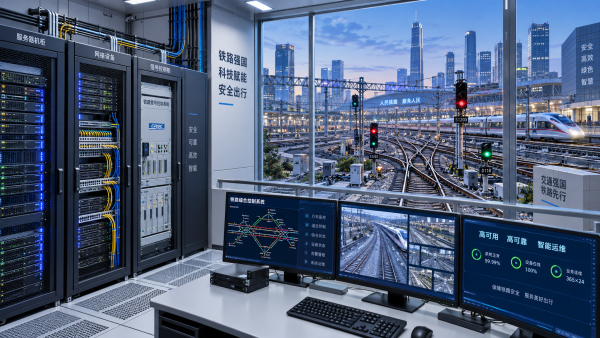
Integration allowances should be attached to named uncertainties, not added as an unexplained contingency percentage. An allowance linked to unavailable protocol records, a pending signaling renewal, or uncertain asset data can be reviewed and reduced as evidence improves. A general contingency often disappears in negotiations while the underlying exposure remains.
Scale is not simply route length or train volume
Route kilometers and daily train movements are useful context, but neither directly defines train control center software cost. A short, dense urban corridor can require intricate headway management, platform control, depot movements, passenger disruption handling, and close coordination with power and signaling systems. A longer network may have fewer control points and a more regular operating pattern.
The practical sizing inputs are the number of controlled territories, signaling control areas, control desks, concurrent sessions, data feeds, train describer zones, stations requiring operational monitoring, and planned timetable changes. Resilience requirements also matter. High availability is not a feature label; it affects server architecture, network design, database replication, failover testing, monitoring, and the operational procedure used when a component is unavailable.
A frequent misunderstanding concerns future capacity. Buying only for current use can appear disciplined, but a later extension may require redesign of server sizing, licensing tiers, interfaces, display hierarchies, or database architecture. Conversely, paying for an expansive future model without a defined expansion path can lock capital into capacity that is never activated. The useful distinction is between capacity that can be enabled without architectural rework and capacity that is merely described as possible.
Data migration is an engineering task, not an administrative upload
Control centers depend on accurate master data: infrastructure topology, track identifiers, signals, points, platform locations, speed restrictions, route names, timing points, rolling-stock references, alarm categories, user roles, contact rules, and operating procedures. These records commonly exist across spreadsheets, diagrams, maintenance databases, timetable applications, and local documents. The same object can carry different names in each source.
Migration cost rises when data ownership is unclear. A clean import into a test database does not demonstrate that the data is fit for use. It must be reconciled against the current railway configuration, approved change records, and the screen or workflow where it will be used. Temporary workarounds developed during migration deserve attention because they can become permanent operating dependencies after go-live.
Data conversion should include clear acceptance conditions: source authority, transformation rules, exception handling, sampling method, reconciliation output, and the process for changes occurring between the initial extract and commissioning. Without this control, late infrastructure changes can lead to repeated reloads and retesting.
Cybersecurity and resilience must be priced as operating requirements
Security work is often underestimated because it is described as a technical appendix. In a train control environment, it affects system architecture and daily support. Network segmentation, privileged access, multifactor authentication where appropriate, endpoint hardening, log retention, remote support pathways, patch approval, malware protection, backup recovery, and incident investigation all require configuration and continuing administration.
The lowest-cost remote support arrangement can conflict with the required access controls. A support connection that works during commissioning may not be acceptable in the live environment without a controlled gateway, session approval, recording, and access review. The budget should distinguish initial security implementation from recurring tasks such as account reviews, certificate renewal, vulnerability remediation, and testing after patches.
Resilience should also be described in operational terms. “Redundant servers” says little about the real outcome. Relevant questions include how quickly service must be restored, whether a failover changes the active display state, how historic events are preserved, whether degraded service is permissible, and how often recovery procedures are rehearsed. These choices influence both capital expenditure and the support model.
Commissioning costs follow the release strategy
A single cutover may reduce the duration of parallel operations, but it concentrates risk. Phased deployment spreads the transition across territories, functions, or interfaces and often requires coexistence with older systems. That coexistence adds gateways, data reconciliation, duplicate monitoring, training refreshers, and additional test cycles. It should not be treated as a no-cost implementation preference.
The release plan needs to include the practical work around software deployment: workstation installation, room readiness, network availability, hardware burn-in, display calibration, historical data loading, alarm tuning, operational scenario testing, fallback arrangements, and post-release observation. A schedule with little allowance for failed tests or changed field conditions can make a fixed-price offer look complete while shifting delay exposure into variation claims.
Training deserves the same specificity. Generic system familiarization does not replace instruction on local route logic, alarm priorities, degraded modes, disruption handling, and the exact workflow used at each desk. Training environments need representative data and controlled scenarios. When training is deferred until the live configuration is nearly complete, changes to displays or workflows can trigger repeated course development and retesting.
Support pricing should be evaluated over the expected service period
Annual support is sometimes treated as a small recurring percentage attached to the initial purchase. That view misses the difference between a basic software maintenance agreement and an operational support commitment. The former may provide version entitlement and defect correction during business hours. The latter can include round-the-clock incident intake, response targets, diagnostics, remote access controls, onsite attendance, spare equipment coordination, patch management, and structured service reporting.
Ask for a service description that separates response time from restoration responsibility. A supplier can acknowledge an incident promptly while the practical path to restore a failed interface, workstation, database, or network device remains unclear. The contract should identify which components are supported, which are excluded, when third-party equipment is involved, and who coordinates the incident.
Version management has a long tail. An upgrade can require interface regression testing, cybersecurity review, operating procedure updates, revised training material, and revalidation of reports or displays. Deferring upgrades indefinitely may lower short-term expenditure but increases the eventual effort when operating systems, databases, or security controls are no longer compatible with the installed release.
Build an approval-ready cost model
A strong budget presents the base scope and the uncertainty around it separately. The base should include only defined deliverables with identified acceptance criteria. Each uncertain item should state its trigger, estimated work range, responsible party, decision date, and effect on schedule. This creates a traceable view of exposure without pretending that incomplete engineering is already fixed.
Commercial terms need the same attention as technical scope. Payment milestones tied solely to document delivery can place significant expenditure ahead of demonstrated integration. Milestones linked to accepted design, successful interface testing, site acceptance, service readiness, and agreed handover evidence better reflect the point at which value has been proven. Retention, warranty commencement, ownership of configuration records, access to event data, and rights to use system documentation after support ends should be explicit.
The final comparison should normalize assumptions across every offer: the same operating territory, interface count, resilience level, commissioning strategy, training scope, support hours, upgrade rights, and hardware responsibility. Once those items are aligned, the remaining price difference becomes far more meaningful. Until then, a lower quotation may simply represent a smaller system boundary and a larger unpriced obligation after contract award.
Recommended for You
 Technical FabricsNonwoven Bonding Cost Data: Comparing Thermal and Chemical ProcessesExplore nonwoven bonding cost data to compare thermal and chemical processes, assess usable yield, and choose the best-value option for your application.By: Chloe DuboisNov 08, 2026
 Fiber LasersIndustrial Lasers to 2035: Automotive Lightweighting and Precision Welding Drive DemandExplore the industrial laser market outlook to 2035 and discover how automotive lightweighting and precision welding could shape demand and procurement.By: Dr. Hideo TanakaNov 07, 2026
 Technical FabricsChoosing Geotextile Under Railway Ballast: Key Performance RequirementsChoosing geotextile under railway ballast? Explore essential filtration, drainage, strength and durability criteria to make a confident, project-specific selection.By: Chloe DuboisNov 07, 2026
 Digital SeaChoosing Rail Welding Equipment for Maintenance: Field Conditions and Weld TypesChoose rail welding equipment for maintenance with confidence. Compare welding methods, field constraints, inspection needs, and lifecycle costs.By: Captain Kenji SatoNov 06, 2026
 Digital SeaIndia Broadband Forum Urges Stronger Submarine Cable ResilienceIndia’s submarine cable resilience is in focus as the Broadband India Forum urges faster repairs, more vessels and stronger landing infrastructure.By: Captain Kenji SatoNov 06, 2026
 Digital SeaChoosing a Railway Network Switch Supplier: Reliability and Support CriteriaChoosing a railway network switch supplier? Compare reliability, standards evidence, cybersecurity, and lifecycle support to reduce project risk.By: Captain Kenji SatoNov 05, 2026
 Grid ResilienceUS Grid Equipment Import Ban Raises Cost and Implementation ConcernsThe US grid equipment import ban raises concerns over costs and delivery delays. Explore how unclear criteria could affect procurement and supply chains.By: Dr. Elena VoltNov 05, 2026
 Digital SeaRailway Coupler Price: How Type and Specifications Affect QuotesRailway coupler price depends on type, specifications, and order scope. Learn how to compare quotes, avoid hidden costs, and make a confident buying decision.By: Captain Kenji SatoNov 04, 2026
 Grid ResilienceGlobal Smart Grid Companies Raise $3 Billion in First Nine Months of 2026Global smart grid companies raised $3 billion in the first nine months of 2026. Explore the funding breakdown and potential implications for buyers and suppliers.By: Dr. Elena VoltNov 04, 2026
 Digital SeaChoosing Wholesale Pet Toys: How to Evaluate Suppliers and Minimum OrdersWholesale pet toys: learn how to assess suppliers, compare minimum orders and landed costs, and reduce inventory risk before you buy.By: Captain Kenji SatoNov 03, 2026
 Digital SeaSustainable Packaging Design: How to Choose Materials and Reduce WasteDiscover how sustainable packaging design helps reduce waste, protect products, and control costs with practical material choices and proven testing strategies.By: Captain Kenji SatoNov 02, 2026
 Technical FabricsUSMCA's First Joint Review Puts Textile Supply Chain Rules in FocusUSMCA's first joint review puts textile supply chain rules in focus. Explore potential impacts on origin compliance, sourcing and tariff treatment.By: Chloe DuboisNov 02, 2026
 Digital SeaManufacturing KPI Benchmarking: How to Compare Production PerformanceBenchmarking KPI manufacturing performance? Learn how to compare OEE, quality and downtime, identify meaningful gaps, and turn insights into practical improvements.By: Captain Kenji SatoNov 01, 2026
 Smart MetersCCI Approves Adani Energy Solutions' ₹305 Billion Acquisition of IntelliSmartCCI approves Adani Energy Solutions' ₹305 billion acquisition of IntelliSmart. Discover what the deal could mean for India's smart meter market.By: Dr. Elena VoltNov 01, 2026
 Digital SeaChoosing a Coin Laundry Machinery OEM: What Buyers Should EvaluateChoosing a coin laundry machinery OEM? Compare machine specifications, payment integration, lifecycle costs, and support to make a confident buying decision.By: Captain Kenji SatoOct 31, 2026
 Grid ResilienceUS Energy Department Announces $237 Million Grid SCALED Funding ProgramExplore the DOE's $237 million Grid SCALED funding program and its goals to strengthen grid equipment supply chains, lower electricity costs, and improve resilience.By: Dr. Elena VoltOct 31, 2026
 UHV TransformersA Decade of UHV Power in Shandong: Province Leads in Station NumbersShandong UHV power leads China in station numbers. Explore a decade of grid development and its implications for electricity supply and business planning.By: Dr. Elena VoltOct 30, 2026
 Digital SeaChoosing a Composite Train Body Panel Manufacturer: Fire Safety and Quality ChecksChoosing a composite train body panels manufacturer? Learn how to verify fire test evidence, audit production quality, and avoid costly approval gaps before you buy.By: Captain Kenji SatoOct 29, 2026
 Subsea ROV/AUVOcean Infinity Deploys Six AUVs Together Beyond 5,000 MetresOcean Infinity reportedly deployed six HUGIN AUVs beyond 5,200 metres. Explore what concurrent deepwater missions could mean for seabed surveys and procurement.By: Captain Kenji SatoOct 29, 2026
 Grid ResilienceRenewable Energy Grid Balancing: How Storage and Demand Response Work TogetherExplore renewable energy grid balancing with storage and demand response. Learn how coordinated controls manage shortfalls, absorb surplus power, and improve grid reliability.By: Dr. Elena VoltOct 28, 2026
 Subsea ROV/AUVSeaber Introduces 13 kg RAVEN AUV to Target Mine Countermeasure CostsSeaber’s 13 kg RAVEN AUV targets lower mine countermeasure costs with two mission configurations. Explore its potential value for naval operations and procurement.By: Captain Kenji SatoOct 28, 2026
 Digital SeaBallast Water Management Rules: IMO vs. USCG Compliance RequirementsBallast water management rules explained: compare IMO and USCG approvals, operating limits, and records. Get practical checks to reduce compliance risks and costly port delays.By: Captain Kenji SatoOct 27, 2026
 Subsea ROV/AUVEni Signs Main Cronos Contracts, Moving Gas Project into ExecutionEni’s Cronos gas project enters execution as major contracts are signed. Explore the Cyprus development, Egypt processing plans and key milestones toward first gas in 2028.By: Captain Kenji SatoOct 27, 2026
 Aseptic FillingWhich Tests Verify Commercial Sterility in Aseptically Filled Foods?Explore aseptic filled food tests, from incubation and microbiology to package integrity. Learn how connected evidence supports confident commercial sterility release decisions.By: Marcus SterlingOct 26, 2026
 Fabric LogicWater-Free Textile Printing: Fabric Compatibility and Pretreatment LimitsExplore water free textile printing for polyester, cotton, and blends. Learn pretreatment limits and key durability tests to choose the right process and avoid costly production mistakes.By: Chloe DuboisOct 26, 2026
 Dyeing MachinesHow Waterless CO2 Dyeing Works—and Why Polyester Is a Strong FitDiscover how waterless dyeing with supercritical CO2 colors polyester, why this fiber is a strong fit, and what to verify for consistent shades and measurable resource savings.By: Chloe DuboisOct 26, 2026
 Smart MetersSourcing Smart Meter Structural Components from China: An RFQ ChecklistExport smart meter structural components from China with confidence. Use this RFQ checklist to compare materials, tooling, quality, and delivered costs—and avoid costly sourcing mistakes.By: Dr. Elena VoltOct 26, 2026
 Optical SensorsEvaluating an Optical Detection Factory: Calibration and RepeatabilityEvaluate an optical detection factory with confidence. Learn how calibration, traceability, and repeatability trials reveal production reliability and help you choose the right supplier.By: Dr. Hideo TanakaOct 26, 2026
 Precision LensesChoosing a Welding Optics Supplier in China: Coatings and Damage ThresholdsCompare welding optics supplier China options for coating quality, verified damage thresholds, and batch consistency. Learn how to reduce downtime and buy with confidence.By: Dr. Hideo TanakaOct 26, 2026
 Aseptic FillingStainless Steel Mixing Tanks: Cleaning Access Checks Before PurchaseBuying stainless steel mixing tanks? Check cleaning access, CIP coverage, drainage, and acceptance tests before purchase to reduce changeover headaches and make a confident choice.By: Marcus SterlingOct 26, 2026
 Digital SeaRail Communication Bandwidth in Europe: GSM-R and FRMCS Bands ExplainedRail communication bandwidth Europe: explore GSM-R and FRMCS bands, compare 900 MHz and 1900 MHz spectrum, and discover key checks for smarter network planning.By: Captain Kenji SatoOct 26, 2026