Track Maintenance Automation News: What Rail Operators Should Watch in 2026
As rail networks prepare for heavier traffic, tighter safety expectations, and aging infrastructure in 2026, track maintenance automation news is becoming essential reading for operators and industry researchers alike.
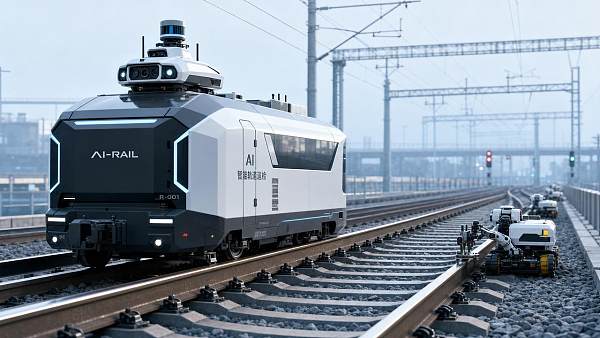
From AI-driven inspection vehicles and predictive analytics to robotic repair systems and digital twin integration, automation is reshaping how maintenance decisions are planned, prioritized, and executed.
This article highlights the key developments rail operators should watch, helping decision-makers evaluate emerging technologies, regulatory signals, and operational risks across smart infrastructure management.
Why 2026 Is a Turning Point for Automated Track Maintenance
The central question for rail operators is no longer whether automation works. It is where automation can reduce risk fastest without disrupting service reliability.
By 2026, many operators will face a difficult mix of higher utilization, labor constraints, climate stress, and infrastructure renewal backlogs.
Track maintenance automation news matters because it signals which technologies are moving from pilot programs into operational procurement and long-term asset strategies.
The strongest business case is not full replacement of human maintenance teams. It is better prioritization, earlier defect detection, and safer field execution.
For information researchers, the most valuable updates are those connecting technology claims with measurable outcomes, including failure reduction, possession efficiency, and inspection frequency.
What Operators Are Really Trying to Solve
Rail maintenance teams are under pressure to inspect more assets with fewer track access windows and less tolerance for service interruptions.
Manual inspection remains important, but it is increasingly insufficient for networks carrying mixed passenger, freight, and high-speed operations.
The practical goal is to detect track geometry degradation, rail defects, ballast problems, fastening failures, and switch issues before they become service risks.
Automation helps by collecting consistent data at scale, comparing changes over time, and guiding crews toward the most urgent locations.
For executives, the issue is investment timing. Buying too early creates integration risk, while waiting too long can increase maintenance backlog and safety exposure.
AI Inspection Is Moving from Data Capture to Decision Support
One major development to watch in 2026 is the shift from automated inspection as a sensing function to automated inspection as decision support.
Earlier systems focused on collecting images, geometry readings, or ultrasonic data. Newer platforms increasingly interpret findings and recommend maintenance priorities.
Machine vision can now identify missing fasteners, surface cracks, vegetation intrusion, drainage issues, and sleeper deterioration with improving consistency.
For operators, the value depends on false positive rates, explainability, and whether results align with existing engineering standards and inspection rules.
Procurement teams should ask whether AI models are trained on comparable track conditions, climates, traffic patterns, and maintenance histories.
Track maintenance automation news in 2026 will likely focus heavily on validation, because operators need confidence before embedding AI into safety-critical workflows.
Predictive Maintenance Will Depend on Data Quality, Not Just Algorithms
Predictive maintenance remains one of the most attractive promises in rail automation, but success depends more on data maturity than software branding.
Operators need clean asset registers, historical defect records, maintenance logs, inspection data, traffic loads, and environmental information to build useful predictions.
Without reliable baseline data, predictive systems may produce attractive dashboards but weak operational guidance for planners and maintenance engineers.
The most credible solutions will show how predictions translate into work orders, budget allocation, possession planning, and risk-based maintenance schedules.
In 2026, researchers should watch for case studies showing avoided failures, extended asset life, and reduced emergency interventions.
Claims about artificial intelligence should be evaluated against practical maintenance metrics, not only technical accuracy scores presented in vendor materials.
Robotic Repair Systems Are Promising, but Deployment Will Be Selective
Robotics is gaining attention because it can reduce worker exposure to hazardous environments and improve repeatability in specific maintenance tasks.
Automated grinding, fastening replacement, ballast profiling, vegetation control, and tunnel inspection robots are among the areas receiving industry attention.
However, robotic repair will not spread evenly across all networks. The best use cases are repetitive, hazardous, measurable, and compatible with restricted access windows.
Rail operators should distinguish between impressive demonstrations and systems that can operate reliably under weather, vibration, dust, and complex site constraints.
Integration with existing maintenance vehicles, depots, signaling procedures, and worker safety protocols will determine whether robotics delivers operational value.
For many operators, semi-automated tools supervised by trained crews may provide better near-term returns than fully autonomous field robots.
Digital Twins Are Becoming Maintenance Planning Tools
Digital twins are often discussed as strategic infrastructure models, but their practical value in 2026 will be maintenance planning.
A useful rail digital twin combines geometry, condition data, asset history, traffic intensity, weather exposure, and intervention records.
When connected with automated inspection feeds, digital twins can help planners visualize deterioration trends and compare intervention scenarios.
This improves decision-making around tamping, rail replacement, drainage repair, speed restrictions, and capital renewal sequencing.
The risk is creating sophisticated models that remain detached from daily maintenance planning and field execution.
Operators should prioritize digital twin projects that connect directly to maintenance decisions, budgeting cycles, and operational performance indicators.
Regulatory and Safety Signals Will Shape Adoption
Automation in rail maintenance cannot advance on technology performance alone. It must align with national safety rules, certification processes, and operator accountability.
In 2026, regulators are expected to focus more closely on how AI-supported findings are validated and documented.
Operators should monitor guidance on data retention, inspection traceability, remote condition monitoring, and the human role in automated decisions.
Safety authorities may not require full explainability for every algorithmic output, but they will expect auditable processes and reliable escalation procedures.
This makes governance a practical procurement issue. Vendors must demonstrate not only detection capability but also compliance readiness and reporting discipline.
For researchers following track maintenance automation news, regulatory language can reveal which technologies are approaching mainstream acceptance.
Cybersecurity Is Becoming a Maintenance Risk
As maintenance systems connect vehicles, sensors, cloud platforms, work-order tools, and control environments, cybersecurity becomes part of operational resilience.
An automated inspection platform may not control trains directly, but compromised data can still distort maintenance priorities or hide emerging defects.
Rail operators should evaluate encryption, access control, data ownership, vendor update policies, and incident response responsibilities.
Cloud-based analytics can provide scalability, but they also require clear rules for data residency, third-party access, and continuity during outages.
The strongest automation strategies treat cybersecurity as a design requirement, not a final IT review before deployment.
In procurement, cybersecurity evidence should carry similar weight to accuracy, uptime, and field performance.
How Operators Should Evaluate Vendor Claims in 2026
Automation vendors often present strong technical narratives, but rail operators need evidence that matches their specific operating environment.
The first question is whether the technology has been tested on comparable track types, traffic density, climate conditions, and maintenance regimes.
The second question is integration. A system that cannot connect with asset databases or work-order platforms may create another data silo.
The third question is operational burden. If automation requires excessive manual review, data cleaning, or specialist interpretation, expected savings may disappear.
Operators should also request lifecycle cost estimates, including hardware maintenance, software subscriptions, staff training, calibration, and data management.
The best vendors will discuss limitations openly and provide phased deployment plans rather than promising instant network-wide transformation.
Where Automation Delivers the Fastest Return
Not every part of track maintenance should be automated first. High-value adoption usually begins where risk, frequency, and inspection complexity intersect.
Priority areas include high-traffic corridors, bridges and tunnels, switches and crossings, high-speed lines, and sections with recurring defects.
Automated monitoring is especially valuable where access is limited, possession costs are high, or failures would create severe service disruption.
For freight networks, automation can help manage heavy axle-load impacts and identify deterioration before capacity is affected.
For passenger networks, the value often lies in reducing delays, supporting safety assurance, and improving public confidence.
A focused deployment can create operational proof before wider investment, making the business case easier to defend internally.
Common Risks That Can Undermine Automation Programs
The most common failure is treating automation as a technology purchase rather than an operating model change.
If maintenance teams do not trust automated outputs, they may continue parallel manual processes and reduce expected efficiency gains.
Another risk is fragmented procurement, where different departments buy separate tools that cannot share data or support unified planning.
Operators should also avoid overreliance on vendor dashboards without developing internal capability to interpret and challenge results.
Data governance, staff training, engineering sign-off, and change management are as important as sensor resolution or algorithm speed.
Successful programs usually involve maintenance engineers, safety teams, IT specialists, procurement leaders, and field supervisors from the beginning.
What Information Researchers Should Monitor
For industry researchers, the most useful track maintenance automation news will come from verified deployments, not only product announcements.
Monitor public tenders, infrastructure renewal programs, regulatory consultations, operator performance reports, and technical conference proceedings.
Pay attention to partnerships between rail operators, inspection technology firms, cloud providers, rolling stock companies, and academic research centers.
These partnerships often indicate where standards, funding, and operational demand are converging.
Researchers should also compare regional adoption patterns. Dense passenger networks, heavy freight corridors, and high-speed systems have different automation priorities.
The most meaningful market signals will show repeat purchases, expanded contracts, or integration into standard maintenance procedures.
A Practical Roadmap for Rail Operators
Rail operators considering automation in 2026 should begin with a clear maintenance pain-point assessment.
Identify where failures occur, where inspections are most costly, and where data gaps prevent confident planning.
Next, select a use case with measurable outcomes, such as reducing urgent defects, improving inspection coverage, or optimizing possession time.
Pilot projects should include baseline metrics, engineering review, user feedback, cybersecurity checks, and integration testing.
After the pilot, operators should compare actual performance with expected benefits before scaling to additional corridors or asset classes.
This staged approach reduces procurement risk and helps teams build confidence in automated maintenance decisions.
Conclusion: What to Watch Most Closely in 2026
Track maintenance automation is becoming a practical response to aging assets, traffic growth, safety expectations, and workforce constraints.
The most important 2026 developments will involve validated AI inspection, predictive maintenance linked to work planning, and selective robotic deployment.
Operators should also watch digital twin integration, regulatory expectations, cybersecurity requirements, and evidence from real-world deployments.
The winning approach is not chasing every new system, but matching automation to specific maintenance risks and measurable operational outcomes.
For decision-makers and researchers, track maintenance automation news should be read through one question: does this technology improve safer, faster, evidence-based maintenance?
If the answer is supported by data, integration readiness, and clear governance, automation can become a core tool for resilient rail infrastructure.