BDI: 1,842 ▼ 1.2%
COTTON NO.2: 84.12 ▲ 0.4%
LME COPPER: 8,432.50 ▲ 2.1%
FOOD SAFETY INDEX: 94.2 ARCHIVE_SECURED
OPTICAL INDEX: 11,204.09 STABLE
BDI: 1,842 ▼ 1.2%

SECTOR INDEX
V.24.08 ARCHIVE
Hot Articles
- Metro Station Noise Criteria: Limits and Measurement MethodsExplore metro station noise criteria, applicable limits and measurement methods. Learn how to select metrics and assess compliance with confidence.
- Kongsberg Maritime Unveils Arctic Hunter Unmanned Surface VesselKongsberg Maritime's Arctic Hunter unmanned surface vessel is proposed for the Royal Navy's Type 92 programme. Explore its technology and procurement implications.
- How Accurate Is AI in Food Quality Control? Metrics and Testing MethodsExplore AI in food quality control accuracy, from recall and false negatives to validation methods. Learn how to assess real-world inspection reliability.
Why Subway Tunnel Drainage Capacity Becomes a Cost Problem After Heavy Rain


After heavy rain, subway tunnel drainage capacity stops being a narrow engineering indicator and becomes a direct cost variable. When water exceeds design assumptions, every minute matters. Delays, shutdowns, emergency pumping, damaged systems, compliance pressure, and public confidence losses can quickly accumulate into major financial exposure.
For infrastructure evaluation, subway tunnel drainage capacity should be reviewed as both a hydraulic threshold and a lifecycle cost driver. The real issue is not only whether water enters the tunnel, but how quickly the network can recover without multiplying repair, labor, energy, and retrofit expenses.
This article explains why subway tunnel drainage capacity becomes a cost problem after heavy rain, what to review first, and which overlooked factors often turn manageable runoff into expensive operational disruption.
Why subway tunnel drainage capacity needs a structured review
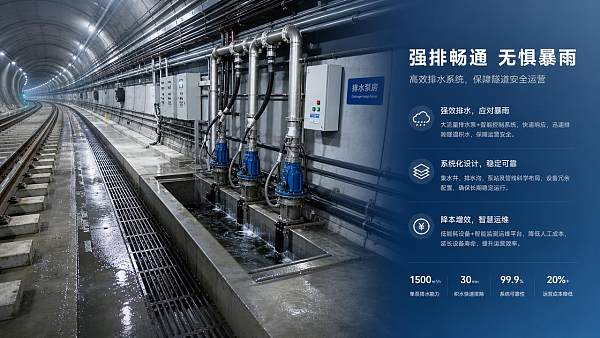
Heavy rainfall events are becoming less predictable. Many subway systems were designed using older rainfall curves, smaller safety margins, and different urban runoff assumptions. That mismatch makes subway tunnel drainage capacity a strategic concern rather than a routine maintenance topic.
A structured review helps connect technical performance with commercial impact. It reveals where limited inflow control, undersized pumps, blocked channels, or poor drainage zoning can trigger costs far beyond water removal itself.
This is especially relevant in cross-sector infrastructure analysis. G-MCE’s benchmarking approach shows that resilience decisions work best when drainage systems are reviewed against standards, asset criticality, energy efficiency, operational continuity, and long-term retrofit timing.
Core checks that explain why subway tunnel drainage capacity becomes a cost problem
The following points help identify whether subway tunnel drainage capacity is likely to create preventable financial losses after heavy rain.
- Compare current rainfall intensity with original tunnel drainage design assumptions, including return periods, runoff coefficients, and station entrance inflow pathways.
- Check whether pump stations have enough redundancy, startup speed, and backup power to handle peak inflow during grid disturbance or equipment failure.
- Inspect sediment, debris, and grease buildup in channels, sumps, gratings, and discharge points that silently reduce effective subway tunnel drainage capacity.
- Review whether drainage zones are isolated properly, so one overloaded section does not transfer water pressure and operational risk to adjacent tunnel segments.
- Verify sensor coverage, alarm thresholds, and control logic because delayed detection often increases labor, downtime, and emergency pumping costs.
- Assess vulnerability of signaling, power cables, communication equipment, and track assets located below likely ponding levels or near drainage bottlenecks.
- Measure recovery time, not only maximum water volume, since slow restart capability often causes larger economic loss than the flood event itself.
- Examine discharge permits and municipal interface limits, because external network constraints can restrict pumping even when internal equipment appears sufficient.
- Calculate lifecycle cost of repeated emergency response versus phased retrofit, including energy demand, spare parts, contractor mobilization, and service interruption.
Where costs rise fastest after heavy rain
The first cost spike usually comes from service interruption. Even short closures can produce lost revenue, rescheduling expense, overtime labor, and network congestion across connected lines.
The second cost spike often appears in asset recovery. Water exposure can damage low-voltage equipment, traction power interfaces, insulation, relays, and tunnel finishes. Cleanup then extends into inspection, testing, drying, and replacement.
A third cost layer emerges when subway tunnel drainage capacity problems become recurring. Repetition increases insurance pressure, regulatory attention, public scrutiny, and forced capital upgrades completed under unfavorable timelines.
Scenario-based notes for different operating conditions
Older tunnels in dense urban districts
Older systems often face combined sewer interaction, constrained discharge routes, and limited retrofit space. In these settings, subway tunnel drainage capacity may be reduced by surrounding urban development rather than tunnel geometry alone.
Key checks include street-level inflow paths, entrance protection, sump enlargement feasibility, and whether municipal drainage upgrades are keeping pace with transit demand.
Newer systems with digital monitoring
Newer networks may have better sensors but still face cost risk if control logic is fragmented. Data without response coordination does not improve subway tunnel drainage capacity during peak rainfall.
Review interoperability between rainfall alerts, pump automation, station operations, and maintenance dispatch. Faster decisions often reduce total cost more than additional pumping hardware.
Interchange stations and critical corridors
High-traffic nodes create higher consequence exposure. If drainage fails there, delay propagation multiplies across lines, making subway tunnel drainage capacity a network-wide financial issue.
Priority checks include compartmentalization, cross-passage protection, emergency isolation procedures, and restart sequencing for power, ventilation, and passenger circulation systems.
Commonly ignored issues that increase total cost
Peak capacity is confused with reliable capacity
Nameplate pump output rarely equals real performance during heavy rain. Wear, partial blockage, voltage instability, and maintenance gaps can lower usable subway tunnel drainage capacity at the exact worst moment.
Drainage is assessed without upstream water control
Tunnel systems cannot compensate for uncontrolled inflow from entrances, shafts, and connected structures. Without source control, expanding subway tunnel drainage capacity alone may deliver poor return on investment.
Recovery economics are underestimated
Many evaluations focus on flood avoidance only. Yet drying, testing, re-certification, and phased reopening can cost more than the water extraction event itself.
Energy and backup systems are treated separately
If drainage pumps depend on unstable power, effective subway tunnel drainage capacity collapses during storms. Backup supply, transfer speed, and load prioritization deserve the same attention as hydraulic sizing.
Practical steps to control subway tunnel drainage capacity costs
- Recalculate design exposure using updated rainfall data, local runoff changes, and recent incident records rather than relying on legacy drainage assumptions.
- Rank assets by consequence of failure, then align drainage upgrades with the most disruption-sensitive sections first.
- Test pumps, alarms, backup power, and discharge routes under simulated storm conditions, not only standard maintenance routines.
- Integrate tunnel drainage review with signaling, energy, civil, and compliance teams to avoid fragmented spending.
- Use phased investment logic, balancing immediate low-cost fixes against larger capital works with measurable resilience benefits.
A practical evaluation framework should also compare options such as sump expansion, inflow barriers, smart monitoring, pump replacement, discharge rerouting, and maintenance intensification. The goal is not maximum spending. The goal is lower cost per avoided disruption.
This is where multidisciplinary benchmarking adds value. By linking hydraulic risk, equipment performance, standards alignment, and operational economics, decision-makers can identify whether subway tunnel drainage capacity needs redesign, procedural improvement, or a combination of both.
FAQ: key questions before investment decisions
Is poor subway tunnel drainage capacity always a pump sizing problem?
No. It may result from blocked drains, poor zoning, delayed alarms, limited discharge permits, power weakness, or uncontrolled inflow at entrances and shafts.
Why does one storm create long-term cost pressure?
One event can expose hidden vulnerabilities, shorten asset life, trigger compliance reviews, and force urgent upgrades at higher unit cost than planned capital programs.
How often should subway tunnel drainage capacity be reassessed?
Reassessment is recommended after major storms, surrounding land-use change, recurring incidents, pump replacement cycles, or updates to municipal rainfall standards.
Conclusion and next actions
Subway tunnel drainage capacity becomes a cost problem after heavy rain because limited hydraulic performance rarely stays isolated. It spreads into operations, assets, labor, compliance, energy, and capital planning.
The most effective next step is a structured review that combines drainage data, equipment testing, inflow mapping, recovery time analysis, and staged investment planning. That approach improves resilience while controlling avoidable spending.
When subway tunnel drainage capacity is evaluated as a total business risk, not only a tunnel engineering metric, infrastructure decisions become clearer, faster, and more defensible over the long term.
Recommended for You
 Digital SeaMetro Station Noise Criteria: Limits and Measurement MethodsExplore metro station noise criteria, applicable limits and measurement methods. Learn how to select metrics and assess compliance with confidence.By: Captain Kenji SatoNov 11, 2026
 Digital SeaKongsberg Maritime Unveils Arctic Hunter Unmanned Surface VesselKongsberg Maritime's Arctic Hunter unmanned surface vessel is proposed for the Royal Navy's Type 92 programme. Explore its technology and procurement implications.By: Captain Kenji SatoNov 10, 2026
 Sorting RobotsHow Accurate Is AI in Food Quality Control? Metrics and Testing MethodsExplore AI in food quality control accuracy, from recall and false negatives to validation methods. Learn how to assess real-world inspection reliability.By: Marcus SterlingNov 10, 2026
 UHV TransformersGE Vernova Selected for 6 GW HVDC Link in IndiaGE Vernova will design a 6 GW HVDC link for PGCIL, connecting Rajasthan and South Kalamb to support India's clean energy transition. Discover the project.By: Dr. Elena VoltNov 09, 2026
 Grid ResilienceEurope's Grid Compliance Standards in 2026: Generator Connection RequirementsExplore new grid compliance standards 2026 Europe projects must address, from generator connection rules to testing and documentation. Prepare for approval.By: Dr. Elena VoltNov 09, 2026
 Technical FabricsNonwoven Bonding Cost Data: Comparing Thermal and Chemical ProcessesExplore nonwoven bonding cost data to compare thermal and chemical processes, assess usable yield, and choose the best-value option for your application.By: Chloe DuboisNov 08, 2026
 Fiber LasersIndustrial Lasers to 2035: Automotive Lightweighting and Precision Welding Drive DemandExplore the industrial laser market outlook to 2035 and discover how automotive lightweighting and precision welding could shape demand and procurement.By: Dr. Hideo TanakaNov 07, 2026
 Technical FabricsChoosing Geotextile Under Railway Ballast: Key Performance RequirementsChoosing geotextile under railway ballast? Explore essential filtration, drainage, strength and durability criteria to make a confident, project-specific selection.By: Chloe DuboisNov 07, 2026
 Digital SeaChoosing Rail Welding Equipment for Maintenance: Field Conditions and Weld TypesChoose rail welding equipment for maintenance with confidence. Compare welding methods, field constraints, inspection needs, and lifecycle costs.By: Captain Kenji SatoNov 06, 2026
 Digital SeaIndia Broadband Forum Urges Stronger Submarine Cable ResilienceIndia’s submarine cable resilience is in focus as the Broadband India Forum urges faster repairs, more vessels and stronger landing infrastructure.By: Captain Kenji SatoNov 06, 2026
 Digital SeaChoosing a Railway Network Switch Supplier: Reliability and Support CriteriaChoosing a railway network switch supplier? Compare reliability, standards evidence, cybersecurity, and lifecycle support to reduce project risk.By: Captain Kenji SatoNov 05, 2026
 Grid ResilienceUS Grid Equipment Import Ban Raises Cost and Implementation ConcernsThe US grid equipment import ban raises concerns over costs and delivery delays. Explore how unclear criteria could affect procurement and supply chains.By: Dr. Elena VoltNov 05, 2026
 Digital SeaRailway Coupler Price: How Type and Specifications Affect QuotesRailway coupler price depends on type, specifications, and order scope. Learn how to compare quotes, avoid hidden costs, and make a confident buying decision.By: Captain Kenji SatoNov 04, 2026
 Grid ResilienceGlobal Smart Grid Companies Raise $3 Billion in First Nine Months of 2026Global smart grid companies raised $3 billion in the first nine months of 2026. Explore the funding breakdown and potential implications for buyers and suppliers.By: Dr. Elena VoltNov 04, 2026
 Digital SeaChoosing Wholesale Pet Toys: How to Evaluate Suppliers and Minimum OrdersWholesale pet toys: learn how to assess suppliers, compare minimum orders and landed costs, and reduce inventory risk before you buy.By: Captain Kenji SatoNov 03, 2026
 Digital SeaSustainable Packaging Design: How to Choose Materials and Reduce WasteDiscover how sustainable packaging design helps reduce waste, protect products, and control costs with practical material choices and proven testing strategies.By: Captain Kenji SatoNov 02, 2026
 Technical FabricsUSMCA's First Joint Review Puts Textile Supply Chain Rules in FocusUSMCA's first joint review puts textile supply chain rules in focus. Explore potential impacts on origin compliance, sourcing and tariff treatment.By: Chloe DuboisNov 02, 2026
 Digital SeaManufacturing KPI Benchmarking: How to Compare Production PerformanceBenchmarking KPI manufacturing performance? Learn how to compare OEE, quality and downtime, identify meaningful gaps, and turn insights into practical improvements.By: Captain Kenji SatoNov 01, 2026
 Smart MetersCCI Approves Adani Energy Solutions' ₹305 Billion Acquisition of IntelliSmartCCI approves Adani Energy Solutions' ₹305 billion acquisition of IntelliSmart. Discover what the deal could mean for India's smart meter market.By: Dr. Elena VoltNov 01, 2026
 Digital SeaChoosing a Coin Laundry Machinery OEM: What Buyers Should EvaluateChoosing a coin laundry machinery OEM? Compare machine specifications, payment integration, lifecycle costs, and support to make a confident buying decision.By: Captain Kenji SatoOct 31, 2026
 Grid ResilienceUS Energy Department Announces $237 Million Grid SCALED Funding ProgramExplore the DOE's $237 million Grid SCALED funding program and its goals to strengthen grid equipment supply chains, lower electricity costs, and improve resilience.By: Dr. Elena VoltOct 31, 2026
 UHV TransformersA Decade of UHV Power in Shandong: Province Leads in Station NumbersShandong UHV power leads China in station numbers. Explore a decade of grid development and its implications for electricity supply and business planning.By: Dr. Elena VoltOct 30, 2026
 Digital SeaChoosing a Composite Train Body Panel Manufacturer: Fire Safety and Quality ChecksChoosing a composite train body panels manufacturer? Learn how to verify fire test evidence, audit production quality, and avoid costly approval gaps before you buy.By: Captain Kenji SatoOct 29, 2026
 Subsea ROV/AUVOcean Infinity Deploys Six AUVs Together Beyond 5,000 MetresOcean Infinity reportedly deployed six HUGIN AUVs beyond 5,200 metres. Explore what concurrent deepwater missions could mean for seabed surveys and procurement.By: Captain Kenji SatoOct 29, 2026
 Grid ResilienceRenewable Energy Grid Balancing: How Storage and Demand Response Work TogetherExplore renewable energy grid balancing with storage and demand response. Learn how coordinated controls manage shortfalls, absorb surplus power, and improve grid reliability.By: Dr. Elena VoltOct 28, 2026
 Subsea ROV/AUVSeaber Introduces 13 kg RAVEN AUV to Target Mine Countermeasure CostsSeaber’s 13 kg RAVEN AUV targets lower mine countermeasure costs with two mission configurations. Explore its potential value for naval operations and procurement.By: Captain Kenji SatoOct 28, 2026
 Digital SeaBallast Water Management Rules: IMO vs. USCG Compliance RequirementsBallast water management rules explained: compare IMO and USCG approvals, operating limits, and records. Get practical checks to reduce compliance risks and costly port delays.By: Captain Kenji SatoOct 27, 2026
 Subsea ROV/AUVEni Signs Main Cronos Contracts, Moving Gas Project into ExecutionEni’s Cronos gas project enters execution as major contracts are signed. Explore the Cyprus development, Egypt processing plans and key milestones toward first gas in 2028.By: Captain Kenji SatoOct 27, 2026
 Digital SeaBenefits of Refurbished Semiconductor Equipment: When Do Savings Justify the Risk?Explore the benefits of refurbished semiconductor equipment. Learn how to weigh savings against process risks, qualification costs, and support gaps before investing.By: Captain Kenji SatoOct 26, 2026
 Digital SeaSemiconductor Equipment Overhaul: Diagnosing Persistent Process DriftSemiconductor equipment overhaul leaving process drift unresolved? Discover how to pinpoint vacuum, sensor, thermal, and conditioning issues to restore stability and reduce repeat service calls.By: Captain Kenji SatoOct 26, 2026
 Digital SeaSemiconductor Equipment Refurbishment Process: Cleaning to QualificationExplore the semiconductor equipment refurbishment process, from precision cleaning to qualification. Learn how measurable testing helps verify production readiness and reduce risk.By: Captain Kenji SatoOct 26, 2026