BDI: 1,842 ▼ 1.2%
COTTON NO.2: 84.12 ▲ 0.4%
LME COPPER: 8,432.50 ▲ 2.1%
FOOD SAFETY INDEX: 94.2 ARCHIVE_SECURED
OPTICAL INDEX: 11,204.09 STABLE
BDI: 1,842 ▼ 1.2%

SECTOR INDEX
V.24.08 ARCHIVE
Hot Articles
- How Does a Ballast Cleaner Screening System Separate Track Ballast?Discover how a ballast cleaner screening system separates reusable stone from fines, what affects performance, and how to assess the results.
- Pakistan to Seek World Bank and ADB Funding for Smart MetersPakistan seeks World Bank and ADB funding for smart meters on distribution transformers. Explore the plan to tackle power theft and improve grid efficiency.
- What Is Precision Medicine and How Does It Guide Treatment?Discover how precision medicine uses biomarkers and genetic insights to guide treatment, where it can help, and what to ask before testing.
Transmission Systems Selection Guide: Key Parameters, Load Types, and Maintenance Needs


Choosing transmission systems is rarely a matter of matching one torque value to one motor curve. In complex assets, the better decision comes from reading the full operating picture: load behavior, duty cycle, installation limits, maintenance access, and the cost of downtime across the asset life.
That is why transmission systems remain a live issue across maritime equipment, textile automation, power infrastructure, food processing lines, and precision optical platforms. The same gearbox, belt, chain, or direct-drive concept can perform very differently when shock loads, contamination, alignment tolerance, and service intervals change.
Within a cross-sector benchmarking environment such as G-MCE, this comparison becomes more practical. Looking across ISO, IEC, and ASTM-aligned applications helps reveal which selection criteria are universal and which depend heavily on the operating context.
What transmission systems selection really involves
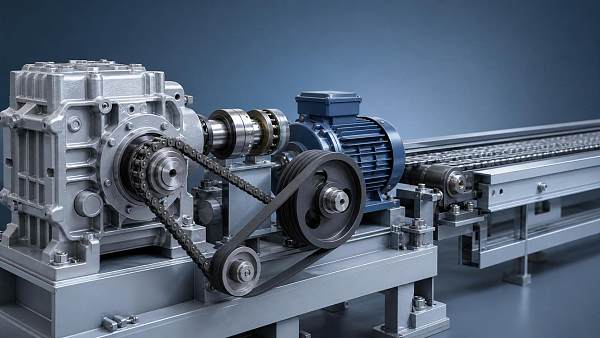
At a basic level, transmission systems transfer power from a prime mover to a driven component. That sounds simple, yet the engineering choice sits between efficiency, controllability, reliability, and maintainability.
In practice, selection can involve geared systems, belt drives, chain drives, couplings, variable speed drives, and direct-drive arrangements. Each option changes how torque is delivered, absorbed, and sustained.
The most useful way to evaluate transmission systems is not by component category alone. A stronger method is to ask how the system behaves under real load, under real environmental conditions, and under real maintenance constraints.
Why the topic matters now
Industrial equipment is being pushed toward higher utilization, tighter energy targets, and more traceable compliance. At the same time, service teams are expected to do more with fewer stoppages.
This raises the cost of a poor decision. An underspecified transmission may fail early. An oversized one may waste energy, add unnecessary mass, and complicate control performance.
Across G-MCE sectors, the same pattern appears repeatedly: transmission systems must now be assessed as lifecycle assets, not only as mechanical parts.
Key parameters that shape performance
Nominal power and rated torque are the starting point, but they rarely finish the job. Selection quality improves when static data is combined with operating variation.
Thermal behavior deserves special attention. Many transmission systems fail not because of one extreme event, but because repeated moderate loading pushes temperature beyond lubricant or seal limits.
Noise, vibration, and alignment tolerance also matter more than they first appear. In food plants or photonics equipment, these factors can affect hygiene regimes, measurement stability, and enclosure design.
Load types often decide the right architecture
Transmission systems should be matched to the character of the load, not only its magnitude. Two applications with equal average torque can require very different designs.
Steady loads
Fans, conveyors, and some process lines often run with stable demand. Here, efficiency, bearing life, and predictable service intervals usually outweigh extreme shock resistance.
Variable and cyclic loads
Automated looms, indexing systems, and actuator platforms see repeating acceleration and deceleration. In these cases, backlash, torsional stiffness, and heat buildup become central selection points.
Shock and impact loads
Winches, lifting mechanisms, and some marine handling equipment experience abrupt torque spikes. Transmission systems for these duties need robust overload margins, strong shaft support, and realistic shock factors.
Reversing loads
Bidirectional motion introduces fatigue patterns that are different from one-way rotation. Reversal frequency can change wear rates in gears, couplings, and chains more than average power figures suggest.
A useful evaluation step is to plot load over time rather than rely on a single rated value. That profile often exposes the real reason one transmission concept outperforms another.
Sector-specific context changes the decision
Cross-industry comparison is helpful because transmission systems behave differently under different operating rules. The core mechanics stay the same, but the priority set changes.
- In specialized maritime engineering, corrosion resistance, sealing integrity, and shock tolerance often dominate.
- In advanced textile lines, speed stability, compact integration, and low vibration may carry more weight.
- In high-voltage transmission and smart grid support equipment, reliability and low maintenance windows are major filters.
- In industrial food processing, washdown compatibility, lubricant strategy, and sanitation-driven component design become critical.
- In precision optics and photonics, backlash control, thermal drift, and motion repeatability can outweigh raw torque capacity.
This is where a repository like G-MCE adds practical value. Technical benchmarks from several sectors help prevent narrow assumptions and expose better-fit transmission systems for adjacent applications.
Maintenance needs should be evaluated early
Maintenance is often treated as a downstream issue. In reality, it should influence transmission systems selection from the first screening stage.
A compact, efficient unit can still be the wrong choice if lubrication points are inaccessible, spare parts are regionally limited, or alignment checks require extended shutdowns.
Questions worth asking early
- How often does the system need lubrication, inspection, or tension adjustment?
- What failure modes are most likely under local operating conditions?
- Can seals, belts, chains, or bearings be replaced without major disassembly?
- Are vibration, oil analysis, or temperature monitoring methods already available on site?
- Do supplier documentation and standards data support predictable servicing?
For critical assets, planned maintenance compatibility can be more valuable than a small gain in nominal efficiency. Downtime cost, safety exposure, and recovery complexity should be part of the same decision model.
A practical framework for comparing options
When several transmission systems appear technically acceptable, comparison should move beyond catalog values. A weighted review often reveals the most resilient option.
This kind of matrix keeps attention on fit-for-duty performance. It also helps document why one of several transmission systems was selected for a regulated or high-value asset.
Where to focus next
A sound decision on transmission systems usually starts with cleaner operating data, not broader catalogs. Load traces, duty cycle mapping, ambient conditions, and service constraints should be assembled before narrowing the shortlist.
From there, compare options against lifecycle exposure rather than nameplate performance alone. In many cases, the best transmission choice is the one that balances controllability, durability, and maintainability under the actual working profile.
For organizations working across sectors, it is worth reviewing benchmarks from adjacent industries as well. That broader view often reveals overlooked risks, stronger standards alignment, and more dependable transmission systems for future projects.
Recommended for You
 Digital SeaHow Does a Ballast Cleaner Screening System Separate Track Ballast?Discover how a ballast cleaner screening system separates reusable stone from fines, what affects performance, and how to assess the results.By: Captain Kenji SatoNov 14, 2026
 Smart MetersPakistan to Seek World Bank and ADB Funding for Smart MetersPakistan seeks World Bank and ADB funding for smart meters on distribution transformers. Explore the plan to tackle power theft and improve grid efficiency.By: Dr. Elena VoltNov 13, 2026
 Digital SeaWhat Is Precision Medicine and How Does It Guide Treatment?Discover how precision medicine uses biomarkers and genetic insights to guide treatment, where it can help, and what to ask before testing.By: Captain Kenji SatoNov 13, 2026
 Grid Resilience2026 CSEE Annual Meeting Opens with Focus on AI and Power SystemsThe 2026 CSEE Annual Meeting explores AI, low-carbon power systems and ultra-high-voltage transmission. Discover why these discussions matter.By: Dr. Elena VoltNov 12, 2026
 Digital SeaShip Radar Detection Range: How Far Can It See and What Limits It?Ship radar detection range depends on more than the display scale. Discover how antenna height, weather, target size, and settings affect what radar can see.By: Captain Kenji SatoNov 12, 2026
 UHV TransformersGE Vernova to Invest $34.5 Million in Louisiana Transformer Plant ExpansionGE Vernova plans a $34.5 million transformer plant expansion in Louisiana. Explore its potential impact on North American supply and procurement.By: Dr. Elena VoltNov 11, 2026
 Digital SeaMetro Station Noise Criteria: Limits and Measurement MethodsExplore metro station noise criteria, applicable limits and measurement methods. Learn how to select metrics and assess compliance with confidence.By: Captain Kenji SatoNov 11, 2026
 Digital SeaKongsberg Maritime Unveils Arctic Hunter Unmanned Surface VesselKongsberg Maritime's Arctic Hunter unmanned surface vessel is proposed for the Royal Navy's Type 92 programme. Explore its technology and procurement implications.By: Captain Kenji SatoNov 10, 2026
 Sorting RobotsHow Accurate Is AI in Food Quality Control? Metrics and Testing MethodsExplore AI in food quality control accuracy, from recall and false negatives to validation methods. Learn how to assess real-world inspection reliability.By: Marcus SterlingNov 10, 2026
 UHV TransformersGE Vernova Selected for 6 GW HVDC Link in IndiaGE Vernova will design a 6 GW HVDC link for PGCIL, connecting Rajasthan and South Kalamb to support India's clean energy transition. Discover the project.By: Dr. Elena VoltNov 09, 2026
 Grid ResilienceEurope's Grid Compliance Standards in 2026: Generator Connection RequirementsExplore new grid compliance standards 2026 Europe projects must address, from generator connection rules to testing and documentation. Prepare for approval.By: Dr. Elena VoltNov 09, 2026
 Technical FabricsNonwoven Bonding Cost Data: Comparing Thermal and Chemical ProcessesExplore nonwoven bonding cost data to compare thermal and chemical processes, assess usable yield, and choose the best-value option for your application.By: Chloe DuboisNov 08, 2026
 Fiber LasersIndustrial Lasers to 2035: Automotive Lightweighting and Precision Welding Drive DemandExplore the industrial laser market outlook to 2035 and discover how automotive lightweighting and precision welding could shape demand and procurement.By: Dr. Hideo TanakaNov 07, 2026
 Technical FabricsChoosing Geotextile Under Railway Ballast: Key Performance RequirementsChoosing geotextile under railway ballast? Explore essential filtration, drainage, strength and durability criteria to make a confident, project-specific selection.By: Chloe DuboisNov 07, 2026
 Digital SeaChoosing Rail Welding Equipment for Maintenance: Field Conditions and Weld TypesChoose rail welding equipment for maintenance with confidence. Compare welding methods, field constraints, inspection needs, and lifecycle costs.By: Captain Kenji SatoNov 06, 2026
 Digital SeaIndia Broadband Forum Urges Stronger Submarine Cable ResilienceIndia’s submarine cable resilience is in focus as the Broadband India Forum urges faster repairs, more vessels and stronger landing infrastructure.By: Captain Kenji SatoNov 06, 2026
 Digital SeaChoosing a Railway Network Switch Supplier: Reliability and Support CriteriaChoosing a railway network switch supplier? Compare reliability, standards evidence, cybersecurity, and lifecycle support to reduce project risk.By: Captain Kenji SatoNov 05, 2026
 Grid ResilienceUS Grid Equipment Import Ban Raises Cost and Implementation ConcernsThe US grid equipment import ban raises concerns over costs and delivery delays. Explore how unclear criteria could affect procurement and supply chains.By: Dr. Elena VoltNov 05, 2026
 Digital SeaRailway Coupler Price: How Type and Specifications Affect QuotesRailway coupler price depends on type, specifications, and order scope. Learn how to compare quotes, avoid hidden costs, and make a confident buying decision.By: Captain Kenji SatoNov 04, 2026
 Grid ResilienceGlobal Smart Grid Companies Raise $3 Billion in First Nine Months of 2026Global smart grid companies raised $3 billion in the first nine months of 2026. Explore the funding breakdown and potential implications for buyers and suppliers.By: Dr. Elena VoltNov 04, 2026
 Digital SeaChoosing Wholesale Pet Toys: How to Evaluate Suppliers and Minimum OrdersWholesale pet toys: learn how to assess suppliers, compare minimum orders and landed costs, and reduce inventory risk before you buy.By: Captain Kenji SatoNov 03, 2026
 Digital SeaSustainable Packaging Design: How to Choose Materials and Reduce WasteDiscover how sustainable packaging design helps reduce waste, protect products, and control costs with practical material choices and proven testing strategies.By: Captain Kenji SatoNov 02, 2026
 Technical FabricsUSMCA's First Joint Review Puts Textile Supply Chain Rules in FocusUSMCA's first joint review puts textile supply chain rules in focus. Explore potential impacts on origin compliance, sourcing and tariff treatment.By: Chloe DuboisNov 02, 2026
 Digital SeaManufacturing KPI Benchmarking: How to Compare Production PerformanceBenchmarking KPI manufacturing performance? Learn how to compare OEE, quality and downtime, identify meaningful gaps, and turn insights into practical improvements.By: Captain Kenji SatoNov 01, 2026
 Smart MetersCCI Approves Adani Energy Solutions' ₹305 Billion Acquisition of IntelliSmartCCI approves Adani Energy Solutions' ₹305 billion acquisition of IntelliSmart. Discover what the deal could mean for India's smart meter market.By: Dr. Elena VoltNov 01, 2026
 Digital SeaChoosing a Coin Laundry Machinery OEM: What Buyers Should EvaluateChoosing a coin laundry machinery OEM? Compare machine specifications, payment integration, lifecycle costs, and support to make a confident buying decision.By: Captain Kenji SatoOct 31, 2026
 Grid ResilienceUS Energy Department Announces $237 Million Grid SCALED Funding ProgramExplore the DOE's $237 million Grid SCALED funding program and its goals to strengthen grid equipment supply chains, lower electricity costs, and improve resilience.By: Dr. Elena VoltOct 31, 2026
 UHV TransformersA Decade of UHV Power in Shandong: Province Leads in Station NumbersShandong UHV power leads China in station numbers. Explore a decade of grid development and its implications for electricity supply and business planning.By: Dr. Elena VoltOct 30, 2026
 Digital SeaChoosing a Composite Train Body Panel Manufacturer: Fire Safety and Quality ChecksChoosing a composite train body panels manufacturer? Learn how to verify fire test evidence, audit production quality, and avoid costly approval gaps before you buy.By: Captain Kenji SatoOct 29, 2026
 Subsea ROV/AUVOcean Infinity Deploys Six AUVs Together Beyond 5,000 MetresOcean Infinity reportedly deployed six HUGIN AUVs beyond 5,200 metres. Explore what concurrent deepwater missions could mean for seabed surveys and procurement.By: Captain Kenji SatoOct 29, 2026
 Grid ResilienceRenewable Energy Grid Balancing: How Storage and Demand Response Work TogetherExplore renewable energy grid balancing with storage and demand response. Learn how coordinated controls manage shortfalls, absorb surplus power, and improve grid reliability.By: Dr. Elena VoltOct 28, 2026






























