

Compare industrial ovens by mapping each offer against your process requirements, destination rules, and acceptance tests. Matching temperature ranges and purchase prices is insufficient.
Different standards may address fire protection, electrical safety, machinery hazards, or thermal processing quality. Their names alone do not establish equivalent protection or performance.
Procurement directors, plant engineers, and quality managers therefore need evidence showing what each oven can safely process, how consistently it performs, and who carries responsibility.
Sourcing arrangements also matter. OEM cooperation and private label manufacturing allocate design control, compliance work, and maintenance obligations differently, influencing both procurement risk and lifetime cost.
What Makes Two Industrial Ovens Truly Comparable?
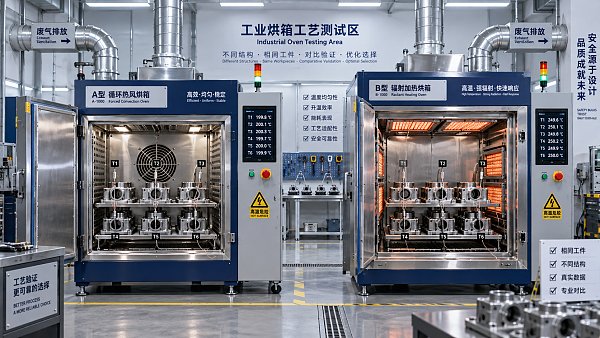
Start with a common application specification. An oven suitable for drying clean metal parts may be inappropriate for curing coatings that release flammable vapors.
Define the product, load mass, loading arrangement, operating temperatures, cycle duration, throughput, atmosphere, and substances released during heating. These details determine meaningful comparison criteria.
Specify the installation country and site conditions, including available utilities, ventilation arrangements, ambient conditions, and any hazardous area classification affecting equipment selection or installation.
Then separate mandatory requirements from production preferences. Applicable legal obligations and essential safety controls should be procurement gates; convenience features can receive weighted commercial scores.
Ask every supplier to complete the same compliance matrix. Each requirement should identify the proposed solution, supporting document, exception, and party responsible for closing gaps.
This approach exposes differences hidden behind similar brochures. Two ovens advertised at 250°C may have different usable working volumes, exhaust capabilities, and loaded temperature uniformity.
Which Standards Apply, and What Do They Actually Prove?
Begin by identifying each standard’s scope. Fire safety requirements, electrical construction rules, and heat treatment quality specifications answer different questions and cannot substitute for one another.
NFPA 86 addresses ovens and furnaces within its scope, including relevant fire and explosion safeguards. Applicability depends on the equipment, process, and governing requirements.
EN 1539 addresses dryers and ovens where flammable substances are released. The ISO 13577 series covers safety requirements for industrial furnaces and associated processing equipment.
ISO 12100 supports machinery risk assessment, while IEC 60204-1 addresses electrical equipment of machines within its scope. Neither independently establishes overall oven compliance or process capability.
AMS2750 concerns pyrometry for thermal processing, and CQI-9 is an automotive heat treatment system assessment. Relevant customers may require either alongside equipment safety provisions.
Record the exact edition, applicable clauses, exclusions, and evidence for each claim. Confirm local adoption and customer requirements with competent specialists before treating any reference as sufficient.
How Do You Compare Safety When the Designs Differ?
Compare how each design controls the same hazards. For solvent curing, examine vapor release assumptions, ventilation capacity, operating limits, purge arrangements, and responses to ventilation failure.
A supplier should explain its maximum permitted solvent loading and calculation basis. An unexplained exhaust flow figure cannot demonstrate suitability for your actual coating chemistry.
For combustion heated ovens, examine fuel isolation, flame supervision, ignition sequences, and required purging. Verify how faults place the system in a defined safe state.
For electrically heated ovens, assess heater control failures, electrical protection, and overtemperature safeguards. Ask how the protective function remains effective when normal temperature control fails.
Review door interlocks, emergency stops, restart behavior, hot surface exposure, and maintenance access. Safety controls must suit actual operator tasks, including loading and fault recovery.
Request a documented protective function test plan. Qualified personnel should verify specified fault responses under controlled conditions, using approved procedures that avoid creating hazardous operating situations.
Which Thermal Performance Claims Should You Trust?
Maximum temperature describes an operating boundary, not production quality. Buyers should separately specify temperature uniformity, stability, recovery time, ramp behavior, and the usable working zone.
Require suppliers to define their uniformity claim precisely. A stated ±5°C tolerance is incomplete without the measurement locations, operating temperature, load condition, and stabilization criteria.
Empty chamber measurements help characterize equipment, but may not predict loaded performance. Dense fixtures, restricted airflow, and product geometry can change heating behavior substantially.
Air temperature also differs from product temperature. Thick components may reach the required condition well after the controller indicates that the oven has stabilized.
For quality critical processes, request representative product temperature measurements across realistic loads. Define when soak timing begins and which measurement determines completion of the cycle.
Compare calibrated instruments, sensor placement, data collection intervals, and reported uncertainty. Results from different methods require reconciliation before you can rank suppliers with confidence.
What Should Factory and Site Acceptance Tests Include?
Agree acceptance criteria before ordering. A supplier’s standard demonstration may confirm basic operation while leaving your throughput, process safety, or temperature consistency requirements untested.
The factory acceptance test should cover agreed construction checks, control sequences, protective functions, and thermal performance. Identify which tests require representative products or equivalent loads.
Use realistic operating conditions wherever practical. Record load arrangement, door opening duration, ambient conditions, exhaust settings, and utilities so results remain interpretable and repeatable.
If production material cannot reach the factory, define a justified surrogate load. State explicitly which performance claims remain provisional until testing with actual products.
The site acceptance test should address installation dependent factors such as utility capacity, duct resistance, ventilation integration, and interfaces with upstream or downstream equipment.
Define pass criteria, corrective action deadlines, retest responsibilities, and payment milestones. These provisions turn performance promises into enforceable deliverables and reduce arguments after installation.
Is OEM Cooperation Better Than Private Label Manufacturing for Our Product?
OEM cooperation is often preferable when your oven requires substantial engineering changes, demanding validation, or integration with a production line. The advantage depends on contractual responsibilities.
Private label manufacturing can suit an established oven platform with proven performance and limited customization. It works best when technical documentation and support remain accessible.
Supplier terminology varies considerably. One company’s OEM arrangement may resemble another’s private label offer, so evaluate the actual design, validation, and service obligations instead.
Ask who owns the drawings, approves component substitutions, maintains technical records, and validates modifications. These answers matter more than the commercial label attached to the partnership.
If you specify higher throughput, different heating elements, or revised exhaust arrangements, establish whether the change requires renewed risk assessment, testing, or conformity documentation.
Branding may also affect legal responsibilities in the destination market. Obtain jurisdiction specific advice on your role before assuming the original manufacturer carries every obligation.
Choose the arrangement that provides adequate engineering control and accountable support. A low customization application may favor private labeling; a demanding process may justify closer development cooperation.
How Do You Compare Lifetime Cost Instead of Purchase Price?
Calculate ownership cost using your expected production schedule. Include purchase, installation, utilities, qualification, maintenance, calibration, spare parts, downtime, and the likely cost of rejected output.
Compare energy consumption per acceptable production unit under an agreed cycle. Rated heater power alone cannot establish efficiency, because cycle length and operating behavior differ.
A higher powered oven may recover temperature faster and increase output. Conversely, excessive ventilation or poor insulation may raise running costs without improving product quality.
Include electrical supply upgrades, fuel connections, ductwork, floor space, and commissioning labor. Equipment with a lower quoted price may require significantly more site investment.
Ask for critical spare part availability, service response arrangements, controller backup procedures, and replacement options. Proprietary components can create expensive delays when failures interrupt production.
Test your financial assumptions against realistic changes in utilization, energy prices, and downtime. Prefer the oven with credible economic benefits under your likely operating conditions.
What Evidence Should a Supplier Provide Before You Commit?
Request a coherent documentation package rather than isolated certificates. It should connect the identified equipment configuration, applicable requirements, safety measures, and promised performance results.
Useful records include electrical drawings, operating instructions, maintenance schedules, calibration records, test reports, and conformity documents where applicable. Confirm that supplied versions match your ordered configuration.
Check what any third party approval actually covers. A certified component, evaluated control panel, or tested prototype does not automatically establish approval of the complete installed system.
Ask suppliers to explain exclusions and unresolved deviations in writing. Missing evidence should become a defined qualification task, with an owner, deadline, and acceptance criterion.
Establish change notification requirements for heaters, controllers, insulation, fans, and protective devices. Substitutions can affect performance, maintainability, or the basis of previous compliance assessments.
Verify references involving similar products, temperatures, load sizes, and destination markets. Relevant operating experience provides stronger procurement evidence than a broad list of unrelated customers.
How Do You Turn the Evidence Into a Purchase Decision?
First eliminate offers that cannot satisfy applicable requirements or control your identified hazards. A weighted score should never compensate for an unresolved essential safety gap.
Then score technically acceptable offers against thermal capability, throughput, ownership cost, documentation quality, and service support. Set weights before reviewing final prices to reduce bias.
For example, compare a lower priced oven with unverified loaded uniformity against a costlier model offering representative test data. The missing evidence creates a qualification obligation.
Require the first supplier to demonstrate the specified result before acceptance. If it cannot, include the likely engineering changes and production delays in your evaluation.
For cross sector procurement, G-MCE’s benchmarking perspective supports this discipline: connect standards references to verifiable evidence, operating requirements, and accountable suppliers before drawing commercial conclusions.
Choose the Oven You Can Verify and Support
The strongest industrial oven comparison starts with one application specification and ends with agreed acceptance evidence. Standard names become useful when their scope is clearly understood.
Purchase the system that safely delivers your required process, passes representative testing, and remains maintainable throughout its service life. Evaluate price only within that framework.
Choose OEM cooperation or private label manufacturing according to the engineering control and responsibility your application needs. Document those obligations before committing to the supplier.