BDI: 1,842 ▼ 1.2%
COTTON NO.2: 84.12 ▲ 0.4%
LME COPPER: 8,432.50 ▲ 2.1%
FOOD SAFETY INDEX: 94.2 ARCHIVE_SECURED
OPTICAL INDEX: 11,204.09 STABLE
BDI: 1,842 ▼ 1.2%

SECTOR INDEX
V.24.08 ARCHIVE
Hot Articles
- How Does a Ballast Cleaner Screening System Separate Track Ballast?Discover how a ballast cleaner screening system separates reusable stone from fines, what affects performance, and how to assess the results.
- Pakistan to Seek World Bank and ADB Funding for Smart MetersPakistan seeks World Bank and ADB funding for smart meters on distribution transformers. Explore the plan to tackle power theft and improve grid efficiency.
- What Is Precision Medicine and How Does It Guide Treatment?Discover how precision medicine uses biomarkers and genetic insights to guide treatment, where it can help, and what to ask before testing.
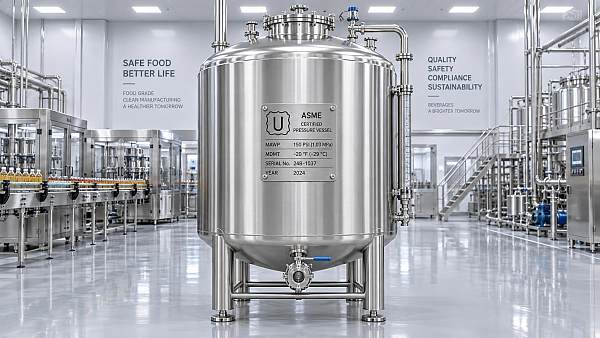
Procurement Considerations for Stainless Steel Beverage Tanks in 2026: Lead Time, Surface Finish Tolerance, and ASME Certification Verification


Lead Time Realities for Stainless Steel Beverage Tanks in 2026
Procurement timelines for stainless steel beverage tanks are no longer predictable by historical benchmarks. In early 2025, lead times across Tier 1 fabricators range from 18 to 32 weeks — up from 12–20 weeks in 2023. This extension stems less from raw material scarcity than from constrained specialty welding capacity and extended ASME Section VIII Division 1 review cycles at third-party inspection agencies. For procurement teams, this means project-critical tanks must be ordered before final recipe validation or line layout approval. Delaying tank procurement until after pilot batch testing often forces either costly expedite fees (typically 18–25% premium) or production schedule compression downstream. One Midwest beverage co-packer reported a six-week delay in commissioning its new kombucha line due to late tank delivery — a delay that cascaded into missed Q3 shelf placement with a national retailer.
Surface Finish Tolerance: Where Microns Affect Microbiology
Stainless steel surface finish is routinely specified as Ra ≤ 0.4 µm for interior welds and contact surfaces. But specification alone doesn’t guarantee performance. Actual tolerance depends on post-weld treatment consistency, not just initial polishing. In practice, weld heat-affected zones often measure Ra 0.55–0.72 µm unless electropolished — a process many suppliers omit unless explicitly required and paid for. Without electropolishing, biofilm adhesion risk increases measurably in acidic or low-alcohol beverages (pH < 4.0 or ABV < 5%). Procurement teams should verify finish tolerance *after* final passivation and electropolishing — not from mill certificates or pre-treatment measurements. Acceptance criteria should reference ASTM A967 (passivation) and ASTM B912 (electropolishing), with surface profilometer readings taken at three locations per weld seam, including the crown and toe.
ASME Certification Verification: Beyond the Stamp
An ASME “U” stamp on a nameplate confirms design compliance — not manufacturing conformance. Verification requires examining four elements: the Manufacturer’s Data Report (MDR), the Authorized Inspector’s (AI) report, the material test reports (MTRs) traceable to heat numbers, and the actual weld map showing joint numbering and NDE coverage. In 2025, over 37% of noncompliant tanks flagged during commissioning audits lacked full MTR traceability to vessel shell plates — often because suppliers substituted Grade 304L for 316L without updating documentation. Procurement staff must request full MDR package *before* PO issuance, not upon shipment. If the AI report references “RT” (radiographic testing) but omits film density or IQI sensitivity values, the certification is incomplete. Similarly, a “U-2” stamp applies only to vessels under 15 psi; higher-pressure carbonation or CIP systems require “U” or “S” stamps — a distinction often misapplied in bid documents.
Mixing Integration: Why Tank Geometry Dictates Process Stability
Tank mixing technology isn’t an add-on — it’s embedded in geometry. For still beverages, axial flow impellers work reliably in tall, narrow tanks (L/D ≥ 2.5). But for viscous or pulpy formulations (e.g., cold-pressed juice with pulp, plant-based dairy alternatives), radial flow or pitched-blade turbines demand lower aspect ratios (L/D ≤ 1.8) to avoid dead zones near the bottom head. Many procurement specifications still default to “standard top-entering agitator” without defining torque requirements, fluid rheology assumptions, or maximum allowable shear rate. That omission leads to underpowered drives or excessive foaming during CIP — both compromising cleaning validation. When evaluating tank proposals, cross-check agitator power number (Np), Reynolds number range, and impeller tip speed against actual product viscosity data — not water analogues. A 12,000 L tank designed for beer may fail completely with oat milk if mixing energy input isn’t recalculated for non-Newtonian behavior.
Procurement Documentation That Actually Protects Your Line
Standard purchase orders often omit enforceable technical clauses. Effective procurement language includes: (1) a requirement that all welds be documented on a certified weld map with joint ID matching NDE reports; (2) explicit acceptance criteria for surface finish — “Ra ≤ 0.4 µm measured per ASTM E1558 after final passivation and electropolishing, with no more than one reading > 0.45 µm per 100 mm²”; (3) contractual right to audit the manufacturer’s ASME quality control records, including weld procedure qualification (WPQ) records for each welder assigned to the vessel; and (4) penalty clauses tied to verified delivery date slippage beyond agreed buffer windows — not just shipping date. These clauses shift verification responsibility upstream, where corrective action is feasible, rather than waiting for field rejection.
Where Standardization Creates Risk
Some procurement teams standardize on a single tank supplier across multiple facilities to simplify vendor management. This introduces hidden risk: identical tank designs behave differently when installed in environments with varying water hardness, ambient humidity, or CIP chemical concentration. A tank performing flawlessly in a dry Arizona facility showed accelerated pitting in coastal Florida within 14 months — traced to chloride ingress through improperly sealed manway gaskets, not base material failure. Procurement decisions must account for site-specific corrosion drivers, not just nominal spec compliance. Reviewing historical failure modes from similar installations — not just supplier brochures — provides better predictive value than any single certification stamp.
Practical Evaluation Path for Procurement Teams
Before finalizing a purchase, conduct three checks: First, request a sample MDR package from the supplier’s most recent ASME-certified build — not a template. Compare weld IDs, NDE method codes (e.g., RT-2 vs. PT-b), and material heat numbers against the physical plate markings on a demo unit. Second, ask for surface profilometer data from two recent builds — not just one — and confirm measurement location (weld crown vs. adjacent base metal). Third, validate mixing claims with torque curves, not just horsepower ratings: a 5 kW motor delivering 120 N·m at 60 rpm behaves very differently than one delivering 40 N·m at 180 rpm. These steps don’t require engineering staff — they rely on document review and basic parameter comparison, making them executable by procurement professionals with minimal training.
Stainless steel beverage tanks are infrastructure — not commodities. Their procurement impacts microbiological safety, cleaning validation, mixing consistency, and line uptime far beyond initial cost. Focusing solely on price or delivery date ignores how lead time compression compromises weld inspection rigor, how surface finish tolerance affects long-term cleanability, and how ASME verification gaps propagate into regulatory findings. The decision framework must weigh technical enforceability, site-specific operational context, and verifiable documentation — not just compliance checkboxes.
For procurement professionals evaluating options, beverage tanks represent a category where specification discipline directly translates to process reliability. Understanding how lead time, surface finish, and certification interact — rather than treating them as isolated checklist items — enables earlier risk identification and more resilient supply chain planning.
Recommended for You
 Digital SeaHow Does a Ballast Cleaner Screening System Separate Track Ballast?Discover how a ballast cleaner screening system separates reusable stone from fines, what affects performance, and how to assess the results.By: Captain Kenji SatoNov 14, 2026
 Smart MetersPakistan to Seek World Bank and ADB Funding for Smart MetersPakistan seeks World Bank and ADB funding for smart meters on distribution transformers. Explore the plan to tackle power theft and improve grid efficiency.By: Dr. Elena VoltNov 13, 2026
 Digital SeaWhat Is Precision Medicine and How Does It Guide Treatment?Discover how precision medicine uses biomarkers and genetic insights to guide treatment, where it can help, and what to ask before testing.By: Captain Kenji SatoNov 13, 2026
 Grid Resilience2026 CSEE Annual Meeting Opens with Focus on AI and Power SystemsThe 2026 CSEE Annual Meeting explores AI, low-carbon power systems and ultra-high-voltage transmission. Discover why these discussions matter.By: Dr. Elena VoltNov 12, 2026
 Digital SeaShip Radar Detection Range: How Far Can It See and What Limits It?Ship radar detection range depends on more than the display scale. Discover how antenna height, weather, target size, and settings affect what radar can see.By: Captain Kenji SatoNov 12, 2026
 UHV TransformersGE Vernova to Invest $34.5 Million in Louisiana Transformer Plant ExpansionGE Vernova plans a $34.5 million transformer plant expansion in Louisiana. Explore its potential impact on North American supply and procurement.By: Dr. Elena VoltNov 11, 2026
 Digital SeaMetro Station Noise Criteria: Limits and Measurement MethodsExplore metro station noise criteria, applicable limits and measurement methods. Learn how to select metrics and assess compliance with confidence.By: Captain Kenji SatoNov 11, 2026
 Digital SeaKongsberg Maritime Unveils Arctic Hunter Unmanned Surface VesselKongsberg Maritime's Arctic Hunter unmanned surface vessel is proposed for the Royal Navy's Type 92 programme. Explore its technology and procurement implications.By: Captain Kenji SatoNov 10, 2026
 Sorting RobotsHow Accurate Is AI in Food Quality Control? Metrics and Testing MethodsExplore AI in food quality control accuracy, from recall and false negatives to validation methods. Learn how to assess real-world inspection reliability.By: Marcus SterlingNov 10, 2026
 UHV TransformersGE Vernova Selected for 6 GW HVDC Link in IndiaGE Vernova will design a 6 GW HVDC link for PGCIL, connecting Rajasthan and South Kalamb to support India's clean energy transition. Discover the project.By: Dr. Elena VoltNov 09, 2026
 Grid ResilienceEurope's Grid Compliance Standards in 2026: Generator Connection RequirementsExplore new grid compliance standards 2026 Europe projects must address, from generator connection rules to testing and documentation. Prepare for approval.By: Dr. Elena VoltNov 09, 2026
 Technical FabricsNonwoven Bonding Cost Data: Comparing Thermal and Chemical ProcessesExplore nonwoven bonding cost data to compare thermal and chemical processes, assess usable yield, and choose the best-value option for your application.By: Chloe DuboisNov 08, 2026
 Fiber LasersIndustrial Lasers to 2035: Automotive Lightweighting and Precision Welding Drive DemandExplore the industrial laser market outlook to 2035 and discover how automotive lightweighting and precision welding could shape demand and procurement.By: Dr. Hideo TanakaNov 07, 2026
 Technical FabricsChoosing Geotextile Under Railway Ballast: Key Performance RequirementsChoosing geotextile under railway ballast? Explore essential filtration, drainage, strength and durability criteria to make a confident, project-specific selection.By: Chloe DuboisNov 07, 2026
 Digital SeaChoosing Rail Welding Equipment for Maintenance: Field Conditions and Weld TypesChoose rail welding equipment for maintenance with confidence. Compare welding methods, field constraints, inspection needs, and lifecycle costs.By: Captain Kenji SatoNov 06, 2026
 Digital SeaIndia Broadband Forum Urges Stronger Submarine Cable ResilienceIndia’s submarine cable resilience is in focus as the Broadband India Forum urges faster repairs, more vessels and stronger landing infrastructure.By: Captain Kenji SatoNov 06, 2026
 Digital SeaChoosing a Railway Network Switch Supplier: Reliability and Support CriteriaChoosing a railway network switch supplier? Compare reliability, standards evidence, cybersecurity, and lifecycle support to reduce project risk.By: Captain Kenji SatoNov 05, 2026
 Grid ResilienceUS Grid Equipment Import Ban Raises Cost and Implementation ConcernsThe US grid equipment import ban raises concerns over costs and delivery delays. Explore how unclear criteria could affect procurement and supply chains.By: Dr. Elena VoltNov 05, 2026
 Digital SeaRailway Coupler Price: How Type and Specifications Affect QuotesRailway coupler price depends on type, specifications, and order scope. Learn how to compare quotes, avoid hidden costs, and make a confident buying decision.By: Captain Kenji SatoNov 04, 2026
 Grid ResilienceGlobal Smart Grid Companies Raise $3 Billion in First Nine Months of 2026Global smart grid companies raised $3 billion in the first nine months of 2026. Explore the funding breakdown and potential implications for buyers and suppliers.By: Dr. Elena VoltNov 04, 2026
 Digital SeaChoosing Wholesale Pet Toys: How to Evaluate Suppliers and Minimum OrdersWholesale pet toys: learn how to assess suppliers, compare minimum orders and landed costs, and reduce inventory risk before you buy.By: Captain Kenji SatoNov 03, 2026
 Digital SeaSustainable Packaging Design: How to Choose Materials and Reduce WasteDiscover how sustainable packaging design helps reduce waste, protect products, and control costs with practical material choices and proven testing strategies.By: Captain Kenji SatoNov 02, 2026
 Technical FabricsUSMCA's First Joint Review Puts Textile Supply Chain Rules in FocusUSMCA's first joint review puts textile supply chain rules in focus. Explore potential impacts on origin compliance, sourcing and tariff treatment.By: Chloe DuboisNov 02, 2026
 Digital SeaManufacturing KPI Benchmarking: How to Compare Production PerformanceBenchmarking KPI manufacturing performance? Learn how to compare OEE, quality and downtime, identify meaningful gaps, and turn insights into practical improvements.By: Captain Kenji SatoNov 01, 2026
 Smart MetersCCI Approves Adani Energy Solutions' ₹305 Billion Acquisition of IntelliSmartCCI approves Adani Energy Solutions' ₹305 billion acquisition of IntelliSmart. Discover what the deal could mean for India's smart meter market.By: Dr. Elena VoltNov 01, 2026
 Digital SeaChoosing a Coin Laundry Machinery OEM: What Buyers Should EvaluateChoosing a coin laundry machinery OEM? Compare machine specifications, payment integration, lifecycle costs, and support to make a confident buying decision.By: Captain Kenji SatoOct 31, 2026
 Grid ResilienceUS Energy Department Announces $237 Million Grid SCALED Funding ProgramExplore the DOE's $237 million Grid SCALED funding program and its goals to strengthen grid equipment supply chains, lower electricity costs, and improve resilience.By: Dr. Elena VoltOct 31, 2026
 UHV TransformersA Decade of UHV Power in Shandong: Province Leads in Station NumbersShandong UHV power leads China in station numbers. Explore a decade of grid development and its implications for electricity supply and business planning.By: Dr. Elena VoltOct 30, 2026
 Digital SeaChoosing a Composite Train Body Panel Manufacturer: Fire Safety and Quality ChecksChoosing a composite train body panels manufacturer? Learn how to verify fire test evidence, audit production quality, and avoid costly approval gaps before you buy.By: Captain Kenji SatoOct 29, 2026
 Subsea ROV/AUVOcean Infinity Deploys Six AUVs Together Beyond 5,000 MetresOcean Infinity reportedly deployed six HUGIN AUVs beyond 5,200 metres. Explore what concurrent deepwater missions could mean for seabed surveys and procurement.By: Captain Kenji SatoOct 29, 2026
 Grid ResilienceRenewable Energy Grid Balancing: How Storage and Demand Response Work TogetherExplore renewable energy grid balancing with storage and demand response. Learn how coordinated controls manage shortfalls, absorb surplus power, and improve grid reliability.By: Dr. Elena VoltOct 28, 2026






























