BDI: 1,842 ▼ 1.2%
COTTON NO.2: 84.12 ▲ 0.4%
LME COPPER: 8,432.50 ▲ 2.1%
FOOD SAFETY INDEX: 94.2 ARCHIVE_SECURED
OPTICAL INDEX: 11,204.09 STABLE
BDI: 1,842 ▼ 1.2%

SECTOR INDEX
V.24.08 ARCHIVE
Hot Articles
- How Does a Ballast Cleaner Screening System Separate Track Ballast?Discover how a ballast cleaner screening system separates reusable stone from fines, what affects performance, and how to assess the results.
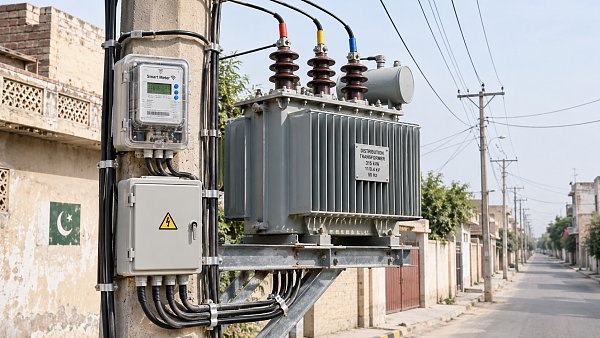
- Pakistan to Seek World Bank and ADB Funding for Smart MetersPakistan seeks World Bank and ADB funding for smart meters on distribution transformers. Explore the plan to tackle power theft and improve grid efficiency.
- What Is Precision Medicine and How Does It Guide Treatment?Discover how precision medicine uses biomarkers and genetic insights to guide treatment, where it can help, and what to ask before testing.
How Do Food Safety Requirements Affect Aseptic Filling Machine Selection?


Food safety requirements affect aseptic filling machine selection by defining what the machine must reliably control, prove, and document. A system that delivers the required output rate may still be unsuitable if it cannot maintain a validated sterile boundary, withstand the intended cleaning and sterilization regime, or provide evidence that each critical process condition remained within control.
For aseptic products, contamination is not simply a quality concern. It can lead to product withdrawal, rejected batches, disrupted customer supply, and difficult audit findings. The machine therefore needs to be assessed as part of the complete filling process: product preparation, sterilization, packaging material handling, filling, closure, cleaning, utilities, controls, and operator access all affect the final risk level.
The practical question is not “Which aseptic filler is best?” It is: Which filling machine can protect this product in this package, under this cleaning regime, with evidence that supports the food safety plan?
Food safety starts with the product and process risk
Aseptic filling is used when a commercially sterile product is filled into a sterilized package under controlled conditions, allowing shelf-stable distribution without refrigerated storage in many applications. That broad description hides important differences. Low-acid beverages, dairy-based products, plant-based drinks, liquid foods with particulates, nutritional products, sauces, and high-viscosity formulations do not place the same demands on a filling system.
Before comparing machine specifications, define the product hazards and operating conditions. Acid level, viscosity, fat or protein content, particle size, foaming tendency, sensitivity to heat, and expected shelf life all influence the required design. A machine appropriate for a clear beverage may not provide suitable product handling or cleaning performance for a protein-rich drink. Likewise, a filler designed around one packaging format may create unnecessary risk when adapted to another format through frequent changeovers.
Food safety requirements should also be translated into critical control points. These commonly include product sterilization, sterilization of the filling environment, treatment of packaging material or containers, closure integrity, and prevention of recontamination after sterilization. The filling machine must support control of those points, rather than merely sit downstream of them.
Hygienic design determines whether the machine can be cleaned and controlled
Hygienic design is often treated as a visual feature: stainless steel surfaces, enclosed guards, polished pipework, and a clean-looking exterior. Those features are not enough. The useful question is whether all product-contact and adjacent high-care areas can be effectively cleaned, drained, inspected, and returned to a known sanitary condition.
Food-contact materials need to be compatible with the product, cleaning chemicals, sterilization agents, and operating temperatures. Material selection matters at seals, gaskets, valve seats, hoses, and components exposed to repeated sterilization cycles. A material that performs well mechanically can still become a food safety problem if it degrades, sheds particles, absorbs product residues, or loses sealing integrity under actual conditions.
Machine geometry also matters. Dead legs, poorly drained pipe sections, inaccessible joints, rough internal surfaces, and areas that retain product can create locations where residues persist. These are not abstract design concerns. Residual product can support microbial survival, complicate cleaning validation, and make a routine changeover less predictable.
When reviewing a filler, ask the supplier to explain how the design manages:
- Complete drainage of product pathways and cleaning circuits.
- Clean-in-place and sterilize-in-place coverage for all relevant product-contact components.
- Seals, valves, nozzles, and transfer points that are difficult to inspect manually.
- Separation between sterile product zones, non-sterile mechanical zones, and operator-access areas.
- Protection against condensation, splash, dust, lubricant migration, and airborne contamination.
- Hygienic recovery after a stoppage, alarm, maintenance event, or package jam.
A machine with fewer inaccessible components may be a better safety choice than a more complex high-speed design if the complex design cannot be consistently cleaned and maintained by the available operation.
Sterilization capability must be validated, not assumed
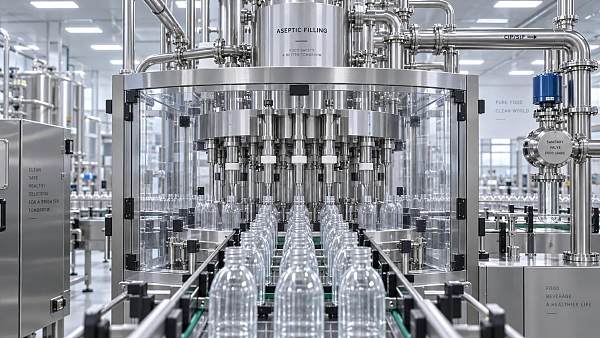
Aseptic filling depends on the controlled treatment of product, packaging, closures, and the filling environment. The chosen method can involve heat, chemical sterilants, filtration, or a combination of approaches. The correct method depends on the product, packaging material, regulatory environment, and process design.
Machine selection should focus on whether the sterilization process can be validated and routinely monitored. A supplier statement that a machine is “aseptic” does not answer the operational questions that matter. Procurement and technical teams need to understand which parameters are measured, how they are recorded, what happens when a limit is exceeded, and how the machine prevents release of potentially affected product.
For example, a filling system may need to monitor temperature, time, pressure, sterilant concentration, air filtration condition, or differential pressure in a controlled enclosure. The exact controls vary by design, but the principle is consistent: the process must show that required conditions were achieved and maintained.
Interlocks are especially important. If a sterile barrier is compromised, a robust system should not allow normal production to continue without a defined recovery sequence. That may mean stopping filling, rejecting affected packages, initiating re-sterilization, or requiring authorized verification before restart. A fast restart is not automatically a good restart if it bypasses the evidence needed to protect product safety.
Cleaning requirements change the economics of machinery selection
Cleaning is not a secondary operating task. It is part of the food safety capability of the line. A filler that requires excessive dismantling, extended downtime, or highly specialized intervention may work well during initial commissioning but become difficult to operate consistently over time.
Consider the full cleaning cycle, including preparation, chemical circulation, rinsing, sterilization, verification, and return to production. The relevant issue is not just how quickly the stated cycle can run. It is whether the cycle matches the product soil, the available utilities, the site’s sanitation procedures, and the number of product or package changes expected each week.
Clean-in-place systems should not be chosen solely because they reduce labor. Their value lies in repeatability. A properly engineered CIP sequence can apply defined conditions to a defined circuit, reducing dependence on individual cleaning technique. However, automated cleaning does not compensate for a poor machine design. If fluid cannot reach, wet, drain, or rinse a surface effectively, automation only repeats the same limitation.
Packaging and closure controls are part of the aseptic system
Aseptic filling machines are often evaluated around the filling valve, but packaging is equally important. The container, pouch, carton, bottle, cap, foil, or closure must be compatible with the sterilization method and must retain integrity through filling, sealing, distribution, and intended storage.
Different packaging systems create different risks. Preformed containers may require controlled container treatment and protected transfer into the filling zone. Roll-fed or web-based materials need reliable sterilization and handling before package formation. Closures require careful management because a sterile product can be compromised at the final sealing point.
Evaluate how the equipment confirms package presence, fill condition, closure application, seal formation, and reject performance. Vision inspection, checkweighing, leak detection, and code verification may contribute useful assurance, but they do not replace control of the aseptic process. Inspection is most valuable when it is integrated with a clear decision rule: detect the fault, remove the affected package, record the event, and prevent recurrence where possible.
Standards matter, but the label is not the decision
Food processors may need to work within FDA expectations, customer specifications, national food regulations, and hygienic engineering guidance associated with bodies such as EHEDG. Quality management and food safety systems may also use ISO-based frameworks. These references can help shape machine requirements, documentation expectations, and supplier assessments.
However, asking whether a machine is “FDA compliant” or “EHEDG compliant” can produce an incomplete answer. Compliance is usually connected to the finished process, the intended use, site controls, materials, procedures, and documented evidence. A machine may contain hygienically designed components and still be unsuitable for a specific product or sanitation regime.
A stronger procurement approach is to convert applicable requirements into a user requirement specification. The specification should identify the product range, packaging formats, target production conditions, cleaning and sterilization expectations, process monitoring needs, documentation, maintenance access, operator controls, and acceptance criteria. This gives suppliers a defined basis for response and makes proposals easier to compare.
Do not buy capacity that the food safety program cannot support
High output is attractive because it lowers apparent unit cost, but speed can magnify weak points. At higher line speeds, package handling becomes less forgiving, operator intervention may become more frequent, and a small sealing or sterilization issue can affect more units before detection. A line should be selected for stable, controlled operation at the planned production rate, not for an exceptional peak figure.
Capacity decisions must also consider upstream and downstream equipment. Product sterilization, buffer management, cap or package supply, cooling, secondary packaging, and warehouse handling can all influence aseptic integrity. A filler cannot compensate for unstable upstream temperature control or poor package handling after closure.
The same principle applies to flexibility. A machine that supports many formats is useful only when each format has a credible sanitation, setup, and validation approach. Excessive flexibility can add change parts, hidden surfaces, adjustment errors, and longer recovery after interventions. For a narrow, stable product portfolio, a more dedicated configuration may offer better control and simpler operation.
Questions worth asking before selecting an aseptic filler
Supplier meetings are more productive when questions test the machine’s controllability rather than its brochure features. Ask for a clear description of the sterile boundary and every point where it can be challenged. Request the proposed cleaning and sterilization sequences for the actual product family. Review the instrumentation, alarms, interlocks, data records, and handling of deviations.
It is also useful to examine maintenance in practical terms. Which components require routine replacement? Can they be changed without exposing sterile areas unnecessarily? How is the machine cleaned and returned to service after maintenance? A design that is technically aseptic during steady-state production may create avoidable exposure during routine service.
For cross-border sourcing and complex industrial procurement, a technical benchmark can help compare supplier claims against consistent criteria. G-MCE’s industrial food processing technology perspective is relevant here because machinery selection benefits from comparing hygienic design, control documentation, material suitability, and lifecycle service requirements alongside headline capacity. That comparison should remain tied to the actual process risk, not reduced to a scorecard of generic features.
Common selection mistakes
Choosing based on throughput alone. Production rate matters, but it should follow validation capability, hygienic design, and stable operation. A lower-rate line with dependable control may deliver more usable output than a faster line with frequent sanitation or quality interruptions.
Treating aseptic operation as a single machine feature. The aseptic condition is maintained by an integrated system. Product treatment, packaging sterilization, filling-zone control, closure performance, utilities, and operating procedures all need to work together.
Assuming automation removes sanitation risk. Automated CIP, alarms, and recipe controls are valuable, but they need correct design, maintained sensors, suitable parameters, and disciplined response to deviations.
Ignoring the operator and maintenance workflow. Complex access procedures, unclear alarms, and difficult changeovers can lead to shortcuts under production pressure. Select equipment that supports disciplined work instead of relying on perfect behavior.
FAQ
Is an aseptic filling machine necessary for every shelf-stable food?
No. The appropriate process depends on the product, packaging, intended shelf life, and overall preservation method. Aseptic filling is most relevant where separately sterilized product and packaging are combined under controlled conditions.
Can a standard liquid filler be upgraded to aseptic operation?
Some upgrades are possible, but adding guards or sterilization components does not automatically create a validated aseptic system. Product paths, sterile boundaries, package handling, controls, cleaning capability, and documentation all need to be evaluated together.
What documentation should accompany the machine?
Useful documentation typically covers materials, hygienic design, process descriptions, cleaning and sterilization sequences, instrumentation, alarm logic, operating instructions, maintenance requirements, and test or acceptance records relevant to the specified configuration.
What should be confirmed first when comparing suppliers?
Confirm that each supplier is designing for the same product, package, sanitation method, utilities, operating pattern, and acceptance criteria. Comparisons become misleading when one proposal assumes conditions that another proposal must actively control.
The right aseptic filling machine is the one that fits the product and package while making safe operation repeatable. Start with the hazards, translate them into controllable requirements, and assess the machine through cleaning, sterilization, monitoring, maintenance, and recovery from deviations. That approach produces a more defensible decision than selecting on price or rated speed alone.
Recommended for You
 Digital SeaHow Does a Ballast Cleaner Screening System Separate Track Ballast?Discover how a ballast cleaner screening system separates reusable stone from fines, what affects performance, and how to assess the results.By: Captain Kenji SatoNov 14, 2026
 Smart MetersPakistan to Seek World Bank and ADB Funding for Smart MetersPakistan seeks World Bank and ADB funding for smart meters on distribution transformers. Explore the plan to tackle power theft and improve grid efficiency.By: Dr. Elena VoltNov 13, 2026
 Digital SeaWhat Is Precision Medicine and How Does It Guide Treatment?Discover how precision medicine uses biomarkers and genetic insights to guide treatment, where it can help, and what to ask before testing.By: Captain Kenji SatoNov 13, 2026
 Grid Resilience2026 CSEE Annual Meeting Opens with Focus on AI and Power SystemsThe 2026 CSEE Annual Meeting explores AI, low-carbon power systems and ultra-high-voltage transmission. Discover why these discussions matter.By: Dr. Elena VoltNov 12, 2026
 Digital SeaShip Radar Detection Range: How Far Can It See and What Limits It?Ship radar detection range depends on more than the display scale. Discover how antenna height, weather, target size, and settings affect what radar can see.By: Captain Kenji SatoNov 12, 2026
 UHV TransformersGE Vernova to Invest $34.5 Million in Louisiana Transformer Plant ExpansionGE Vernova plans a $34.5 million transformer plant expansion in Louisiana. Explore its potential impact on North American supply and procurement.By: Dr. Elena VoltNov 11, 2026
 Digital SeaMetro Station Noise Criteria: Limits and Measurement MethodsExplore metro station noise criteria, applicable limits and measurement methods. Learn how to select metrics and assess compliance with confidence.By: Captain Kenji SatoNov 11, 2026
 Digital SeaKongsberg Maritime Unveils Arctic Hunter Unmanned Surface VesselKongsberg Maritime's Arctic Hunter unmanned surface vessel is proposed for the Royal Navy's Type 92 programme. Explore its technology and procurement implications.By: Captain Kenji SatoNov 10, 2026
 Sorting RobotsHow Accurate Is AI in Food Quality Control? Metrics and Testing MethodsExplore AI in food quality control accuracy, from recall and false negatives to validation methods. Learn how to assess real-world inspection reliability.By: Marcus SterlingNov 10, 2026
 UHV TransformersGE Vernova Selected for 6 GW HVDC Link in IndiaGE Vernova will design a 6 GW HVDC link for PGCIL, connecting Rajasthan and South Kalamb to support India's clean energy transition. Discover the project.By: Dr. Elena VoltNov 09, 2026
 Grid ResilienceEurope's Grid Compliance Standards in 2026: Generator Connection RequirementsExplore new grid compliance standards 2026 Europe projects must address, from generator connection rules to testing and documentation. Prepare for approval.By: Dr. Elena VoltNov 09, 2026
 Technical FabricsNonwoven Bonding Cost Data: Comparing Thermal and Chemical ProcessesExplore nonwoven bonding cost data to compare thermal and chemical processes, assess usable yield, and choose the best-value option for your application.By: Chloe DuboisNov 08, 2026
 Fiber LasersIndustrial Lasers to 2035: Automotive Lightweighting and Precision Welding Drive DemandExplore the industrial laser market outlook to 2035 and discover how automotive lightweighting and precision welding could shape demand and procurement.By: Dr. Hideo TanakaNov 07, 2026
 Technical FabricsChoosing Geotextile Under Railway Ballast: Key Performance RequirementsChoosing geotextile under railway ballast? Explore essential filtration, drainage, strength and durability criteria to make a confident, project-specific selection.By: Chloe DuboisNov 07, 2026
 Digital SeaChoosing Rail Welding Equipment for Maintenance: Field Conditions and Weld TypesChoose rail welding equipment for maintenance with confidence. Compare welding methods, field constraints, inspection needs, and lifecycle costs.By: Captain Kenji SatoNov 06, 2026
 Digital SeaIndia Broadband Forum Urges Stronger Submarine Cable ResilienceIndia’s submarine cable resilience is in focus as the Broadband India Forum urges faster repairs, more vessels and stronger landing infrastructure.By: Captain Kenji SatoNov 06, 2026
 Digital SeaChoosing a Railway Network Switch Supplier: Reliability and Support CriteriaChoosing a railway network switch supplier? Compare reliability, standards evidence, cybersecurity, and lifecycle support to reduce project risk.By: Captain Kenji SatoNov 05, 2026
 Grid ResilienceUS Grid Equipment Import Ban Raises Cost and Implementation ConcernsThe US grid equipment import ban raises concerns over costs and delivery delays. Explore how unclear criteria could affect procurement and supply chains.By: Dr. Elena VoltNov 05, 2026
 Digital SeaRailway Coupler Price: How Type and Specifications Affect QuotesRailway coupler price depends on type, specifications, and order scope. Learn how to compare quotes, avoid hidden costs, and make a confident buying decision.By: Captain Kenji SatoNov 04, 2026
 Grid ResilienceGlobal Smart Grid Companies Raise $3 Billion in First Nine Months of 2026Global smart grid companies raised $3 billion in the first nine months of 2026. Explore the funding breakdown and potential implications for buyers and suppliers.By: Dr. Elena VoltNov 04, 2026
 Digital SeaChoosing Wholesale Pet Toys: How to Evaluate Suppliers and Minimum OrdersWholesale pet toys: learn how to assess suppliers, compare minimum orders and landed costs, and reduce inventory risk before you buy.By: Captain Kenji SatoNov 03, 2026
 Digital SeaSustainable Packaging Design: How to Choose Materials and Reduce WasteDiscover how sustainable packaging design helps reduce waste, protect products, and control costs with practical material choices and proven testing strategies.By: Captain Kenji SatoNov 02, 2026
 Technical FabricsUSMCA's First Joint Review Puts Textile Supply Chain Rules in FocusUSMCA's first joint review puts textile supply chain rules in focus. Explore potential impacts on origin compliance, sourcing and tariff treatment.By: Chloe DuboisNov 02, 2026
 Digital SeaManufacturing KPI Benchmarking: How to Compare Production PerformanceBenchmarking KPI manufacturing performance? Learn how to compare OEE, quality and downtime, identify meaningful gaps, and turn insights into practical improvements.By: Captain Kenji SatoNov 01, 2026
 Smart MetersCCI Approves Adani Energy Solutions' ₹305 Billion Acquisition of IntelliSmartCCI approves Adani Energy Solutions' ₹305 billion acquisition of IntelliSmart. Discover what the deal could mean for India's smart meter market.By: Dr. Elena VoltNov 01, 2026
 Digital SeaChoosing a Coin Laundry Machinery OEM: What Buyers Should EvaluateChoosing a coin laundry machinery OEM? Compare machine specifications, payment integration, lifecycle costs, and support to make a confident buying decision.By: Captain Kenji SatoOct 31, 2026
 Grid ResilienceUS Energy Department Announces $237 Million Grid SCALED Funding ProgramExplore the DOE's $237 million Grid SCALED funding program and its goals to strengthen grid equipment supply chains, lower electricity costs, and improve resilience.By: Dr. Elena VoltOct 31, 2026
 UHV TransformersA Decade of UHV Power in Shandong: Province Leads in Station NumbersShandong UHV power leads China in station numbers. Explore a decade of grid development and its implications for electricity supply and business planning.By: Dr. Elena VoltOct 30, 2026
 Digital SeaChoosing a Composite Train Body Panel Manufacturer: Fire Safety and Quality ChecksChoosing a composite train body panels manufacturer? Learn how to verify fire test evidence, audit production quality, and avoid costly approval gaps before you buy.By: Captain Kenji SatoOct 29, 2026
 Subsea ROV/AUVOcean Infinity Deploys Six AUVs Together Beyond 5,000 MetresOcean Infinity reportedly deployed six HUGIN AUVs beyond 5,200 metres. Explore what concurrent deepwater missions could mean for seabed surveys and procurement.By: Captain Kenji SatoOct 29, 2026
 Grid ResilienceRenewable Energy Grid Balancing: How Storage and Demand Response Work TogetherExplore renewable energy grid balancing with storage and demand response. Learn how coordinated controls manage shortfalls, absorb surplus power, and improve grid reliability.By: Dr. Elena VoltOct 28, 2026