BDI: 1,842 ▼ 1.2%
COTTON NO.2: 84.12 ▲ 0.4%
LME COPPER: 8,432.50 ▲ 2.1%
FOOD SAFETY INDEX: 94.2 ARCHIVE_SECURED
OPTICAL INDEX: 11,204.09 STABLE
BDI: 1,842 ▼ 1.2%

SECTOR INDEX
V.24.08 ARCHIVE
Hot Articles
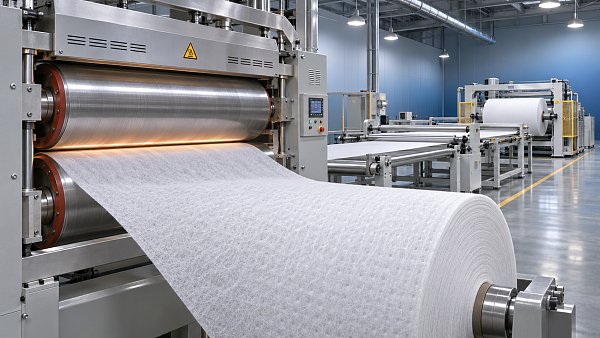
- Nonwoven Bonding Cost Data: Comparing Thermal and Chemical ProcessesExplore nonwoven bonding cost data to compare thermal and chemical processes, assess usable yield, and choose the best-value option for your application.
- Industrial Lasers to 2035: Automotive Lightweighting and Precision Welding Drive DemandExplore the industrial laser market outlook to 2035 and discover how automotive lightweighting and precision welding could shape demand and procurement.
- Choosing Geotextile Under Railway Ballast: Key Performance RequirementsChoosing geotextile under railway ballast? Explore essential filtration, drainage, strength and durability criteria to make a confident, project-specific selection.
Silver Ion Antibacterial Fabric: How to Verify Performance After Repeated Washing


A supplier may present strong initial antibacterial results while offering little evidence for the same fabric after laundering. When qualifying silver ion antibacterial fabric for washable garments, bedding, or reusable textile products, that gap matters: an untreated-looking, intact fabric can still have lost much of its antibacterial function.
Verify wash durability by comparing unwashed and post-wash specimens using a documented laundering protocol, the same appropriate antibacterial test method, and predefined acceptance criteria. Silver-content measurements alone cannot establish retained activity. The evidence must connect the supplied material, its washing conditions, and its measured antibacterial performance.
Define the claim before commissioning a test
“Antibacterial after repeated washing” is incomplete unless the supplier identifies how many washes, which wash procedure, which bacteria, and what performance endpoint the claim covers. A result after gentle domestic laundering does not automatically support use under industrial laundering, bleach exposure, or thermal disinfection.
Translate the intended application into a written test specification before samples reach the laboratory. Include:
- The finished fabric identity, construction, composition, finish, and production lot.
- The claimed laundering life and relevant care-label conditions.
- The antibacterial test method, edition, selected procedure, and bacterial strains.
- The required post-wash endpoint and how variability will affect acceptance.
- Any additional exposures, such as bleach or tumble drying, that belong to the intended use.
Keep the claim limited to what the test can demonstrate. Antibacterial activity under controlled laboratory conditions does not establish reduced infection transmission, clinical protection, or odor control in wear. Those are separate claims requiring suitable evidence.
Make the wash count reproducible
A report stating “tested after 50 washes” is not reproducible without the laundering details. Detergent chemistry, temperature, mechanical action, rinsing, and drying can affect the silver treatment, the textile surface, and subsequent bacterial recovery.
ISO 6330 provides domestic washing and drying procedures for textile testing. ISO 15797 addresses industrial washing and finishing procedures for evaluating workwear. AATCC TM61 provides accelerated laundering conditions; it should not be treated as a universal conversion between laboratory cycles and household washes for antibacterial durability. Select a protocol appropriate to the intended exposure and explain any claimed equivalence.
Use the complete specified wash-and-dry sequence rather than adding drying only at the end unless the chosen protocol requires that arrangement. If a commercial laundry process differs materially from a standard procedure, document it as a separate application-specific exposure rather than presenting it as an unmodified standard test.
Wash treated and untreated controls separately when treatment transfer could contaminate the reference fabric. Record storage and conditioning between laundering and antibacterial testing, and do not introduce an unreported rinse that changes the specimen’s chemical state.
Choose a method that fits the fabric, not the preferred percentage
ISO 20743 specifies quantitative methods for determining antibacterial activity of textile products, including different inoculation approaches. AATCC TM100 is another widely used quantitative method for evaluating antibacterial finishes on textile materials. Neither standard name, by itself, tells the reader everything needed to interpret a result.
The selected procedure must suit the specimen’s wetting behavior and construction. A hydrophobic fabric that does not accept the inoculum as intended can produce misleading results through uneven contact or poor organism recovery. Ask the laboratory to explain method suitability, specimen preparation, and any deviations rather than quietly modifying the procedure.
Use the same method and procedure for baseline and post-wash comparisons. Results obtained under different inoculum levels, contact times, organisms, or recovery conditions are not directly interchangeable. Where different methods are necessary, present them as separate evidence rather than a continuous durability series.
Qualitative agar diffusion testing can provide supplementary information, but an inhibition zone is not a substitute for a quantitative wash-durability result. Zone size depends partly on diffusion into agar. A treatment with limited diffusion may behave differently in direct contact, while a large zone does not establish lasting performance.
Build a comparison that can reveal real performance loss
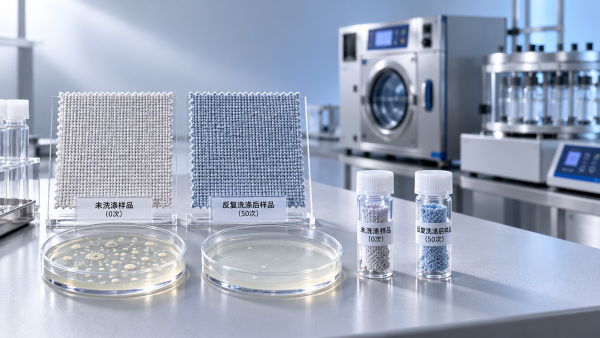
At minimum, test unwashed treated fabric and treated fabric at the claimed laundering endpoint. Intermediate wash points help establish whether activity declines progressively or falls sharply before the endpoint. Choose those points around the product’s intended life rather than an arbitrary series.
Obtain specimens from identifiable production material. Record the sampling location, lot, treated side where relevant, and specimen allocation. A development swatch may support formulation work, but it does not establish consistency across commercial production.
Controls determine whether the result is credible
An appropriate untreated reference helps distinguish treatment activity from bacterial survival changes caused by the underlying textile. Where feasible, use a comparable fabric without the antibacterial treatment and expose it to the corresponding laundering conditions. Detergent residues or substrate changes can otherwise be mistaken for retained antibacterial performance.
The laboratory also needs the controls required by the selected method to establish adequate bacterial viability, growth where applicable, recovery, and test validity. Include measurements at the relevant initial and final time points so that loss during inoculation or recovery is not confused with activity during contact.
Neutralization deserves explicit attention with silver-treated textiles. If antimicrobial action continues in the extraction liquid, organisms may die after the intended contact period. That can inflate apparent performance. The laboratory should demonstrate that its recovery system stops residual antibacterial action without being toxic to the organisms. Simply naming a neutralizing solution is not enough.
Use the replication required by the method and add independent production-lot sampling where qualification risk warrants it. Several specimens from one small swatch describe local repeatability; they do not demonstrate manufacturing consistency.
Read the calculations behind the headline result
Request viable-count data, the calculation used, control results, detection limits, and individual replicate results—not just a percentage and a “pass” label. A percentage reduction against a reference population and an antibacterial activity value calculated using control growth answer related but different questions.
For a simple comparison using the same reference count, a 99% reduction corresponds mathematically to a two-log reduction, and 99.9% corresponds to a three-log reduction. These conversions do not make results equivalent across methods. The reference population, incubation period, and calculation basis must still match.
ISO 20743 antibacterial activity calculations account for changes in the control and treated populations. Do not relabel that activity value as a simple percentage reduction without checking the calculation. Likewise, do not infer rapid killing from a result measured only after a long contact period.
- Check reference growth: insufficient growth or recovery can invalidate the comparison under the applicable method.
- Inspect replicate spread: a favorable mean can conceal inconsistent treatment or borderline specimens.
- Respect reporting limits: no recovered colonies does not establish absolute sterility or unlimited log reduction.
- Compare organisms separately: retained activity against one strain does not establish the same result against another.
When baseline and post-wash results both reach the assay’s reporting ceiling, the evidence may show that both exceed the required threshold, but not that washing caused no change. A suitably designed follow-up test may be needed if distinguishing high performance levels is important.
Investigate contradictory evidence before rejecting or approving
Silver remaining in the textile is supporting chemical evidence, not a biological endpoint. Total silver measured by a suitable elemental method can help track treatment loss, but it does not directly describe how much silver is available at the bacteria–fabric interface.
Silver may remain embedded while becoming less accessible. Conversely, antibacterial activity may persist despite some silver loss. Detergent deposits, surface coatings, and changes in wetting can alter contact and ion availability without a proportional change in total silver content.
For unresolved discrepancies, split a traceable sample set between laboratories under an agreed protocol. Sending unrelated swatches with instructions to “test antibacterial performance” is unlikely to isolate the cause.
Turn the evidence into a bounded qualification decision
Define acceptance before reviewing results. Specify the required metric, organisms, laundering endpoint, and treatment of borderline or variable results. There is no single universal pass threshold that makes every washable antibacterial textile suitable for every application.
A defensible approval ties the claim to an identified fabric and a defined exposure: it names the laundering procedure, completed cycles, antibacterial method, organisms, contact conditions, and achieved endpoint. It also records limitations, such as an untested bleach process or a different drying regime.
Check that the report identifies the laboratory, test dates, specimen traceability, method editions, deviations, and validity controls. Accreditation to ISO/IEC 17025 is relevant only when the applicable testing falls within the laboratory’s accredited scope; it is not product certification. A test performed to ISO 20743 or AATCC TM100 likewise does not, by itself, make a fabric “ISO certified.”
Antibacterial efficacy, skin-contact safety, environmental release, and permission to market particular claims are separate assessments. Where the intended market regulates antimicrobial treatments or treated articles, verify the applicable requirements independently of wash-performance testing.
Finally, connect qualification to change control. Changes to the silver treatment, binder, substrate, dyeing process, or finishing route can affect durability. Require notification and define which changes trigger targeted retesting or full requalification; otherwise, a valid historical report may no longer describe the fabric being supplied.
Recommended for You
 Technical FabricsNonwoven Bonding Cost Data: Comparing Thermal and Chemical ProcessesExplore nonwoven bonding cost data to compare thermal and chemical processes, assess usable yield, and choose the best-value option for your application.By: Chloe DuboisNov 08, 2026
 Fiber LasersIndustrial Lasers to 2035: Automotive Lightweighting and Precision Welding Drive DemandExplore the industrial laser market outlook to 2035 and discover how automotive lightweighting and precision welding could shape demand and procurement.By: Dr. Hideo TanakaNov 07, 2026
 Technical FabricsChoosing Geotextile Under Railway Ballast: Key Performance RequirementsChoosing geotextile under railway ballast? Explore essential filtration, drainage, strength and durability criteria to make a confident, project-specific selection.By: Chloe DuboisNov 07, 2026
 Digital SeaChoosing Rail Welding Equipment for Maintenance: Field Conditions and Weld TypesChoose rail welding equipment for maintenance with confidence. Compare welding methods, field constraints, inspection needs, and lifecycle costs.By: Captain Kenji SatoNov 06, 2026
 Digital SeaIndia Broadband Forum Urges Stronger Submarine Cable ResilienceIndia’s submarine cable resilience is in focus as the Broadband India Forum urges faster repairs, more vessels and stronger landing infrastructure.By: Captain Kenji SatoNov 06, 2026
 Digital SeaChoosing a Railway Network Switch Supplier: Reliability and Support CriteriaChoosing a railway network switch supplier? Compare reliability, standards evidence, cybersecurity, and lifecycle support to reduce project risk.By: Captain Kenji SatoNov 05, 2026
 Grid ResilienceUS Grid Equipment Import Ban Raises Cost and Implementation ConcernsThe US grid equipment import ban raises concerns over costs and delivery delays. Explore how unclear criteria could affect procurement and supply chains.By: Dr. Elena VoltNov 05, 2026
 Digital SeaRailway Coupler Price: How Type and Specifications Affect QuotesRailway coupler price depends on type, specifications, and order scope. Learn how to compare quotes, avoid hidden costs, and make a confident buying decision.By: Captain Kenji SatoNov 04, 2026
 Grid ResilienceGlobal Smart Grid Companies Raise $3 Billion in First Nine Months of 2026Global smart grid companies raised $3 billion in the first nine months of 2026. Explore the funding breakdown and potential implications for buyers and suppliers.By: Dr. Elena VoltNov 04, 2026
 Digital SeaChoosing Wholesale Pet Toys: How to Evaluate Suppliers and Minimum OrdersWholesale pet toys: learn how to assess suppliers, compare minimum orders and landed costs, and reduce inventory risk before you buy.By: Captain Kenji SatoNov 03, 2026
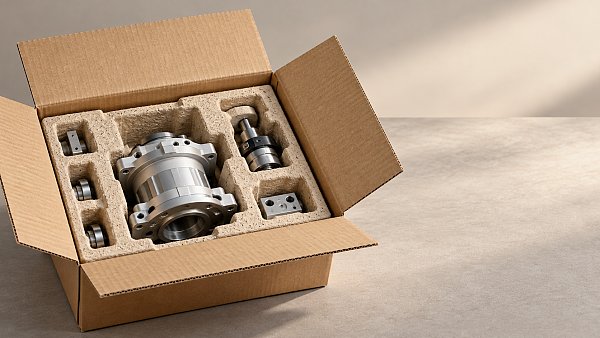
 Digital SeaSustainable Packaging Design: How to Choose Materials and Reduce WasteDiscover how sustainable packaging design helps reduce waste, protect products, and control costs with practical material choices and proven testing strategies.By: Captain Kenji SatoNov 02, 2026
 Technical FabricsUSMCA's First Joint Review Puts Textile Supply Chain Rules in FocusUSMCA's first joint review puts textile supply chain rules in focus. Explore potential impacts on origin compliance, sourcing and tariff treatment.By: Chloe DuboisNov 02, 2026
 Digital SeaManufacturing KPI Benchmarking: How to Compare Production PerformanceBenchmarking KPI manufacturing performance? Learn how to compare OEE, quality and downtime, identify meaningful gaps, and turn insights into practical improvements.By: Captain Kenji SatoNov 01, 2026
 Smart MetersCCI Approves Adani Energy Solutions' ₹305 Billion Acquisition of IntelliSmartCCI approves Adani Energy Solutions' ₹305 billion acquisition of IntelliSmart. Discover what the deal could mean for India's smart meter market.By: Dr. Elena VoltNov 01, 2026
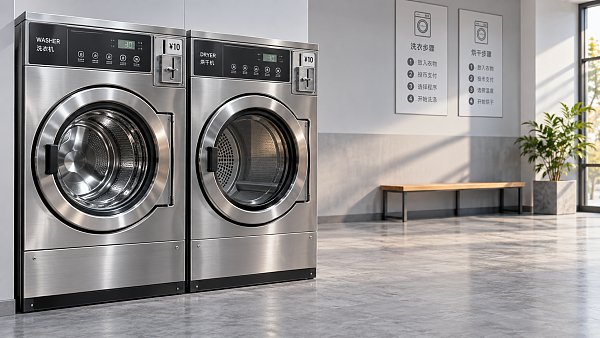
 Digital SeaChoosing a Coin Laundry Machinery OEM: What Buyers Should EvaluateChoosing a coin laundry machinery OEM? Compare machine specifications, payment integration, lifecycle costs, and support to make a confident buying decision.By: Captain Kenji SatoOct 31, 2026
 Grid ResilienceUS Energy Department Announces $237 Million Grid SCALED Funding ProgramExplore the DOE's $237 million Grid SCALED funding program and its goals to strengthen grid equipment supply chains, lower electricity costs, and improve resilience.By: Dr. Elena VoltOct 31, 2026
 UHV TransformersA Decade of UHV Power in Shandong: Province Leads in Station NumbersShandong UHV power leads China in station numbers. Explore a decade of grid development and its implications for electricity supply and business planning.By: Dr. Elena VoltOct 30, 2026
 Digital SeaChoosing a Composite Train Body Panel Manufacturer: Fire Safety and Quality ChecksChoosing a composite train body panels manufacturer? Learn how to verify fire test evidence, audit production quality, and avoid costly approval gaps before you buy.By: Captain Kenji SatoOct 29, 2026
 Subsea ROV/AUVOcean Infinity Deploys Six AUVs Together Beyond 5,000 MetresOcean Infinity reportedly deployed six HUGIN AUVs beyond 5,200 metres. Explore what concurrent deepwater missions could mean for seabed surveys and procurement.By: Captain Kenji SatoOct 29, 2026
 Grid ResilienceRenewable Energy Grid Balancing: How Storage and Demand Response Work TogetherExplore renewable energy grid balancing with storage and demand response. Learn how coordinated controls manage shortfalls, absorb surplus power, and improve grid reliability.By: Dr. Elena VoltOct 28, 2026
 Subsea ROV/AUVSeaber Introduces 13 kg RAVEN AUV to Target Mine Countermeasure CostsSeaber’s 13 kg RAVEN AUV targets lower mine countermeasure costs with two mission configurations. Explore its potential value for naval operations and procurement.By: Captain Kenji SatoOct 28, 2026
 Digital SeaBallast Water Management Rules: IMO vs. USCG Compliance RequirementsBallast water management rules explained: compare IMO and USCG approvals, operating limits, and records. Get practical checks to reduce compliance risks and costly port delays.By: Captain Kenji SatoOct 27, 2026
 Subsea ROV/AUVEni Signs Main Cronos Contracts, Moving Gas Project into ExecutionEni’s Cronos gas project enters execution as major contracts are signed. Explore the Cyprus development, Egypt processing plans and key milestones toward first gas in 2028.By: Captain Kenji SatoOct 27, 2026
 Aseptic FillingWhich Tests Verify Commercial Sterility in Aseptically Filled Foods?Explore aseptic filled food tests, from incubation and microbiology to package integrity. Learn how connected evidence supports confident commercial sterility release decisions.By: Marcus SterlingOct 26, 2026
 Fabric LogicWater-Free Textile Printing: Fabric Compatibility and Pretreatment LimitsExplore water free textile printing for polyester, cotton, and blends. Learn pretreatment limits and key durability tests to choose the right process and avoid costly production mistakes.By: Chloe DuboisOct 26, 2026
 Dyeing MachinesHow Waterless CO2 Dyeing Works—and Why Polyester Is a Strong FitDiscover how waterless dyeing with supercritical CO2 colors polyester, why this fiber is a strong fit, and what to verify for consistent shades and measurable resource savings.By: Chloe DuboisOct 26, 2026
 Smart MetersSourcing Smart Meter Structural Components from China: An RFQ ChecklistExport smart meter structural components from China with confidence. Use this RFQ checklist to compare materials, tooling, quality, and delivered costs—and avoid costly sourcing mistakes.By: Dr. Elena VoltOct 26, 2026
 Optical SensorsEvaluating an Optical Detection Factory: Calibration and RepeatabilityEvaluate an optical detection factory with confidence. Learn how calibration, traceability, and repeatability trials reveal production reliability and help you choose the right supplier.By: Dr. Hideo TanakaOct 26, 2026
 Precision LensesChoosing a Welding Optics Supplier in China: Coatings and Damage ThresholdsCompare welding optics supplier China options for coating quality, verified damage thresholds, and batch consistency. Learn how to reduce downtime and buy with confidence.By: Dr. Hideo TanakaOct 26, 2026
 Aseptic FillingStainless Steel Mixing Tanks: Cleaning Access Checks Before PurchaseBuying stainless steel mixing tanks? Check cleaning access, CIP coverage, drainage, and acceptance tests before purchase to reduce changeover headaches and make a confident choice.By: Marcus SterlingOct 26, 2026
 Digital SeaRail Communication Bandwidth in Europe: GSM-R and FRMCS Bands ExplainedRail communication bandwidth Europe: explore GSM-R and FRMCS bands, compare 900 MHz and 1900 MHz spectrum, and discover key checks for smarter network planning.By: Captain Kenji SatoOct 26, 2026