BDI: 1,842 ▼ 1.2%
COTTON NO.2: 84.12 ▲ 0.4%
LME COPPER: 8,432.50 ▲ 2.1%
FOOD SAFETY INDEX: 94.2 ARCHIVE_SECURED
OPTICAL INDEX: 11,204.09 STABLE
BDI: 1,842 ▼ 1.2%

SECTOR INDEX
V.24.08 ARCHIVE
Hot Articles
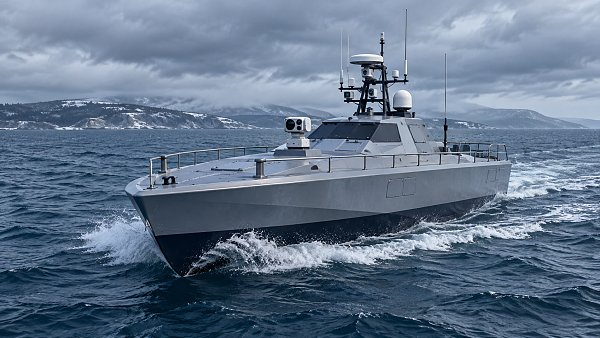
- Kongsberg Maritime Unveils Arctic Hunter Unmanned Surface VesselKongsberg Maritime's Arctic Hunter unmanned surface vessel is proposed for the Royal Navy's Type 92 programme. Explore its technology and procurement implications.
- How Accurate Is AI in Food Quality Control? Metrics and Testing MethodsExplore AI in food quality control accuracy, from recall and false negatives to validation methods. Learn how to assess real-world inspection reliability.
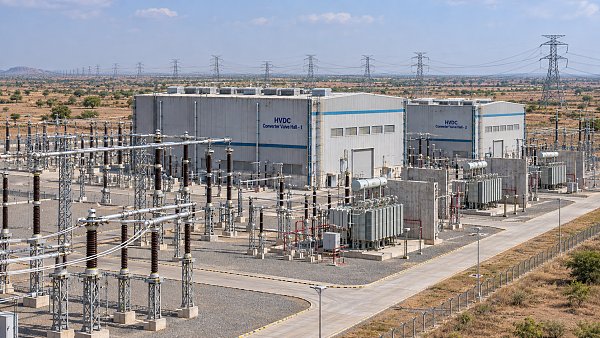
- GE Vernova Selected for 6 GW HVDC Link in IndiaGE Vernova will design a 6 GW HVDC link for PGCIL, connecting Rajasthan and South Kalamb to support India's clean energy transition. Discover the project.
Yarn Strength Benchmarks for Weaving: Setting Warp and Weft Requirements


There is no universal minimum yarn strength that guarantees successful weaving. A yarn can meet an average breaking-force requirement and still produce excessive loom stops because of weak sections, abrasion damage, poor elongation compatibility, or inconsistent sizing. Useful yarn strength benchmarks for weaving therefore combine tensile properties with the loading conditions experienced by the warp and weft.
Warp requirements generally need a stronger emphasis on repeated loading, surface durability, and weak-end control. Weft requirements depend more directly on insertion dynamics, package unwinding, and the finished fabric specification. Applying the same strength threshold to both systems can reject suitable weft unnecessarily while overlooking the causes of warp failure.
Start with tenacity, but retain breaking force
Breaking force describes the load at which a specimen fails. Tenacity divides that force by yarn linear density, allowing more meaningful comparisons between yarn counts. Both belong in a weaving specification: tenacity supports material comparison, while breaking force relates directly to the load carried by an individual yarn.
When force is expressed in centinewtons and linear density in tex:
Tenacity (cN/tex) = breaking force (cN) ÷ linear density (tex)
For illustration, a 20 tex yarn with a tenacity of 18 cN/tex has a breaking force of 360 cN, or 3.6 N. A 10 tex yarn with the same tenacity breaks at 1.8 N. These are calculation examples, not recommended acceptance limits. The finer yarn has equal specific strength but only half the absolute load capacity.
This distinction matters when changing yarn count without changing loom settings. Preserving tenacity does not preserve the available force margin against a tension peak. Conversely, specifying breaking force alone can conceal a heavier-than-agreed yarn that reaches the required force through additional mass rather than better material performance.
Count notation must also be explicit. Indirect systems such as English cotton count increase as yarn becomes finer, whereas tex increases as yarn becomes coarser. For plied yarns, identify whether the stated count refers to the component singles or the resultant yarn. Determine linear density on the agreed basis rather than relying solely on the nominal package label; ISO 2060 provides a skein method for yarn from packages.
Why warp and weft need different acceptance logic
Warp ends remain under tension while undergoing repeated changes in load and geometry during shedding and beat-up. They also contact guides, drop wires, heddles, reed dents, and neighboring yarns. Failure can therefore result from accumulated surface damage or local weakness even when a single tensile test indicates adequate strength.
Weft yarn experiences a different loading sequence. Depending on the insertion system, critical events include withdrawal from the package, acceleration, braking, gripping, and transfer. A satisfactory weft must survive those events without introducing unacceptable stretch, loops, or insertion instability.
The distinction does not mean that weft can always be weaker. A fabric may require high filling-direction tensile or tear performance, and an insertion system may impose demanding transient loads. The defensible rule is to derive each requirement from its own process exposure and fabric function, not from a fixed warp-to-weft strength ratio.
What standardized tensile results establish—and what they do not
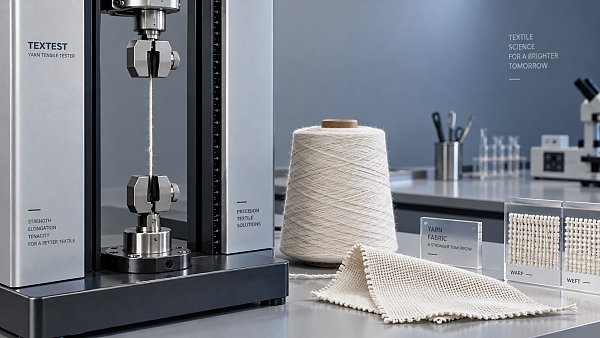
ISO 2062 specifies determination of single-end breaking force and elongation at break for yarn from packages using a constant-rate-of-extension tester. ASTM D2256/D2256M covers tensile properties of yarns by the single-strand method. These are test methods, not universal pass/fail standards for weaving suitability.
A supplier certificate stating only “tested to ISO 2062” does not fully define a purchasing requirement. The agreement should identify the applicable edition, selected procedure, specimen condition, gauge length, testing speed or permitted method setting, pretension, gripping arrangement, and sampling plan. Results obtained under different conditions should not be treated as directly interchangeable without establishing comparability.
Gauge length deserves particular attention. A longer specimen samples more yarn and has a greater opportunity to contain a weak section. Changing gauge length can consequently change both measured strength and its distribution. Pretension also affects the starting reference for elongation, especially for textured or extensible yarns.
Conditioning must be controlled because moisture affects fiber behavior and measured linear density. ISO 139 defines standard atmospheres for conditioning and testing textiles; ASTM D1776/D1776M addresses conditioning and testing practice. State the chosen conditioning protocol and any agreed deviations, rather than combining results from different laboratory environments.
Grip slippage and jaw-related failures require documented treatment under the selected method. Excluding low results without an established reason can artificially improve the reported distribution. Reports should distinguish valid breaks, invalid tests, and replacement specimens.
Set limits around variability, not just the average
A high mean tenacity does not establish dependable weaving performance if a lot contains a substantial weak tail. Two lots with identical averages can expose the loom to different break risks when their strength distributions differ.
A practical acceptance specification should distinguish:
- Mean performance: the required average tenacity or breaking force for the defined yarn.
- Variation: an agreed measure such as the coefficient of variation of breaking force or tenacity.
- Weak-result control: a defined lower-tail criterion, or a permitted number of valid results below a stated threshold.
- Elongation behavior: an acceptable range and, where important, a variability limit.
A lower-tail criterion needs an appropriate sample size and decision rule. Estimating a rare failure probability from a small routine test is unreliable. Calculating a low percentile from the mean and standard deviation also assumes a distribution model that may not represent mixed packages, damaged sections, or intermittent spinning faults.
Package selection is therefore as important as the number of breaks tested. Many specimens from one package provide limited information about package-to-package variation. Sampling should cover the production lot and, where relevant, different positions within packages. Requalification is justified after changes to fiber source, blend, spinning route, twist, or finishing that could alter performance.
Elongation at break should not be maximized indiscriminately. Insufficient extension can reduce tolerance to transient loading; excessive or inconsistent extension can complicate tension control and dimensional behavior. Breaking elongation also does not describe recovery or the full force-extension curve. Where extension during shedding is critical, behavior at operating loads may be more informative than the endpoint alone.
Build the warp benchmark around its actual condition
For sized staple warp, distinguish the incoming yarn requirement from the sized-warp performance requirement. Sizing can bind protruding fibers and improve resistance to surface damage, but its effectiveness depends on compatibility, application uniformity, drying, and subsequent handling. A higher tensile result after sizing does not, by itself, demonstrate adequate abrasion durability.
The incoming yarn specification should establish a stable substrate: agreed count, strength distribution, elongation, and relevant surface characteristics. Preparation trials should then establish whether the sizing process produces a usable warp without unacceptable stiffness, shedding, or loss of flexibility. Unsized, sized, and desized test results should be clearly identified rather than compared as equivalent measurements.
For filament warp, filament damage, interlacing or twist, finish, and friction may dominate the relationship between laboratory strength and loom performance. A strong bundle can still be vulnerable to snagging or broken filaments. Staple and filament constructions therefore need separate qualification logic even when their measured tenacities overlap.
Benchmarks should also remain construction-specific. Fiber blend, spinning system, twist, and ply structure affect strength, extensibility, surface behavior, and fabric properties together. Raising twist merely to improve tensile results can compromise other requirements; tensile optimization is not automatically weaving optimization.
Relate laboratory strength to measured loom loads
A useful engineering comparison is between the yarn’s lower-end strength distribution and the upper end of its operating tension distribution. Average warp tension is insufficient because failures may be associated with short-duration peaks during the weaving cycle.
A screening load margin can be expressed as lower-tail breaking force divided by a defined peak operating tension. Both quantities should refer to compatible conditions, and the tension measurement must have enough temporal resolution to capture the relevant event.
This ratio is not a universal safety factor. Laboratory tensile loading differs from repeated bending, contact abrasion, and localized damage on a loom. A seemingly comfortable ratio can coexist with poor performance if yarn strength deteriorates during processing. Its main value is comparative: it helps identify whether a count change, higher loom speed, or different tension setting is consuming an established margin.
Qualification should record loom type, speed, weave, fabric density, warp tension settings, preparation conditions, and relevant environmental conditions. Breaks should be reported on a consistent exposure basis, such as warp breaks per million end-metres woven. Weft stops need a similarly defined basis and should distinguish yarn breaks from other insertion faults.
A trial result has limited transferability when these conditions change. A yarn approved for one weave and speed is not automatically approved for a denser construction or a different insertion system.
Turn the benchmark into an enforceable specification
A usable requirement links material identity, laboratory testing, and process qualification. “High-strength weaving yarn” is not enforceable, and a tenacity threshold without a test basis leaves substantial room for disagreement.
A specification can state that a defined yarn construction must meet an agreed mean tenacity, strength-variation limit, elongation range, and weak-result rule under a named tensile method. It should then specify conditioning, package sampling, specimen count, treatment of invalid tests, reporting precision, and the disposition of a nonconforming lot. Numerical limits should come from qualified reference lots and controlled trials, not an unrelated yarn category.
Separate laboratory acceptance from process approval. A lot may pass incoming tensile requirements yet require investigation if it produces abnormal abrasion-related stops. Conversely, a laboratory deviation should not be waived solely because a short trial runs without a break; limited exposure may not reveal a weak-tail problem.
The strongest benchmark is therefore not the highest available tenacity. It is the lowest justified set of material and variability requirements that consistently supports the specified weaving conditions and finished-fabric performance. Warp and weft limits should remain distinct, traceable to test conditions, and subject to review when the yarn construction or operating load changes.
Recommended for You
 Digital SeaKongsberg Maritime Unveils Arctic Hunter Unmanned Surface VesselKongsberg Maritime's Arctic Hunter unmanned surface vessel is proposed for the Royal Navy's Type 92 programme. Explore its technology and procurement implications.By: Captain Kenji SatoNov 10, 2026
 Sorting RobotsHow Accurate Is AI in Food Quality Control? Metrics and Testing MethodsExplore AI in food quality control accuracy, from recall and false negatives to validation methods. Learn how to assess real-world inspection reliability.By: Marcus SterlingNov 10, 2026
 UHV TransformersGE Vernova Selected for 6 GW HVDC Link in IndiaGE Vernova will design a 6 GW HVDC link for PGCIL, connecting Rajasthan and South Kalamb to support India's clean energy transition. Discover the project.By: Dr. Elena VoltNov 09, 2026
 Grid ResilienceEurope's Grid Compliance Standards in 2026: Generator Connection RequirementsExplore new grid compliance standards 2026 Europe projects must address, from generator connection rules to testing and documentation. Prepare for approval.By: Dr. Elena VoltNov 09, 2026
 Technical FabricsNonwoven Bonding Cost Data: Comparing Thermal and Chemical ProcessesExplore nonwoven bonding cost data to compare thermal and chemical processes, assess usable yield, and choose the best-value option for your application.By: Chloe DuboisNov 08, 2026
 Fiber LasersIndustrial Lasers to 2035: Automotive Lightweighting and Precision Welding Drive DemandExplore the industrial laser market outlook to 2035 and discover how automotive lightweighting and precision welding could shape demand and procurement.By: Dr. Hideo TanakaNov 07, 2026
 Technical FabricsChoosing Geotextile Under Railway Ballast: Key Performance RequirementsChoosing geotextile under railway ballast? Explore essential filtration, drainage, strength and durability criteria to make a confident, project-specific selection.By: Chloe DuboisNov 07, 2026
 Digital SeaChoosing Rail Welding Equipment for Maintenance: Field Conditions and Weld TypesChoose rail welding equipment for maintenance with confidence. Compare welding methods, field constraints, inspection needs, and lifecycle costs.By: Captain Kenji SatoNov 06, 2026
 Digital SeaIndia Broadband Forum Urges Stronger Submarine Cable ResilienceIndia’s submarine cable resilience is in focus as the Broadband India Forum urges faster repairs, more vessels and stronger landing infrastructure.By: Captain Kenji SatoNov 06, 2026
 Digital SeaChoosing a Railway Network Switch Supplier: Reliability and Support CriteriaChoosing a railway network switch supplier? Compare reliability, standards evidence, cybersecurity, and lifecycle support to reduce project risk.By: Captain Kenji SatoNov 05, 2026
 Grid ResilienceUS Grid Equipment Import Ban Raises Cost and Implementation ConcernsThe US grid equipment import ban raises concerns over costs and delivery delays. Explore how unclear criteria could affect procurement and supply chains.By: Dr. Elena VoltNov 05, 2026
 Digital SeaRailway Coupler Price: How Type and Specifications Affect QuotesRailway coupler price depends on type, specifications, and order scope. Learn how to compare quotes, avoid hidden costs, and make a confident buying decision.By: Captain Kenji SatoNov 04, 2026
 Grid ResilienceGlobal Smart Grid Companies Raise $3 Billion in First Nine Months of 2026Global smart grid companies raised $3 billion in the first nine months of 2026. Explore the funding breakdown and potential implications for buyers and suppliers.By: Dr. Elena VoltNov 04, 2026
 Digital SeaChoosing Wholesale Pet Toys: How to Evaluate Suppliers and Minimum OrdersWholesale pet toys: learn how to assess suppliers, compare minimum orders and landed costs, and reduce inventory risk before you buy.By: Captain Kenji SatoNov 03, 2026
 Digital SeaSustainable Packaging Design: How to Choose Materials and Reduce WasteDiscover how sustainable packaging design helps reduce waste, protect products, and control costs with practical material choices and proven testing strategies.By: Captain Kenji SatoNov 02, 2026
 Technical FabricsUSMCA's First Joint Review Puts Textile Supply Chain Rules in FocusUSMCA's first joint review puts textile supply chain rules in focus. Explore potential impacts on origin compliance, sourcing and tariff treatment.By: Chloe DuboisNov 02, 2026
 Digital SeaManufacturing KPI Benchmarking: How to Compare Production PerformanceBenchmarking KPI manufacturing performance? Learn how to compare OEE, quality and downtime, identify meaningful gaps, and turn insights into practical improvements.By: Captain Kenji SatoNov 01, 2026
 Smart MetersCCI Approves Adani Energy Solutions' ₹305 Billion Acquisition of IntelliSmartCCI approves Adani Energy Solutions' ₹305 billion acquisition of IntelliSmart. Discover what the deal could mean for India's smart meter market.By: Dr. Elena VoltNov 01, 2026
 Digital SeaChoosing a Coin Laundry Machinery OEM: What Buyers Should EvaluateChoosing a coin laundry machinery OEM? Compare machine specifications, payment integration, lifecycle costs, and support to make a confident buying decision.By: Captain Kenji SatoOct 31, 2026
 Grid ResilienceUS Energy Department Announces $237 Million Grid SCALED Funding ProgramExplore the DOE's $237 million Grid SCALED funding program and its goals to strengthen grid equipment supply chains, lower electricity costs, and improve resilience.By: Dr. Elena VoltOct 31, 2026
 UHV TransformersA Decade of UHV Power in Shandong: Province Leads in Station NumbersShandong UHV power leads China in station numbers. Explore a decade of grid development and its implications for electricity supply and business planning.By: Dr. Elena VoltOct 30, 2026
 Digital SeaChoosing a Composite Train Body Panel Manufacturer: Fire Safety and Quality ChecksChoosing a composite train body panels manufacturer? Learn how to verify fire test evidence, audit production quality, and avoid costly approval gaps before you buy.By: Captain Kenji SatoOct 29, 2026
 Subsea ROV/AUVOcean Infinity Deploys Six AUVs Together Beyond 5,000 MetresOcean Infinity reportedly deployed six HUGIN AUVs beyond 5,200 metres. Explore what concurrent deepwater missions could mean for seabed surveys and procurement.By: Captain Kenji SatoOct 29, 2026
 Grid ResilienceRenewable Energy Grid Balancing: How Storage and Demand Response Work TogetherExplore renewable energy grid balancing with storage and demand response. Learn how coordinated controls manage shortfalls, absorb surplus power, and improve grid reliability.By: Dr. Elena VoltOct 28, 2026
 Subsea ROV/AUVSeaber Introduces 13 kg RAVEN AUV to Target Mine Countermeasure CostsSeaber’s 13 kg RAVEN AUV targets lower mine countermeasure costs with two mission configurations. Explore its potential value for naval operations and procurement.By: Captain Kenji SatoOct 28, 2026
 Digital SeaBallast Water Management Rules: IMO vs. USCG Compliance RequirementsBallast water management rules explained: compare IMO and USCG approvals, operating limits, and records. Get practical checks to reduce compliance risks and costly port delays.By: Captain Kenji SatoOct 27, 2026
 Subsea ROV/AUVEni Signs Main Cronos Contracts, Moving Gas Project into ExecutionEni’s Cronos gas project enters execution as major contracts are signed. Explore the Cyprus development, Egypt processing plans and key milestones toward first gas in 2028.By: Captain Kenji SatoOct 27, 2026
 Digital SeaBenefits of Refurbished Semiconductor Equipment: When Do Savings Justify the Risk?Explore the benefits of refurbished semiconductor equipment. Learn how to weigh savings against process risks, qualification costs, and support gaps before investing.By: Captain Kenji SatoOct 26, 2026
 Digital SeaSemiconductor Equipment Overhaul: Diagnosing Persistent Process DriftSemiconductor equipment overhaul leaving process drift unresolved? Discover how to pinpoint vacuum, sensor, thermal, and conditioning issues to restore stability and reduce repeat service calls.By: Captain Kenji SatoOct 26, 2026
 Digital SeaSemiconductor Equipment Refurbishment Process: Cleaning to QualificationExplore the semiconductor equipment refurbishment process, from precision cleaning to qualification. Learn how measurable testing helps verify production readiness and reduce risk.By: Captain Kenji SatoOct 26, 2026
 Digital SeaBidding for Offshore Decommissioning Projects: Scope and Liability ChecksBidding for offshore decommissioning projects? Discover key scope, liability, and insurance checks to avoid hidden costs, protect margins, and bid with confidence.By: Captain Kenji SatoOct 26, 2026